
































































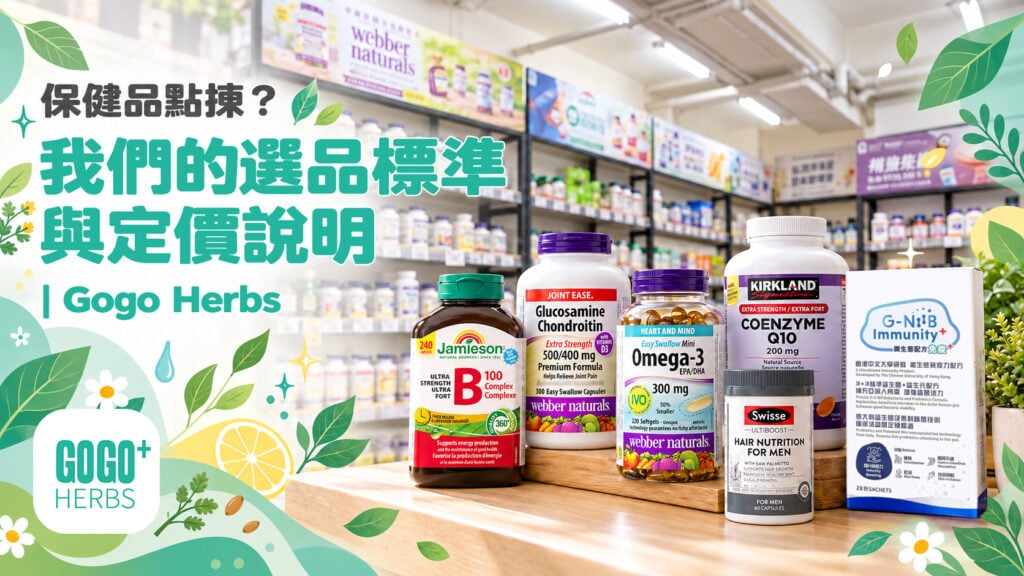
What a health supplement store sells speaks volumes about its stance, more than how good it claims to be.
This article avoids adjectives. We directly list the five dimensions we meticulously check before listing, the three actual cost factors for pricing, and why the same product can vary significantly in price across different stores. After reading this, you can use the same standards to inspect any health supplement store, including ours.
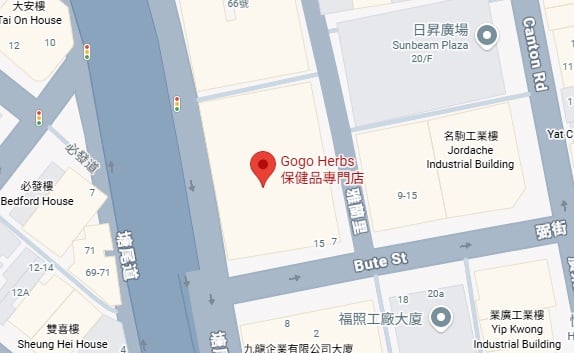
If you are simply looking for the location of the Mong Kok store and self-pickup arrangements, please see...Mong Kok Health Supplement Buying Guide。
First, let me explain what we don't sell.
Describing "what we sell" can easily become boastful; stating "what we don't sell" is more specific. The following types of products, even if they offer good profit margins and even if customers inquire about them, are typically not listed on our shelves.
1. Products with unclear ingredient and content labeling
The packaging only says "compound essence" and "patented formula," but doesn't list the actual content of each ingredient in each serving. These products are impossible to compare or verify. Our approach is: if the label can't clearly explain what's in a bottle, we won't sell it. This isn't about quality judgment, but a fundamental issue of information transparency—if you can't understand the contents of a product even when you're holding the bottle, it's difficult to determine its price.
2. Products that substitute claims of therapeutic effects for ingredient descriptions.
We do not stock products whose packaging or advertising emphasizes "treatment," "cure," "guaranteed effectiveness," or "no side effects." There are two reasons for this: First, such claims are regulated in Hong Kong by the Unhealthy Advertising (Medical) Ordinance and related regulations; nutritional supplements should not make claims about disease treatment or prevention. Second, when a product uses therapeutic claims in its marketing, it usually means that its ingredients and their amounts cannot withstand close comparison. For truly high-quality products, clearly displaying the ingredient list is sufficient.
3. Products with unclear expiration dates or origins.
We do not sell goods whose country of origin, batch number, or expiration date cannot be confirmed. This is especially important for parallel import products—parallel imports themselves are not problematic, but the source must be clearly stated.
Five dimensions to check before listing
Here are the five dimensions we consider when evaluating whether a health supplement should be listed on the market. This standard is not mysterious; you can do it yourself with any product in hand.
1. Are the ingredients and their quantities listed?
What you should look at is "how much per serving", not "how much each tablet weighs". For the same vitamin C product, if it says "1000 mg per tablet", it may refer to the total weight of the raw materials, and the actual vitamin C content may only be 500 mg; another product may say "1000 mg of vitamin C per serving (2 tablets)". The two cannot be directly compared.
Also, check the ingredient list to see if it includes excipients, binders, sweeteners, and other additives. A shorter ingredient list usually indicates a simpler formula, but this isn't always the case—some ingredients are essential for the manufacturing process. The key point is:Did it list things accurately?
II. Are the dosage form and daily dosage practically feasible?
This is often overlooked, but it directly determines whether you will continue taking it. The label suggests "two capsules three times a day." If a bottle only contains 60 capsules, it will be finished in ten days. The price seems cheap, but the actual monthly cost may be higher than you imagine.
The dosage form should also be tailored to the user. For the elderly or those with difficulty swallowing, large hard capsules, no matter how good the ingredients, are impractical; in such cases, powders, liquids, or smaller soft capsules are more worth considering. During our evaluation, we take into account whether the target user can maintain this dosage form and dosage in the long term.
III. Country of Origin, Batch Number and Expiry Date
Country of origin affects regulatory standards and production specifications, and is fundamental information for determining a product's background. Expiry date and batch number relate to the freshness and traceability of the product. All three should be visible on the bottle or packaging, not just verbally explained by the salesperson.
IV. Are the import channels clearly explained?
Is the product a locally distributed genuine product or a parallel import? Both are acceptable, but it must be clearly stated. This directly affects packaging language, batch number appearance, and after-sales arrangements in case of problems. If a store is unwilling to answer "where this batch of goods comes from," that in itself is an answer.
V. Can the price level hold?
The last item is the price, and the question isn't "Is it cheap?" but rather "Is this price reasonable?" The method is to calculate the cost per serving of active ingredient and then compare it with the price level of similar products in major local retail channels. If a product's price is significantly lower than similar products, you need to ask why—it could be due to channel advantages, near-expiry products, reduced specifications, or discrepancies between the stated and actual content.
The low price itself is not the problem; the problem is that people cannot explain why the price is low.
How is the price determined?
The retail price of health supplements is not arbitrarily set; it is mainly determined by the combination of three cost factors. Understanding these three points will help you understand why the same product can have significant price differences in different stores.
Factor 1: Import channels
For genuine products imported through exclusive local agents in Hong Kong, the supply chain typically involves: original manufacturer → local agent → distributor → retailer. Each layer incurs costs and profits, resulting in a higher selling price. However, in return, the local agent provides after-sales support, Chinese labels, and assumes responsibility.
Parallel imports involve purchasing goods directly from the country of origin or overseas markets through other channels, bypassing local agents. This results in a different cost structure and a lower selling price. This is the most significant and reasonable source of the price difference.
Factor 2: Packaging Specifications
The unit cost of the same product can differ significantly between large and small bottles. Packaging, transportation, and shelf costs are spread across a larger quantity, thus reducing the cost per serving. Therefore, the statement "large bottles are always cheaper" only holds true if you are sure you will finish the entire bottle.
Factor 3: Exchange rate and batch size of goods purchased
Overseas products are imported in different batches and at different times, so costs will fluctuate with exchange rates. It's normal for the price of the same product to vary slightly at different times. This is why our website doesn't list prices explicitly in articles—articles are ongoing content, while prices are real-time information; mixing the two would be misleading.
Regarding price comparison with peers
The price level of similar products in major local retail channels is one of the references we use to decide whether to stock the product and how to price it. However, it should be made clear that we will not write "by a certain percentage compared to a certain store" in the article, because such comparisons can become outdated at any time, and the packaging specifications, import channels, and expiration dates of different stores may not be equivalent, so directly comparing numbers can easily lead to incorrect conclusions.
A fairer approach would still be to go back to the "cost per serving of active ingredient," and take into account the background of the distribution channels and packaging.
Where does "affordability" come from?
If I had to explain our pricing logic in one sentence, it would be something like this:It's not about driving the price down to the lowest possible level, but about ensuring that the price of each bottle is commensurate with what's inside.
Specifically, the price advantage usually comes from three places, rather than from compressing quality:
- Choose the right channel.Provided the source can be clearly explained, choose an import method with a more reasonable cost structure, rather than always going through the most expensive agency chain.
- Choose the right specifications.Prioritize introducing packaging that matches the size and price, to avoid customers buying quantities they can't finish just to make the bottles look bigger.
- We don't sell things we don't need.We don't stock products that rely on claims of therapeutic effects or whose ingredients can't withstand comparison. This is both a product selection principle and a way to reduce unnecessary cost shifting.
Conversely, for some products, our prices won't be the lowest. Products sold locally, with full after-sales support, have different cost structures. If you find a product significantly cheaper elsewhere, it's worth checking three things: are the packaging specifications the same? Are the expiration dates close? Is it a parallel import? Checking these three things usually explains most of the price difference.
How can you judge a store yourself?
This is how we operate, but you don't have to rely solely on us. The following five questions can be used to check any health supplement store—including Gogo Herbs.
- What is the effective ingredient content per serving of this product?If a salesperson can only answer "1000 mg per capsule" but cannot state the content of the active ingredients, it means that the store is not familiar enough with the products it sells.
- Is this batch of goods officially imported or parallel imported?A clear answer is basic; if you answer "they are all genuine products" but avoid mentioning the source, it's worth asking further questions.
- When does it expire?If the price is significantly lower than expected, this item needs to be specifically checked.
- What can I do if I feel unwell after eating it?Whether a store offers a return or exchange policy and whether there are people you can consult are better indicators of its reliability than discounts.
- Why recommend this one instead of the one next to it?A good answer will mention the differences in ingredients, content, and dosage form; a bad answer will only say "this one sells best".
After asking these five questions, you'll probably know whether this store "sells products" or "helps you choose products." We hope to be the latter, but that judgment should be made by you, not by us.
Frequently Asked Questions
1. Are the health supplements you sell really cheaper than those in chain stores?
It's not a simple matter of generalization. Some products have lower prices primarily because we use import channels with more reasonable cost structures; others are locally sourced, including authorized dealers and full after-sales support, making their prices similar to or even the same as chain stores. To determine if it's a good deal, we recommend calculating the "cost per unit of active ingredient" and simultaneously confirming packaging specifications, expiration date, and whether it's a parallel import. If you're comparing a specific product, you can send the link or screenshot to customer service, and we'll directly explain the product's pricing context, including whether it's a genuine product or a parallel import.
2. Why can the price of the same health supplement differ by several percent between different stores?
The three most common reasons are: different import channels (the cost structure of locally distributed genuine products and parallel imports differs the most), different packaging specifications (larger bottles have lower unit costs), and differences in import time and exchange rates. Also, be aware that some significantly cheaper products may be nearing their expiration date or have older packaging. Therefore, when comparing prices, it is recommended to check both the expiration date and packaging version, rather than just looking at the price tag.
3. Are parallel import products of lower quality?
Parallel imports refer to the sales channels, not the products themselves. As long as the source is clear, the batch is traceable, and the expiration date is correct, the product content is the same as the original version. What needs attention are the differences in accessories: packaging and labeling languages may differ, and after-sales support and return/exchange arrangements may differ from locally sold products. Therefore, the issue is not whether "parallel imports are inferior," but whether "the source and date of this batch of goods are clearly stated." This is why we include import channels in our product verification process.
4. How do you decide not to sell a certain product?
The most common reason is unclear labeling. If a product only states "patented compound" without listing the content of each ingredient per serving, or uses words like "treatment," "cure," or "guaranteed effectiveness" instead of ingredient descriptions, we usually won't list it. Secondly, we consider sources whose origin and date cannot be verified. Finally, we consider price – if a product's price deviates significantly from similar products, and the supplier cannot explain why, we will also handle it with caution. It should be noted that these are our own product selection principles and do not imply that other stores selling similar products have problems.
5. The price is low; could it be that it's near expiration or the specifications have been reduced?
This is precisely where proactive verification is necessary. The method is simple: check the expiration date on the bottle and compare the content and number of capsules per capsule for the same product from different stores. If the content or number of capsules differs, prices cannot be directly compared. Our practice is to list specifications and expiration date information on the product page; if you cannot see this when purchasing, simply contact customer service. At any time, a price significantly lower than the market average is a signal that you should ask further questions.
6. Do you compare your prices with those of other stores?
We will refer to prices, but we won't include specific percentages or claims like "cheapest in Hong Kong" in our articles. There are two reasons for this: firstly, prices fluctuate constantly, and rigid comparisons quickly become outdated and misleading; secondly, packaging specifications, import channels, and expiration dates may differ between stores, making direct comparisons of numbers prone to erroneous conclusions. Therefore, our approach is to refer to the price levels of similar products in major local retail channels as one of the considerations for whether to stock the product and how to price it, rather than using it as a promotional slogan.
7. What can I do if I buy something and find it doesn't suit me?
We recommend stopping use immediately and contacting customer service to explain the situation. If the product itself is defective (e.g., damaged packaging, labeling discrepancies), returns and exchanges can be processed according to the website's policy. If you experience discomfort after taking the product, you should consult a doctor or pharmacist, and not rely solely on the store's assessment. Specific return and exchange policies vary depending on the product type and purchase channel; please review the relevant terms before checkout or confirm directly with customer service.
8. Can I just buy it in the store and not look online?
Yes. The advantage of visiting a physical store is that you can personally check the product labels—whether the ingredient list is clear, whether the content per serving refers to raw materials or active ingredients, and the location of the expiration date and batch number—these things may not be clear in photos. If you've already selected several products online, comparing the actual products side-by-side at the store is usually faster than just looking at the webpage. For store addresses, opening hours, and payment methods, please see [link/details].Mong Kok Health Supplement Buying Guide。
References
Related Post:
![秋冬護眼指南:四種營養素、產品規格比較與維他命A的安全劑量]()
Autumn/Winter Eye Care Guide: Four Nutrients, Product Specifications Comparison, and Safe Dosage of Vitamin A
![眼乾食葉黃素有用嗎?」「秋冬天眼乾特別嚴重,點算?]()
What foods are good for dry eyes? The roles and selection of Omega-3, lutein, zeaxanthin, and blueberry extract.
![男士夜尿、滴滴仔:良性前列腺增生的症狀、檢查與保健品選購]()
Nocturia and dribbling in men: Symptoms, examinations, and supplemental evidence of benign prostatic hyperplasia (BPH).
![通宵一晚,血壓會升多少?]()
Staying up late and blood pressure: How much will blood pressure rise after staying up all night on Halloween? Interpreting cardiovascular risk data.