



































































Summer Pet Skin Care | Guide to Cleaning Dogs and Cats for Odor, Scratching, Dandruff, and Ear Canals
This article provides general pet care and product information only and should not replace veterinary diagnosis. If your pet continues to scratch, lick, bite, lose hair, become red and swollen, ooze pus, has ear odor, ear pain, or experiences changes in behavior or appetite, please consult a veterinarian as soon as possible.
First and foremost: A clean face does not equate to a cured skin condition.
Hong Kong summers are hot and humid. When pets go out and return home, their paws, bellies, armpits, ears, and fur easily accumulate sweat, dirt, pollen, sebum, and environmental contaminants. For owners, the most obvious signs are "odor," "shedding fur," and "constant scratching." However, for the pets, these may only be the visible results. The underlying causes could include flea bites, environmental allergies, food allergies, contact dermatitis, ear mites, yeast infections, or bacterial infections.
Veterinary information indicates that common causes of itching in dogs include flea allergies, seasonal allergies, food allergies, contact dermatitis, and mites; finding the cause may require skin scraping, dermatology, or other examinations.VCA: Dog Itching and Scratching
Therefore, the correct direction of this article is not to teach you to "cure all diseases with one product," but to help you distinguish three things:
- In what situations can you perform gentle daily cleaning first?
- When is it appropriate to add nutritional support for skin and hair?
- What situations are beyond the scope of home care and require diagnosis and treatment by a veterinarian?
Why do pets seem to smell especially bad in the summer?
Body odor is not the only reason
Unlike humans, dogs don't rely on sweat glands to dissipate heat. Their odor typically comes from sebum, skin microbes, damp fur, earwax, mouth, anal glands, paw pads, and their living environment. Cats generally groom themselves, but when they are obese, old, have joint pain, oral discomfort, or are otherwise unwell, their ability to groom themselves may decrease, making their fur more prone to grease, tangles, or odor.
Dampness makes hair harder to dry
Walking after rain, not drying your pet thoroughly after a bath, or having constantly damp paws can all make your furry friend uncomfortable. While dampness isn't the only cause of infection, it makes cleaning, ventilation, and skin care even more important. Pets with deep ear canals, drooping earlobes, thick fur, or skin folds should especially follow a consistent grooming routine under veterinary advice.
Air conditioning may also make skin drier.
Prolonged exposure to air conditioning can dry out the air, and frequent use of strong detergents, excessive bathing, or failure to apply proper moisturizing care after bathing can also make the skin even drier. More frequent bathing is not necessarily better; the frequency of bathing should be adjusted according to the pet's breed, coat thickness, activity level, skin condition, and veterinary advice.
These behaviors are your pet's "skin alarm signals".
Licking toes or soles of feet
Occasionally licking your feet can be a normal cleaning habit, but if you lick or bite your toes for extended periods every day, causing the hair to turn brown or the spaces between your toes to become red and swollen, it may be related to allergies, external irritants, interdigital dermatitis, parasites, or pain. First, check the soles of your feet for sharp stones, grass seeds, cuts, burns from hot surfaces, or cleaning agents stuck to them; if there is redness or swelling or persistent licking and biting, you should seek medical attention.
Biting the tail, scratching the back or waist
The area from the base of the tail to the hind legs is one of the common areas of itching associated with flea allergies. Even if you don't see any fleas, you can't completely rule out a flea bite, as fleas may only stay for a short time, or your pet may have already scratched them away. The VCA points out that dogs allergic to fleas may experience itching for days even from a single bite.VCA: Flea Allergic Dermatitis
Smelly ears, head shaking, ear scratching
Ear odor, dark earwax, redness in the ear canal, frequent head shaking or ear scratching may be related to ear mites, yeast, bacteria, allergies, foreign objects, or ear canal structure. Ear cleaning solution can be used as a cleaning tool, but it cannot be used alone to diagnose or treat ruptured eardrums, deep otitis media, and ear canal pain.
Redness, oiliness, flaking, and hair loss of skin
Canine yeast dermatitis can present with itching, redness, oiliness, dandruff, crusting, thickened skin, increased pigmentation, and a musty odor; however, similar symptoms can also occur with allergies, parasites, or bacterial infections. VCA reminds users that excessive yeast growth is often related to underlying allergies or other skin problems, and simply washing the surface may not prevent recurrence.VCA: Canine yeast dermatitis
Hair removal, scratching until skin breaks or bleeds
This is no longer just a cosmetic issue. Scratching can damage the skin, increasing the chance of bacterial infection; if there is oozing, pus, wounds, significant swelling, pain, or your pet doesn't let you touch them, you should have them examined by a veterinarian as soon as possible.
The correct order for home care: First find the cause, then choose the products.
Step 1: Conduct daily quick observations
Spend one to two minutes examining the eyes, ears, soles of the feet, abdomen, armpits, tailbone, and skin folds. Observe for red spots, eczema-like changes, scabs, parasites, abnormal earwax, strong odor, localized hair loss, or painful reactions. Take photos weekly to compare whether the condition has worsened.
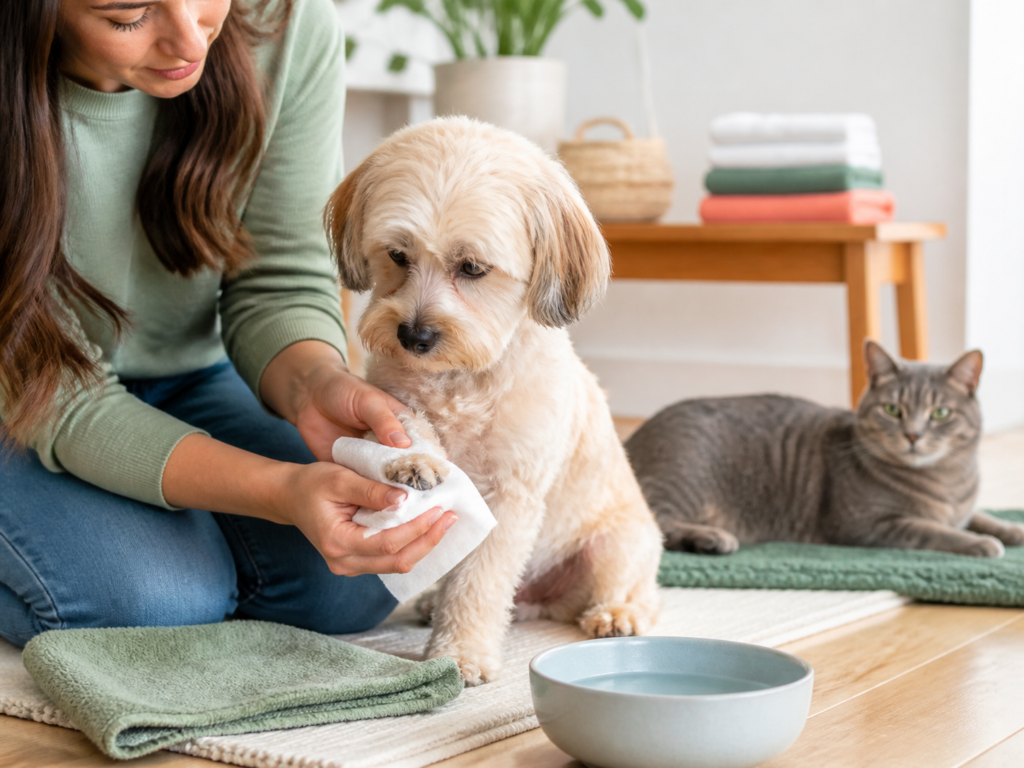
Step 2: Perform localized cleaning after going out.
If only the paws, abdomen, or rear end are soiled, use pet-specific wet wipes or a product suitable for spot cleaning, then keep the area dry. Do not apply human wet wipes, perfumes, disinfectants, alcohol, bleach, or homemade formulas containing essential oils directly to your pet.
Step 3: Choose a mild formula when you need to take a bath.
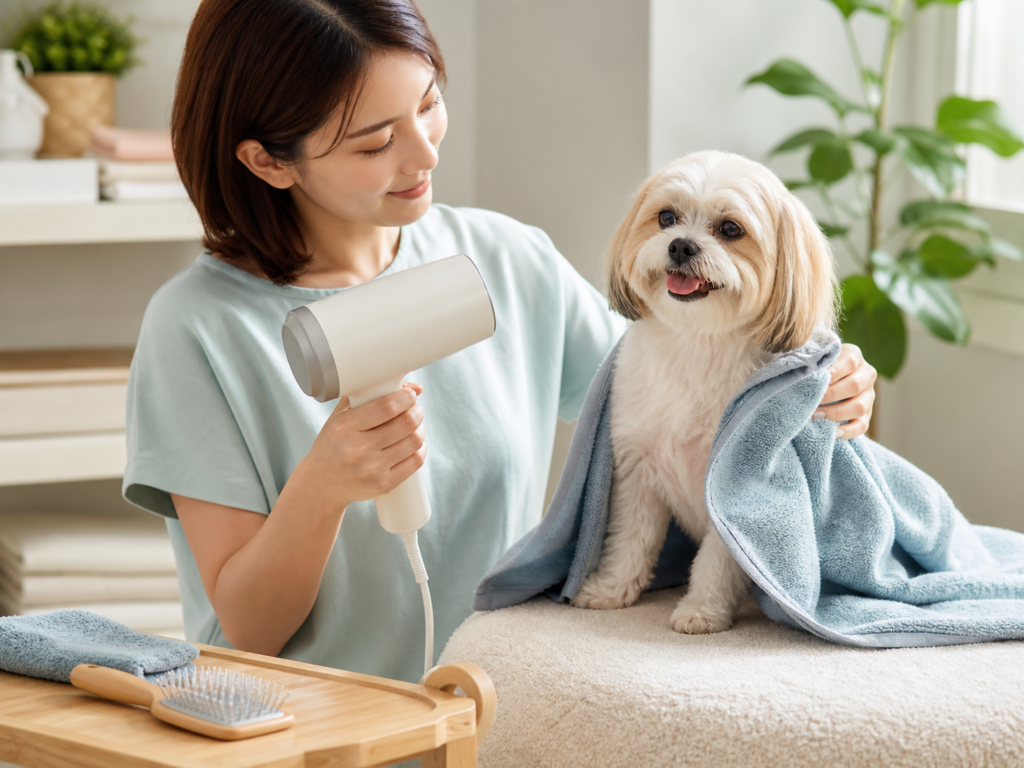
Pet shampoo is for cleaning sebum and dirt, and is not a self-prescription. If your pet is undergoing treatment for a skin condition, the choice of shampoo and the duration of application should follow your veterinarian's advice. After washing, rinse thoroughly and blow-dry at a suitable temperature, paying special attention to the armpits, between the toes, behind the ears, and skin folds.
Step 4: Separate routine cleaning from medical treatment
Terms like "hypoallergenic," "natural," and "alcohol-free" do not equate to zero risk for every pet, nor do they guarantee the elimination of fungi, ear mites, or bacteria. When using a new product for the first time, test it on a small area according to the label and observe the effects. If redness, swelling, panting, vomiting, drooling, persistent scratching, or unusual behavior occurs, discontinue use immediately and contact your veterinarian.
Summer Pet Skincare Series: Introduction to 6 Products
The prices listed below are compiled from Gogo Herbs' latest product database. Actual selling prices, discounts, flavors/fragrances, sizes, and stock availability are subject to the product pages and checkout pages. Some product database entries are not filled in the "In Stock" field; this should not be interpreted as a guarantee of availability.
| PRODUCTS | Main application direction | Important Reminder | |
|---|---|---|---|
| Positive Care Antibacterial Ear Wash 30 ml | Daily cleaning of the outer ear and ear canal | If you experience ear pain, discharge, bleeding, head tilting, or suspect a problem with your eardrum, consult a veterinarian first; avoid excessive ear cleaning. | |
| HICC Pet Plant-Based Formula Wet Wipes, 100 Sheets | Spot cleaning of face, body, buttocks and soles of feet | For external use only; the rose scent may affect sensitive pets; do not apply to eyes or ears. | |
| Monster Tribe Dog & Cat Skin Care Fish Oil 70 Capsules | Omega-3, skin and hair nutrition support | Consult a veterinarian before taking anticoagulants or before/after major surgery; feed according to body weight. | |
| HYPONIC Ultra Hypoallergenic Pet Dry Shampoo Foam 190 ml | Foot and other areas need waterless cleaning after going out. | Not a substitute for a full bath; avoid licking, eyes, and mucous membranes; scented/unscented, select on the page. | |
| Fuller's Cat & Dog King Oil-Removing Bath Mask Spa Powder 70g x 3 | Deep cleansing care for oily skin | Rinse thoroughly, blow dry, and use conditioner; consult a veterinarian first if there are wounds, redness, or sensitivities. | |
| MagiCoco Hyaluronic Acid Hair Wash 230/710 ml | Full body bath, cleaning and hair care | 230 ml / 710 ml, choose according to size; product information lists fragrance and preservative ingredients; avoid contact with eyes and rinse thoroughly. |
1. Bubble Cleaner: Start with good ear cleaning habits.
Bubble Plus Antibacterial Ear Wash comes in a 30ml bottle. The product information lists the US patented ingredient Goldshield, a slightly acidic pH, and that it is free of alcohol, steroids, bleach, and oil. The database recommends using it once daily, squeezing 3 to 5 drops into the ear canal, massaging the outer ear, and then wiping it dry.
Its purpose is ear cleaning and daily care, and it should not be directly labeled as "treating ear mites" or "curing otitis media". If your pet's ears are just prone to accumulating dirt, you can use it according to the label after a veterinarian has checked the condition of the ear canal. If there is already pain, a strong odor, dark discharge, head tilting, loss of balance, or resistance when the ears are touched, stop trying to treat it yourself and let a veterinarian check the otoscope, earwax, and eardrum condition.
VCA recommends not inserting the bottle nozzle into the ear canal during cleaning; if the nozzle touches the ear, clean the nozzle and do not force it if the pet is in pain.VCA: Dog Ear Cleaning Guide
2. HICC Pet Plant-Based Formula Wet Wipes: Your After-Street Cleaning Assistant
HICC Pet Damask Rose Scented Wet Wipes come in packs of 100. The product information lists ingredients such as glycerin, fermented coconut oil, colloidal oats, hyaluronic acid, aloe vera, rose water, chamomile, and vitamin E. They are designed for spot cleaning of the face, skin, buttocks, and soles of the feet and do not require rinsing.
These types of wet wipes are suitable for quickly wiping away surface dirt and sweat after being outdoors, but they cannot replace bathing or treat deep skin infections. If your pet has sensitive skin, the rose scent and plant extracts should not be considered absolutely non-irritating; when using them for the first time, check a small area behind the ear or on the back, and avoid contact with the eyes, mouth, genital mucous membranes, and open wounds.
3. Monster Tribe Skin Care Fish Oil: Supports skin and hair from within.
Monster Tribe Skin Care Fish Oil 70 Capsules is a product in this series that leans more towards "nutritional supplementation". The database lists Spanish patented fish oil, lecithin, turtle egg, biotin, vitamin E, and yeast zinc. Each gram contains 270 mg of Omega-3, 125 mg of lecithin, 500 mcg of biotin, and 2 IU of vitamin E. The feeding dosage is divided according to body weight: 0.2 to 1 capsule for those under 10 kg, 1 to 2 capsules for those 11 to 20 kg, and 2 to 3 capsules for those over 20 kg, once every 1 to 2 days.
Fish oil can provide nutritional support for the skin and coat, but it cannot replace flea control, antifungal treatment, antibiotics, prescription antiscar medication, or testing for food allergies. If your pet is scratching, shaking its fur, bleeding, or has a strong odor, find the cause before deciding whether to add fish oil. For pets currently taking anticoagulants, suffering from bleeding problems, or preparing for major surgery, the database also recommends consulting a veterinarian first.
Use as soon as possible after opening and store in a dry, dark place. If the capsules repeatedly get damp and stick together, check the product condition and storage method first. Do not feed products that have an odor, leak oil, are discolored, or are expired.
4. HYPONIC Dry Cleaning Foam: For spot cleaning when rinsing is not possible.
HYPONIC Dry Cleaning Foam 190 ml is available in scented and unscented options. The product information lists 100% natural hypoallergenic cleaning ingredients, free of alcohol and chemical fragrances, and recommends rubbing the foam onto the area to be cleaned, then wiping and combing it out with a towel or paper towel.
Dry shampoo foam is suitable for feet after being outdoors, for localized stains, or for situations where it's temporarily inappropriate to get the whole body wet after surgery; however, it doesn't mean you can stay clean forever without showering, nor can it completely replace rinsing. If your fur gets stained with oily chemicals, disinfectants, paint, or unknown substances, do not rely solely on dry shampoo foam; contact a veterinarian immediately and follow their professional instructions.
Cats will groom themselves, so after use, ensure there is no visible hair residue and observe for drooling, vomiting, lethargy, or skin redness and swelling. A product labeled "natural" does not mean it's safe for cats to lick in large quantities. ASPCA reminds users that direct contact with concentrated essential oils or ingestion by pets may pose health risks. Cats are particularly sensitive to certain essential oils, so do not mix essential oils into dry shampoo products yourself.ASPCA: Pet and Essential Oil Safety
5. Cat & Dog King Fullerite Spa Powder: Deep cleansing doesn't mean daily use.
Cat & Dog King Fuller Clay Oil-Control Bath Mask Spa Powder 70 g x 3 is recommended for situations with excessive oil or requiring deep cleansing. Instructions for use include wetting the fur, applying the correctly mixed clay mask, massaging for 3 to 5 minutes, rinsing off with warm water, followed by shampoo and conditioner in sequence, and finally blow-drying and combing.
Fuller's products cannot be considered medical products that "absorb all toxins" or "kill all fungi." Excessive oil removal may dry out the skin and may not be suitable for already red, broken, or sensitive skin. The database also advises against using them on open wounds; if itching or redness occurs after use, discontinue use and consult a veterinarian.
If your pet is just normally oily, you can use the cleansing powder in an occasional deep cleansing routine, rather than every time you bathe them. Be especially careful about your cat licking, inhaling, or getting the powder in their eyes. Ensure good ventilation when preparing and rinsing to prevent the powder from scattering.
6. MagiCoco Hyaluronic Acid Shampoo: A gentle full-body shower routine.
MagiCoco Hyaluronic Acid Hair Wash comes in 230 ml and 710 ml sizes. The product information lists coconut extract, aloe vera, provitamin B, hyaluronic acid, and other hair care ingredients. The instructions for use are to shake well, wet the hair, lather and massage, and finally rinse thoroughly with water.
The ingredient list in the database also lists various cleaning agents, fragrances, and benzisothiazolinone, so "hypoallergenic" does not mean that every pet will not have a reaction. For pets with known contact allergies, damaged skin barriers, or those undergoing skin treatment, show the ingredient list to your veterinarian first, and do not replace treatment with a product just because it claims to "relieve eczema".
Avoid getting soap in the eyes and ears while bathing, and focus on rinsing thoroughly. Soap residue left in the armpits, abdomen, between the toes, or skin folds can make your pet uncomfortable. After washing, ensure the undercoat is completely dry; otherwise, even if the surface is dry, the inner layer may still be damp.
More frequent bathing isn't necessarily better: How should you determine the grooming frequency for dogs and cats?
dog
A dog's bathing frequency is influenced by breed, coat type, outdoor activity, sebum production, skin condition, and veterinary prescriptions. Some dogs are suited to regular baths, while others may experience dryness and itching from over-bathing. The most important thing is to use pet-specific products, rinse thoroughly, blow-dry the undercoat, and comb out any tangles.
Cats
Most healthy cats groom themselves and don't usually need as frequent full-body baths as dogs. Long-haired cats, obese cats, senior cats, cats with limited mobility, or cats that are soiled may require spot cleaning or assistance from a veterinarian or groomer. If your cat resists bathing, do not force it, as this may injure it or cause scratches to the owner.
Skin disease treatment period
If your veterinarian prescribes medicated baths, antifungal shampoos, or other treatments, the frequency, duration of application, and rinsing method may differ from regular daily bathing. Do not mix general hypoallergenic shampoos with prescription shampoos, and do not add essential oils, vinegar, tea tree oil, or human ointments yourself.
8-Step Safe Procedure for Pet Ear Cleaning
- First, observe the auricle, the entrance to the ear canal, and secretions in a well-lit place.
- If your pet experiences ear pain, bleeding, pus discharge, head tilting, or loss of balance, stop feeding and seek veterinary care.
- Use ear cleaning products suitable for pets, and do not insert cotton swabs deep into the ear canal.
- Apply the appropriate amount according to the product label; do not force the bottle nozzle into your ear.
- Gently massage the base of the ear for about 20 to 30 seconds, allowing the pet to shake its ear naturally.
- Wipe away any visible dirt from the outer ear with gauze or cotton pads; do not force it to dig deeper.
- After cleaning, observe if your pet is in more pain, shakes its head more frequently, or scratches its ears more often.
- Use only as directed by your veterinarian or the product, and do not increase the dosage indefinitely every day just because your ears smell.
Excessive ear washing can irritate the ear canal and increase discomfort. The color and odor of earwax cannot diagnose ear mites or yeast infections on their own; a veterinary examination of earwax is still necessary in some cases.
What's the safest way to feed pet fish oil?
First look at the weight and product content.
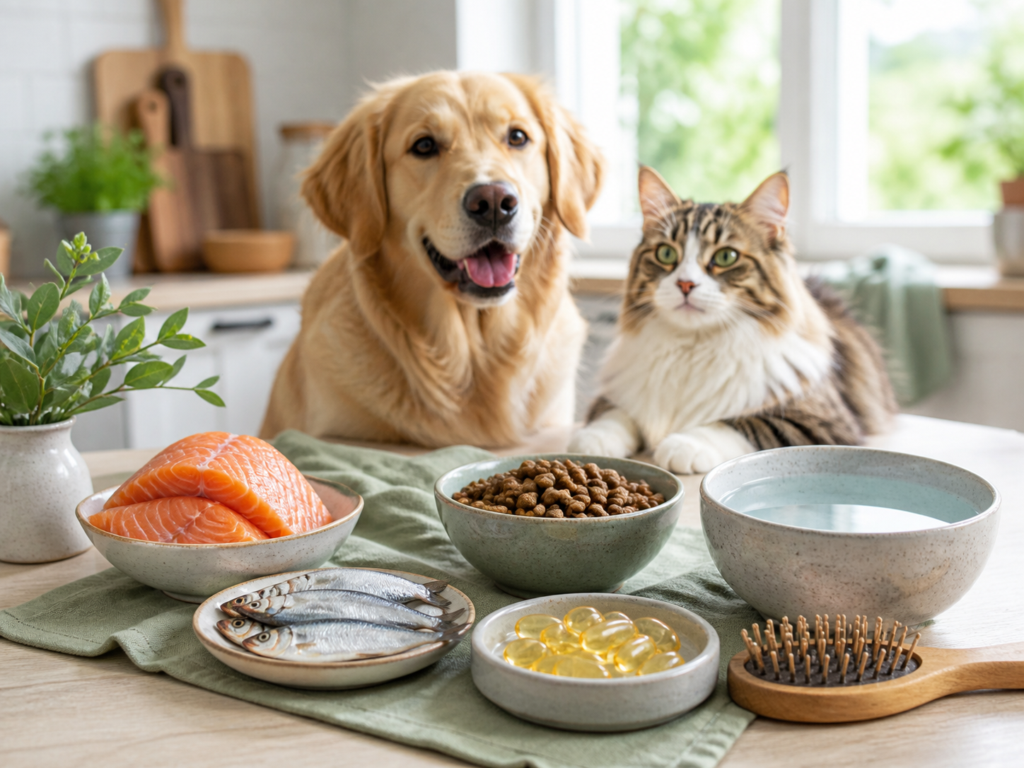
Different fish oil products have different EPA, DHA, total Omega-3 content and feeding methods. You cannot compare them based solely on the "one fish oil capsule" figure, nor can you feed your pet human fish oil at the same dosage as humans. LM004 already provides product recommendations based on weight, but puppies, kittens, pregnant women, lactating pets, pets with chronic illnesses, or those taking medication should still be individually consulted with a veterinarian.
Observe gastrointestinal reactions
Fish oil may cause some pets to experience loose stools, vomiting, bad breath, or loss of appetite. When introducing fish oil for the first time, follow the veterinarian's or product's recommendations and observe gradually. If diarrhea, vomiting, abdominal pain, lethargy, or decreased appetite persists, discontinue use and seek veterinary attention.
Don't use fish oil as a scar treatment.
Omega-3 provides nutritional support, but its effects take time and it's not suitable for all causes of itching. Flea allergies, ear infections, fungal infections, or food allergies require different treatments, and fish oil cannot immediately "turn off" itching.
Store in a cool, dry place away from light, heat, and moisture.
Fish oil is susceptible to oxidation, so it should be stored according to the label after opening. If the product has a noticeable rancid smell, is leaking oil, is spoiled, or expired, do not continue to feed it to your child just because it is "nutritious".
In what situations should you not only try products at home?
In the following situations, it is recommended to contact a veterinarian as soon as possible:
- The skin is scratched until it bleeds, oozes pus, or has a deep wound.
- Sudden, widespread red rash, facial swelling, difficulty breathing, or suspected allergic reaction.
- Severe ear pain, head tilting, loss of balance, swelling of the auricle, or bloody discharge.
- The symptoms include persistent head shaking, ear scratching, ear odor, or recurring dark earwax.
- Localized bald patches may expand, or family members or other pets may also develop circular rashes and itching.
- Accompanying symptoms include fever, lethargy, loss of appetite, vomiting, or diarrhea.
- Puppies, kittens, seniors, pregnant women, pets with weak immune systems, or pets with chronic diseases may experience a sudden deterioration.
"Tinea ventricosa" is a common term used in Hong Kong to refer to fungal skin infections, and it cannot be diagnosed by visual inspection alone. Skin fungi can be transmitted to other animals or humans, and a veterinarian should perform an appropriate examination and treat the infection according to a prescribed protocol. Cleaning products can only be used as an adjunct.
Home cleaning: Don't just wash your pets, ignore your home.
Wash sleeping mats and towels regularly.
Pet sleeping mats, towels, travel bags, and combs can accumulate sebum, dander, pollen, and parasites. Wash washable items regularly, air dry thoroughly, and avoid using heavily scented detergents.
Vacuuming and flea control
Fleas aren't just a problem for pets; they can also infest carpets, sofas, mattresses, and crevices at different stages of their life cycle. If you suspect fleas, consult your veterinarian for a suitable prevention plan for your dog or cat. Do not use flea products designed for dogs on cats, and do not use concentrated essential oils as natural flea treatments.
Keep the room well-ventilated but avoid sudden temperature changes.
Air-conditioned rooms should be adequately ventilated, and wet fur should not be kept in enclosed environments for extended periods. After going out in the summer, use a towel to pat dry before cleaning the paws and belly. Do not use an overheated hairdryer, and do not let your pet sleep with wet fur for extended periods.
Quick pairing of 6 products
| Pet situation | Products you can learn about first | Confirm before use |
|---|---|---|
| Daily ear cleaning | Bubble Cleaning Ear Wash | Do you have ear pain, pus, blood, head tilting, or eardrum problems? |
| Foot and buttock dirt after walking | HICC Pet Wet Wipes | Do you have any open wounds, are sensitive to fragrances, or have a history of licking? |
| Skin and hair nutrition support | Monster Tribe Skin Care Fish Oil | Weight, feeding amount, medication and surgical arrangements |
| Spot cleaning when rinsing is inconvenient | HYPONIC dry cleaning foam | It cannot replace a full bath, and you should also avoid leaving any residue or licking it. |
| Occasionally deep clean for oily skin | Cat & Dog King Fuller Soil Spa Powder | Does your skin have any wounds, redness, swelling, sensitivity, or dryness? |
| Full body bath and hair cleaning | MagiCoco Hair Wash | Ingredients, fragrances, thorough rinsing, and pet's reaction |
Summer Pet Care FAQ
Q1: My pet has an odor. Is it okay to bathe it every few days?
Not necessarily. Odors can come from the skin, ears, mouth, anal glands, or moist hair; if accompanied by redness, itching, earwax, dandruff, or hair loss, you should find the cause and not just cover it up with fragrance products.
Q2: My dog keeps licking its paws, is it just a habit?
Occasional licking may be for cleaning purposes, but persistent licking, biting, discoloration of fur, redness and swelling between the toes, or an odor may indicate allergies, foreign body irritation, infection, or pain, and should be evaluated by a veterinarian.
Q3: If I can't see fleas, can I still have a flea allergy?
Yes. Fleas may only stay briefly, and your pet may have already removed them. Fleas are commonly seen at the base of the tail and on the hind legs, but a veterinary diagnosis is still necessary.
Q4: Can ear cleaning solution treat ear mites?
Cleaning can help remove some earwax, but whether there are ear mites, yeast, or bacterial infections should be checked by a veterinarian. Do not repeatedly apply ear drops yourself if you experience ear pain, head tilting, or loss of balance.
Q5: Can cats and dogs share the same shampoo?
Only consider using products that are clearly labeled as suitable for cats and dogs, and when used according to the label. Do not apply dog flea products, essential oils, or human shampoos to cats.
Q6: Are natural products always safer?
Not necessarily. Natural ingredients, fragrances, plant extracts, and essential oils can also irritate the skin or cause poisoning, especially since cats lick their fur. Always check the full ingredient list and use only as directed on the label and according to your veterinarian's advice.
Q7: My skin has red spots. Can I wipe them with a wet wipe first?
If it's just surface dirt, you can clean the surrounding area first, but avoid repeatedly rubbing on broken skin, pus, bleeding, or unexplained rashes. If the red spots enlarge or your pet continues to scratch, you should seek veterinary care.
Q8: Can dry cleaning foam be used every day?
You should check the product label and your pet's condition before deciding. Dry shampoo is suitable for spot cleaning, but it cannot replace a full bath that requires rinsing, nor can it solve skin infections or parasite problems.
Q9: How long do I need to take fish oil to see results?
There is no fixed time that works for every pet. Skin and coat conditions are affected by allergies, parasites, infections, diet, and season; fish oil is a nutritional support, not an instant cure. If skin and coat conditions worsen, stop taking it and consult a veterinarian.
Q10: My pet has eczema. Can I use human ointment?
Do not use this product without consulting a veterinarian. Human topical medications may contain ingredients that are dangerous to pets, especially if ingested by your furry friend. Please have your veterinarian confirm the name and ingredients of the ointment.
Q11: My pet still smells after a bath. Is it because it wasn't cleaned properly?
Not necessarily. Ear infections, yeast infections, anal gland problems, oral diseases, or infections in skin folds can all cause an odor. If repeated bathing doesn't improve the situation, you should consult a veterinarian instead of constantly intensively cleaning the area.
Q12: Can Fullerite Spa Powder remove all toxins?
This should not be understood. It is a cleaning and grooming product and cannot replace treatment for poisoning, skin diseases, or parasites. If your pet comes into contact with chemicals, contact a veterinarian immediately.
Q13: My cat doesn't like taking baths. Can I use wet wipes instead?
For localized soiling, pet-specific wet wipes can be used, but they cannot replace all cleaning needs. If the fur is matted, contaminated with harmful substances, chronically oily, or the pet's ability to groom itself has decreased, a veterinarian or professional groomer should be consulted.
Q14: I have two pets in the same house. One has fungal infection. Should I bathe and groom the other together?
First, isolate the pets' belongings, bedding, and combs, and consult your veterinarian about examination and environmental cleaning plans. Do not treat both pets as having the same infection, and do not apply strong disinfectants to your pets yourself.
Q15: Do I only need to see a vet if my pet scratches me until my skin is broken?
Not necessarily. Persistent scratching, localized hair loss, recurring ear discomfort, strong odor, or disruption to daily life all warrant early evaluation. The earlier fleas, allergies, or infections are identified, the easier they are usually to manage.
The final summer skincare checklist
- After a walk, check your feet, between your toes, and abdomen, and clean the area if necessary.
- After showering, blow-dry the underfur, especially behind the ears, underarms, abdomen, and between the toes.
- Use only pet-specific products and avoid human shampoos, alcohol, bleach, and homemade essential oil formulas.
- Do not equate "natural", "hypoallergenic", and "antibacterial" directly with treating infections or zero risk.
- When cleaning your ears, do not insert the bottle tip or cotton swabs deep into the ear canal, and do not force the procedure when you are in pain.
- Fish oil should be given according to the pet's weight and label. Consult a veterinarian before administering medication, before or after surgery, or for pets with chronic illnesses.
- Observe the product before first use; if redness, swelling, vomiting, drooling, lethargy, or persistent itching occurs, discontinue use immediately and seek medical attention.
- Don't rely solely on toiletries to delay treatment for strong odors, earaches, pus discharge, large areas of hair loss, wounds, or fever.
Gogo Herbs Pet Zone
For more information on daily care and nutritional products for dogs and cats, please visit:Pet Zone
New customers who spend $350 or more on the website can enter a coupon in the coupon field at checkout. NEW88Regular-priced products are eligible for a 12% discount and free shipping. See the website checkout page for details.
Address in Mong Kok: Unit D, 5/F, Lung Kui Enterprise Building, 64 Tong Mei Road, Mong Kok. Open Monday to Saturday, 10:00 a.m. to 7:00 p.m. Closed on public holidays.
Pet Health Statement
This article provides general pet care and product information only and should not replace veterinary diagnosis, prescription, or treatment. Pet skin and ear problems have many causes; please do not use human medications, essential oils, alcohol, bleach, or antifungal/antibiotic products that have not been veterinarily approved. If your pet exhibits persistent or severe itching, redness, swelling, wounds, pus discharge, ear pain, head tilting, loss of balance, difficulty breathing, vomiting, lethargy, or suspected poisoning, please contact a veterinarian immediately.
References
Related Products:
-
Sale!
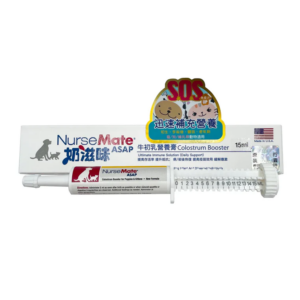
NurseMate – Milk Taste Colostrum Nutritional Cream 30ml
Original price was: $299.00.$279.00Current price is: $279.00. Add to basket -
Sale!
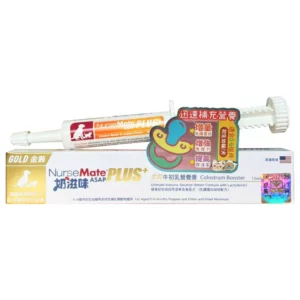
NurseMate – Gold Milk Nourishing Colostrum Nutritional Cream 15ml
Original price was: $250.00.$220.00Current price is: $220.00. Add to basket -
Sale!
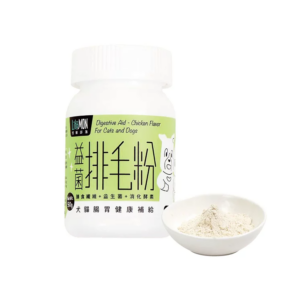
Monster Tribe – Dietary Fibre + Probiotics + Digestive Enzymes Probiotic Hair Removal Powder 50g
Original price was: $128.00.$88.00Current price is: $88.00. Add to basket -
Sale!
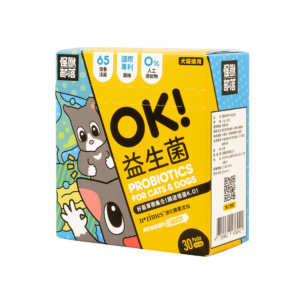
Monster Tribe – OK! Probiotics for Dogs and Cats 1.5g 30 packs
Original price was: $190.00.$154.00Current price is: $154.00. Add to basket
Related Post:
![牛樟芝子實體與膠囊製品示意]()
What is Antrodia camphorata? A complete guide to its ingredients, research evidence, and precautions for consumption.
![世界心臟日護心飲食場景,香港中年夫婦享用豆漿、豆腐、雞蛋與堅果,旁有心臟及細胞膜卡通示意]()
World Heart Day: Heart Health in Hong Kong Starts with Daily Life | What are the Benefits of Lecithin? Which of Three 1200mg Products to Choose From?
![香港女士在家規劃日程與Jamieson維柏健Kirkland維他命B12產品]()
Where to choose Vitamin B12 in Hong Kong? Supplementation and testing guidelines for memory loss, fatigue, and numbness in the hands and feet.
![香港女士益生菌選購指南:蔓越莓與益生菌膠囊]()
Hong Kong Women's Probiotic Recommendations and Purchasing Guide: How to Choose Cranberry, Strain, and Dosage Form?