Lutein is a type of natural carotenoid that the human body cannot synthesize on its own and must obtain from food or supplements. It selectively accumulates in the eyes.maculaTogether with zeaxanthin, it forms macular pigment, which is the eye's first natural line of defense against strong light and oxidative stress.Linus Pauling Institute (Oregon State University)It is pointed out that lutein and zeaxanthin are even moreThe only carotenoid in the human eye lensIt also accumulates preferentially in the brain. This article summarizes the efficacy and current research status of lutein, daily intake and timing of consumption, food sources, and how to choose eye health supplements.
- What is lutein?
- The benefits of lutein: What research says
- Who is suitable to supplement with lutein?
- How much should I eat each day? When should I eat it?
- Natural food sources of lutein
- How to choose lutein supplements?
- When should you see an ophthalmologist?
- Frequently Asked Questions (FAQ)
- Source of information
1. What is lutein?
Lutein belongs toOxygenated carotenoids (xanthophyll, lutein)It is a member of the family, structurally similar to zeaxanthin, and often occurs together with it in nature. Purified lutein is a yellow to orange-yellow crystal.Insoluble in water, readily soluble in oils and organic solventsThis characteristic also determines its two practical advantages: adding a little oil during cooking can improve absorption, and excess lutein in the body will be stored in adipose tissue and skin.
Lutein is widely found in dark green leafy vegetables, yellow flowers, and some fruits and vegetables. Commercially, it is mostly derived from...Marigold (Tagetes erecta)Extraction. Humans and most animals.Unable to synthesize lutein on its ownIt must be obtained through diet.
(1) Why do eyes need it so much?
Lutein and zeaxanthin in the diet will beSelective delivery to the eyesHigh concentrations of these substances accumulate in the macula of the retina. Together with meso-zeaxanthin, a form of lutein converted in the body, they constitute a complex known as...Macular pigmentThis layer of yellow pigment is located in front of the photoreceptor cells and plays two roles:
- Natural light filter layer:According to the Linus Pauling Institute, macular pigment can be absorbed in the macula.Blu-ray with up to approximately 901 TP4TThis reduces the oxidative impact of short-wavelength, high-energy light on photoreceptor cells.
- Antioxidant:Lutein is a fat-soluble antioxidant that can neutralize reactive oxygen free radicals generated under light exposure and protect the cell membranes of photoreceptor cells.
Also because of the color of the macular pigment itself,Macular pigment density (MPOD)Lutein status has become a commonly used indicator in ophthalmic research—blood concentrations can rise within weeks after lutein supplementation, but changes in macular pigment concentration typically require longer to become apparent.Lasting for several monthsIt only came to light then.
但The hormone "progesterone" is a steroid hormone secreted by the corpus luteum and is completely unrelated to lutein.One is a carotenoid pigment derived from plants, and the other is an animal hormone. When writing and communicating, it is recommended to use "lutein" directly to avoid confusion.
(2) Differences between lutein and zeaxanthin
Both are macular pigments, but their distributions differ slightly: lutein is more concentrated in the macula.Surrounding areaZeaxanthin is concentrated in the very center.Fovea center of the macular regionThe human body can convert lutein into racemic zeaxanthin, therefore supplements often combine lutein and zeaxanthin. A common reference ratio comes from the AREDS2 study.Lutein 10 mg + Zeaxanthin 2 mg。
2. The effects of lutein: What research says
Lutein is one of the most well-studied nutrients for eye health. The following is a summary of areas supported by empirical evidence.
(1) Supporting macular health: AREDS2 is the most critical study
Led by the National Eye Institute (NEI) AREDS2 Large-scale randomized controlled trials use a formulation of 10 mg lutein + 2 mg zeaxanthin as its core. NEI's AREDS 2 Instruction Page:
- 對Mid-term AMD (dry)Patient, AREDS2 formulaHelps slow down vision lossReduce the chance of progression from the middle stage to the late stage; if one eye is already in the late stage, it may also...Slow down the progress of the other eye。
- 依 Summary of NEI's AREDS/AREDS2 studyOverall, taking AREDS or AREDS2 formula can...The risk of AMD progressing from mid-stage to late-stage is reduced by approximately 25%.。
- AREDS2 contains lutein/zeaxanthinReplaces the original beta-caroteneThe reason is that high doses of beta-carotene can increase the risk of lung cancer in smokers—so smokers or former smokers should choose AREDS2 instead of the old AREDS formula.
- According to Linus Pauling Institute According to the analysis, randomized controlled trials in AMD patients showed that supplementation with lutein and zeaxanthin...It helps improve visual acuity and contrast sensitivity.This slowed progress toward late-stage AMD.
在Dietary aspectsMultiple large-scale prospective studies also point in a positive direction: daily intake of fruits and vegetables... 6 mgLutein and zeaxanthin (relatively below 2 mg) were associated with a lower risk of advanced AMD; in the Nurses Health Study and Health Professionals Follow-up Study, the group with the highest predicted plasma lutein/zeaxanthin concentrations had a lower risk of advanced AMD.Reduced by approximately 411 TP4T。
(2) Visual function: glare, recovery after strong light and visual fatigue
This is an area where lutein has accumulated a significant amount of research in recent years, and the main subjects are...Normal visual function but high intensity of eye useHealthy adults:
- Recovery and comparison after strong light:A randomized, double-blind, placebo-controlled study (Hammond et al., 2014,Investigative Ophthalmology & Visual Science)by 115 healthy young peopleThe subjects were supplemented with 10 mg of lutein and 2 mg of zeaxanthin for 12 consecutive months. Results showed a significant increase in macular pigment density in all central areas.Visual recovery time and color contrast were significantly improved after exposure to strong light (glare).。
- Eye fatigue and dry eyes:Another placebo-controlled study (Stringham et al., 2017,Foods Journal)by 48 healthy young people who use close-up screens for at least 6 hours a dayAfter supplementing with macular carotenoids for 6 months, macular pigment density, overall sleep quality, andFrequency of headaches, eye strain and eye fatigueThe visual performance indicators showed significant improvement compared to the placebo group.
- Night vision and dark adaptation:Based on a review of the literature (Macular Pigment in Retinal Health and DiseaseIndividuals with higher macular pigment density generally exhibit better visual retention under glare, as well as better dark adaptation and mesoscopic contrast sensitivity; while those with lower macular pigment density typically show more significant improvement after supplementation. Reduced glare, faster recovery after strong light, and improved color contrast are all related to…Visual comfort during nighttime driving and prolonged use of the eyesDirectly related.
(3) Cognitive processing speed
Lutein also accumulates in the brain. The aforementioned review indicates that macular pigment density is associated with macular pigment density in healthy older adults and those with mild cognitive impairment.Cognitive processing speed and cognitive performanceA correlation was observed; other studies have also observed a correlation between macular pigment density and supplementation in young, healthy subjects.Visual processing speedImprove simultaneously.
(4) Skin: Filters blue light, maintains skin tone and elasticity
Lutein, like zeaxanthin, is distributed in the skin and functions similarly to the eye—filtering high-energy blue light and reducing oxidative stress. Several human studies have already been conducted.
- A randomized, double-blind, placebo-controlled study (Juturu et al., 2016,Clinical, Cosmetic and Investigational Dermatology)by 50 healthy adults with mild to moderate dry skinThe subjects were given a daily supplement of 10 mg lutein + 2 mg zeaxanthin isomer for 12 weeks. Results showed...Overall skin tone and brightness were significantly improved compared to the placebo group, and the minimum erythema dose (MED) of the skin to ultraviolet radiation also increased.。
- Another double-blind placebo-controlled study (Palombo et al., 2007,PubMedComparing oral, topical, and combined applications, the results showed that oral lutein and zeaxanthin...Skin hydration, skin elasticity, surface lipids, and photoprotective abilityIt showed positive results in all aspects, and the antioxidant protection was highest when oral and topical medications were used in combination.
These studies typically involve samples of dozens of people and are partly funded by raw material or product manufacturers, representing evidence that is "continuously accumulating." However, as part of daily skincare, lutein's "inside-out" approach has a research basis.
- It cannot prevent or correct myopia.依 NEI Myopia ExplanationMyopia is a refractive error, and its causes are...The anteroposterior axis of the eyeball is too longOr, the shape of the cornea or lens may cause light to focus in front of the retina, requiring glasses, contact lenses, or surgery for correction. The NEI points out that...Children who spend more time outdoors are less likely to develop myopia.This is the more empirically supported direction at present, rather than supplementing with lutein.
- The overall effect on cataracts is limited, but the dietary intake is positive.依 NEIAREDS/AREDS2 formulationOverall, no significant effect was observed on cataracts.;but AREDS2 Report No. 4 show,The group with the lowest daily intake of lutein/zeaxanthinThe risk of progressing to cataract surgery after supplementation was significantly lower (HR 0.68). Regarding diet, the Linus Pauling Institute also compiled data showing that those who regularly consume vegetables rich in lutein/zeaxanthin (spinach, kale, broccoli) have a significantly lower risk of developing cataracts requiring surgery.The risk of needing cataract surgery is approximately 18%–50%.in other words,"Eating enough through diet" is more worthwhile than "relying on supplements to make up for it later."。
- "Significantly enhances intelligence" is an overstatement.The relevant studies observe thatCognitive and visual processing speedThese are not intelligence test scores; "reading speed, athletic performance, driving safety," etc., are areas where research is ongoing and should not be described as established effects.
3. Who is suitable to supplement with lutein?
Lutein is a nutrient that is naturally present in our daily diet. The following groups should pay particular attention to whether they are getting enough:
- People who eat less dark green leafy vegetables and eggs:The main sources of lutein are dark green leafy vegetables and egg yolks. Those who frequently eat out and don't consume enough fruits and vegetables often find it difficult to even reach the daily intake of 6 mg (according to the US NHANES survey, the average adult's daily intake of lutein and zeaxanthin is approximately...). 1.7 mg(This is significantly lower than the 6 mg level observed in the study).
- People aged 50 and above:依 NEIAMD's risks increase with age.55 years and olderThose who belong to a higher-risk group; those with a family history of smoking are at even higher risk.
- People who spend long hours using screens or working outdoors in bright sunlight:This is precisely the population targeted by the aforementioned research on visual function and visual fatigue.
- Smokers or former smokers:Aside from AMD-related risk factors, if eye-protection formulations are a consideration, you should choose...Does not contain beta-caroteneAREDS2 type formula.
- People with high myopia:According to the NEI, individuals with high myopia are at higher risk of retinal-related diseases and should follow their doctor's advice.Have regular eye examsLutein can be used as part of daily nutritional maintenance.
- People who are concerned about their skin condition:As the aforementioned studies have shown, lutein and zeaxanthin have positive research results in terms of skin brightness and skin elasticity, and can be used in conjunction with sun protection and moisturizing.
As forPeople with AMDPlease note: The AREDS2 formula is...Combination of specific ingredients and specific dosageNot every lutein product can replace it. An ophthalmologist should assess your stage of lutein deficiency before deciding whether to use it.
4. How much should I eat each day? When should I eat it?
(1) Recommended intake
- Dietary goals:Daily 6 mgLutein and zeaxanthin (from fruits and vegetables) have been associated with a lower risk of late-onset AMD. This serving size is roughly equivalent to 1 cup of cooked spinach or 1.5 cups of cooked kale.
- Common dosage of supplements:Most commercially available products are available daily. 6–20 mgThe formulation used in the AREDS2 study was...Lutein 10 mg + Zeaxanthin 2 mg。
- There is no official recommended intake (RDA):Neither the official agencies in the United States nor Europe list lutein as an essential nutrient.No tolerance limit (UL) has been established.Generally speaking, long-term use of up to 20 mg daily is considered safe; the Taiwan Food and Drug Administration recommends daily supplementation.No more than 30 mg。(National Taiwan University Hospital Health Newsletter)
(2) When to eat? Best with a meal.
Lutein isfat solubleIt is best taken with a meal containing oil for better absorption. Commercially available products usually indicate "1 capsule daily, taken with a meal." As for which meal to take...No special provisionsYou can do it in the morning or evening; the key is to do it consistently every day.
(3) How long should I eat it?
Lutein levels in the blood rise within a few weeks, butChanges in macular pigment concentration typically take several months to occur.Only then can it be reflected; the observation period for AREDS2 is as long as several years. Therefore, it is regarded asLong-term daily maintenanceIt's more practical to expect short-term results than to rely on consistent daily intake, which aligns better with the research design than occasional high-dose supplementation.
- Yellowing of the skin is not jaundice.Long-term daily intake of high doses (e.g., more than 20 mg) may cause yellowing of the skin, medically known as jaundice.CarotenomorphemiaThe characteristic is that the palms and soles are more prominent. This isHarmless and can be restored after discontinuation.This phenomenon is related to liver and gallbladder problems.Jaundice (caused by elevated bilirubin levels, which also causes the whites of the eyes to turn yellow).Completely different. Data from National Taiwan University Hospital also records that after taking 15 mg daily for 20 consecutive weeks, some patients experienced yellowing of the skin.
- Young children primarily rely on food.Lutein supplements are not necessary for young children; if you are considering supplementation due to picky eating, please consult a doctor before use.Age restrictions indicated on the product labelConsult a doctor or pharmacist first.One should not make their own judgment based on the premise that it "will cause jaundice".。
- Competes with other carotenoids for absorption:High doses of lutein may compete with beta-carotene for absorption; takingInhibit fat absorptionFor individuals taking certain medications (such as some weight-loss drugs) or suffering from fat malabsorption, lutein absorption may be reduced. It is recommended to wait at least 2 hours between taking such medications and taking them.
- Allergy warning:Commercially available lutein is mostly extracted from marigolds.People allergic to plants in the Asteraceae/Compositae family should not take this product.This is usually stated on the product label.
- Before surgery:Some products are recommended to be discontinued two weeks before surgery. Please refer to your product label and the instructions of your medical staff.
5. Natural food sources of lutein
The richest source of lutein isDark green leafy vegetablesZeaxanthin is found in higher concentrations in yellow corn, bell peppers, and egg yolks. Below is a reference for zeaxanthin content in common foods, compiled by the Linus Pauling Institute:
| Food (cooking method) | Servings | Lutein + Zeaxanthin |
|---|---|---|
| Spinach (frozen, cooked) | 1 cup | Approximately 29.8 mg |
| Turnip leaves (frozen, cooked) | 1 cup | Approximately 19.5 mg |
| Kale (frozen, cooked) | 1 cup | Approximately 18.5 mg |
| Mustard greens (cooked) | 1 cup | Approximately 14.6 mg |
| Dandelion leaves (cooked) | 1 cup | Approximately 9.6 mg |
| Broccoli (frozen, cooked) | 1 cup | Approximately 2.0 mg |
| Sweet corn (cooked) | 1 cup | Approximately 1.4 mg |
| Raw avocado | 1 | Approximately 0.5 mg |
| Boiled eggs | 1 big egg | Approximately 0.2 mg |
This table actually contains an interesting comparison:Egg yolks may seem to contain very little lutein, but their absorption rate is far superior to that of leafy green vegetables.
- 依 The U.S. Department of Agriculture's Agricultural Research Service (USDA ARS)In a study, 10 participants ingested the same dose (6 mg) of lutein from cooked spinach, eggs, or lutein supplements, respectively. The results...When lutein is obtained from eggs, the concentration in the blood is approximately three times higher than that from other sources.Researchers speculate that this is related to components such as lecithin in egg yolks. Another review described the relative absorption rate of lutein in egg yolks as "approximately four times." This is because lutein in spinach is encased in chloroplasts and fiber structures, requiring significant breakdown before release; while lutein in egg yolks is soluble in the lipid phase and can be directly absorbed.
- Practical methods:Dark green leafy vegetablesCookedIt releases more lutein than when eaten raw;Chop or crushThis can further increase the release rate; add a littlegreaseFor better absorption, eat olive oil, avocado, and full-fat salad dressing together.I can eat steadily every dayIt's more meaningful than occasionally eating a large portion.
- Other common sources:Dark leafy greens such as kale, spinach, and collard greens; corn, pumpkin, kiwi, oranges, red bell peppers; and egg yolks. Marigold is a major source of ingredients for supplements.
6. How to choose lutein supplements?
The dosage forms and formulations of products on the market vary greatly. The following points can help you make a judgment:
- Look at the ratio of lutein to zeaxanthin:When both are used together, the composition of macular pigment is closer to that of macular pigment than when only one is used. A common reference ratio is 5:1 (e.g., 20:4, 25:5).
- Check the content and daily dosage:The most common range on the market is 61 TP1T20 mg daily. Higher concentrations do not necessarily mean better results—studies using 10 mg have already shown clear results, and long-term high doses are more likely to cause yellowing of the skin.
- Look at the style:Common forms include free lutein and lutein esters. Lutein esters need to be hydrolyzed in the intestine before they can be absorbed, so the available amount of the free form is usually higher under the same labeling.
- Raw material inspection and testing:The raw materials are mostly derived from marigold extract; pay attention to whether the product indicates third-party testing and whether it clearly lists the content of each ingredient and the recommended dosage.
- See if it's "suitable for me":Smokers or former smokers should avoid eye protection formulas containing beta-carotene; those allergic to chrysanthemum plants should not choose marigold-derived products; pregnant women, breastfeeding mothers, children, and those taking medication should consult a professional first.
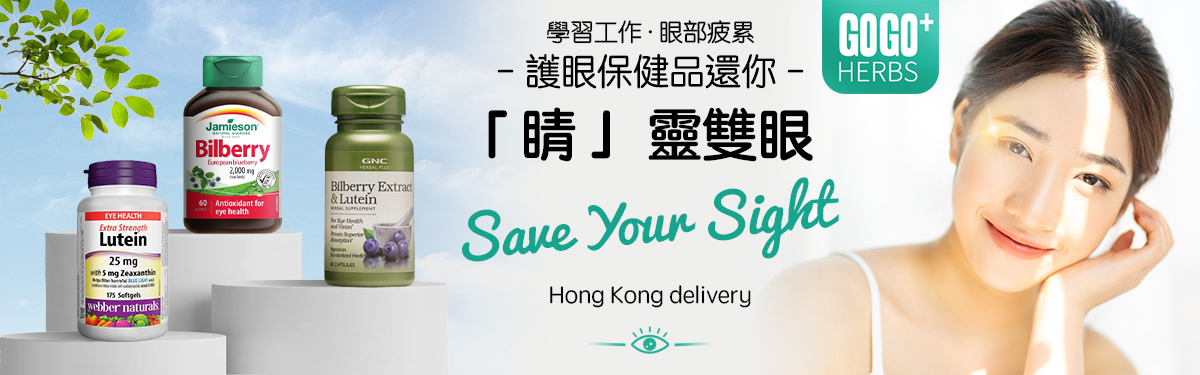
To compare different formulas, browse Gogo Herbs' eye care product categories and choose the combination that suits you best by content, ratio, and dosage form.
7. When should I see an ophthalmologist?
Supplements cannot replace examinations. UK NHS The following suggestions apply:Schedule an appointment with an optometrist or seek medical attention as soon as possible.:
- visionSuddenly worse;
- Appears in the center of visionDark curtain or shadowmove;
- EyeRed and painful;
- SeeStraight lines become waves or curvesWords and sentences disappear while reading—this is an important warning sign of advanced macular degeneration;
- It is extremely sensitive to strong light and has difficulty adapting to changes in brightness from dark to light.
- If you have diabetes, high blood pressure, high myopia, or a family history of AMD, please have regular eye exams as advised by your doctor.
According to World Health OrganizationAt least 2.2 billion people worldwide have visual impairment, of whom approximately 1 billion have vision problems.This could have been avoided or has not yet been addressed.The main causes include refractive errors, cataracts, diabetic retinopathy, glaucoma, and age-related macular degeneration. Regular checkups are the most practical step.
8. Frequently Asked Questions (FAQ)
Q1. Is lutein a vitamin?
No. Lutein genus.CarotenoidsThis family of carotenoids (oxygenated carotenoids) is not a vitamin and cannot be converted into vitamin A in the body. Neither the US nor European official agencies list it as an essential nutrient, therefore there is no formal recommended intake (RDA). It is an important component of macular pigment in the human body, and its role is more akin to "the eye's natural protective pigment and antioxidant."
Q2. Are "plant progesterone" and the hormone progesterone the same thing?
no.PhytoluteinIt is an older name for lutein, derived from the fact that this pigment was first isolated from the luteal tissue of cattle in 1886; andProgesteroneIt is a steroid hormone secreted by the corpus luteum of the ovary. The two are completely different in composition, source, and function; they only share the same Chinese name. For everyday communication, it's recommended to use "lutein."
Q3. Can taking lutein prevent nearsightedness?
Myopia belongs toRefractive problemsMyopia is caused by an excessively long eyeball or the shape of the cornea and lens that causes light to focus in front of the retina; it is not significantly related to macular pigmentation. Lutein cannot correct myopia. According to the National Eye Institute in the United States, the most well-documented practices regarding childhood myopia are...Increase outdoor activity timeControl close-range eye use and have regular eye exams.
Q4. How long does it take to see results after taking lutein?
Blood concentrations rise within a few weeks, but macular pigment concentrations typically require [further time needed].For several monthsOnly then can changes be reflected; AREDS2 has a follow-up period of several years. The study design is...Stable daily intakeTherefore, it is more practical to treat it as a long-term routine maintenance than to expect short-term results.
Q5. Will taking lutein turn my skin yellow? Is it the same as jaundice?
Long-term daily intake of high doses (e.g., more than 20 mg) may cause yellowing of the skin, medically known as jaundice.CarotenemiaIt is most commonly found on the palms and soles of the feet, and belongs toHarmless and can be restored after discontinuation.This phenomenon. This is related to...jaundiceThey are different—jaundice is caused by elevated bilirubin levels, usually causing the whites of the eyes to turn yellow, and it is associated with liver and gallbladder diseases. The two should not be confused; if yellowing of the whites of the eyes occurs, seek medical attention immediately.
Q6. Can children take lutein?
The focus of nutrition for young children isBalanced dietDark green leafy vegetables and egg yolks can both provide lutein. Whether additional supplementation is needed should be discussed with a doctor or pharmacist; if you decide to supplement, please use it according to the age restrictions and dosage indicated on the product label.One should not make their own judgment based on the premise that it "will cause jaundice".That's a misunderstanding of carotenemia.
Q7. Should lutein and zeaxanthin be taken together?
It is recommended to use them together. Both lutein and zeaxanthin together constitute macular pigment, but their distributions have slightly different functions: lutein is more concentrated in the periphery of the macula, while zeaxanthin is more concentrated in the fovea. AREDS2's formula is a combination of the two (10 mg lutein + 2 mg zeaxanthin), and commercially available products often have a ratio of around 5:1.
9. Sources of information
- Linus Pauling Institute, Oregon State University — Carotenoids (Relationship between macular pigment, blue light filtering, food content and dietary intake and AMD)
- National Eye Institute (NEI) — Age-Related Macular Degeneration (AMD staging, risk factors, and dietary recommendations)
- NEI — AREDS 2 Supplements for AMD (Formulation Ingredients and Dosage, Period of Application, Beta-Carotene and Smoker's Reminder)
- NEI — AREDS/AREDS2 Clinical Trials (reduced risk of progression by approximately 251 TP4T, with no significant overall effect on cataracts)
- AREDS2 Research Group — Lutein/Zeaxanthin for the Treatment of Age-Related Cataract (AREDS2 Report No. 4, Results of the Lowest Dietary Intake Subgroup)
- NEI — Nearsightedness (Myopia) (Causes of Myopia, Outdoor Activities, and High Risk of Myopia)
- NHS — Age-related macular degeneration (AMD) (Causes, Risk Factors, and Warning Signs)
- World Health Organization — Blindness and vision impairment (Global data on vision impairment and its main causes)
- Hammond et al. (2014), Investigative Ophthalmology & Visual Science — Lutein and Zeaxanthin on Photostress Recovery, Glare Disability, and Chromatic Contrast (115 people, 12 months, 10mg+2mg)
- Stringham et al. (2017), Foods — Macular Carotenoid Supplementation and Visual Performance, Sleep Quality (48-bit high-screen-usage adults, 6 months)
- Macular Pigment in Retinal Health and Disease (A Review and Summary of Macular Pigment Density and its Relationship with Glare, Dark Adaptation, and Cognitive Processing Speed)
- Juturu et al. (2016), Clinical, Cosmetic and Investigational Dermatology — Overall skin tone and skin-lightening (50 people, 12 weeks)
- Palombo et al. (2007) — Beneficial long-term effects of combined oral/topical lutein and zeaxanthin on human skin (skin moisturizing, elasticity, and photoprotection).
- USDA Agricultural Research Service — Absorbing News About Eggs and Lutein (Egg yolk lutein has an absorption rate approximately 3 times higher than other sources)
- National Taiwan University Hospital Health Newsletter—Lutein (Records of Yellowing Skin and Recommended Daily Intake)
This article is for general nutrition and eye care information only and does not constitute medical diagnosis, treatment, prevention advice, or prescription, nor does it guarantee the effectiveness of any product. Every reader's physical condition is different; lutein supplements cannot replace eye examinations, corrective lenses, or doctor's prescriptions. Pregnant women, breastfeeding mothers, children, the elderly, those with chronic diseases, or those taking medications (especially anticoagulants) should consult a doctor, ophthalmologist, or registered dietitian before supplementing with any health products. Product ingredients, content, dosage form, and recommended dosage are subject to the information on the actual product page and packaging. External links in this article are subject to their original publishing institution.
Related Post:
![母親用滴管把少量植物藻油滴在食物匙上,幼兒坐在餐桌旁]()
A Complete Guide to Plant-Based Algae Oil Omega-3: Odorless, Vegetarian, and Suitable Omega-3 Choices for Pregnant Women and Infants
![牛樟芝子實體與膠囊製品示意]()
What is Antrodia camphorata? A complete guide to its ingredients, research evidence, and precautions for consumption.
![世界心臟日護心飲食場景,香港中年夫婦享用豆漿、豆腐、雞蛋與堅果,旁有心臟及細胞膜卡通示意]()
World Heart Day: Heart Health in Hong Kong Starts with Daily Life | What are the Benefits of Lecithin? Which of Three 1200mg Products to Choose From?
![香港成年人在家閱讀與休息,從日常習慣開始理解腦部健康]()
魚油、迷你膠囊還是B12?腦部健康熱銷8款的配方與日常選擇