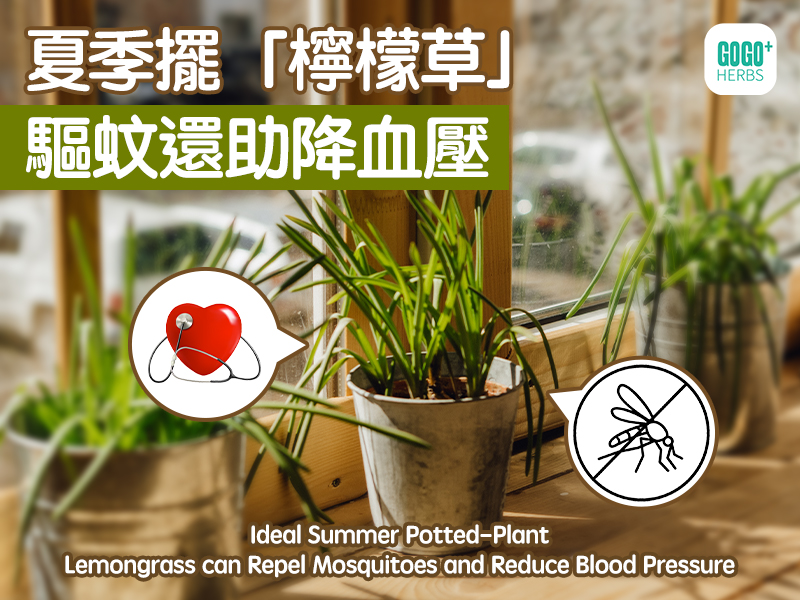
Can lemongrass repel mosquitoes? Empirical evidence and correct practices for mosquito prevention at home.
Every summer, mosquitoes become more active. Many people place a pot of lemongrass (also known as citronella) by their windows, hoping to both beautify the environment and naturally repel mosquitoes. This practice is widespread, but its effectiveness depends on whether you "place the plant" or "release its components"—the two are very different.
This article will first state the conclusion, then explain each point in detail: the actual mosquito-repelling ability and correct usage of lemongrass essential oil, the home mosquito prevention practices recommended by the Hong Kong Centre for Health Protection, the research support for lemongrass tea, and who should consult a doctor before using it. For general safety guidelines regarding herbs, please refer to the information on this website.Natural Herbal Remedies for Upper Respiratory Tract InfectionsThis will not be elaborated upon again in this article.
First, the conclusion: What repels mosquitoes, and what role does lemongrass play?
II. What is lemongrass? The differences between lemongrass, lemon lemongrass, and lemongrass.
3. "Placing a potted plant here will repel mosquitoes"—what research says
IV. Is lemongrass essential oil effective? The key lies in how it's used.
V. Truly Effective Home Mosquito Prevention Methods (Hong Kong Official Recommendations)
VI. Lemongrass Tea and Other Applications: What research supports this?
VII. How to eat and use
8. Who needs to be especially careful?
IX. Frequently Asked Questions (FAQ)
Source of information
First, the conclusion: What repels mosquitoes, and what role does lemongrass play?
To reduce mosquito bitesThe two things that really matter areFirstly:Remove standing waterThis prevents mosquitoes from breeding; secondly...Take good personal protectionFor example, applying mosquito repellent, wearing light-colored long-sleeved clothing, and using mosquito nets or mosquito curtains. These are also practices that the Hong Kong Centre for Health Protection has been advocating.
What is the role of lemongrass? It contains volatile components such as citral.When concentrated into essential oils and applied directly, it does indeed have the ability to repel mosquitoes.However, these components are locked in the plant leaves, and simply placing a pot of them and letting them release naturally will not provide a sufficient concentration. Therefore, the key is not whether to place the pot or not, but whether the components are released and whether they are used correctly.
| practice | Actual situation | suggestion |
|---|---|---|
| Place a pot of lemongrass indoors | The fragrance is faint and dissipates in the wind; studies have not found that simply placing the item can reduce mosquitoes. | It can be used for beautification and appreciation, but it is not suitable as a primary means of mosquito repellent. |
| Crush the leaves and apply to skin/clothes | It can release essential oils, but the protective effect is short-lived. | Temporary aids, but mosquito repellent should still be used before going out. |
| Formulated products containing essential oils | High concentrations provide experimentally supported repellent properties. | Pay attention to the label and reapplication frequency; do not apply pure essential oil directly. |
| Remove standing water + mosquito repellent + mosquito net | The core practices recommended by the authorities | Prioritize these mosquito prevention measures at home |
II. What is lemongrass? The differences between lemongrass, lemon lemongrass, and lemongrass.
Lemongrass belongs to the genus *Citronella* of the family Poaceae (Poaceae).CymbopogonThis plant, native to tropical and subtropical regions, resembles a clump of slender grass and has a refreshing citrus scent, hence its other names "lemongrass" or "citrus lemongrass." Its stems and leaves are an important spice in Southeast Asian cuisine, indispensable in Thai Tom Yum soup, curry, and steamed lemon fish; it is also often used to make tea after being dried.
One point worth noting is that the Chinese word "香蓋" (xiangmao) actually refers to several plants in the same genus, but they are not entirely the same.
- Lemongrass (Cymbopogon citratus)This is the most commonly used type of essential oil in cooking and tea making, with citral as the main component.
- lemongrass (Cymbopogon nardus、C. winterianus)Citronella grass, often called citronella grass in English, is the source of essential oils for many mosquito repellent candles and products.
Although they belong to the same family and have similar aromas, their essential oil compositions differ.When buying essential oils or mosquito repellent products, it's more reliable to look at the scientific name than the common Chinese name.This also helps avoid buying "mosquito repellent plants" that only have similar names but do not actually contain lemongrass essential oil (such as lemongrass geranium, which is often mistakenly called lemongrass geranium).
3. "Placing a potted plant here will repel mosquitoes"—what research says
This is the most important point to clarify in this article. Plant essential oils are stored in glands within the leaves, and are primarily released in large quantities when the leaf surface is damaged (by rubbing or biting). The concentration released naturally under normal conditions is very low, and becomes even weaker with wind. Therefore...Arranging plants on the ground and applying essential oils to the body produce two completely different effects.。
A study published in the Journal of Malaria (Malaria JournalA systematic review and compilation of ) 62 itemsStudies on the mosquito-repellent effects of plants. Results showed that almost all of these studies were conducted in the laboratory (only 6 out of 62 were field trials), and...No study has tested whether planting plants in the garden or indoors can repel mosquitoes.—The tests all focused on extracted essential oils or extracts. The horticultural extension department at Clemson University in the United States, after reviewing similar literature, reached the same conclusion: for it to be effective, the leaves must…CrushedOr use essential oilsApply directly to the skin。
IV. Is lemongrass essential oil effective? The key lies in how it's used.
Effective, but it depends on the concentration and method. Within the same systems review database,20% concentration lemongrass essential oil solutionIn laboratory tests on Anopheles mosquitoes (Anopheles stephensiIt provides complete repellency and protection for approximately 8 hours. This indicates that lemongrass essential oil itself contains repellent components.
However, two prerequisites should be noted:First, "laboratory conditions"(No wind, fixed concentration, direct application)Second, "high concentration"Returning to practical realities, Clemson's data indicates that the protective effect of essential oils on the skin is actually very short-lived—rosemary oil for about 15 minutes.Lemongrass oil for about 40 minutesThen you need to reapply it. Therefore, lemongrass essential oil is suitable as...Short-duration, close-range assistanceIt is not the only protection for prolonged outdoor activities.
In the US Centers for Disease Control and Prevention (CDC) mosquito prevention guidelines, only one plant-derived ingredient is listed as "providing longer-lasting protection," which is...Lemon eucalyptus oil (OLE) and its component PMDIt is listed alongside DEET, picaridin, and IR3535. The CDC also...It is explicitly not recommendedUsing unformulated, "pure" essential oils directly as mosquito repellents is not recommended because they have not undergone safety and efficacy testing. Please note the following when using essential oils:Do not apply undiluted essential oils directly.For skin use, it is generally recommended to dilute to approximately 21 TP4T and perform a local test first.
V. Truly Effective Home Mosquito Prevention Methods (Hong Kong Official Recommendations)
The Hong Kong Centre for Health Protection points out the importance of preventing mosquito-borne diseases (such as dengue fever).The best prevention methods are eliminating stagnant water to prevent mosquito breeding and avoiding mosquito bites.The following are the official recommendations:
Remove standing water (at least once a week).
- Used jars and bottles should be placed in...Covered trash canDo not discard it anywhere;
- Water for planting flowersReplace completely at least once a weekTry to avoid using flower pot saucers and do not leave water standing in the bottom of the pot;
- Tightly cover water storage containers, wells, and water tanks; check the air conditioner chassis for water accumulation;
- Ensure that the drain pipes are not clogged; thoroughly inspect the air gaps in the drainage ducts, roof gutters, and open drains;
- Fill in the depressions in the ground to prevent water accumulation;
- Scrub ditches and open drains with an alkaline cleaner at least once a week to remove any mosquito eggs that may have accumulated.
Avoid mosquito bites
- Wearing when going outLight-colored long-sleeved top and trousers;
- Apply to exposed skin and clothingInsect repellents containing DEET; There are also products containingIR3535、Icaridin (Pikaridin)Products containing other active ingredients;
- When there is no air conditioning in the room, useMosquito curtains or mosquito netsIf necessary, mosquito nets can be installed on doors and windows.
In addition, dengue fever is transmittedAedes albopictus mosquitoes can also be found in Hong Kong.It likes to be inDaytime stingsEspecially in the two hours after sunrise and a few hours before sunset, it's important to take precautions when outdoors during the day. There is currently no registered dengue fever vaccine in Hong Kong, making mosquito prevention especially crucial. If you find mosquitoes breeding in public places, please call 1823 or the Food and Environmental Hygiene Department hotline 2868 0000 to report it.
VI. Lemongrass Tea and Other Applications: What research supports this?
Besides repelling mosquitoes, lemongrass is also commonly used in tea. It contains various plant compounds, including flavonoids such as luteolin, quercetin, kaempferol, and apigenin, as well as phenolic substances such as chlorogenic acid and caffeic acid. These components have shown antioxidant activity in experiments. Below are some frequently cited research directions:
- blood pressure:A comprehensive review published in *Biology* in 2022 summarized the antihypertensive effects of lemongrass and its main component, citral, in various studies, including vasodilatory effects in in vitro and animal experiments, reports of blood pressure reduction after drinking lemongrass tea in healthy and hypertensive individuals, and reports of weak to moderate diuretic effects. The review authors also noted that the safety profile of lemongrass remains...Further research is needed.。
- Stomach comfort:Lemongrass is traditionally used as a digestive aid; animal studies have shown that its essential oil has a protective effect on the gastric mucosa. However, related human studies remain limited.
- Relaxation:Many people believe that drinking lemongrass tea can be relaxing. However, Memorial Sloan Kettering Cancer Center (MSKCC) points out that...Lemongrass tea did not show any effect in reducing anxiety or calming the nerves in clinical studies.The findings in this area mainly come from animal experiments.
Regarding blood pressure, it's important to clarify a point: A small study reported that participants who drank 180 ml of lemongrass tea after breakfast daily experienced a decrease in average blood pressure from 153/90 mmHg to 141/82 mmHg after two weeks. This study had a small sample size, no control group, and the values before and after the initial readings were...Still higher than normalThis can only be considered a preliminary observation. Currently, the 2020 guidelines from the International Society of Hypertension list beverages that may help lower blood pressure (such as hibiscus tea, pomegranate juice, beetroot juice, and cocoa).Lemongrass tea is not included.Therefore, lemongrass tea can be part of a daily diet, but...It cannot replace regular antihypertensive treatment.。
To learn more about daily relaxation and a balanced life, please refer to the information on this website.Stress Management and Balanced LifeFor overall blood pressure management, please refer to <Cardiovascular problem prevention〉。
VII. How to eat and use
| form | Suggested usage | take note of |
|---|---|---|
| Lemongrass tea | Steep 1 to 2 fresh stems, or 1 to 2 teaspoons of dried leaves, in a cup of hot water for 5 to 10 minutes. | No sugar or less sugar is healthier |
| Cuisine | Use the tender inner stems for cooking; after boiling, remove the woody parts. | Safe for general consumption. |
| Essential oils (aromatherapy) | Dilute with water and put into a diffuser | Keep ventilated |
| Essential oils (for skin) | Dilute with base oil (generally about 21 TP 4T) and perform a local test first. | Do not apply undiluted essential oils directly, and do not ingest them. |
If you usually add honey or sugar to your tea, please pay attention to the amount of sugar; see the details on this website.The benefits, contraindications, and sugar content of honey〉。
8. Who needs to be especially careful?
Lemongrass is generally well-tolerated in cooking and occasionally infused in tea, and most people can tolerate it. However, you should consult a doctor or pharmacist before using it in the following situations:
- Pregnancy and breastfeeding:The citral and myrcene contained in lemongrass, inAnimal experiments have shown that this can cause fetal malformations.Therefore, WebMD in the United States lists oral administration during pregnancy as "possibly unsafe" and recommends avoiding it; safety data during breastfeeding is also insufficient. For safety reasons, lemongrass should not be used for medicinal or health purposes during pregnancy and breastfeeding.
- Currently taking anticoagulants or antiplatelet drugs:lemongrass mayIncreased risk of bleedingExtra caution should be exercised when using it concurrently with warfarin, aspirin, clopidogrel, or nonsteroidal anti-inflammatory drugs.
- Currently taking blood sugar or blood pressure medication:lemongrass mayLowering blood sugar、Lower blood pressureIt may enhance the effect when used in conjunction with related drugs.
- Drugs metabolized by the liver:Lemongrass may have an effect CYP450 Enzyme systems alter the metabolic rate of some drugs.
- Liver or kidney disease:MSKCC pointed out that,High doses of lemongrass essential oil can damage the liver and gastric mucosa.Long-term or excessive consumption of lemongrass tea may also affect kidney function.
- Skin sensitivity or allergy to grasses:Essential oils may cause contact dermatitis; a local test should be performed before use.
IX. Frequently Asked Questions (FAQ)
Does placing a pot of lemongrass by the window really repel mosquitoes?
Studies have not found that simply placing plants can reduce mosquitoes. The mosquito-repellent components of plants are mainly locked inside the leaves and need to be crushed or extracted to be released in large quantities. To use lemongrass, a more practical approach is to crush the leaves and apply them to clothing for a temporary boost, or use formulated mosquito-repellent products containing essential oils; daily mosquito prevention should still focus on eliminating stagnant water and using mosquito repellents.
Can lemongrass essential oil be applied directly to the skin?
Not recommended. Undiluted essential oils may irritate the skin and even cause contact dermatitis. For skin use, dilute with a carrier oil (generally about 21 TP 4 T) and perform a patch test on the inside of the arm first. The CDC also explicitly advises against using unformulated pure essential oils as mosquito repellents.
Which mosquito repellent ingredients are more reliable?
According to the CDC, ingredients that provide longer-lasting protection include DEET, picaridin, IR3535, and plant-derived lemon eucalyptus oil (OLE) and its ingredient PMD. The Hong Kong Centre for Health Protection also recommends using mosquito repellents containing DEET, with the maximum concentration limit for pregnant women being 301 TP4T and for children being 101 TP4T. Apply sunscreen first, then the mosquito repellent.
Can I drink lemongrass tea every day?
While occasional or moderate consumption is generally acceptable for adults, it is not a "the more the better" beverage. MSKCC points out that long-term or excessive consumption of lemongrass tea may affect kidney function, and high doses of essential oils may damage the liver and gastric mucosa. It is recommended to use a standard tea serving size; consult a doctor before long-term or large-volume consumption.
Can drinking lemongrass tea lower blood pressure?
Preliminary studies suggest a slight association between lemongrass tea and lower blood pressure, but the evidence is still early: most studies are small with limited sample sizes, and current hypertension guidelines do not recommend lemongrass tea as a beverage. Therefore, it can be included as part of a daily diet, but...It cannot replace prescribed blood pressure medication or regular treatment.If you already have high blood pressure or are taking medication, please consult your doctor before adjusting your diet.
Can pregnant women drink lemongrass tea?
It is recommended to avoid it. Citral and myrcene in lemongrass have been shown to cause fetal malformations in animal studies. WebMD lists oral administration during pregnancy as "possibly unsafe," and safety data during breastfeeding is insufficient. While the usual amount of lemongrass used in cooking is generally fine, consult a doctor before drinking lemongrass tea or using it for health purposes.
Are lemongrass and lemongrass the same thing?
Generally speaking, yes. In Chinese, "香蓋" (xiangmao) often refers to several plants in the genus *Citronella*, among which lemongrass is the most commonly used in cooking and tea making.Cymbopogon citratus), and lemongrass is a commonly used mosquito repellent.Cymbopogon nardusAlthough they belong to the same genus, they are different species. They have similar aromas but different essential oil compositions. It is more reliable to check the scientific name when purchasing.
What's the most important thing to do at home in the summer?
Thoroughly eliminate standing water in and around your home at least once a week. Flower pot bottoms, air conditioner trays, water containers, and drains are often overlooked breeding grounds. Eliminating standing water reduces mosquitoes at the source, a more fundamental approach than relying solely on any mosquito repellent product. The most comprehensive approach combines this with applying mosquito repellent when outdoors, wearing light-colored long-sleeved clothing, and using mosquito nets or curtains indoors.
Source of information
- Centre for Health Protection, Department of Health, Hong Kong Dengue Fever Page(Transmission routes, Aedes albopictus mosquitoes, mosquito prevention measures)
- Centre for Health Protection, Department of Health, Hong Kong Precautions for using insect repellents(DEET concentration, application order, reapplication)
- Centre for Health Protection, Department of Health, Hong Kong dengue fever prevention(Eight measures for clearing standing water and personal protection)
- Hong Kong Food and Environmental Hygiene Department — Mosquito control(Home Mosquito Control and Prevention)
- U.S. Centers for Disease Control and Prevention (CDC) — Avoid Bug Bites(Recommended mosquito repellent active ingredients and usage restrictions for children)
- U.S. Centers for Disease Control and Prevention (CDC) Yellow Book — Mosquitoes, Ticks, and Other Arthropods(It is not recommended to use unformulated pure lemon eucalyptus essential oil)
- U.S. Environmental Protection Agency (EPA) — Find the Repellent that is Right for You(Mosquito Repellent Registration Inquiry Tool)
- Asadollahi A, Khoobdel M, Zahraei-Ramazani A, et al. Effectiveness of plant-based repellents against different Anopheles species: a systematic review. Malaria Journal. 2019;18:436. full text(Review of 62 studies, data on lemongrass essential oil repellent)
- Clemson University Home & Garden Information Center — Can Plants Repel Problematic Insects?(Leaf leaves must be crushed; essential oil protection time)
- Silva H, Bárbara R. Exploring the Anti-Hypertensive Potential of Lemongrass—A Comprehensive Review. Biology (Basel). 2022;11(10):1382. PubMed Summary(The mechanism of lemongrass in lowering blood pressure and its safety in humans are still under investigation.)
- Memorial Sloan Kettering Cancer Center (MSKCC)— Lemongrass(No clinical evidence of anti-anxiety effects, pregnancy, liver and kidney function, or side effects was observed.)
- WebMD — Lemongrass — Uses, Side Effects, and More(Interactions between pregnancy and lactation, and CYP450)
Note: The research results cited in this article are mostly observations of specific species, concentrations, or populations. Laboratory data may differ from daily usage and should not be directly extrapolated to all people. Please refer to the product label for product ingredients and concentrations.
Related Products:
-
Sale!

Webber Naturals – Triple Strength Omega-3 (900mg EPA / DHA) 200 capsules Value Pack
Original price was: $398.00.$280.00Current price is: $280.00. Add to basket -
Sale!

Kirkland Signature – Omega-3 Ultra Concentrated Deep Sea Fish Oil Capsules 1300mg 330 Capsules
Original price was: $350.00.$298.00Current price is: $298.00. Add to basket -
Sale!

Webber Naturals – Omega-3 Mini Fish Oil Capsules 300mg 220 Softgels
Original price was: $198.00.$168.00Current price is: $168.00. Add to basket -
Sale!
Kirkland Signature – Coenzyme Q10 200 mg 225 capsules
Original price was: $438.00.$358.00Current price is: $358.00. Add to basket
Related Post:
![牛樟芝子實體與膠囊製品示意]()
What is Antrodia camphorata? A complete guide to its ingredients, research evidence, and precautions for consumption.
![世界心臟日護心飲食場景,香港中年夫婦享用豆漿、豆腐、雞蛋與堅果,旁有心臟及細胞膜卡通示意]()
World Heart Day: Heart Health in Hong Kong Starts with Daily Life | What are the Benefits of Lecithin? Which of Three 1200mg Products to Choose From?
![香港女士在家規劃日程與Jamieson維柏健Kirkland維他命B12產品]()
Where to choose Vitamin B12 in Hong Kong? Supplementation and testing guidelines for memory loss, fatigue, and numbness in the hands and feet.
![香港女士益生菌選購指南:蔓越莓與益生菌膠囊]()
Hong Kong Women's Probiotic Recommendations and Purchasing Guide: How to Choose Cranberry, Strain, and Dosage Form?