
































































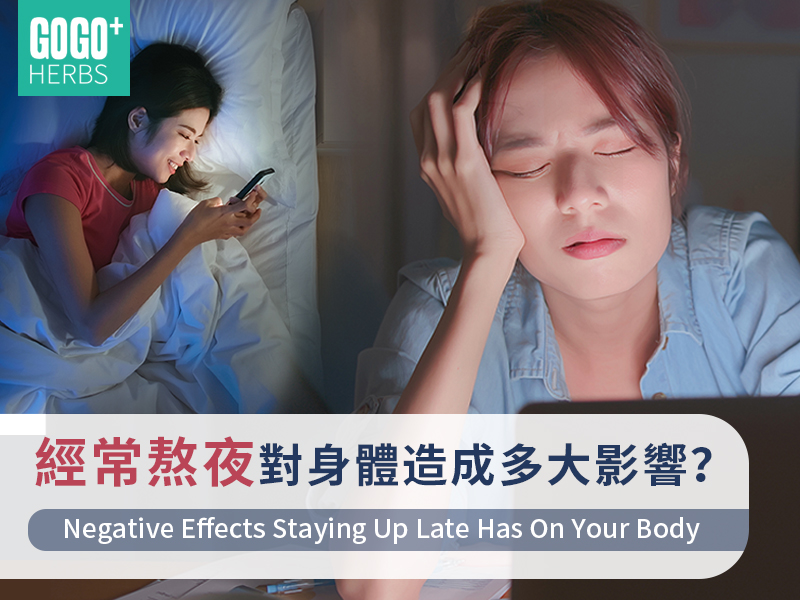
"Staying up late" is not just about getting less sleep, but...Insufficient sleep and irregular sleep patternsMany people aren't unable to go to bed early, but rather they're reluctant to end the day when it's time—scrolling through their phones, watching videos, and dragging it out until the early hours. This state of "being completely occupied during the day and only reclaiming one's own time at night" has often been referred to as...Revenge sleep deprivationThis article explains the true psychological mechanisms, the effects of chronic sleep deprivation on the body, the sleep cycle and "why you feel especially tired when woken up by an alarm clock," and how night owls can adjust their diet and nutrition. Gogo Herbs will help you get your sleep schedule back on track step by step.
- How is "staying up late" defined? It's not just about getting less sleep.
- Revenge bedtime procrastination: Why can't we go to bed early even though we know we should?
- The effects of sleep deprivation on the body
- Sleep cycles and the feeling of being particularly tired after being woken up by an alarm clock.
- Melatonin and adenosine: The body's own sleep switch
- Adjusting your sleep schedule: A few things you can do starting tonight
- Dietary recommendations for people who stay up late: What to avoid and what to eat more of
- Nutrients often mentioned by night owls
- Frequently Asked Questions (FAQ)
- Information on health supplements for people who stay up late
- Source of information
1. How is "staying up late" defined? It's not just about getting less sleep.
Staying up late can be viewed from two perspectives: one is...lack of sleep(Sleeping less than the body needs), secondlyIrregular sleep(My sleep and wake-up times are inconsistent.) Many people think that "as long as I get enough sleep, it's fine," but sleep...Time point與RegularityEqually important—UK NHSOne of the key practices to improve sleep is to go to bed and wake up at the same time every day, including weekends.
As for "how much sleep is enough", it depends on...US CDCRecommendations from the NHS:
| Age group | Recommended daily sleep duration |
|---|---|
| Adults (18– 60 years old) | 7 hours or more |
| Adolescents (13–17 years old) | 8–10 hours |
| School-aged children (6–12 years old) | 9–12 hours |
The CDC also reminds everyone that sleep quality is just as important as the number of hours.I get enough sleep but still feel tired during the day.This likely reflects a problem with sleep quality, rather than insufficient sleep duration.
2. Revenge Sleep Deprivation: Why Can't I Go to Bed Early Even When I Know I Should?
This state of "being sleepy and knowing you have to get up early tomorrow, but still refusing to go to sleep" is often referred to in research as...Bedtime procrastinationThis concept was proposed by Kroese et al. in *Frontiers in Psychology* in 2014, and is defined as "Unable to go to bed at their usual time without external interference"In other words, if you stay up late because of working overtime, taking care of children, or shift work, it doesn't count as bedtime procrastination."
(1) What constitutes "bedtime procrastination"?
依Sleep FoundationThe organization must meet three conditions:
- Delaying sleepThis reduces overall sleep time;
- No legitimate reason(It's not a night shift, nor is it an emergency.)
- Knowing that postponement would have negative consequencesThey did as instructed.
It manifests in two ways: one is...Delay bedtimeSecondI go to bed on time, but I spend the time scrolling through my phone or watching TV shows, and I can't seem to fall asleep.Both will reduce overall sleep duration and quality.
(2) The underlying reason is not just "lack of self-discipline".
Research is still ongoing, but it is known to be related to several factors:
- Daytime stress and lack of free time:When a day is filled with work, meetings, and housework, the night becomes the only time "belonging to oneself," leading people to try and regain a sense of autonomy by staying up late. A follow-up study in 2018 also found that...People who need to resist more desires during the day are more likely to procrastinate on falling asleep at night.This reflects that "self-regulation resources are almost used up by the end of the day," rather than simply a matter of willpower.
- The "Intention-Behavior Gap" in Self-Control:I want to go to bed early and I agree that it's important, but when the time comes, I just can't do it.
- Chronotype:People who are naturally "night owls" will find it more difficult to adapt to a schedule designed for early risers.
- The allure of the screen:Mobile phones and streaming platforms provide a constant stream of unpredictable stimulation, keeping the brain in a state of arousal and delaying the natural "closing down" process.
(3) How can I loosen the binding?
Since one of the core issues is "a lack of personal time during the day," relying solely on willpower to stay awake at night is often ineffective. Three more practical approaches are:
- Move your "own time" forward:Schedule a real break during the day, such as taking a walk during lunch break or spending 20 minutes after get off work doing something you enjoy, so that "me time" doesn't have to be compensated entirely by sacrificing sleep.
- Relaxation doesn't have to be about indulgence:If you don't suppress your needs (such as appetite and rest) too much during the day, you won't need to "compensate" by staying up late at night.
- Establish a consistent bedtime routine:Make "what time to start work" a habit, rather than having to re-determine it every night. Studies have shown that even before bed...Put your phone down 30 minutes in advanceIn conjunction with a stable bedtime ritual, it can also help reduce the strain before falling asleep.
3. The effects of insufficient sleep on the body
依US CDCSufficient sleep helps to: reduce illness, maintain a healthy weight, reduce stress and improve mood, maintain heart and metabolic health, andReduce the risk of chronic diseases such as type 2 diabetes, heart disease, high blood pressure, and stroke.It also improves attention and memory. Conversely, chronic sleep deprivation will negatively impact these areas one by one:
| Oriented | The effects of sleep deprivation |
|---|---|
| immunity | More susceptible to illness; studies also show that insufficient sleep may affect the immune response after vaccination. |
| Metabolism and weight | Related to weight control, glucose metabolism, and the risk of type 2 diabetes. |
| cardiovascular | Associated with high blood pressure, heart disease, and stroke risk |
| Brain and cognition | It affects attention, memory, and decision-making; daytime sleepiness also increases the risk of traffic accidents. |
| mood | Irritability and poor mood regulation; associated with depression and anxiety. |
It is worth noting that insufficient sleepYou may not feel it immediately.Many people "think they've gotten used to it," but in reality, their daytime focus and emotional stability are gradually declining.
4. Sleep cycles and "being particularly tired after being woken up by an alarm clock"
Sleep is not a single, uniform state, but rather consists of several cyclical stages.Sleep FoundationA night usually involves 4 to 6 sleep cyclesOn average, each cycle is approximately 90 minutes(The first cycle is shorter, about 70 to 100 minutes; the second cycle is about 90 to 120 minutes).
| stage | Approximate length | feature |
|---|---|---|
| N1(Light sleep) | 1–7 minutes | During the transition period when you are just falling asleep, you are easily awakened. |
| N2(Light sleep) | 10–25 minutes | A decrease in body temperature, a slower heart rate and breathing, and muscle relaxation constitute the largest portion of total sleep time. |
| N3(Deep sleep/slow-wave sleep) | 20–40 minutes | It is the most difficult to awaken and is believed to be related to body repair, immune function, and memory organization. |
| REM(Rapid Eye Movement) | 10–60 minutes | Brain activity is close to that of the waking state, during which most vivid dreams occur and are related to memory, learning, and emotional processing. |
(1) Deep sleep is concentrated in the first half of the night, and REM sleep is concentrated in the second half of the night.
The Sleep Foundation points out that,Deep sleep (N3) mainly occurs in the first half of the night.,and REM sleep gradually gets longer in the latter half of the night.—The final REM can even last up to an hour. This explains two things:
- Going to bed too late (e.g., going to bed at 2 AM):Even if you sleep until noon and seem to have made up for lost time, the quality of deep sleep is often not as good as during normal periods due to circadian rhythms."Catching up on sleep" is not a completely equivalent exchange.。
- Sleep is disrupted (e.g., waking up multiple times in the middle of the night):If each cycle is interrupted, there is less opportunity to complete deep sleep and REM sleep. Even if the total number of hours spent in bed is enough, you may still feel like you haven't slept enough when you wake up.
(2) Why do I feel dizzy and lightheaded when I am woken up by an alarm clock?
The sleep cycle naturally includes lighter stages (N1, N2), during which people are more easily awakened and more likely to wake up naturally. However, if...Being suddenly awakened during deep sleepThis could lead to the so-called"Sleep inertia"Brief periods of drowsiness, slowed reflexes, and disorientation, usually lasting several minutes, but may last longer in some cases.
Therefore, the original text's statement that "going to bed early and waking up naturally is the best sleep pattern" is correct in its direction.Waking up naturally during a light sleep stage is usually much more comfortable than being abruptly awakened from deep sleep.However, it should be noted that the "90-minute multiple sleep method" popular online (such as intentionally sleeping 6 or 7.5 hours) is only...Rough estimateThe actual length of the cycle varies from person to person and from night to night, and it is difficult to know exactly what time you actually fall asleep, so it should not be used as a precise formula.
5. Melatonin and adenosine: The body's own sleep switch
(1) Melatonin: a signal that follows light.
When ambient light dims, signals are transmitted to the brain via the optic nerve, prompting...The pineal gland secretes melatonin.It makes people sleepy; therefore, if the sleep environment is not dark enough (such as with lights on or screen light), it may affect the natural rhythm of melatonin secretion. This is the origin of suggestions such as "keep the room dark and reduce screen time before bed".
(2) Adenosine: the accumulation of sleepiness pressure
The longer you are awake, the more your brain...adenosineThe more adenosine accumulates, the higher the pressure to fall asleep; adenosine is gradually cleared during sleep. The mechanism by which caffeine is stimulating is precisely this.Blocking the effect of adenosineIt doesn't eliminate fatigue, but rather temporarily prevents you from feeling sleepy. According to relevant information, caffeine in the human body...The half-life is approximately 3 to 5 hours.(Significant individual differences), andConsuming food 6 hours before bedtime may still reduce total sleep time, decrease deep sleep, and increase the number of times you wake up at night.This also echoes the NHS's recommendation:Avoid caffeinated beverages such as coffee and tea for at least 6 hours before bedtime.。
(3) What about "melatonin supplements"?
依NCCIH (National Center for Complementary and Integrative Health) in the United StatesThe compilation and research of melatonin supplementsJet lagThere is relatively more evidence in this regard;Shift workRegarding this aspect, the research results did not reach a consensus; as forChronic insomniaBoth the American Academy of Sleep Medicine and the American College of Physicians have guidelines stating that current evidence is insufficient to support routine use and recommend that...Cognitive Behavioral Therapy (CBT-I) for InsomniaAs the first line of direction.
Melatonin is a naturally occurring hormone in the body. Short-term use appears safe for most people, but long-term safety data is limited. Common side effects include headache, dizziness, nausea, and drowsiness. Special precautions should be taken before use:
- Pregnant women, breastfeeding mothers, and children:Safety data is insufficient; consult a doctor before use.
- People with epilepsy or those currently taking anticoagulants (such as warfarin):It must be used under medical supervision.
- Elderly people with dementia:The American Academy of Sleep Medicine guidelines do not recommend its use.
- Product labeling may not be accurate:The NCCIH cited a test study indicating that the actual content of commercially available melatonin products (especially gummies) may differ significantly from the labeling. Consumers should pay attention to brand reputation and third-party testing when purchasing.
6. Adjust your schedule: A few things you can do starting tonight.
The following practices are compiled fromNHS Every Mind Matters與 CDC The suggestions all fall under the category of "sleep hygiene":
- Regular schedule:Go to bed and wake up at the same time every day (including weekends if possible) to let your biological clock know when it's time to sleep.
- Reserve time for relaxation:Put away your phone, tablet, and computer at least one hour before bed; instead, read, listen to soft music, meditate, or practice breathing exercises.
- Dealing with worries:Write down what you need to do tomorrow before bed. Leave the "things to remember" to paper and reduce the time you spend thinking about things after you've gone to bed.
- Pay attention to diet and irritants:Avoid large meals before bed; avoid alcohol and nicotine 1 to 2 hours before bed; avoid caffeine in the afternoon or evening (the NHS recommends not drinking coffee or strong tea for at least 6 hours before bed).
- Adjust the environment:Rooms should be as spacious as possibleQuiet, dark, coolYou can use earplugs, eye masks, or blackout curtains; put away your clock to reduce checking the time at night.
- Don't force yourself to sleep:If you can't fall asleep after lying down for about 20 minutes, get up and do something quiet elsewhere (like reading). Go back to bed when you feel sleepy.
- Regular exercise:Regular daytime activities can help you sleep; however, if you find that exercising before bed makes you more energetic, start earlier (some guidelines suggest avoiding strenuous exercise a few hours before bed).
- Daytime exposure to sunlight:Exposing yourself to natural light in the morning helps stabilize your biological clock.
7. Dietary recommendations for people who stay up late: What to avoid and what to eat more of?
When your sleep schedule is irregular, your diet often follows suit. Here are some practical suggestions.
(1) Avoid these types of activities when staying up late/before going to bed.
- Coffee and strong tea:According to the recommendations of the NHS and CDC, avoid caffeine within 6 hours before bedtime, otherwise it will delay falling asleep, reduce deep sleep, and also affect subsequent sleep.
- Alcohol and Nicotine:The NHS advises against alcohol consumption 1 to 2 hours before bedtime; while alcohol may induce drowsiness, it can also lead to shallow and fragmented sleep.
- High-sugar snacks:Eating high-sugar foods late at night can cause rapid fluctuations in blood sugar and may also increase the burden on the digestive system at night. Using it as a way to "help sleep" or "boost energy" is not ideal.
- Greasy, large-portion late-night snacks:Eating a large meal before bed keeps the body busy digesting, making it harder to fall asleep (NHS).
(2) Foods that can be included more often in daily diet
The original article listed kelp, mushrooms, vinegar, mung beans, sweet potatoes, and lotus root as "detoxifying foods." While these foods are generally good everyday choices, claims of "detoxification/purification/blood cleansing" are exaggerated. It's better to understand their nutritional value in terms of what they actually contain.
| Ingredients | More verifiable nutritional characteristics |
|---|---|
| seaweed such as kelp | Sources of iodine and dietary fiber. Iodine is a trace element required for thyroid function;Individuals with thyroid dysfunction (such as hyperthyroidism) should consult a doctor first.Then decide on the intake. |
| Mushrooms | It provides dietary fiber, some B vitamins, and minerals (the selenium content of mushrooms varies depending on the variety and cultivation substrate), and can be used as a low-calorie side dish. |
| 醋 | It can be used as a daily seasoning, helping to reduce salt intake; however, "reducing body acidity" is not a scientific concept. The body's blood pH level is strictly regulated and will not be changed by eating a certain food. |
| mung beans, sweet potatoes, lotus root | All three provide dietary fiber and minerals.It helps with bowel movements and overall dietary balance.Treating them as a source of fiber is closer to the truth than treating them as "detox foods". |
8. Nutrients frequently mentioned by night owls
People with irregular sleep patterns are more likely to experience inadequate nutrient intake due to irregular eating habits. The following are several nutrients mentioned in the original text that are indeed related to daily physiological functions, supplemented with verifiable official statements (according to...).UK NHS (Vitamin and Mineral Guide)
| Nutrients | The role in the body |
|---|---|
| Vitamin C | It helps maintain the normal functioning of the immune system and participates in collagen synthesis and antioxidant defense; it also helps with iron absorption. |
| Vitamin B complex(B1, B2, B3, B5, B6, B12, folic acid, etc.) | As a coenzyme, it participates in energy metabolism and is related to the normal functioning of the nervous system; deficiency may lead to fatigue, decreased concentration, and other symptoms. |
| Vitamin A | It is related to maintaining normal vision, healthy skin and mucous membranes, and immune function;It is fat-soluble and will accumulate in the body, so it is not suitable for long-term high-dose supplementation. |
| Vitamin E | These are antioxidant-related nutrients that help protect cells from oxidative damage. |
It is important to emphasize that:These nutrients are not "antidotes for staying up late".The core problems caused by staying up late are insufficient sleep and disordered sleep patterns, and nutritional supplements cannot offset their effects; however, it is still reasonable to make up for the lack of basic nutrients when eating irregularly.
9. Frequently Asked Questions (FAQ)
Q1: Can catching up on sleep on the weekend make up for the sleep debt from weekdays?
It can partially alleviate fatigue, but it's difficult to achieve a complete equivalent exchange. Because the distribution of deep sleep and REM sleep is related to the biological clock, "catching up on sleep" by staying up late and waking up late usually cannot fully replicate the sleep structure of normal sleep periods; moreover, the significant shift in sleep patterns on weekends makes it even harder to get up on Monday. A more ideal approach is...Try to maintain a regular daily routineThe time I wake up on weekends is no more than one or two hours different from weekdays.
Q2: I only sleep 6 hours a day, but I'm not too tired during the day, so it should be okay, right?
"No noticeable effects" does not mean there are no consequences. According to the CDC and related studies, chronic sleep deprivation is associated with cardiovascular, metabolic, and mood risks, and daytime concentration decline may not be noticeable. If you consistently only sleep 6 hours a night, it is recommended to gradually move your bedtime earlier and observe your daytime mental state; those with persistent fatigue should consult a doctor.
Q3: Can I "make up" for the effects of staying up late by taking B vitamins or vitamin C?
It cannot replace sleep. B vitamins are involved in energy metabolism, and vitamin C helps with immunity and antioxidation, but neither...The effects of sleep deprivation on cognition, mood, and metabolism cannot be offset.If your daily diet is irregular, supplementing with basic nutrients is reasonable; however, adjusting your lifestyle should still be the fundamental approach.
Q4: Will taking melatonin help me fall asleep peacefully?
According to the NCCIH's compilation, the research evidence for melatonin is based on...jet lagThere are relatively many aspects to consider, but guidelines for chronic insomnia are not recommended for routine use. Cognitive behavioral therapy for insomnia is a more recommended approach. It is a hormone...Pregnant women, breastfeeding mothers, children, people with epilepsy, and those taking anticoagulants should not take this medication without consulting a doctor.If you are considering using it, please consult a doctor or pharmacist first.
Q5: I'm really sleepy but I don't want to sleep. Is it because I have poor self-control?
Not entirely. Studies show that bedtime procrastination is related to...Self-regulation ability declines at the end of the day.,as well asInsufficient free time during the dayIt's more related to the time of day than simply a personality issue. Since willpower is weakest at night, changing the environment and routine (such as putting down your phone early, setting an alarm to end work, and making up for lost time during the day) is usually more effective than relying solely on willpower.
Q6: Can staying up late directly lead to liver disease?
medically,Alcoholic liver disease, fatty liver, and viral hepatitis are not directly causally related to insufficient sleep.The liver's detoxification and metabolic functions are continuous, not limited to specific times (such as "11 pm to 3 am"). However, long-term irregular sleep patterns often occur alongside habits such as drinking alcohol, overeating, and lack of exercise, and these are the main risk factors for liver health. If you have any concerns, it is advisable to consult a doctor for examination and evaluation.
10. Information on health supplements for people who stay up late

The above is a summary of the features of product labeling and publicly available information.This does not constitute a usage recommendation.This does not imply any treatment effect on any symptoms or diseases. Actual ingredients, content, and recommended dosage are subject to the labeling of the product you purchase.
11. Sources of information
- US CDC:About Sleep (Recommended sleep duration, health benefits of sleep, and risks of chronic diseases)
- UK NHS:Insomnia (Causes of insomnia, sleep duration, self-adjustment methods, and when to seek medical help);How to fall asleep faster and sleep better (Practical tips for sleep hygiene);The role of vitamins and minerals
- US NCCIH:Melatonin: What You Need To Know (Uses, Research Status, Safety, and Interactions)
- Sleep Foundation:Stages of Sleep (Sleep cycle length, characteristics and distribution of each stage);Revenge Bedtime Procrastination (Definition, Causes, and Improvement Directions)
- Research literature:Kroese et al. (2014), Bedtime procrastination: introducing a new area of procrastination, Frontiers in Psychology;Kamphorst et al. (2018), Too depleted to turn in, Frontiers in Psychology
- Merck Manual:Reishi (Current Status of Research on Ganoderma lucidum, Adverse Reactions and Drug Interactions)
- Product ingredients and recommended dosage: Official/retail labeling information for each product (Kirkland Signature, Jamieson, Webber Naturals, Organika).
This article is a compilation of sleep and nutrition health information for reference only.This does not constitute diagnosis, treatment, or prescription advice, nor can it replace professional medical advice.Health supplements are for daily nutritional support and cannot replace a balanced diet and regular sleep schedule. They should not be used to diagnose, treat, or prevent any disease. If you experience persistent sleep difficulties, daytime sleepiness, or mood disturbances, please consult a doctor or pharmacist.
Related Products:
-
Sale!

Webber Naturals – Melatonin 5mg 400 capsules
Original price was: $188.00.$148.00Current price is: $148.00. Add to basket -
Sale!

Unichi – Teddi Lab® South African Drunken Cigar Bear Gummies Grape Flavour 60 capsules
Original price was: $170.00.$125.00Current price is: $125.00. Add to basket -
-
Related Post:
![母親用滴管把少量植物藻油滴在食物匙上,幼兒坐在餐桌旁]()
A Complete Guide to Plant-Based Algae Oil Omega-3: Odorless, Vegetarian, and Suitable Omega-3 Choices for Pregnant Women and Infants
![牛樟芝子實體與膠囊製品示意]()
What is Antrodia camphorata? A complete guide to its ingredients, research evidence, and precautions for consumption.
![世界心臟日護心飲食場景,香港中年夫婦享用豆漿、豆腐、雞蛋與堅果,旁有心臟及細胞膜卡通示意]()
World Heart Day: Heart Health in Hong Kong Starts with Daily Life | What are the Benefits of Lecithin? Which of Three 1200mg Products to Choose From?
![香港成年人在家閱讀與休息,從日常習慣開始理解腦部健康]()
Fish oil, mini capsules, or B12? Formulas and daily choices for 8 best-selling brain health products.