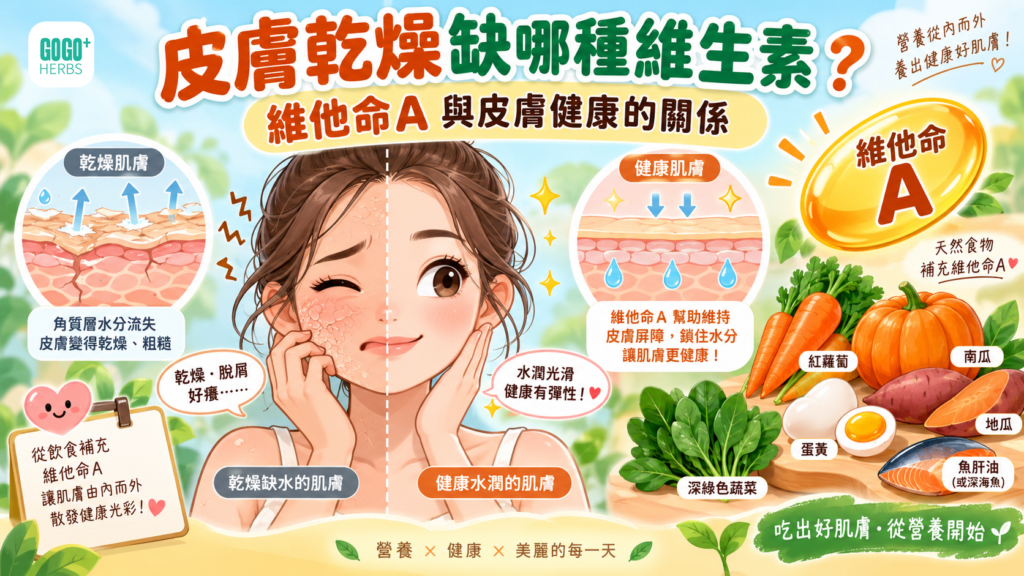
Give an honest answer first:The most common cause of dry skin is usually not "vitamin deficiency".Rather, it's not caused by dry weather, insufficient water intake, frequent hot baths, decreased sebum production due to aging, or skin conditions like eczema. However, if asked "Which vitamin is most related to dry skin?", the answer is mostly...Vitamin A—It is a fat-soluble vitamin (retinol) that participates in the normal metabolism of skin and mucous membrane epithelial cells, playing a role in maintaining the skin barrier and immunity. However, it should be noted that most people's dryness is not caused by deficiency, and...Excessive vitamin A supplementation may actually make skin drier.Therefore, the statement that "supplementing with Vitamin A can solve dryness" is not true.
- 1. The relationship between Vitamin A and skin/epithelial health
- 2. Deficiency and Excess: Both sides need attention.
- 3. What other nutrients are related to the skin?
- 4. Food Sources and Intake Recommendations
- 5. Who needs to be aware of/seek medical advice?
- 6. How to choose products
- 7. Frequently Asked Questions (FAQ)
- 8. Sources of information
1. The relationship between Vitamin A and skin/epithelial health
Vitamin A (retinol) isfat solubleEssential nutrients that participate in cell growth and differentiation, and support the skin, respiratory tract, and intestines.Epithelial tissue and mucous membraneNormal structure and function (NHS: Vitamin AIt participates in the synthesis of glycoproteins, maintaining the normal metabolism of epithelial cells; it also participates in the normal functioning of the immune system.NIH ODS: Vitamin A Fact SheetVitamin A indirectly helps the skin resist external stimuli. Furthermore, vitamin A is also important for low-light vision (rhodopsin).
Simply put: Vitamin A is a "basic maintenance" nutrient for skin and mucous membranes—a deficiency can affect epithelial health, but it is for maintaining normal function, not a guarantee that "rough skin will return to normal."
2. Deficiency and Excess: Both sides need attention.
When lack
Long-term severe vitamin A deficiency is most alarming.Eye performance(Night blindness, dry eyes, which can lead to blindness in severe cases) andIncreased risk of infection(Especially measles and diarrhea-related infections). Long-term severe deficiency can also affect the skin and mucous membranes; some nutritional data link severe deficiency with dry and rough skin (follicular keratosis), but authoritative institutions emphasize eye signs and infection as the typical symptoms. People with a generally balanced diet rarely have deficiencies.
Excessive dosage (equally important)
Vitamin A is fat-soluble and accumulates in the body. Long-term excessive intake (such as regularly consuming animal liver and supplementing with high doses) may lead to…Chronic poisoningSymptoms includeDry skinSymptoms of vitamin A deficiency include muscle and joint pain, fatigue, and increased liver burden (the NIH ODS lists "dry skin" as a sign of long-term overdose). In other words, dry skin may be caused by "consuming too much vitamin A," rather than "consuming too little." The tolerable upper intake level (TAD) of pre-existing vitamin A for adults is approximately 3000 mcg RAE/day; the NHS also warns that long-term average intake exceeding 1.5 mg/day may affect bone health.
3. What other nutrients are related to the skin?
For dry skin, addressing the issue through nutrition is more practical than simply supplementing with a single vitamin. Nutrients related to skin health also include:
- Vitamin E:Antioxidant, protects sebum and cell membranes.
- Vitamin C:It is necessary for collagen synthesis and supports skin structure.
- Essential fatty acids (Omega-3/Omega-6):It helps maintain the skin's lipid barrier and moisturize the skin.
- Zinc:It participates in wound repair and sebum regulation.
4. Food Sources and Intake Recommendations
Pre-formulated Vitamin A (retinol, derived from animals):Animal liver (extremely high content, do not consume excessively), egg yolks, dairy products, oily fish (salmon, sardines, etc.), and some fortified foods.
Beta-carotene (from plants, can be converted into vitamin A in the body):Dark green leafy vegetables, carrots, sweet potatoes, red peppers, mangoes, papayas, and other orange/dark green fruits and vegetables.
A balanced diet usually provides enough vitamin A, so there's no need to supplement it daily; the body will also store excess pre-existing vitamin A. Pregnant women should avoid eating animal liver.
5. Who needs to be aware of/seek medical advice?
- Persistent dryness, peeling, itching, redness, or other symptoms:You should see a doctor first to rule out conditions such as eczema, psoriasis, thyroid disorders, or diabetes, and do not blame it on "vitamin deficiency".
- Pregnant woman:Avoid high doses of pre-prepared vitamin A and animal liver (high doses may cause birth defects); if you wish to supplement, beta-carotene is relatively safe, but it is still recommended to consult a doctor first.
- Long-term high-dose supplementation:There is a risk of chronic poisoning and bone damage. Do not take high doses for a long period of time on your own.
- Smokers or former smokers:Studies have shown that high-dose beta-carotene combined with retinol supplementation carries risks and should be avoided.
6. How to choose products
When purchasing Vitamin A or Vitamin A-containing skin/multivitamins, pay attention to the label:Form (retinol or beta-carotene)The actual dosage must be confirmed, and the daily total amount must not exceed the upper limit. Compound products should be included in the total vitamin A intake. Pregnant women should choose beta-carotene. Those with existing skin conditions should consult a doctor before considering supplementation.
7. Frequently Asked Questions (FAQ)
- Is dry skin caused by a lack of Vitamin A?
- Not necessarily. Vitamin A is indeed related to skin/epithelial health, and severe, long-term deficiency can affect the skin; however, most people's dryness stems from environmental factors, age, insufficient moisturizing, or skin conditions, rather than simply a vitamin A deficiency. In fact, excessive vitamin A supplementation can actually make the skin drier. Improving moisturizing and environmental conditions first, and seeking medical attention if necessary, is more practical than blindly supplementing.
- What are the benefits of Vitamin A for the skin?
- It participates in the normal metabolism of skin and mucous membrane epithelial cells, supporting the barrier and immunity; a deficiency can affect epithelial health. However, it plays a "basic maintenance" role, not a guarantee that "rough skin will return to normal."
- What happens if you take too much Vitamin A?
- Vitamin A is fat-soluble and can accumulate; long-term excessive intake (such as frequently consuming liver and supplementing with high doses) may lead to chronic poisoning, with symptoms including dry skin, joint pain, fatigue, and increased liver burden. Long-term high doses may also affect bones. The upper limit for pre-prepared vitamin A in adults is approximately 3000 mcg RAE/day.
- Which foods contain vitamin A?
- Animal-based foods (liver, egg yolks, milk, oily fish) contain retinol; plant-based foods (dark green/orange-yellow fruits and vegetables) contain beta-carotene, which can be converted into vitamin A in the body. A balanced diet is usually sufficient.
- Can pregnant women take vitamin A?
- High doses of pre-prepared vitamin A and animal liver should be avoided (due to teratogenic risks); if supplementation is desired, beta-carotene is relatively safe, but it is still recommended to consult a doctor first.
8. Sources of information
- NHS. Vitamins and minerals – Vitamin A:nhs.uk
- National Institutes of Health, Office of Dietary Supplements. Vitamin A – Health Professional Fact Sheet:ods.od.nih.gov
Health Disclaimer:This article provides nutrition and lifestyle information and does not constitute medical diagnosis, treatment, or prevention advice, nor can it replace professional medical evaluation. If you experience persistent dry skin, peeling, itching, or other accompanying symptoms, please consult a doctor or dermatologist. The effectiveness of supplements varies depending on individual constitution, dosage, and dietary habits; please refer to the product page for product ingredients, content, and specifications.
Related Products:
-
Sale!
Unichi – Teddi Lab® Gummy Bears Gummy Bears for Hair Growth Upgraded Sea Salt and Green Titanium Flavour 60 Capsules
Original price was: $170.00.$125.00Current price is: $125.00. Add to basket -
Sale!
ProVen – Women's Dedicated Probiotic + Cranberry 3600 30 Capsules
Original price was: $198.00.$138.00Current price is: $138.00. Add to basket -
Sale!
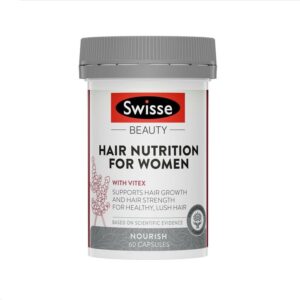
Swisse – Beauty Women's Hair Nutritional Capsules 60 Capsules
Original price was: $168.00.$118.00Current price is: $118.00. Add to basket -
Sale!
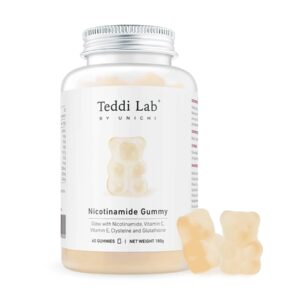
Unichi – Teddi Lab® Smokamine Whitening Gummy Bears Jasmine & Grapefruit Flavour 60 capsules
Original price was: $170.00.$125.00Current price is: $125.00. Add to basket
Related Post:
![母親用滴管把少量植物藻油滴在食物匙上,幼兒坐在餐桌旁]()
A Complete Guide to Plant-Based Algae Oil Omega-3: Odorless, Vegetarian, and Suitable Omega-3 Choices for Pregnant Women and Infants
![牛樟芝子實體與膠囊製品示意]()
What is Antrodia camphorata? A complete guide to its ingredients, research evidence, and precautions for consumption.
![世界心臟日護心飲食場景,香港中年夫婦享用豆漿、豆腐、雞蛋與堅果,旁有心臟及細胞膜卡通示意]()
World Heart Day: Heart Health in Hong Kong Starts with Daily Life | What are the Benefits of Lecithin? Which of Three 1200mg Products to Choose From?
![香港成年人在家閱讀與休息,從日常習慣開始理解腦部健康]()
魚油、迷你膠囊還是B12?腦部健康熱銷8款的配方與日常選擇