
































































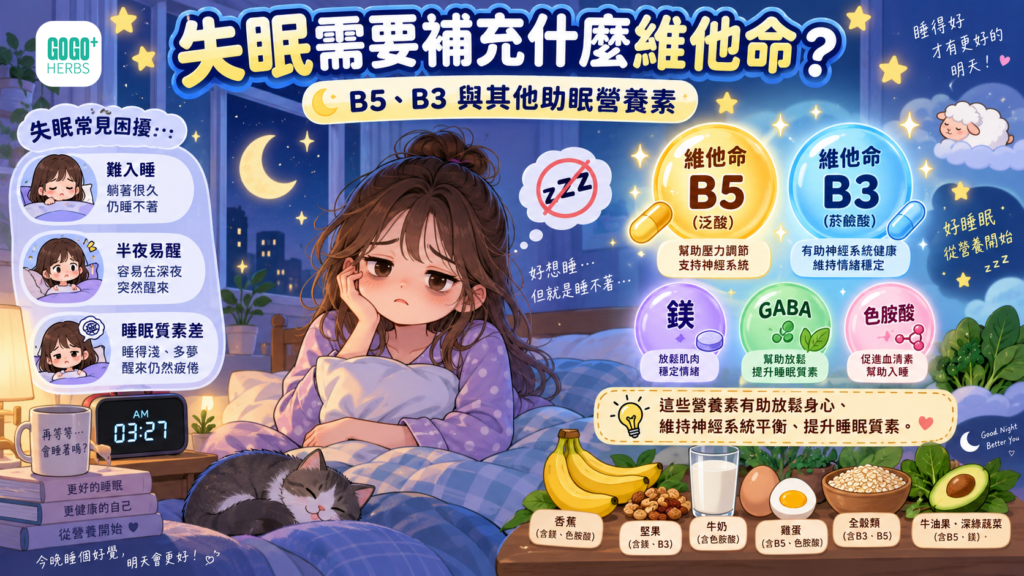
Insomnia isn't always caused by a vitamin deficiency. Stress, anxiety, irregular sleep patterns, caffeine, and alcohol are the most common causes. B vitamins (especially B5 and B3) are essential nutrients for normal nerve function and energy metabolism.Severe deficiency can indeed affect mood and sleep.However, if your diet is balanced and you are not deficient in any nutrients, there is no evidence that supplementation can "cure" insomnia. If you have chronic sleep problems, the first step is to find the cause and seek medical help if necessary, rather than rushing to take high doses of vitamins.
- To summarize: The relationship between insomnia and vitamins
- Vitamin B5 (pantothenic acid): the foundation of energy and nerve function
- Vitamin B3 (niacin/nicotinamide): central nervous system and mood
- Other B vitamins and nutrients related to sleep
- Self-adjustment methods for insomnia
- When should you see a doctor (medical treatment guidelines)
- Selection and Product Recommendations
- Frequently Asked Questions (FAQ)
- Source of information
1. Conclusion first: The relationship between insomnia and vitamins
Simply put, it can be understood on three levels:
- Vitamins are not the main cause of insomnia:Most people's insomnia comes from stress, anxiety, irregular sleep patterns, watching screens before bed, caffeine, or alcohol, rather than "not taking a certain vitamin".
- Severe shortages can cause problems:B vitamins are involved in nerve and energy metabolism, and long-term severe deficiency (such as extreme malnutrition) can indeed be accompanied by irritability, anxiety, low mood and sleep disorders; in this case, it is meaningful to replenish the lack of nutrients.
- Supplementing what you don't need may not be helpful:Studies have shown a correlation between insufficient intake of certain vitamins and poor sleep, butIf you are not deficient in vitamins, taking vitamin supplements may not necessarily improve your sleep.It is inappropriate to regard it as a "miracle sleep aid".
2. Vitamin B5 (pantothenic acid): the foundation of energy and nerve function.
Vitamin B5 (also known as pantothenic acid) is a member of the water-soluble B vitamin group. According to...Data from the National Institutes of Health (NIH)Its main function is to synthesize "coenzyme A (CoA)," which is essential for fat synthesis and breakdown, energy metabolism, and various metabolic reactions.
Because almost all natural foods contain small amounts of vitamin B5.Deficiency is very rare under normal dietary conditions.However, the NIH also notes that in extreme deficiency conditions, symptoms such as numbness and tingling in the hands and feet, headache, and fatigue may occur.Irritability, restlessness, and sleep disturbancesSymptoms such as vitamin B5. In other words, vitamin B5 is a nutritional basis for nerve and stress-related metabolism, but it is not a magic supplement for "anti-stress and mood improvement"—such claims are mostly oversimplified.
3. Vitamin B3 (niacin/nicotinamide): central nervous system and mood
Vitamin B3 (niacin, also known as niacinamide) is converted into two coenzymes, NAD and NADP, in the body, participating in more than 400 enzyme reactions and playing an important role in the central nervous system and overall energy metabolism.NIH data)。
Regarding the original text's statement that "a deficiency in vitamin B3 can cause anxiety, irritability, and insomnia," this is based on evidence: a severe deficiency in vitamin B3 can lead to...PellagraIts neuropsychiatric symptoms includeDepression, apathy, headaches, fatigue, and memory loss.In severe cases, it can even lead to delusions or hallucinations. Therefore, the statement that "lack affects mood and sleep" is true.
4. Other B vitamins and nutrients related to sleep
Besides B5 and B3, the following nutrients are also frequently discussed in relation to sleep (the same principle applies: supplement only if there is a deficiency; not supplementing if there is no deficiency does not guarantee effectiveness):
- Vitamin B6:It participates in the synthesis pathways of neurotransmitters such as serotonin and melatonin; preliminary studies suggest that B6 may be helpful for some insomniacs and restless legs syndrome, but the evidence is still limited.Sleep Foundation)。
- Vitamin B12:It participates in the production of melatonin; some studies have found that low B12 levels are associated with shorter sleep duration, but B12 supplementation has not been proven to be a universal sleep aid for those with adequate nutrition.
- Vitamin D:It is related to the regulation of the biological clock and the timing of melatonin secretion; those with insufficient sunlight are more likely to have lower levels, and supplementation can be done through testing and with the advice of a doctor if necessary.
- Magnesium, Zinc:It is a mineral, not a vitamin, but it is associated with nerve relaxation and sleep continuity, and is a common natural sleep aid nutrient option.
5. Self-adjustments that can be made first for insomnia
according toUK National Health Service (NHS) Insomnia GuidelinesMost cases of insomnia can be improved by adjusting sleep habits:
- I only go to bed when I feel sleepy; I get up at the same time every day.
- Relax for at least an hour before bed (take a bath, read), and keep your bedroom dark and quiet.
- Avoid coffee, tea, alcohol, and smoking for at least 6 hours before bedtime; avoid late-night meals.
- Engage in regular exercise during the day, but avoid strenuous exercise within 4 hours of bedtime.
- Use your phone and screen less before bed (blue light can make you more awake); don't take naps during the day.
6. When should you see a doctor (the line for seeking medical help)?
- No improvement was observed after several weeks of adjusting sleep habits;
- Insomnia has persisted for several months, or multiple times a week, affecting daytime energy and concentration;
- Insomnia accompanied by persistent low mood, anxiety, or difficulty coping with daily life;
- If you have thoughts of self-harm or harming others, please seek emergency assistance immediately (in Hong Kong, you can contact the Hospital Authority's Accident or Mental Health Services).
7. Selection and Product Recommendations
If you suspect your diet is unbalanced and want to use B vitamins or multivitamins as part of your daily health regimen, check if the product label indicates this.Ingredients, dosage, dosage form and third-party testingIt is advisable to choose formulas with dosages close to the recommended daily intake, rather than high-dose "aggressive" supplements. For those experiencing insomnia, it is recommended to consult a doctor or pharmacist to confirm whether supplementation is truly necessary and whether it interacts with existing medications.

8. Frequently Asked Questions (FAQ)
Is insomnia caused by a vitamin B deficiency?
Not necessarily. The most common causes are lifestyle factors such as stress, anxiety, sleep patterns, and caffeine; only a severe deficiency in B vitamins can affect mood and sleep. People with a balanced diet rarely have this deficiency, so insomnia should not be assumed to be caused by a "B vitamin deficiency."
Can vitamin B3 cure insomnia?
It should not be considered a treatment. While vitamin B3 deficiency (pellagra) can indeed cause neuropsychiatric symptoms such as depression and memory loss, and supplementing the deficiency is meaningful, vitamin B3 supplementation has not been proven to improve sleep in insomniacs who are not deficient. High doses of niacin may also have risks such as hot flashes and liver damage.
Besides B vitamins, what other nutrients are related to sleep?
Common supplements include B6, B12, vitamin D, and minerals such as magnesium and zinc. The principle remains the same: first determine if there is a deficiency, then decide whether to supplement; for those who are not deficient, additional supplements may not be effective.
What should I do if I have chronic insomnia?
First, adjust your sleep habits (fixed schedule, reduced screen time and caffeine before bed); if there is no improvement after several weeks, or if it affects daytime function and mood, you should see a doctor. Evidence-based methods such as cognitive behavioral therapy (CBT-I) are usually more suitable than taking supplements long-term on your own.
9. Sources of information
- Office of Dietary Supplements, National Institutes of Health (NIH) — Pantothenic Acid (Vitamin B5) Health Professional Fact Sheet
- Office of Dietary Supplements, National Institutes of Health (NIH) — Niacin (Vitamin B3) Health Professional Fact Sheet
- Sleep Foundation — Vitamins for Sleep
- The UK National Health Service (NHS) — Official Guidelines for Insomnia
Disclaimer: This article is for health information purposes only and should not replace medical diagnosis and treatment. Vitamins and nutritional supplements are not medicines and should not be used to "treat, cure, or prevent" insomnia or any disease. If you have chronic insomnia, emotional distress, or are currently taking medication, please consult a doctor or pharmacist. Product information is subject to change as displayed on the product page on the day of publication.
Related Products:
-
Sale!

Webber Naturals – Melatonin 5mg 400 capsules
Original price was: $188.00.$148.00Current price is: $148.00. Add to basket -
Sale!

Unichi – Teddi Lab® South African Drunken Cigar Bear Gummies Grape Flavour 60 capsules
Original price was: $170.00.$125.00Current price is: $125.00. Add to basket -
-
Related Post:
![母親用滴管把少量植物藻油滴在食物匙上,幼兒坐在餐桌旁]()
A Complete Guide to Plant-Based Algae Oil Omega-3: Odorless, Vegetarian, and Suitable Omega-3 Choices for Pregnant Women and Infants
![牛樟芝子實體與膠囊製品示意]()
What is Antrodia camphorata? A complete guide to its ingredients, research evidence, and precautions for consumption.
![世界心臟日護心飲食場景,香港中年夫婦享用豆漿、豆腐、雞蛋與堅果,旁有心臟及細胞膜卡通示意]()
World Heart Day: Heart Health in Hong Kong Starts with Daily Life | What are the Benefits of Lecithin? Which of Three 1200mg Products to Choose From?
![香港關節健康洞察報告封面:中年及長者在香港步行]()
How to choose joint health supplements? 8 best-selling formulas and repurchase information help you find the right daily option.