





































































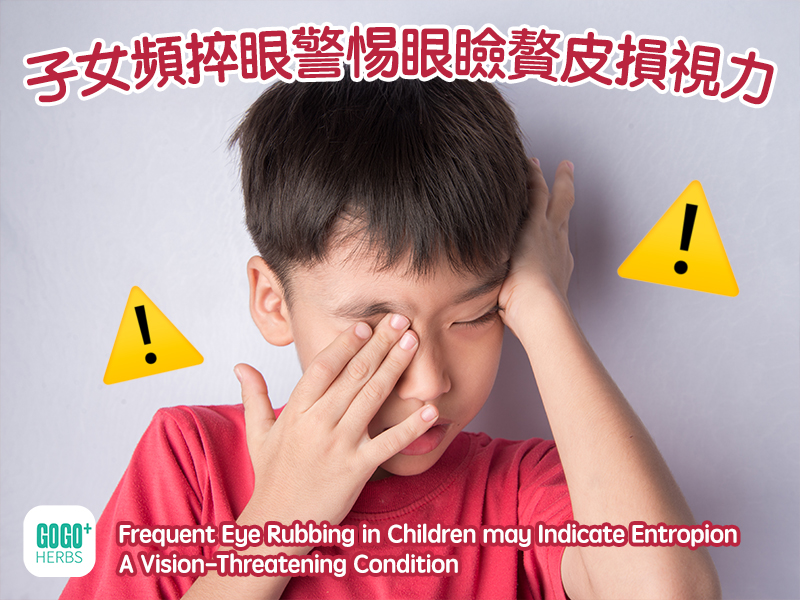
The child came home from school, rubbing his eyes while watching TV; his eyes were red. When you asked him if it was a scratch, he said no, just a stinging sensation. You took him to get his eyes checked, but the prescription was the same at first. The optometrist said, "The prescription is inaccurate." You went to another optometrist, and the prescription had increased by several tens of degrees.
This situation usually has two explanations: one is eye sensitivity, and the other is an extra crease in the eyelid that pushes the eyelashes towards the eyeball. The symptoms of both are almost the same, including redness, tearing, rubbing, and photophobia, but the treatments are completely different—for the former, avoid allergens and use anti-allergy medication; for the latter, check if the eyelashes are sticking to the cornea.
The method for distinguishing them is actually surprisingly simple:Ask the child to look down and glance at their lower eyelids.If your eyelashes are pressed against the surface of your eyeball, or if there's a horizontal ridge of skin on your lower eyelid pushing your eyelashes inward, the problem isn't with pollen or dust mites, but with your eyelid structure. This condition is called...epicanthal foldsEpiblepharon is one of the most common eyelid problems in Asian children.
Let me make the good news clear first:Clinically, over 90% of cases are mild.For most cases, moisturizing eye drops and regular eye exams are sufficient; as facial bones develop, most cases will improve on their own. Surgery is only needed in a minority, and the procedure is short, low-risk, and the incision is hidden under the eyelashes. The real concern isn't the condition itself, but rather mistaking it for mere eye allergy and delaying treatment.
First, perform three distinguishing actions.
Before scheduling a specialist appointment, parents can do three things at home that are enough to divert most cases.
First, check if the eyelashes are touching the eyeball.Have the child sit still with their head and eyes looking downwards. Gently pull down the lower eyelid slightly with your finger to see if the tips of the eyelashes are touching the white of the eye or the cornea. In cases of epicanthal folds, the eyelashes usually start near the inner corner of the lower eyelid and sweep inwards, becoming more noticeable towards the nose; in some cases, they are only visible when looking downwards and are not apparent at other times.
Second, observe whether the symptoms follow the season.Eye sensitivity usually has obvious triggers: seasonal changes, humidity, home renovations, pet ownership, pollen season, etc. Symptoms appear and disappear in stages. Epiblepharitis is a structural issue that exists year-round, but it becomes more noticeable with sweating, rubbing the eyes, or prolonged television viewing.
Third, check if there is "turning the head to see objects".This is the least noticed aspect, yet it's very telling. The cornea becomes irregular due to constant friction from eyelashes. To see clearly, children will automatically tilt their heads to one side or refuse to turn their eyes in a certain direction (most often inwards or downwards). If a teacher has mentioned that a child always tilts their head when looking at things, and eye exams are frequently inaccurate, both of these factors combined warrant a checkup.
If the first of the three conditions is met, it is not advisable to treat this matter with excessive sensitivity. The following is the rest of the explanation.
II. What is epicanthal fold: an extra crease?
The structure of the lower eyelid can be imagined as several layers stacked together: the outermost layer is skin, below that is the orbicularis oculi muscle, and below that is the tarsal plate that supports the shape of the eyelid. The problem of epicanthal folds is...There is an extra horizontal fold of skin and muscle near the inner corner of the lower eyelid.This crease pushes the eyelashes and the skin of the eyelid margin inward, causing the eyelashes to sweep towards the eyeball.
Orbis volunteer ophthalmologist Wu Liqi explained that Asian children have flatter nasal bridges, and the excess muscle and skin on both sides of the nasal bridge pushes the eyelashes towards the eyeball.Hong Kong 01 reportsSo the problem isn't that the eyelashes themselves are growing in the wrong direction, but that they're being pushed in the wrong place by an extra piece of tissue.
The key lies inWith each blink, the eyelashes sweep across the cornea.A normal person blinks about ten times per minute. In other words, the affected cornea is being rubbed about ten times per minute. Each blink is very light, but this happens all year round, all day long, even when not sleeping. As a result, pinpoint damage will appear on the corneal epithelium, and children will feel a stinging sensation, light sensitivity, and tearing.
It can be in one eye or both eyes; it is most common in the lower eyelid, and in rare cases, it can also be in the upper eyelid. It is present at birth, but because infants' eyelashes are soft and have little friction, it usually becomes apparent later in life.Eyelashes harden at three or four years oldAfter that, the symptoms become more obvious—which is why most people seeking medical help are concentrated in this age group.The Sunny News reported)。
3. Epiblepharma, trichiasis, and entropion: These three terms should not be used interchangeably.
In Chinese popular science articles, "ingrown eyelashes," "ingrown eyelashes," "ingrown eyelashes," and "epipsicles" are often used interchangeably, but in a clinic, they refer to three different things, and the treatments are also different. It's worth taking two minutes to understand this.
| name | Where is the problem? | eyelid margin position | Common causes |
|---|---|---|---|
| epicanthal folds epiblepharon |
An extra fold of skin and muscle pushes the eyelashes toward the eyeball. | Normal, no involution. | Congenital, common in Asian children |
| Ingrown eyelashes trichiasis |
The eyelashes themselves are growing in the wrong direction, growing from behind the eyelid margin. | normal | Scars, chronic eyelid inflammation, infection, trauma |
| Entropion entropion |
The entire eyelid margin rolls inward, pressing the skin against the eyeball. | Involution | Aging, spasms, scars |
Why divide? BecauseThe eyelid margin of epicanthal folds is normal.The surgery only addresses the extra crease; for trichiasis, it addresses the incorrectly growing hair follicle; and for entropion, it repositions the entire eyelid margin. The incision locations and procedures differ for all three. Most of the "eyelash plucking" and "electrocauterization" procedures parents see online are for adult trichiasis and are not suitable for children with epicanthal folds.
This is clearly explained in the official science popularization: Lower eyelid epicanthal folds cause "eyelashes to be pulled inward, coming into contact with the cornea and conjunctiva, but the eyelid margin itself does not turn inward" (Beijing Municipal Health CommissionTherefore, "ingrown eyelashes" is a phenomenon, while "epipsicles" is a cause; the two are not synonyms.
IV. Why are there so many children in Asia?
Three features increase the risk: a flatter nose bridge, a deeper epicanthal fold (commonly known as a Mongolian fold), and single eyelids. All three point to the same thing—the skin on the inner side of the lower eyelid has greater tension, making it easier to form the crease that pushes the eyelashes inward.
Regarding weight, the figures are inconsistent. A screening in Tianjin covering 28,225 school children aged 6 to 12 found that among children with epicanthal folds, 16.7% were overweight and 47.2% were obese.J AAPOS 2024However, a study in Beijing involving 3,170 children aged 3 to 6 years, after adjusting for age and sex, found no significant association between weight and epicanthal folds.BMC Ophthalmol 2021)。
How should we interpret these two sets of figures? We can say that "a large number of patients have been observed to be overweight or obese," but we cannot say that "obesity causes epicanthal folds," nor can we conclude that thin children are not a concern. Wu Li-chi also mentioned in the interview that this is not an issue that only obese children need to be concerned about.
Another common misconception is "Will it get better on its own?" The answer is mostly yes.As facial bones develop and the bridge of the nose grows higher, the skin under the eyes stretches, and that crease gradually becomes shallower.The eyelashes no longer stick to the eyeballs. The interviewee stated that over 90% of cases improve naturally with age, which is why doctors usually observe first rather than scheduling surgery immediately after a diagnosis.

5. How to read the number "one in ten children"?
The statement that "approximately one in ten Asian children is at risk" is a common clinical observation, and while the general direction is correct, it is...A summary numberThe actual proportion varies considerably depending on age and diagnostic criteria.
| Research/Source | object | Proportion | Remark |
|---|---|---|---|
| Clinical observation (Wu Liqi) | Asian children | About 10% | In short, regardless of age |
| Beijing Research (PMID 33397314) | 3 to 6 years old, 3,170 people | 26.2% | After excluding minor cases, the number of cases dropped to 11.9% |
| Same as above, categorized by age. | 3 years old / 6 years old | 30.6% / 14.3% | The older you are, the less |
| Tianjin Research (PMID 38796139) | 6 to 12 years old, 28,225 people | 6 years old 2.50%12 years old 1.19% | School screening only counts those who have had corneal grafts applied to their eyelashes. |
| Japanese Studies | 766 children | 13.8% | Only those who are fluorescein positive are counted. |
For the same event, the figure can range from 1% to 26%, for three reasons:age(This is more common in younger children because their facial bones are not yet developed.)Diagnostic criteria(Even if the eyelash touches the cornea, it counts; or it counts if the cornea is stained.)Inspection Scene(Clinic patients vs. school census).
The Beijing study best illustrates the point: the overall figure is 26.2%, but after excluding minor cases, it is... 11.9%—This almost perfectly matches what the doctor said, "one in ten." Therefore, "one in ten" is not wrong; it describes...The clinically significant groupInstead of all children whose eyelashes slightly touch their eyeballs.
There are currently no publicly available statistics on the prevalence of epicanthal folds in Hong Kong, and any claim about "how many children in Hong Kong have it" is merely an estimate. What is certain is that it is not uncommon among local Chinese children, and the trend is quite consistent with decreasing age.

Six or seven observable clues
The features listed in the interview are very useful because they are all things parents can observe in their daily lives and do not require any equipment:
- Frequent eye rubbing and blinkingEspecially when you need to concentrate, such as when watching TV, drawing, or doing homework.
- Red eyes, tearsThere is a lot of discharge or eye glue in the corners of my eyes when I wake up in the morning;
- Afraid of lightWhen going out, they squint and are unwilling to look up;
- Turn your head to see objectsOr they refuse to turn their eyes to one side (most often inward or downward);
- Eye test results fluctuateThe same eye gets different measurements every time, and the optometrist says the prescription is inaccurate.
- When looking down, the eyelashes stick to the eyeballsThis is the most direct one;
- Rubbing the same eye frequentlyIf only one side has a problem, usually only massage that side.
Of the seven items,"Surprising eye prescription" and "tilting the head to see" are the most easily attributed to other causes.The former is often mistaken for a child being inattentive or uncooperative during an eye exam; the latter is often mistaken for a bad habit or torticollis. In reality, if the corneal surface is rubbed irregularly, the prescription will be unstable, and the child will automatically tilt their head to avoid the blurry area. The simultaneous appearance of these two signals is much more targeted than simply "rubbing the eye".
It's important to note that initial symptoms can be very subtle. Young children often struggle to articulate the feeling of their cornea being rubbed; they might simply say "something," "it stings," or remain silent altogether. Therefore, parents often only realize they need to see a doctor after the eye-rubbing and tearing have persisted for some time.
7. How to distinguish it from eye allergies?
The symptoms of the two cases highly overlap, but asking a few questions can separate most cases.
| Comparison Items | epicanthal folds | Eye sensitivity (allergic conjunctivitis) |
|---|---|---|
| Triggers | No specific cause, structural problem | Dust mites, pollen, pets, home renovations, air pollution |
| Time pattern | It remains the same all year round, with little change over the years. | It can occur seasonally or after exposure, and it can be better or worse at different times. |
| Main feeling | prickly sensation, foreign body sensation, photophobia | 癢The more you rub it, the itchier it gets. |
| Accompanying circumstances | 無 | It is often accompanied by nasal allergies, eczema, and asthma. |
| eyelid appearance | There is a raised area of skin on the inner side of the lower eyelid. | The eyelids may be slightly swollen and the conjunctiva may be congested. |
| Processing direction | Lubrication, observation, and surgery if necessary. | Avoid allergens, use anti-allergy eye drops |
The most useful one isThe difference between "itching" and "stinging"The core issue of eye sensitivity is itching; children will rub their eyes vigorously, which only makes them itchier. The core issue of epicanthal folds is a stinging and foreign body sensation; children rub their eyes because they feel uncomfortable, but they don't feel particularly comfortable afterward. The interviewee stated that "children feel more itchy," which is indicative of eye sensitivity, while ingrown eyelashes are a form of continuous irritation.
However, both can coexist, which is the easiest place to misjudge. A child with nasal allergies often also has eye allergies; if they also have epicanthal folds, the itching may subside after using allergy medication, but the stinging remains, leading parents to believe that "the medication is ineffective." Therefore...If there is no improvement after one or two weeks of anti-allergy treatment, your eyelashes should be checked.Instead of constantly changing medications.
8. What will happen to the cornea?
The outermost layer of the cornea is an epithelial cell responsible for protection and maintaining its transparency. Long-term friction from eyelashes will first cause...Punctate epithelial lesions—When stained with fluorescein, small patches of color will be visible under a slit lamp. This step is reversible: the epithelial cells will repair themselves, and they will usually grow back within a few days to a week or two once the friction stops.
If the friction continues unchecked, the affected area will expand, and the following may occur:
- corneal ulcerEpithelial defects extending into the stroma layer can cause pain, photophobia, and significant tearing.
- Bacterial infectionA damaged cornea becomes an entry point for bacteria, which can lead to abscesses in severe cases.
- Thinning or irregular corneaProlonged pressure can alter the shape of the cornea, directly affecting astigmatism.
- corneal neovascularizationUnder chronic hypoxia and inflammation, blood vessels grow from the edge of the cornea into areas that were originally avascular.
These complications are not something everyone will experience. In a Singapore study of 108 patients who underwent surgery, 82.4% had corneal lesions, but most were mild; meanwhile, 68.5% had symptoms.Ophthalmology 2010).in other words,It's common for the cornea to get scratched, but it's rare for it to ulcerate.This is why most cases can be treated with lubricant instead of requiring immediate surgery upon diagnosis.
IX. Astigmatism and Amblyopia: The Meaning of Three Sets of Numbers
The survey presented three sets of figures: 50-70% will have astigmatism of 50 degrees; 14-33% will have astigmatism exceeding 200 degrees; and about 10% will develop amblyopia as a result. These three sets of figures should be read together; taking them out of context will distort the data.
First, let's talk about units. In Hong Kong, "50 degrees" equals 0.50 D, and "200 degrees" equals 2.00 D. So the complete meaning is:Five to seven out of ten people have at least 0.50 D of astigmatism, of which 14% to 33% reach 2.00 D or higher, and about 10% eventually develop amblyopia.。
0.50 D is considered mild, and many children naturally have it, so treatment may not be necessary; only those with 2.00 D or higher are clinically significant. International research aligns with these figures: among 91 patients in Singapore, 52.2% had astigmatism of 1.00 D or higher, and 9% developed amblyopia.All amblyopia cases had significant astigmatism.(Am J Ophthalmol 2007Another case-control study involving 134 children showed that the astigmatism in the 4- to 7-year-old group was 1.12 D, while that in the control group was only 0.47 D.Cornea 2007)。
The mechanism is simple: the crease of the lower eyelid continuously presses down on the lower half of the cornea, causing it to be compressed from a round shape into a horizontal ellipse, resulting in with-the-rule astigmatism. The same study also contains another very convincing observation—In the same child, the eye with more severe corneal damage also has higher astigmatism.Even if the corneal epithelium has repaired, this relationship still exists.
As for amblyopia, the key is not astigmatism itself, but...Has the astigmatism been corrected?When the retina receives blurred images for a prolonged period, the brain's visual processing will shift in the opposite direction; the higher the degree of myopia and the later it is detected, the higher the risk. Therefore, during an eye exam...My pupils must be dilated.Children have strong accommodative abilities, and the prescription obtained without pupil dilation can vary greatly, which is another common reason for "inaccurate measurement".
Why is the period before age 10 or 18 crucial?
The Department of Health's Family Health Services are clearly stated:A child's visual system typically completes its development around age eight.If abnormalities occur during this developmental period and are not corrected, visual development may be impaired.Preschool children's vision screeningThe same document also points out that parents often find it difficult to detect vision problems in their children in daily life, so screenings should be used instead of observation.
Here, I need to correct a common misrepresentation. Some versions say it "will affect brain and vision development," which sounds like it will hinder overall brain development. The accurate statement is:It affects the area of the brain that processes visual signals.The visual cortex requires normal visual input to develop properly. If the input is consistently blurry, the functional development of this area will be affected. It will not affect intelligence, language, or learning ability itself, but it will affect the ability to "see clearly," which directly affects reading and classroom learning.
Therefore, "before age eight" is not a scary timeframe, but rather a...Explaining why early eye exams are important.The reason is that for the same degree of astigmatism, the results can be very different depending on whether you start wearing glasses at age five or age nine.
11. What examinations will be performed during a consultation?
Ophthalmologists usually follow this procedure in order, so parents won't feel like they're being charged for just a quick look.
- Taking medical historyWhen did you start rubbing your eyes? Does it follow the season? Do you have nasal allergies or eczema? Do any family members have similar conditions?
- Visual acuity and eyelid examinationThis includes asking children to look up and down to see where their eyelashes touch their eyeballs;
- Slit lamp inspectionExamine the conjunctiva, cornea, and eyelid margins to assess the extent of epicanthal folds;
- Corneal fluorescein staining: Put a drop of fluorescein in the cornea and use blue light to check for any abrasions on the cornea and the extent of the damage;
- cycloplegic refractionUse cycloplegic eye drops to relax accommodation and accurately measure the refractive power;
- Corneal topography(If necessary): Check if the cornea has been compressed into an irregular shape.
Fluorescence staining is the most crucial step because it transforms the subjective feeling of "whether there is an abrasion" into visible evidence. A negative stain does not mean there is no epicanthal fold—some minor cases only touch the cornea when looking down and do not leave a mark at other times, so the doctor's eyelid examination and staining should be considered together.
12. How to treat mild cases: Over 90% rely on moisturizing.
Most cases do not require surgery. The direction is...Reduce friction, protect the cornea, and have regular checkups.This also gives the facial bones time to develop.
Artificial tearsThis is the most commonly used step. Daytime drops work by forming a film of moisture, allowing the eyelashes to glide across the cornea instead of being scraped. Use as needed; you can take it to school or when you're out.Lubricating eye ointmentIt is used before bedtime; its high viscosity helps protect you throughout the night.
In the Singapore study of 108 people, 65.7% were initially treated with lubricant, and only those with persistent symptoms or corneal lesions were admitted to the operating room.Ophthalmology 2010This aligns with the practices of local doctors: observe first, moisturize first, then see if necessary.
Two other auxiliary methods:Lower eyelid tape tractionGently pull the lower eyelid outwards and downwards with hypoallergenic adhesive tape to temporarily separate the eyelashes from the eyeball. This is a short-term measure and is often used while sleeping.Regular eye examsGenerally, it should be done every three to six months to check for any changes in the degree of myopia and the condition of the cornea.
As for the question many people ask, "Which eye drops to use?", the principle is...For lubrication only, do not use products like those that "remove red veins".The latter often contains vasoconstrictors, which provide temporary relief from redness, but long-term use can lead to drier eyes, rebound redness, and no relief from eyelash friction. Steroid-containing eye drops should never be purchased and used without a doctor's prescription; dosage and treatment duration must be determined by a physician.
Thirteen, Three things you shouldn't do
First, do not pluck your eyelashes yourself.This is the most common and least desirable thing parents mentioned in the interviews—plucking eyelashes while their children are asleep, thinking they're too long and poking their eyes. There are three problems: they will grow back, and the new growth is usually thicker and harder; the plucking process can injure the eyelid skin or hair follicles, causing folliculitis; and most importantly,…Plucking the eyelashes didn't address the crease that pushed the eyeball towards the eyeball.Therefore, the symptoms return quickly. Adult ingrown eyelashes can be treated with electrocautery of the hair follicles, but this is difficult for children to cooperate with under local anesthesia and is not suitable for epicanthal folds.
Second, do not buy eye drops on your own.Prolonged and improper use of steroid-containing eye drops can increase intraocular pressure and induce glaucoma; those containing antibiotics may cause drug resistance. The dosage and type of eye medication for children should be determined by a doctor.
Third, don't keep waiting.The statement "things will get better as you grow up" holds true for most cases, but it has one premise:The cornea was not damaged by scratching, and the prescription did not increase rapidly.If corneal ulcers have already developed, astigmatism has increased by tens of degrees in a year, or the child's fear of light is affecting their classes and outdoor activities, then it is not time to continue waiting.
14. When should surgery be considered?
Three situations where surgery should be discussed with a doctor:
- If the condition does not improve by age six to eightHowever, the symptoms persist;
- The cornea is already damaged.This includes recurring punctate lesions and ulcers, or lesions that do not improve after a period of moisturizing treatment;
- Astigmatism continues to worsenIt may have already affected eyesight and daily life.
The age range of six to eight is not a hard and fast rule, but rather the intersection of two conditions: on the one hand, it's necessary to allow time for facial bone development, and on the other hand, it's crucial to address astigmatism and amblyopia before visual development is complete (around age eight). The actual decision should be based on corneal condition and changes in refractive error, not just age.
It is worth noting that international literature has shown differing opinions on "solely observing" in recent years. The conclusion of the Singapore study explicitly states that for symptomatic epicanthal folds or those with corneal lesions,Compared to the observation strategy commonly adopted at the time, early definitive surgical intervention should be considered.(Ophthalmology 2010This does not mean "everyone has to do it," but rather that those with symptoms or corneal lesions should not simply wait.
15. How the surgery is performed, risks and rehabilitation
The most common procedure is called the modified Hotz procedure, and the principle is not complicated: inMake a small incision below the lower eyelid margin to remove excess skin and part of the orbicularis oculi muscle.If necessary, one or two stitches are added to make the eyelashes flip outwards before suturing the skin. The incision is located below the eyelashes, so the scar will be covered by the eyelashes and will not have a significant impact on appearance.
Several practical issues that parents are most concerned about:
- General anesthesia requiredAdults undergoing similar surgeries only require local anesthesia, but children find it difficult to remain still for extended periods, so general anesthesia is generally used for pediatric cases. An anesthesiology evaluation will be conducted before the surgery.
- The time is approximately 30 to 45 minutes.You can be discharged today and do not need to stay in the hospital.
- Use soluble suturesFor example, polyglycolic acid sutures and chromium catgut sutures will dissolve on their own and do not need to be removed.
- Bruising may occur on the eyelids during the first week after surgery.It requires the application of ointment; students can usually return to school the next day, but it is recommended to rest for one or two days; the cornea will recover in about one to two weeks.
Regarding efficacy, the data in the literature are quite consistent. A follow-up study of 169 patients showed that...92.3% of the results were satisfactory.Complications were rare, including 4 cases of suture abscess and 1 case of wound dehiscence.Br J Ophthalmol 2000Of the 108 patients in Singapore,81.5% of eyelids were well corrected.Complications include undercorrection, overcorrection, wound dehiscence, and wound infection.Ophthalmology 2010)。
Therefore, the statement "the risk is very low" has numerical implications: most cases are resolved on the first attempt, a few require reassessment, and serious complications are uncommon. However, it's important to understand that..."Low" does not equal "zero".Anesthesia risks, insufficient correction, and keloid scarring predisposition must all be clearly explained before the surgery.

16. Will astigmatism improve after surgery?
This is the question parents ask most often, and it's also the one most easily brushed off. The answer has two parts:Corneal lesions will improve significantly, while astigmatism will only partially improve, and existing astigmatism will still require glasses.
First, the good news. A study involving 82 children (158 eyes) with a control group compared surgical and non-surgical groups, and the results showed that the surgical group...Six months later, the rate of complete remission of corneal lesions was 71.4%, compared to only 11.5% in the non-surgical group.Meanwhile, the astigmatism in the surgical group decreased from 2.22 D to 1.97 D (p = 0.001), which was more pronounced in the group that originally had astigmatism exceeding 2.00 D.J Ophthalmol 2020)。
Two other studies also showed a similar trend: 202 eyes underwent surgery, and 142 eyes were controls; in the surgery group, astigmatism decreased from 1.10 D to 0.84 D three months post-surgery.The higher the myocardial infarction level and the older the child (aged 5 to 8), the greater the reduction in myocardial infarction.(Korean J Ophthalmol 2010Another study on children with high astigmatism (2.00 D or higher) showed that the astigmatism decreased from 3.27 D to 2.62 D two years later. The younger the child and the higher the initial degree of astigmatism, the more significant the improvement.J AAPOS 2008)。
However, it's also important to acknowledge the other side of the story. In a Singapore study, the group that underwent surgery before age five showed no significant change in astigmatism one to two years post-surgery.Am J Ophthalmol 2007A study of 134 children in Taiwan also found that astigmatism did not decrease significantly after surgery, even after the corneal epithelium had healed.Cornea 2007)。
Putting both sides together, the conclusion is clear:The surgery addresses friction and corneal lesions, which is what it can most reliably do; astigmatism will be partially improved, but not completely eliminated.Therefore, postoperative eye examinations are still necessary, and glasses may still be required. If amblyopia has developed, additional eye patching or vision training will be necessary. This does not mean the surgery was "unsuccessful," but rather that it was originally intended to address another issue.
Conversely, if you choose not to have surgery because "you'll still need to wear glasses after the surgery," the cost is that your cornea will continue to be rubbed—that's what will truly worsen astigmatism and increase the risk of amblyopia.
17. Hong Kong's Path: Several Usable Resources
Hong Kong has several tiers of vision services for children, so parents don't need to rush to private specialists right away.
The first layer is the "Preschool Children's Vision Screening" provided by the Department of Health's Family Health Services.This service is offered at maternal and child health centers for children aged four to five. The examination is conducted by a registered optometrist or vision correction specialist to check vision and binocular coordination. Those with weaker vision will also undergo preliminary refractive errors and a fundus examination.Family health servicesCases that fail to pass the initial screening will be referred to a community optometrist or ophthalmology clinic, depending on the circumstances.
The second layer is student health services.After entering Primary One, students undergo annual health assessments, including vision tests; those who fail are referred to a health assessment centre. The Centre for Health Protection also reminds students that even if they pass the pre-school screening, regular checkups are still necessary, as some vision problems may not appear until later in life.Non-communicable diseases: a firsthand look at June 2016)。
The third floor is an ophthalmology clinic.In the public system, patients need to be referred from a general outpatient clinic or family doctor to the Hospital Authority's ophthalmology outpatient clinic, with waiting times varying by area and condition. Private clinics can make direct appointments, usually allowing for faster slit-lamp and cycloplegic refraction. If...Sudden sharp decline in vision, severe eye pain, red eyes accompanied by headache and vomiting, or eye injury.This is an ophthalmic emergency. You should go to the emergency room immediately or call 999. Do not wait for an outpatient visit.
As for prevention, one of the key points of Orbis's "Little Eye Care Agents" campus program, which is being implemented in kindergartens throughout Hong Kong, is to remind students to wear sunglasses that block ultraviolet rays during outdoor activities.Orbis Eye Care Little AgentThis is not directly related to epicanthal folds, but it is fundamental to children's eye protection: UV damage is cumulative, and children's pupils are larger and their lenses are thinner, making them more susceptible to UV penetration. When purchasing lenses, look for the UV400 label; lens color is unrelated to protection level.Consumer Council)。
Frequently Asked Questions
Will epicanthal folds heal on their own?
In most cases, yes. As facial bones develop and the bridge of the nose grows higher, the skin of the lower eyelid stretches, and the crease gradually becomes shallower, so the eyelashes no longer stick to the eyeball. The survey indicated that over 90% of cases improve naturally with age, which is why doctors often observe and moisturize first. However, two conditions must be met: the cornea has not been scratched to the point of showing obvious lesions, and the astigmatism has not worsened rapidly. If the symptoms persist even after six to eight years of age, surgery should be discussed with a doctor.
Why is it only discovered when the child is three or four years old?
Because infants' eyelashes are soft and don't generate much friction, even if the eyelashes stick to the eyeball, it may not cause significant discomfort. Around three or four years old, the eyelashes harden, and combined with increased activity levels and longer periods of focused attention, symptoms become more pronounced. This explains why most local cases initially seek medical attention around this age. The structure is already present at birth; it's just that symptoms appear later.
Is surgery absolutely necessary?
Not necessarily, and in most cases, it's unnecessary. Clinically, over 90% of cases are mild, and lubrication with artificial tears, applying eye ointment before bed, and regular eye exams are sufficient. Surgery should be considered in three situations: if symptoms persist despite age 6-8, if the cornea is already damaged (repeated damage or ulceration), or if astigmatism continues to worsen and affects vision. The decision depends on the condition of the cornea and changes in refractive error, not just age.
Is it safe to perform surgery on children under general anesthesia?
Children typically undergo general anesthesia because it's difficult for them to remain still for extended periods; adults undergoing similar procedures only require local anesthesia. A pre-operative anesthesiology evaluation will be conducted, explaining fasting arrangements and risks. The surgery itself takes approximately 30 to 45 minutes, and patients can be discharged the same day. Literature indicates that complications are uncommon—92.3% of 169 patients had satisfactory outcomes. The main complications were suture abscesses and wound dehiscence; however, "low risk" does not equate to zero risk, and the possibility of inadequate anesthesia or correction should be clarified pre-operatively.
Will astigmatism disappear after surgery?
It won't completely disappear. The most certain thing the surgery does is relieve eyelash friction and allow corneal lesions to regress—a control group study showed that six months after surgery, the proportion of corneal lesions completely regressed was 71.4% in the surgical group, compared to only 11.5% in the control group. Astigmatism will partially decrease, especially in groups with higher initial prescriptions and younger age; however, some studies have not shown significant changes. Existing astigmatism still needs to be corrected with glasses, and if amblyopia is present, additional eye patching or vision training is required.
Can I pluck out a child's ingrown eyelashes myself?
Not recommended. Eyelashes will grow back, and the new growth is usually thicker and harder. The plucking process can injure the eyelid skin or hair follicles, causing folliculitis. Furthermore, plucking doesn't address the crease that pushes the eyelashes towards the eyeball, so the symptoms will quickly return. Adult ingrown eyelashes can be treated by electrocautery of the hair follicles, but this is difficult for children to cooperate with under local anesthesia and is not suitable for epicanthal folds. If eyelashes are causing discomfort, they should be treated by an ophthalmologist.
Can epicanthal folds and eye sensitivity coexist?
Yes, it's possible. Children with nasal allergies or eczema are more likely to have eye allergies. If they also have epicanthal folds, the itching may subside after using anti-allergy medication, but the stinging and foreign body sensation may persist, leading parents to believe the medication is ineffective. Therefore, if there is no improvement after one to two weeks of anti-allergy treatment, it's important to check if the eyelashes are sticking to the eyeball, rather than constantly changing medications. Both treatments can be used concurrently and are not mutually exclusive.
Should I see an ophthalmologist or get my eyes checked and prescribed glasses?
It depends. If it's just a routine check-up or a problem with prescription vision, a registered optometrist can perform a refractive examination. However, if there are eyelashes sticking to the eyeball, corneal abrasion, recurrent redness and tearing, or suspected amblyopia, you should see an ophthalmologist. This is because a slit-lamp examination and fluorescein staining are needed to assess the cornea and determine if surgery is necessary. Children aged four to five can first use the Department of Health's preschool vision screening program; those who fail will be referred.

Source of information
- Hong Kong 01: Parents cruelly pluck eyelashes to treat "eye sensitivity" when their child frequently rubs their eyes. Doctor: May have epicanthal folds (2019-04-04, interview with Orbis volunteer ophthalmologist Wu Liqi)
- The Sun Yat-sen Daily: Children with red eyes who frequently rub their eyes may have epicanthal folds.
- Department of Health Family Health Services: Preschool Children's Vision Screening
- Centre for Health Protection's "Non-Communicable Diseases in Focus" June 2016: Child, can you see clearly?
- Beijing Municipal Health Commission: Your baby's frequent blinking may indicate ingrown eyelashes.
- Zhuo D, et al. The prevalence of lower eyelid epiblepharon and its association with refractive errors in Chinese preschool children. BMC Ophthalmol. 2021.
- Congenital epiblepharon in Chinese school-age children: a cross-sectional study. J AAPOS. 2024.
- Refractive changes in epiblepharon. Am J Ophthalmol. 2007.
- Astigmatism in children with epiblepharon. Cornea. 2007.
- Surgical treatment of epiblepharon effectively alleviates keratopathy but not astigmatism. J Ophthalmol. 2020.
- The effect of epiblepharon surgery on visual acuity and with-the-rule astigmatism in children. Korean J Ophthalmol. 2010.
- Changes in astigmatism after surgery for epiblepharon in highly astigmatic children: a controlled study. J AAPOS. 2008.
- Epiblepharon in East Asian patients: the Singapore experience. Ophthalmology. 2010.
- Surgical correction for lower lid epiblepharon in Asians. Br J Ophthalmol. 2000.
- Orbis Hong Kong: Eye Care Little Agents Eye Protection Education Exhibition
- Consumer Council: The price of children's sunglasses is not the sole indicator of eye protection; knowledge is needed.
Further Reading
- Eye rubbing and keratoconus: sudden increase in astigmatism, corneal topography and collagen cross-linking
- Dry eye syndrome and prolonged screen time: How strong is the correlation, and how to choose artificial tears?
- Eyes also need sun protection: UV rays damage the eyes; how to choose UV400 sunglasses.
- Is blueberry really good for eye health? The effects, dosage, and choices of six eye-protecting ingredients.
- Air pollution harms the eyes: Dry eye, conjunctivitis, and eye irritation risks on smoggy days.
Health Reminder
This article is a compilation of health information and should not replace diagnosis or medical decisions. Changes in a child's vision, eye pain, photophobia, or tearing should be examined by an ophthalmologist; whether surgery is necessary must be determined by a doctor after assessing the condition of the cornea and changes in refractive error. This is especially true for children's medication and anesthesia arrangements; please do not buy eye drops or pluck a child's eyelashes yourself. If there is a sudden and severe decrease in vision, severe eye pain, red eyes accompanied by headache and vomiting, or eye injury, please seek immediate medical attention or call 999.
Related Products:
-
Sale!

[Price as low as $330 in stores] G-NiiB – Immunity+ 28 packets
Original price was: $498.00.$365.00Current price is: $365.00. Add to basket -
Sale!

G-NiiB – Immunity Pro Immunity Pro Formula 28 packs
Original price was: $598.00.$498.00Current price is: $498.00. Add to basket -
Sale!

Swisse – Ultiboost Odorless High Concentration Wild Fish Oil 1500mg 400 Capsules
Original price was: $298.00.$248.00Current price is: $248.00. Add to basket -
Sale!

[Average price: $ 350/1] [Price as low as $ 330 in stores] G-NiiB – Immunity+ 28 packets x 3 bottles
Original price was: $1,494.00.$1,050.00Current price is: $1,050.00. Add to basket
Related Post:
![肌酸點食?每日 5 克、100 日份量與選購要點]()
Creatine supplementation? 5 grams daily, 100-day supply, and key points for selection.
![網購保健品付款前,先核對這 8 件事]()
Before paying for health supplements online, check these 8 things first.
![葡萄糖胺軟骨素MSM點揀?食極都痛先檢查每日劑量]()
Glucosamine chondroitin MSM selection? Eating causes pain; first check the daily dosage.
![gogoherbs-mens-hair-cover]()
How to Choose Hair Care Supplements for Men? A Comparison of 8 Biotin, Saw Palmetto, and Collagen Products