






























































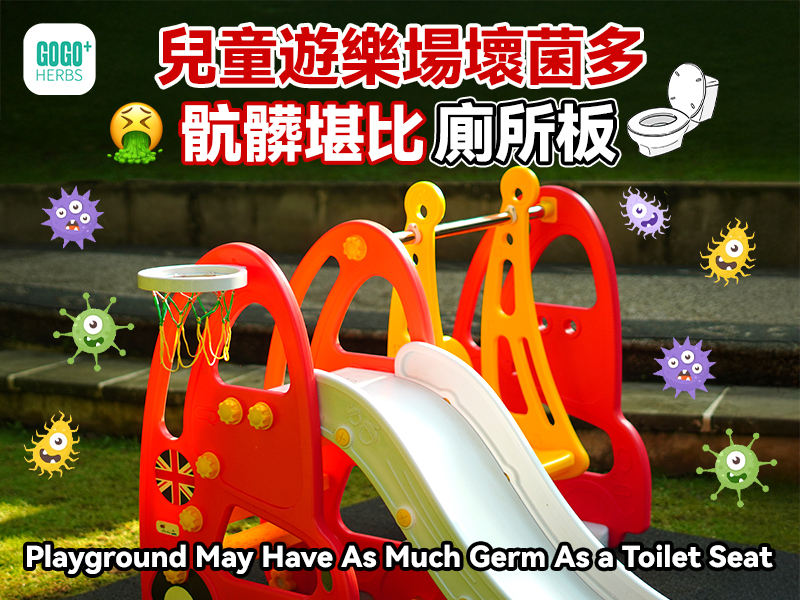
At the park on the weekend, there was a long queue at the bottom of the slide. The children climbed up, slid down, stood up by holding onto the handrail, and then wiped their faces. The parents next to them held wet wipes in one hand and water bottles in the other, repeatedly saying, "Don't touch."
In recent years, a set of figures has been circulating in parent groups: the bacterial content of playground equipment is 390 times higher than that of household toilet seats, with E. coli and Staphylococcus aureus detected, "which can cause kidney failure in severe cases." These figures have a source, from a commissioned laboratory investigation; however, they have omitted three crucial premises in their dissemination—That was a survey conducted in the fall of 2020, comparing bacterial colony concentrations under the same laboratory and method. However, there are several hurdles between detecting bacteria and a true infection.。
Let me explain the answer clearly first:Go to the park as usual, and make sure to wash your hands thoroughly, but don't keep your children at home because of these numbers.Data from the Department of Health's Student Health Services shows that in the 2024/25 school year, 93.6% of students were unable to engage in at least 60 minutes of moderate to vigorous physical activity daily; outdoor playgrounds are the easiest place for children to catch up. The issue isn't whether or not they go, but rather those three minutes after they finish playing.
I. What did that survey investigate?
The investigation was commissioned by the "Spotlight" column of the Oriental Daily News and reported on October 23, 2020. Reporters sampled ten children's play equipment from each of five outdoor playgrounds across Hong Kong, taking samples from areas easily touched by the hands.
- Tai Po Kwong Fuk Park
- Children's Playground on Middle Road, Tsim Sha Tsui
- Lai Chi Kok Park, Sham Shui Po
- Fung Tak Park, Wong Tai Sin
- Quarry Bay Park, Eastern District, Hong Kong Island
The report begins by stating "reopened at the end of last month," referring not to recently, but to September 23, 2020. A review of the Leisure and Cultural Services Department's press releases from that year reveals that outdoor children's playgrounds reopened on that day after being closed for more than two months during the third wave of the pandemic. Therefore, the entire investigation is set against the backdrop of park reopening during the pandemic, not the norm today.
This is not to deny the results. It is not surprising that the facilities had a high bacterial count due to the sudden influx of people at the beginning of the reopening and the cleaning shifts had not been adjusted in time; and the conclusion that "the more people touch a place, the dirtier it is" holds true in any year. The year is specified so that the following figures can be used correctly, rather than being interpreted as "going to the park now will cause you to get infected".
II. How was the 390 times calculated?
The report provides two raw figures: 470,000 bacterial colonies per milliliter on the climbing frame in the children's playground in the middle lane; and 1,200 on a typical household toilet seat. Dividing the two gives approximately 392, which the report describes as "more than 390 times."
There is another sentence in the same paragraph that is often overlooked:The other samples also had bacterial counts more than 100 times higher than those found on household toilet seats, but the surfaces of the facilities showed no visible stains.The key point is to consider these two things together: what appears clean to the naked eye is not necessarily clean. Parents judge whether a facility is safe to use based on their eyes; however, laboratory tests address the layer that the eyes cannot see.
There is another detail that is often overlooked:The number 1,200 is the reference value for a "typical household toilet seat".Without it, the 390-fold multiplier cannot be verified; with it, at least we know where the multiplier comes from. The report doesn't explain how this control value was obtained or the sample size, so it's suitable as a rough reference, not as a standard.
III. What the unit CFU/ml can and cannot explain.
CFU stands for "colony forming unit." The method involves swabbing the surface, immersing the cotton swab in a specific volume of liquid to wash it off, then applying the liquid to a culture medium and counting the number of colonies that grow. The problem lies in the "specific volume": for the same amount of bacteria, the number per milliliter can differ by a factor of ten between 5 ml and 50 ml.
Therefore, CFU/ml isConcentration in the eluentIt's not about "how many bacteria per square centimeter," nor is it about "how many bacteria you'll pick up when you touch it." It varies depending on the sampling area, the wiping pressure, the volume of the elution buffer, and the incubation temperature and time. To compare these two figures, it's necessary to use the same laboratory and the same method.
The value of this survey lies precisely here:Five parks, ten samples, the same expert, and the same methodologyTherefore, horizontal comparisons such as "climbing frames are dirtier than other facilities" or "all are dirtier than toilet seats" are credible in terms of direction. However, it's equally clear what it cannot be used for: it cannot be converted into infection risk, it cannot be directly compared with figures from foreign studies, and it cannot be used to infer "how many germs you ingest from touching it once."
Treat CFU/ml asIndicators of whether cleaning is adequateCompared toMeasurement of risk levelIt gets closer to what it can really say.
IV. What does the detection of two bacteria indicate?
The report stated that all ten samples tested positive for Staphylococcus aureus and Escherichia coli. These two names can be alarming, but they play very different roles in the human body.
| Detected bacteria | Role in the human body | Risks related to amusement park settings | Common |
|---|---|---|---|
| Staphylococcus aureus | About 30% of people carry bacteria in their nasal cavity or on their skin, which are harmless most of the time. | Infections through broken skin: pustules, folliculitis, impetigo | Common in the community, mostly minor. |
| Escherichia coli (common strains) | The normal gut flora in humans and warm-blooded animals contains most harmless strains. | As an indicator of fecal contamination, it is generally not pathogenic in itself. | Common in the environment |
| Shiga toxin-producing Escherichia coli | A few strains that can produce potent toxins | Hemorrhagic diarrhea; a small number of young children develop hemolytic uremic syndrome. | Hong Kong reports single digits annually |
In other words, the most direct information from detecting these two bacteria is..."Many hands have touched it, but the number of cleaning shifts can't keep up with the usage."—Some people leave behind resident bacteria on their skin, while others leave behind fecal marker bacteria (due to insufficient handwashing after diaper changes or toilet use). These are hygiene indicators, not proof of infection.
From "detection" to "illness," several things must be met simultaneously: a sufficient bacterial load, a route of entry (mouth, nasal mucosa, broken skin), and the body's defenses must be unable to block it. This is why most children are fine after playing in the same park, with only a few developing problems.
5. Staphylococcus aureus: It enters through wounds, not through mucous membranes causing gastrointestinal discomfort.
The report quoted a family doctor as saying that Staphylococcus aureus "can cause gastrointestinal discomfort after entering the human body through the mucous membrane." This statement conflates two different pathways.
Gastrointestinal discomfort caused by Staphylococcus aureus is formally known as...Staphylococcus aureus food poisoningThe cause is not that bacteria get into the mucous membrane, but...Bacteria first multiply in food and produce enterotoxins, which are then ingested by humans.The US Centers for Disease Control and Prevention (CDC) states it directly: This is a disease caused by toxins; symptoms usually begin suddenly within 30 minutes to 8 hours, and most improve within 24 hours.Antibiotics are not used for this type of food poisoning because they are ineffective against toxins.。
In the amusement park scenario, the truly relevant path is another one:Broken skinAbrasions, scratches from eczema, and areas damaged by mosquito bites can become infected with bacteria, leading to redness, swelling, pus, and pustules. This is why treating wounds is more practical than wearing a mask—masks block the respiratory tract, while the risks here mainly lie on the hands and skin.
Regarding the claim that "children's oily hands enhance bacterial adhesion," this is a reasonable explanation from research experts: sebum and sweat make it easier for microorganisms to adhere to the skin surface, requiring more rubbing during washing. The practical solution is simple—Wash your hands thoroughly, rubbing for a sufficient amount of time. Before rinsing, rub between your fingers and fingertips together.。
VI. Escherichia coli and kidney failure: Only one type exists, and it is rare.
The statement "Infection with E. coli may cause gastroenteritis, and in severe cases, hemorrhagic diarrhea or kidney failure" needs to be analyzed in three parts.
First layer: Most E. coli bacteria are not pathogenic.According to the Centre for Health Protection, Escherichia coli is commonly found in the intestines of humans and warm-blooded animals, and most strains do not cause harm; only certain strains, such as Shiga toxin-producing Escherichia coli, can produce potent toxins and cause serious illness.
The second level: Kidney failure corresponds to specific complications.In a small number of patients infected with Shiga toxin-producing E. coli, life-threatening complications can develop, such as hemolytic uremic syndrome (HUS) leading to kidney failure in young children. This is a real and serious outcome, but it is not a common outcome of E. coli infection.
The third layer: This type of infection is not common in Hong Kong.It is a legally notifiable infectious disease, with reported cases remaining in the single digits each year. The main route of transmission is through the ingestion or consumption of contaminated food and water, such as raw or undercooked treated meat and unpasteurized dairy products; it can also be transmitted from person to person via the fecal-oral route, and direct contact with farm animals or their environment is a significant risk factor.
Therefore, the statement that "a positive E. coli test equals potential kidney failure" treats a rare outcome as a common one. Conversely, it shouldn't be underestimated either:If a child develops hemorrhagic diarrhea (blood in stool), severe abdominal pain, persistent high fever, significantly reduced urine output, or paleness after playing, do not wait; seek medical attention immediately.
7. Why are children particularly susceptible to this?
The survey cited Dr. Liang Haowen, a research assistant at Beijing Normal University-Hong Kong Baptist University United International College, who explained that children's bodies are not fully developed, their immune systems are not yet mature, their antibacterial abilities are weaker, and their hygiene awareness is lower, making them more susceptible to infection. These points are all valid, but a more crucial element needs to be added—Behavior。
Preschool and early elementary school children often use their hands to support themselves on the ground, hold onto railings, rub their faces, rub their eyes, and put their hands in their mouths while playing, and they play for extended periods. Given the same facilities and the same amount of germs, adults remember to wash their hands after touching them, but children don't. Therefore, the real difference isn't in their immune system, but...Number of times hands touch mucous membranes。
This also explains why "wash your hands immediately after playing" is more effective than any equipment: it cuts off the easiest link in the entire path.
The other side also needs to make it clear:The benefits of outdoor activities for children are immediate and comprehensive.The WHO recommends that children and adolescents aged five to seventeen engage in at least 60 minutes of moderate to vigorous physical activity daily, including at least three days a week of vigorous aerobic exercise, as well as activities that strengthen muscles and bones. Running, jumping, climbing, and sliding are examples of such activities. Reducing outdoor time in an attempt to avoid germs may come at a greater cost than the germs themselves.
8. A slippery surface is a sign worth noting.
There's a very useful sentence in the same interview that's hardly ever shared:If you find the surface of an amusement ride to be slippery, be extra careful, as it may indicate that a bacterial film has formed on the ride.
A bacterial biofilm is a matrix secreted by bacteria after they attach to a surface, encapsulating the entire community. Its problem is...Makes it difficult for disinfectant to penetrateSpraying or wiping only treats the surface; the bacteria underneath remain. Therefore, a handrail that feels "sticky and slippery" is more worth avoiding than a handrail that looks dusty.
The same principle applies to sunlight. Ultraviolet rays only reach the sunlit surface; the bottom of slides, the inside of climbing frames, seams, and screw holes are often in the shade, making them difficult to clean and sun-expose. This is why the idea that "open-air exposure kills bacteria" is incorrect—the investigative experts stated in their report that "sunlight cannot kill all bacteria."
9. Three minutes of preparation before playing:
- Trim your nails short.The crevices under the fingernails are the hardest place to clean and also the easiest place for bacteria to stay.
- Treat any wounds first.For abrasions or scratches caused by eczema, cover them with waterproof tape or dressings before going out. This is much more practical than wearing a mask.
- Bring your own clean water and lye solution.Park restrooms may not have soap, and there may be queues. Bring a small bottle of water with hand soap, or a bottle of – % alcohol-based hand sanitizer as a backup.
- Bring a towel or paper towels.Wet hands are more prone to harboring germs than dry hands, so drying them is part of the handwashing process, not an optional final step.
- Bring your own water bottle and do not share water with others.Sharing beverages is the most direct form of mouth-to-mouth transmission.
- They agreed to "eat first, then play".Eating while playing is like putting the handrail you just touched directly into your mouth. If you want to eat, sit down and wash your hands first.
10. After playing: Truly effective handwashing
The Centre for Health Protection places hand hygiene at the core of preventing the spread of disease, and provides two approaches based on the condition of the hands: soap and water for visibly dirty hands, and alcohol-based hand sanitizer for hands without visibly dirty hands. The usage and limitations of both are worth remembering:
| lye solution + water | – % alcohol hand sanitizer | |
|---|---|---|
| When to use | Hands that are visibly dirty, oily, or have been in contact with sand or mud; hands after using the toilet; hands after contact with soil or animals. | When hands are not visibly dirty |
| How long to rub | Knead for at least 20 seconds, the entire process takes about – seconds. | Rub your hands together until they are completely dry, for at least 20 seconds. |
| The areas to be rubbed | Palm, back of hand, between fingers, back of fingers, thumb, fingertips, wrist—all seven areas should be covered. | |
| Things that cannot be done | Water source and hand-wiping tools are needed | It cannot handle norovirus or spores, nor can it remove obvious dirt. |
Two practical details are often overlooked:First, alcohol-based hand sanitizer and soap should not be used at the same time.Using hand sanitizer before washing your hands will neutralize the effects of hand sanitizer.Second, avoid washing your hands with hot water.Long-term use of hot water can increase the risk of dermatitis; warm or cold water is fine.
Once you get home, besides washing your hands, changing your clothes, washing your face, and wiping the outside of your water bottle and phone, you can eliminate any remaining risks. This step takes less than two minutes, but it's much more effective than constantly shouting "Don't touch!" in the park.
11. Things hand sanitizer can't do
Alcohol kills microorganisms by disrupting their lipid envelope, making it effective against most bacteria and enveloped viruses. However, it is effective against...Viruses without a lipid envelope (such as norovirus) and bacteria that can form spores.The effectiveness would be greatly reduced. Therefore, the infection control guidelines of the Centre for Health Protection clearly require that after contact with patients with hand-foot-mouth disease or intestinal infectious diseases, or in environments suspected of involving spores, hands should be washed with soap and water, not hand sanitizer.
In a park setting, this is especially relevant: slides, climbing frames, and swing chains are all places where multiple people take turns touching them, and norovirus can survive on environmental surfaces for a period of time. If a child with a history of gastroenteritis has played on these surfaces, the alcohol content might not be sufficient—this isn't to say you shouldn't go, but rather that you should...lye and waterPut it first, and keep hand sanitizer as a backup.
12. Do we still need to wear masks?
The survey's recommendation back then was "children should wear masks while playing." That was a pandemic prevention measure in 2020, and the context was different: the government... March 1, 2023The requirement to wear masks has been lifted; it is no longer mandatory indoors, outdoors, or on public transportation.
The current approach is to assess the situation on a case-by-case basis. The government continues to urge people with respiratory symptoms, as well as those with weakened immune systems or chronic illnesses, to wear masks in poorly ventilated areas. (Scene in an amusement park:)
- In open parks, it is not necessary to wear masks all the time; wearing masks while running and jumping can actually hinder breathing and heat dissipation.
- Children with fever, cough, and runny nose should not go to parks; this is more thorough than wearing a mask.
- In crowded indoor game rooms and poorly ventilated ball pits, which are different environments, wearing them may be considered.
It's important to distinguish between the two: masks block droplets and respiratory viruses, while the figures for amusement parks refer to...Hand-borne bacteriaWearing a mask won't make the handrails clean; washing your hands will.
13. Eczema and wounds: It's not that you can't go to the eczema treatment center.
The survey cited the advice that "children who are unwell or have skin problems should not go to playgrounds." The first part is true, but the second part is too broad—There's a long way to go between "having skin problems" and "not being able to go to the park".
For children with stable eczema, running, jumping, sweating, sunbathing, and playing with peers are beneficial for their overall health and mood; conversely, prolonged avoidance of outdoor activities may actually worsen their skin barrier and physical fitness. What truly needs adjustment are three things:
- When the skin has open wounds or oozing fluidThe affected area should be covered with a dressing; if the area is large or the attack is ongoing, stay indoors for a day.
- Rinse with clean water as soon as possible after sweating.Do not leave sweat in skin folds; moisturize immediately after washing.
- Do not rub repeatedly with wet wipes in the park.Most wet wipes contain alcohol or preservatives, which can be an additional irritant to damaged skin; rinsing with water is gentler.
As for "feeling unwell"—avoiding visits during periods of fever, vomiting, or diarrhea—this is to protect both children and other users. There is no controversy regarding this.
XIV. Antibacterial Coating and Cleaning: How Much Does It Help?
The investigative report mentioned that some Legislative Council members suggested that the Leisure and Cultural Services Department (LCSD) spray antibacterial coatings on children's play facilities. The LCSD responded that the facilities had been thoroughly cleaned and disinfected before reopening, and that cleaning staff would be arranged to clean them regularly according to the flow of people and usage after reopening. The venue staff had also increased patrols.
The principle behind antibacterial coatings is to form a film containing antibacterial components on the surface, commonly silver ions and quaternary ammonium salts. It's effective, but there are three limitations worth noting:
- The effect is temporary.The coating will gradually wear down with friction, sun exposure, rain, and cleaning agents, and needs to be recoated regularly; it is effective when it leaves the factory, but that does not mean it will still be effective after six months.
- The dirtier the surface, the worse the effect.Organic matter (dust, sweat, food residue) can cover the coating, preventing the antibacterial ingredients from contacting the bacteria and greatly reducing their effectiveness.
- It cannot replace cleaning.The coating is an auxiliary means of "reducing bacterial growth", not a substitute for "not needing to be wiped".
What parents can do is...Tell me what you saw.If facilities have obvious stains, standing water, or damage, or if the restrooms are out of soap, you can report it to the staff on site or report it to the department via 1823. This is more practical than bringing your own disinfectant spray to spray on the spot—most disinfectants require a certain amount of contact time to work, and spraying and playing immediately has limited effectiveness; some ingredients may also damage the surface of the facilities.
15. When should you seek medical attention immediately?
Regarding woundsIf the redness and swelling spreads, a pus-filled head appears, a red line spreads upwards around the head, or fever or increased pain occurs, seek medical attention as soon as possible. Most Staphylococcus aureus skin infections can be treated with antibiotics, but the longer they are left untreated, the more difficult they become to treat. Do not squeeze the pustules yourself.
GastrointestinalIf you experience bloody or black stools, severe abdominal pain, persistent high fever, persistent vomiting, significantly reduced urine output, pale complexion, or a marked decline in mental state, seek medical attention immediately. Signs of dehydration in infants and young children include sunken eyes, no tears when crying, diapers remaining dry for extended periods, lethargy, or refusal to eat.
If any of the above symptoms occur and the situation deteriorates rapidly, please call [phone number]. 999 Or go to the emergency room.

XVI. Frequently Asked Questions
Can bacteria in playgrounds really make children sick?
It's possible, but not a guaranteed infection from touching the facilities. The detection of Staphylococcus aureus and E. coli on the facilities primarily indicates that cleaning frequency is not keeping up with usage. For an actual infection to occur, a sufficient bacterial load, a route of entry (mouth, nasal mucosa, broken skin), and the body's defenses being unable to prevent it are all necessary. Truly effective prevention isn't avoiding parks altogether, but rather thoroughly washing your hands and covering any wounds after playing.
How was 390 times calculated?
The colony count per milliliter on a climbing frame is 470,000. Dividing this by the 1,200 on a household toilet seat gives approximately 392, hence the statement "more than 390 times." Both figures come from the same laboratory and use the same testing method, making the comparison reliable. However, the colony count per milliliter reflects the concentration of the eluent, which varies with the sampling area and liquid volume. It cannot be used to estimate "how many bacteria you'll pick up by touching it," nor can it be directly converted into an infection risk.
Should I wash my hands immediately after playing? What if there's no water nearby?
Yes, and the sooner the better, ideally before leaving the facility or eating. If there are no restrooms nearby, first rub your hands with – % alcohol hand sanitizer until completely dry (at least 20 seconds), then wash them again with soap and water when you get home. If your hands are visibly dirty or have been in contact with sand or mud, hand sanitizer will be less effective; use soap and water instead.
Is the alcohol-based hand sanitizer enough?
It's sufficient to combat most bacteria and enveloped viruses, but its effectiveness against norovirus and spores is limited. In environments like parks where many people come into contact with the virus, gastroenteritis viruses pose a real risk, so hand sanitizer should be kept on hand, while soap and water are the primary treatments. Furthermore, alcohol-based hand sanitizer and soap should not be used simultaneously.
Can wet wipes replace handwashing?
No. Wet wipes can remove some dirt and microorganisms, but they cannot wash away bacteria like running water and soap. Alcohol-based wet wipes are also ineffective against norovirus. They are suitable for emergency situations when there is absolutely no water available, but not for daily hand washing; they may also cause irritation to damaged eczema skin.
Does the absence of visible stains on the surface of a facility mean it is clean?
This is not necessarily true. The same survey indicated that all samples had high bacterial counts, but no stains were found on the surface of the facilities. Another sign to watch out for: if the surface feels slippery or sticky to the touch, a bacterial film may have formed, making it difficult for disinfectants to penetrate. Such facilities should be avoided. Gaps, bottoms, and areas that are constantly shaded are also more difficult to clean and expose to sunlight.
Do I need to change clothes after visiting the park?
I recommend changing your clothes. Outer clothes accumulate dust and microorganisms; changing them before sitting on the sofa or going to bed helps to dispose of the contaminants in one place. Washing your face and wiping the outside of the kettle and your phone at the same time is a quick and easy process that only takes two minutes.
Do children need to wear masks when going to the park?
Hong Kong lifted all mandatory mask-wearing requirements on March 1, 2023. Masks are no longer required in open outdoor parks, and wearing them while running and jumping can actually hinder breathing and heat dissipation. Children with respiratory symptoms should stay home to rest; however, wearing masks may be considered in crowded, poorly ventilated indoor playrooms. Masks block droplets, which are a separate issue from bacteria on handrails.
Can children with eczema go to playgrounds?
During a stable period, it's fine to go outdoors, and you should. Outdoor activities and exercise are beneficial to overall health; prolonged avoidance may negatively impact physical and emotional well-being. However, please note: if you have open wounds or oozing fluid, cover the area with a dressing; if the wound is large or currently flaring up, postpone your visit; rinse and moisturize with water as soon as possible after sweating; and do not repeatedly rub the affected area with wet wipes in the park.
When is it necessary to see a doctor?
If the wound becomes increasingly red and swollen, contains pus, develops a red line around the wound, or if fever develops; or if symptoms include bloody stools, severe abdominal pain, persistent high fever, persistent vomiting, significantly reduced urine output, pale complexion, or decreased mental state, seek immediate medical attention. Infants and young children who exhibit sunken eyes, cry without tears, have diapers that remain dry for extended periods, or are lethargic should also be taken to the doctor immediately. If the condition deteriorates rapidly, please call 999.
XVII. Sources of Information
- Oriental Daily News <Searchlight: Children's playground's shoddy climbing frame is dirtier than a toilet seat> (October 23, 2020)
- Leisure and Cultural Services Department: Latest Public Service Arrangements (September 16, 2020; Outdoor Children's Play Facilities to Reopen on September 23)
- Centre for Health Protection: Proper Handwashing
- Department of Health: Infection control guidelines for its clinical service clinics (hand hygiene, timing of use of alcohol-based hand sanitizer and soap).
- Centre for Health Protection: Shiga toxin-producing Escherichia coli infection
- US Centers for Disease Control and Prevention: Staphylococcus aureus Basics (approximately 30% of adults carry the bacteria, most are harmless)
- US Centers for Disease Control and Prevention: About Staph Food Poisoning (Enterotoxin-induced illness, antibiotics ineffective)
- Government press release: The government fully lifts the mandatory mask-wearing requirement (February 28, 2023)
- Department of Health Student Health Services: Healthy Living (60 minutes of physical activity, applying waterproof bandages to wounds, washing hands before meals and after using the toilet)
- Hong Kong Government News Network: Overweight is widespread among primary and secondary school students (93.6% of students did not reach 60 minutes of physical activity per day in the 2024/25 academic year)
- World Health Organization: WHO guidelines on physical activity and sedentary behavior
Further Reading
- Hand hygiene and infection prevention in public places: How dirty are shopping carts, handrails, and door handles?
- How to protect yourself during flu season? A complete guide to vaccines, personal hygiene, and lifestyle habits.
- Dietary recommendations and care for gastroenteritis: hydration, electrolyte replenishment, and the line between seeking medical attention and not seeking treatment.
Health Reminder
This article is a compilation of health information and should not replace diagnosis or medical decisions. Children's wound infections, persistent diarrhea, and dehydration symptoms should be evaluated by a doctor; the need for antibiotics must be determined by a doctor's diagnosis and should not be purchased or used on one's own. If breathing difficulties, altered consciousness, seizures, severe dehydration, or a rapid deterioration in condition occur, call 999 immediately or go to the emergency room.
Related Products:
-
Sale!

[Price as low as $330 in stores] G-NiiB – Immunity+ 28 packets
Original price was: $498.00.$365.00Current price is: $365.00. Add to basket -
Sale!
G-NiiB – Immunity Pro Immunity Pro Formula 28 packs
Original price was: $598.00.$498.00Current price is: $498.00. Add to basket -
Sale!

Swisse – Ultiboost Odorless High Concentration Wild Fish Oil 1500mg 400 Capsules
Original price was: $298.00.$248.00Current price is: $248.00. Add to basket -
Sale!
[Average price: $ 350/1] [Price as low as $ 330 in stores] G-NiiB – Immunity+ 28 packets x 3 bottles
Original price was: $1,494.00.$1,050.00Current price is: $1,050.00. Add to basket
Related Post:
![肌酸點食?每日 5 克、100 日份量與選購要點]()
Creatine supplementation? 5 grams daily, 100-day supply, and key points for selection.
![網購保健品付款前,先核對這 8 件事]()
Before paying for health supplements online, check these 8 things first.
![葡萄糖胺軟骨素MSM點揀?食極都痛先檢查每日劑量]()
Glucosamine chondroitin MSM selection? Eating causes pain; first check the daily dosage.
![gogoherbs-mens-hair-cover]()
How to Choose Hair Care Supplements for Men? A Comparison of 8 Biotin, Saw Palmetto, and Collagen Products