


















































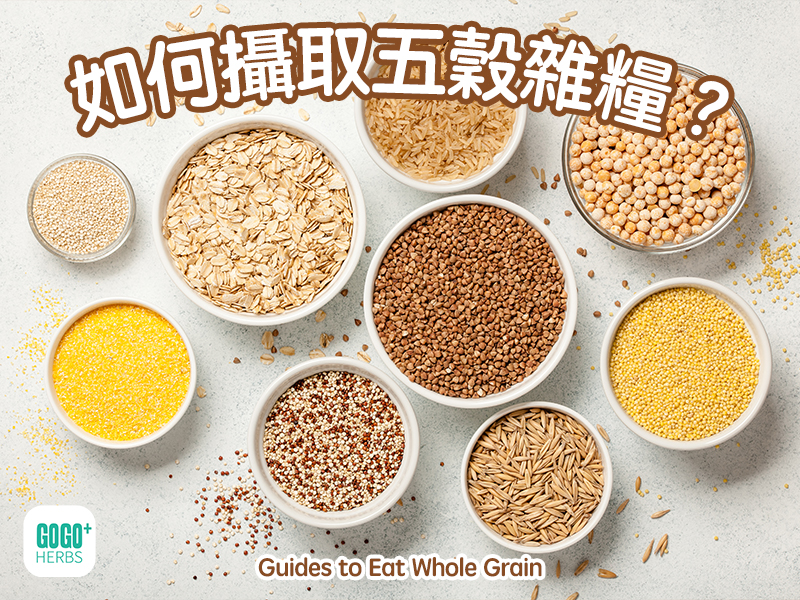
How to consume whole grains?
In modern diets, the "whole grains" category of the five food groups is often replaced by refined starches such as white rice and white flour. Although the Ministry of Health and Welfare has long promoted the consumption of whole grains, many parents are still troubled by how to persuade their children to eat these foods. Chen Qiaoming, deputy executive director of the Nutrition Foundation, pointed out that foods that children generally accept are also whole grains, such as corn. Parents may consider replacing some white rice with corn as part of their daily diet.
Refined starches easily raise blood sugar levels, posing a high risk to children with long-term consumption.
Chen Qiaoming stated that refined starches, lacking dietary fiber, are digested and absorbed quickly, causing a rapid rise and fall in blood sugar. This not only makes people feel hungry easily, leading to the consumption of more sugar, but in the long run, it may also increase the risk of developing chronic diseases such as type 2 diabetes, cardiovascular disease, and obesity. However, many parents, due to busy work schedules or their children's dislike of refined starches, often still rely on them as their staple food, resulting in a significant deficiency in whole grain intake.
A survey shows that about 40-50% of children have low acceptance of traditionally perceived whole grains such as brown rice and oats due to factors such as texture, appearance, or taste. However, Chen Qiaoming emphasized, "In fact, corn is a whole grain food with a very high nutritional density, and more than 60% of children like to eat it."
Corn is rich in nutrients, with a lutein content higher than that of carrots.
Chen Qiaoming further explained that corn's nutrient density is about six times that of white rice, meaning that for the same amount of calories, corn provides a wider variety and higher quantity of nutrients. In particular, corn...Rich in luteinZeaxanthin and α-carotene, foreye healthIt is extremely helpful, even more so than common carrots in protecting eyesight. It is a good source of nutrition for children who spend a lot of time in front of electronic devices and don’t like to eat carrots.
Busy families can opt for canned corn kernels to enhance the convenience of whole grain intake.
In response to the actual needs of modern families preparing meals, a survey by the Nutrition Foundation found that nearly half of parents want simple food preparation, 40% prioritize saving time and speed of serving, and 35% want their children to enjoy the food. Chen Qiaoming pointed out that canned corn kernels are not only convenient to use and highly acceptable to children, but also help increase the intake of whole grains, making them ideal for families with fast-paced lifestyles.
However, some parents are concerned that canned foods contain unnecessary additives that may be detrimental to health. Chen Qiaoming explained that canned foods use vacuum sealing and high-temperature sterilization technology during the manufacturing process, so they can be preserved for a long time without the need for additional preservatives, making them relatively safe and reliable.
Clever combinations to improve children's picky eating habits
The survey also showed that over 60% of children with picky eating habits dislike vegetables, with bitter melon, green peppers, and eggplant ranking as the top three least popular vegetables. Bitter melon was even considered the "most feared ingredient" by over 70% of picky eaters. To help children obtain balanced nutrition, Chen Qiaoming offered three practical suggestions to help parents more easily improve their children's eating habits:
- Diced Mixing MethodCut your child's favorite ingredients, such as corn and mushrooms, into small cubes and add them to staple foods or stir-fries. This will not only improve the overall taste but also increase your child's willingness to eat.
- Taste contrast pairingsCombining softer and crisper ingredients, such as adding eggplant to a fried egg and pairing it with corn or cucumber, creates more layers in the food and enhances its appetite.
- Bright and attractive colorsUsing brightly colored ingredients such as corn, cherry tomatoes, and cucumbers can not only increase visual appeal but also make children more interested in food.
Through these simple and practical methods, parents can gradually guide their children to accept a wider variety of foods, cultivate good eating habits, and also obtain more comprehensive nutrition.