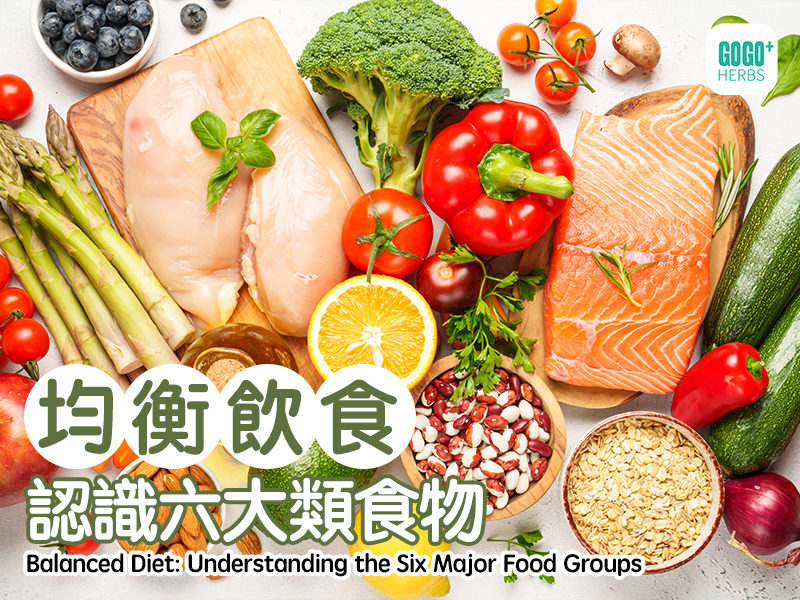
The six common food groups refer toWhole grains, vegetables, fruits, dairy products, beans, fish, eggs, meat, as well as oils, nuts, and seeds.To determine which category the food in your hand belongs to, you can use two clues—Its texture (especially the amount of starch and water), and what nutrients it provides to the body.As for the portion size, the Hong Kong Department of Health...Healthy Eating PyramidTo summarize the principle in one sentence: "Eat the most grains, more vegetables and fruits, moderate amounts of meat, fish, eggs, beans, and dairy, and the least oil, salt, and sugar," using the most memorable "Daily Two Plus ThreeThe goal is to eat at least 2 servings of fruit and 3 servings of vegetables daily. This article will explain the classification methods, daily serving amounts, and common examples for each of the six categories, and answer questions about easily misclassified items such as potatoes, corn, avocados, and tofu.
What are the six food groups? Why should we consume them in a balanced way?
Dividing everyday foods into six categories is to help everyone check whether they have eaten all of them and in the correct proportions. The six categories are:
- Whole grainsIt mainly provides carbohydrates (starch), which are the body's primary energy source.
- VegetablesIt provides vitamins, minerals, dietary fiber, and various phytochemicals.
- FruitsIt has a high water and sugar content, and also provides vitamins, potassium and dietary fiber.
- Dairy productsIt is an important source of calcium and protein.
- Beans, fish, eggs, and meat: The main source of protein.
- Oils and nuts and seedsIt provides essential fatty acids and fat-soluble vitamins, and is also a source of aroma and flavor.
Why "average intake"? BecauseNo single food can provide all the nutrients the body needs at the same time.Grains are low in dietary fiber and vitamin C, fruits and vegetables are low in protein and fat, dairy products are deficient in iron, and meat is deficient in fiber. Only by combining different categories can one obtain sufficient energy while also supplementing vitamins, minerals, and dietary fiber. Conversely, if one consistently favors one or two categories (for example, consuming too much starch and fat, and too little fruits, vegetables, and dairy), nutritional imbalances can easily occur, increasing the risk of obesity, cardiovascular disease, diabetes, and other chronic problems. The benefits of a balanced diet extend beyond weight; it also affects daily energy levels, concentration, and the risk of long-term chronic diseases. Further reading can be found at [link to relevant article].6 major benefits of a balanced diet〉。
Tip:"Six food groups" areHealth Promotion Administration, Ministry of Health and Welfare, TaiwanThe classification method used in the "Daily Dietary Guidelines" is similar to that of the Hong Kong Department of Health, which uses the "Healthy Eating Pyramid" to express a similar concept. The pyramid is divided into cereals, vegetables, fruits, meat, fish, eggs and their substitutes, dairy products and their substitutes, plus oil, salt, and sugar at the top. While the names of the two systems differ slightly, the principles of "diversity, cereal-based diet, plenty of fruits and vegetables, adequate protein and dairy, and low oil, salt, and sugar" are consistent.
Whole grains and cereals: How to determine and daily serving size
Whole grains are the staple foods that contain a relatively high amount of starch. Besides rice and wheat,All grains are included.This includes sorghum, millet, buckwheat, oats, corn, red beans, and mung beans; as well as foods with high starch content such as sweet potatoes, potatoes, yams, and lotus roots. Therefore, mung bean vermicelli (glass noodles) is considered a whole grain, as are bread and steamed buns made from wheat flour.
Judgment method:It contains a lot of starch and sugar, so it has a powdery texture when eaten raw.
Daily serving size:The Hong Kong Department of Health's Healthy Eating Pyramid classifies this category as "cereals," recommending 4 to 8 bowls daily for men aged 18 to 64 and 3 to 6 bowls daily for women (approximately 250 to 300 ml per bowl), with adjustments made according to age and activity level. Taiwan's Health Promotion Administration's "Daily Dietary Guidelines" recommend that whole grains make up approximately [a certain percentage].50 to 60% of total daily calories (TP4T)。
Select the key points:It's better to eat more unrefined grains than refined white grains (white rice, white bread).Whole grainsExamples include brown rice, red rice, oats, and whole wheat bread. Whole grains retain the bran and germ, and in addition to starch, you can get more B vitamins, magnesium, and dietary fiber. In practice, you don't need to switch all at once. You can start with "three-quarters white rice plus one-quarter brown or red rice" to allow the taste to gradually adapt.
Vegetables: How to determine and daily serving size
Vegetables mainly refer to the roots, stems, and leaves of plants, such as leafy vegetables like bok choy, spinach, water spinach, cabbage, and sweet potato leaves; root vegetables like carrots and radishes; and stem vegetables like bamboo shoots and asparagus. In addition, the fruits of some plants (such as cucumbers and gourds) are also classified as vegetables.
Tomatoes are quite special:Large tomatoes are generally considered vegetables, while cherry tomatoes are considered fruits.This is related to serving size and sugar content.
Judgment method:It consists of the roots, stems, and leaves of plants, and generally contains less water than fruit.
Daily serving size:The Department of Health recommends at least daily 3 copiesVegetables (this is the minimum, you can eat more). One serving is roughly equivalent to a bowl of uncooked leafy greens, or half a bowl of cooked vegetables, melons, or mushrooms.
Vegetables are the main source of vitamins, minerals and dietary fiber for the human body. They also contain various phytochemicals (such as anthocyanins, carotene, lycopene and polysaccharides), which help the body maintain normal function.
Two places that are easy to get wrong:① PotatoesAlthough they are root vegetables, because they are often used to replace grains (such as in baked potatoes, mashed potatoes, and French fries), the Department of Health generally does not recommend counting them as part of the daily three servings of vegetables. However, root vegetables like carrots and radishes, which are not a primary source of starch, can be counted. ② Soy products (tofu, soy milk, dried bean curd sticks)Although it is vegetarian, it is classified as "protein" and should not be included in the vegetable portion.
Fruits: How to determine and daily serving size
Fruits mainly refer to the fruit parts of plants, which are high in water and sugar and have a good taste, such as oranges, apples, bananas, watermelons, honeydew melons, grapes, and custard apples.
Judgment method:It is the fruit part of the plant, which is juicy and sweet.
Daily serving size:Minimum daily 2 copiesA serving of fruit is roughly equivalent to: one medium-sized fruit (such as an orange or apple), half a large fruit (such as a banana or grapefruit), half a bowl of fruit chunks (such as a watermelon or honeydew melon), or three-quarters of a cup of unsweetened pure fruit juice.
Although fruits are primarily composed of water and sugar, they also provide many nutrients: for example, bananas are high in potassium, and citrus fruits contain vitamin C and dietary fiber. It's worth noting that...Juice is not the same as whole fruit.Juicing reduces dietary fiber, and even without added sugar, pure fruit juice is still a sugary drink, so it's best to control your intake and eat more fruits and vegetables.Whole fruitMainly.
Dairy products: Judgment methods and daily serving size
Milk is a major source of calcium. In addition to fresh milk, dairy products such as cheese, yogurt, and yogurt drinks, as well as calcium-fortified soy milk, all fall into this category.
Judgment method:Dairy products. It is recommended to choose sugar-free, low-fat, or fat-free versions to reduce sugar and fat content.
Daily serving size:The Department of Health's Healthy Eating Pyramid recommends that "dairy and dairy alternatives" should be consumed daily. 1 to 2 cups(One cup is about 240 ml); one cup is roughly equivalent to two slices of low-fat cheese or a small box (about 150 grams) of low-fat plain cheese.
If you have lactose intolerance, you can try three approaches:Start with a small amount of milk and gradually increase..., changeFermented dairy products(Cheese and cheese have less lactose), or chooseCalcium-fortified soy milkAlternatives. If symptoms are pronounced (e.g., persistent diarrhea, abdominal pain), it is advisable to consult a doctor or registered dietitian to determine if there are other underlying causes.
Beans, fish, eggs, and meat: How to determine and daily serving size
Beans, fish, eggs, and meat are the main sources of protein. Beans include soybeans, black beans, lima beans, and products made from them such as tofu and dried tofu; these are then paired with fish, eggs, and meat.
Judgment method:Just remember "soybeans, black beans, lima beans, plus fish, eggs, and meat".
Daily serving size:The Department of Health's Healthy Eating Pyramid recommends that adults consume 5 to 8 liang (one liang is roughly equivalent to the size of a ping-pong ball of meat) per day; Taiwan's Health Promotion Administration recommends that such foods account for about 201 TP4T of total daily calories, or about the size of one palm per meal.
Select the key points:It is recommended to press "Beans → Fish → Eggs → MeatChoose protein sources in the following order: legumes, fish, and eggs are easier for the body to break down and absorb, and they are also lower in fat. Among meats, white meat (poultry, fish) should be prioritized over red meat, and processed meats (sausages, luncheon meat, bacon, etc.) should be consumed in moderation. The International Agency for Research on Cancer of the World Health Organization classifies processed meat as a Group 1 carcinogen (with strong evidence of carcinogenicity to colorectal cancer) and red meat as a Group 2A carcinogen. Therefore, controlling the intake of processed and red meat is a feasible approach.
Oils and Nuts & Seeds: How to Determine and Daily Serving Size
Oils can be divided into saturated fats and unsaturated fats. Oils high in saturated fat (such as animal fats like butter, lard, and coconut oil) are less beneficial to cardiovascular health. It is advisable to choose more vegetable oils with higher unsaturated fat content and a trans fat label of "0", such as olive oil, canola oil, sunflower oil, and soybean oil, and to cook them using low-oil, low-temperature methods such as steaming, stewing, braising, and poaching.
Judgment method:Plant seeds containing high levels of oil.
Daily serving size:Use about 4 to 5 teaspoons of cooking oil daily; you can also supplement with a serving of nuts and seeds (about one tablespoon), such as peanuts, cashews, walnuts, and almonds. Avocados are high in fat and are also included in this category.
Regarding "0" trans fats:According to Hong Kong's nutrition labeling system, foods containing no more than 0.3 grams of trans fat per 100 grams (solid) or 100 milliliters (liquid) can be labeled as "0". Therefore, "0" indicates a very low content, not absolute zero. When choosing oils, in addition to looking at trans fat content, you should also pay attention to the total amount of saturated fat. While nuts are healthy, they are high in calories and should be consumed in moderation, not in large quantities.
A chart to help you understand how to identify and portion sizes for six food categories.
| Food categories | Judgment method | Daily serving size (Department of Health Healthy Eating Pyramid) | Common examples |
|---|---|---|---|
| Whole grains | It contains a lot of starch and sugar, and has a powdery texture when eaten raw. | Grains: 41 tbsp for men (8 bowls), 31 tbsp for women (6 bowls); primarily unrefined whole grains. | Rice, flour, brown rice, oats, millet, sweet potato, potato, yam, lotus root, red bean, mung bean |
| Vegetables | The roots, stems, and leaves of plants contain less water than fruits. | Eat at least 3 servings per day (1 serving = half a bowl of cooked vegetables) | Choy sum, spinach, water spinach, cabbage, sweet potato leaves, carrots, radishes, bamboo shoots, asparagus, cucumber |
| Fruits | The fruit of the plant is juicy and sweet. | Eat at least 2 servings per day (1 serving = 1 medium-sized fruit) | Oranges, apples, bananas, watermelons, honeydew melons, grapes, custard apples |
| Dairy products | For dairy products, choose those with no added sugar and low fat. | 11 TP 1 T 2 cups daily (1 cup = 240 ml) | Milk, cheese, yogurt, calcium-fortified soy milk |
| Beans, fish, eggs, and meat | Soybeans, black beans, lima beans, plus fish, eggs, and meat | 5–8 liang per day (1 liang ≈ 1 egg) | Tofu, dried tofu, soybeans, fish, eggs, lean meat, poultry |
| Oils and nuts and seeds | Plant seeds containing high levels of oil | Approximately 41 tbsp oil + 1 serving of nuts (approximately 1 tablespoon) | Olive oil, canola oil, peanuts, cashews, walnuts, almonds, avocados |
How Hong Kong readers use it: The Daily Two Plus Three and the Healthy Eating Pyramid
If you find the six categories of portions too many to remember, you can start by using two tools from the Hong Kong Department of Health.
Tool 1: "Daily Two Plus Three"
The Department of Health urges adults and teenagers aged 12 to 17 to...Eat at least 2 servings of fruit and 3 servings of vegetables daily.This "2+3" corresponds precisely to the World Health Organization's recommendation that adults consume at least 400 grams (approximately 5 servings, each about 80 grams) of fruits and vegetables daily. (This is from the Department of Health.)materialIt was pointed out that a local population health survey showed that only about 1.51% of people aged 15 or above were able to consume at least 2 servings of fruit and 3 servings of vegetables daily, indicating that most people still have room for improvement in their fruit and vegetable intake.
Tool Two: The Healthy Eating Pyramid
The pyramids divided food into several layers according to "how much to eat":Eat the most grains → Eat more vegetables and fruits → Eat meat, fish, eggs and their substitutes, and dairy products and their substitutes in moderation → Eat the least oil, salt, and sugar.The pyramid also advises drinking 6 to 8 cups of fluids daily (including water, tea, and broth) and developing a regular eating habit. To find out your actual daily needs, you can refer to the Department of Health's guidelines."Daily Fruits and Vegetables 2+3" Special FeatureThe age and gender recommendations are listed below.
Besides a balanced diet, do I need nutritional supplements?
A balanced diet is always the most important thing. Most people can meet their nutritional needs by eating according to the proportions of the six major food groups and consuming plenty of whole grains and fruits and vegetables, without needing additional supplements. However, in some cases, such as...lactose intolerant or vegetarian(Calcium and vitamin B12 may be insufficient)Elderly or those with poor appetite(low food intake)Pregnancy and breastfeedingIt may be necessary to supplement with specific nutrients.
Before purchasing, it is advisable to consult a doctor or registered dietitian and carefully read the ingredients, content and usage instructions on the product label. Supplements are for "filling gaps" and cannot replace three meals a day, nor should they be expected to solve weight or chronic disease problems on their own.
Frequently Asked Questions
What are the six major food categories?
The six food categories are whole grains, vegetables, fruits, dairy products, legumes, fish, eggs, and meat, as well as oils, nuts, and seeds. This classification is commonly found in the "Daily Dietary Guidelines" of the Health Promotion Administration of the Ministry of Health and Welfare in Taiwan. The Hong Kong Department of Health uses a similar concept in the "Healthy Eating Pyramid," which divides foods into grains, vegetables, fruits, meat, fish, eggs and substitutes, dairy products and substitutes, plus oils, salts, and sugars at the top. Both share the same core principles: a diverse diet, grains as the staple, plenty of fruits and vegetables, adequate protein and dairy, and low levels of oils, salts, and sugars.
Is potato a vegetable or a whole grain?
Both interpretations are used, the key is the intended use. Potatoes are root vegetables, but because of their high starch content, they are often used to replace grains (baked potatoes, mashed potatoes, French fries). Therefore, the Hong Kong Department of Health generally does not recommend including them in the daily three servings of vegetables. In Taiwan, however, they are classified as "whole grains" in the six major food categories. In practice, calculating their nutritional value as part of a staple food is closer to their nutritional characteristics than considering them as vegetables.
Are tofu and soy milk considered vegetables?
No. Although soy products (tofu, soy milk, and dried bean curd sticks) are vegetarian, they are high in protein and low in vitamins and dietary fiber. In the healthy eating pyramid, they are classified as "proteins," which is one of the six categories of beans, fish, eggs, and meat. They should not be counted in the daily vegetable intake.
To which category do large tomatoes and cherry tomatoes belong?
Large tomatoes are generally considered vegetables, while cherry tomatoes are considered fruits. The difference lies in the serving size and sugar content: large tomatoes are often used as an ingredient in dishes, while cherry tomatoes are often eaten directly as fruit or snacks, and have a relatively higher sugar content.
Is corn considered a vegetable or a whole grain?
Different regions have different classification systems: the United States classifies fresh sweet corn as a vegetable, while mainland China and Taiwan classify it as a whole grain, based on its high starch content, which allows it to be part of a staple food. For consumers, the practical approach is to consider corn as a "partial staple food," replacing some white rice, rather than as a leafy vegetable. (Corn shoots are immature small corn kernels, high in water content and low in starch, and are classified as vegetables.)
Is avocado considered a fruit or an oil?
Although avocados grow on trees and are botanically classified as fruits, nutritionally they are high in fat and low in sugar, thus falling under the category of "oils, nuts, and seeds." Therefore, they should account for a portion of your daily oil and nut intake, rather than your fruit intake, and should be consumed in moderation.
How much vegetables and fruit should you eat every day?
The Hong Kong Department of Health recommends that adults and adolescents aged 12 to 17 consume at least two servings of fruit and three servings of vegetables daily ("two plus three"), which aligns with the World Health Organization's recommendation of at least 400 grams of fruits and vegetables per day for adults. One serving of vegetables is roughly equivalent to a bowl of uncooked leafy greens or half a bowl of cooked vegetables; one serving of fruit is roughly equivalent to one medium-sized fruit (such as an orange or apple) or half a large fruit (such as a banana). This is the minimum; individuals can eat more depending on their individual circumstances.
Can I drink milk if I have lactose intolerance?
Most people can adjust their dairy intake by changing their approach: start with a small amount of milk and gradually increase; or switch to fermented dairy products with less lactose (cheese, cheese); or choose calcium-fortified soy milk as an alternative. If diarrhea, abdominal pain, or bloating persists after drinking milk, consult a doctor or registered dietitian to identify the cause and arrange appropriate calcium sources.
Should we completely avoid oils and nuts?
It's neither necessary nor recommended to completely eliminate oils. Oils provide essential fatty acids and help absorb fat-soluble vitamins; the key is "quality" and "quantity"—choose vegetable oils that are higher in unsaturated fats and labeled as "0" trans fats, using about 4 to 5 teaspoons of oil daily, plus a serving of nuts (about one tablespoon). What you should reduce is saturated fats (animal fats, coconut oil) and hidden fats in processed foods, not eliminate all oils altogether.
Is it necessary to strictly follow the portion sizes?
Portion sizes are reference values, not rigid rules. Everyone's age, gender, height, weight, activity level, and health condition are different, and actual needs will vary from person to person. Rather than calculating by the gram, it's better to first grasp three principles: eat a variety of foods, maintain proportions roughly in line with the food pyramid, and eat more unrefined and minimally processed foods. Individuals with chronic diseases, kidney disease, difficulty swallowing, or who are taking certain medications should consult a doctor or registered dietitian for an individual assessment.
Data Sources and Health Disclaimer
Source:
- Central Health Education Division, Department of Health (Revised 2014).Knowing what to drink, what to eat, and how to choose: The Healthy Eating Pyramid(Tips on portion sizes and selection of various foods).
- Department of Health: "Living a Healthy New Direction".Common Health Eating Questions(The serving size of a fruit/vegetable, and the classification of potatoes and soy products).
- Department of Health's "Living a Healthy New Direction" (April 2023).The essential elements of a healthy diet: fruits and vegetables("Two plus three every day", World Health Organization 400 grams recommendation, Hong Kong Population Health Survey data).
- Department of Health: "Living a Healthy New Direction".Dietary fiber(Adolescents and adults take 25 grams or more per day).
- Centre for Health Protection, Department of Health.Daily fruits and vegetables (two plus three)(Recommended serving size of fruits and vegetables for each age group).
- Food Safety Centre.Why do claims about trans fats include a requirement regarding saturated fat content?(Conditions for "0" and "free" on nutrition labels).
- Health Promotion Administration, Ministry of Health and Welfare, Taiwan.Healthy eating standards(Six food categories substitution table).
- World Health Organization.Cancer: Carcinogenicity of the consumption of red meat and processed meat(Carcinogenicity classification of processed meat and red meat).
- Information Services Department of the Hong Kong Special Administrative Region Government.Fruits and vegetables 2+3: Easily incorporate into every meal(Promotional video).
Health Disclaimer:This article is for general health and nutrition information only and should not replace professional medical diagnosis, treatment, or individual nutritional advice. Everyone's health condition, dietary needs, and disease risks are different; actual portion sizes should be adjusted according to age, gender, activity level, and physical condition. If you have chronic diseases (such as diabetes, kidney disease, or heart disease), food allergies or intolerances, are taking medications, or are pregnant, breastfeeding, an infant, or elderly, you should consult a doctor or registered dietitian before adjusting your diet or using supplements. If you experience persistent discomfort or unexplained weight loss, seek medical attention as soon as possible.
Related Products:
-
Sale!

GINAX – Ginseng Tea Bag / Ginseng White Tea Rose Tea Bag | 1bag
Original price was: $13.00.$10.00Current price is: $10.00. 選擇規格 This product has multiple variants. The options may be chosen on the product page -
Sale!

GINAX – Manuka Honey UMF™ 5+ 30g
Original price was: $30.00.$25.00Current price is: $25.00. Add to basket -
Sale!

Single 10% off】aXimed – Recovery Speed 100% Whey Protein Powder 30 sachets
Original price was: $558.00.$502.00Current price is: $502.00. Add to basket -
Sale!

Livinglean – Organic Dietary Mineral Powder 8g x 20 sachets
Original price was: $368.00.$298.00Current price is: $298.00. Add to basket
Related Post:
![母親用滴管把少量植物藻油滴在食物匙上,幼兒坐在餐桌旁]()
A Complete Guide to Plant-Based Algae Oil Omega-3: Odorless, Vegetarian, and Suitable Omega-3 Choices for Pregnant Women and Infants
![牛樟芝子實體與膠囊製品示意]()
What is Antrodia camphorata? A complete guide to its ingredients, research evidence, and precautions for consumption.
![世界心臟日護心飲食場景,香港中年夫婦享用豆漿、豆腐、雞蛋與堅果,旁有心臟及細胞膜卡通示意]()
World Heart Day: Heart Health in Hong Kong Starts with Daily Life | What are the Benefits of Lecithin? Which of Three 1200mg Products to Choose From?
![香港關節健康洞察報告封面:中年及長者在香港步行]()
How to choose joint health supplements? 8 best-selling formulas and repurchase information help you find the right daily option.