


















































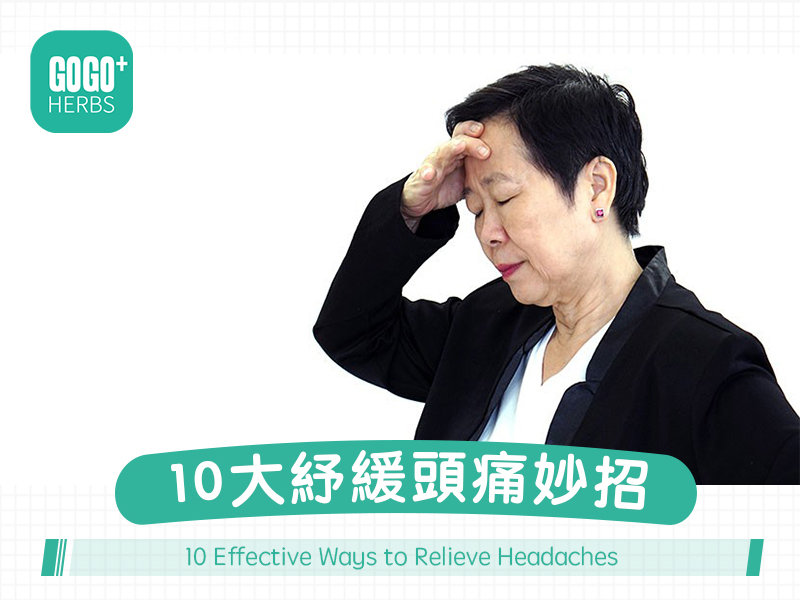
10 Great Ways to Relieve Headaches
Do you carry painkillers in your bag? When you have a headache, do you endure it, or do you ask others to endure your bad temper when you have a headache? Did you accidentally do something wrong to cause such a severe headache? Besides medication, are there any other better ways to relieve pain?
Yes! A complete cure.HeadacheTo avoid harming your liver, kidneys, and digestive system with medication, the best approach is to focus on three aspects: stretching and relaxation, improving circulation, and calming your mind. Below, I offer 10 ways to relieve headaches, hoping everyone can become their own healer.
1. Turn your head and shrug your shoulders
Among the headache patients I've encountered, the majority suffer from muscle tension headaches. When I press lightly behind their ears, they cry out in unbearable pain. People who stare at screens for too long, scroll through their phones too intently, and those under immense work and life stress are more likely to experience this type of pain than others.
I taught them to do this: Sit firmly with your feet on the ground, slowly inhale and exhale, and rotate your head 21 times counterclockwise and 21 times clockwise. When lowering your head, try to bring your chin as close to your neck as possible. Then, relax the muscles around your eyes, make a fist, and use your knuckles to gently scrape your brow ridge, inner corner of your eye, outer corner of your eye, and cheekbone below your outer eye socket. Finally, stretch your shoulders, rotating them forward and backward 21 times each. This takes 3-5 minutes and is very effective at relieving headaches, much faster than taking painkillers which take half an hour.
Other types of headaches or throbbing pains experienced during exercise are pulsating or throbbing. If the headache is caused by overly strenuous exercise or sudden, excessive vasoconstriction due to a long period of inactivity, remember to perform head-turning, shoulder-circling, head-to-toe stretching, and other warm-up exercises for at least 10 minutes. This will ensure that all your cells receive the "it's time to exercise" signal, preventing headaches and nausea halfway through your workout. (Recommended reading: 5-minute neck and shoulder relaxation)
2. Pull the ears
Gently pull, pinch, and lift the helix, earlobe, and ear tip. When blood flow to the head and face is poor, our ears are the most effective switch to promote circulation.
Physical methods, like painkillers, also have "enhanced" versions. In addition to treating the ear itself, you can also work on the sides of the head around the ear. Use your knuckles, a gua sha board, or a comb—whatever is most convenient and comfortable for you is the best choice.
Especially for women who are out and about with makeup on, if they want to relax their eye muscles but are afraid of rubbing off their freshly drawn eyebrows, pulling on their ears and relaxing their head can also have a good pain-relieving effect.
3. Press the pain-relieving acupoint.
To be more precise, the acupoints I frequently use include Baihui (GV20) at the very top of the head, Fengchi (GB20) in the depression one inch inside the hairline on both sides of the back of the head, the well-known Taiyang (EX-HN5) acupoint, and Kunlun (BL60) in the depression between the outer side of the ankle and the Achilles tendon. These versatile acupoints have a certain pain-relieving effect on headaches caused by poor blood circulation, muscle tension, or mental stress.
4. Scalp Spa
When you're too tired to do anything yourself, leave it to the professionals! Find a hair salon you can trust as your secret stress-relieving base, book a scalp spa, and enjoy shaving, massage, rubbing, and steaming. I often relax and fall asleep during this process.
In addition, combing my hair before bed is also a daily skincare routine for me. The Du meridian, bladder meridian, gallbladder meridian, and stomach meridian all pass through the head. Taking care of these meridians can not only prevent headaches but also relieve fatigue throughout the body, help me fall asleep, and promote deeper sleep. You can use a horn comb, a wooden comb, or a toothed comb; choose whichever you prefer.
5. Just the right amount of sleep
Many people nowadays like to work and play hard during the week, staying up late to work, drink, and sing, and then try to catch up on sleep on the weekend, sleeping for more than 12 hours or even longer. Prolonged lying down depletes your energy; the more you sleep, the more tired you become, and it's also easy to get headaches.
Sleep can be improved, but it shouldn't be done by making up for it over a long period of time. The key to good health is timing! What is the best time to sleep? The answer is "midnight naps"—between 11:00 PM and 1:00 AM, and between 11:00 AM and 1:00 PM.
Sleeping too much can cause headaches, but not enough sleep can too! What constitutes "enough" sleep? Depending on individual constitution, 6-9 hours is considered normal. If 2-4 hours of that sleep are deep sleep, not only will headaches disappear, but it will also greatly benefit overall health. (Recommended reading: 3 Harms of Sleep Deprivation!)
6. Optimize your diet
I once met someone who frequently ate out and whose neck would immediately tighten and head would start to hurt every time they ate MSG. This is because the sodium glutamate in the seasoning causes blood vessels to constrict. Think back to your own headache history; was it caused by what you eat? Common foods that may trigger headaches include: cheese, red wine, beer, hot chocolate, popsicles, sausages, and foods or dishes containing chemical seasonings. Individual constitutions vary; if eating these causes you a headache immediately, try to avoid them next time. If it doesn't affect you, there's no need to be overly concerned about the above list.
Here's a list of good foods for preventing headaches, primarily those rich in vitamins B and C, magnesium, iron, and calcium. Examples include guava, black dates, whole grains like brown rice, dark green vegetables like spinach, bean sprouts, sesame seeds, kelp, and white sunflower seeds. Additionally, Rhodiola rosea and saffron are good for preventing altitude sickness-related headaches (saffron should be avoided during pregnancy, menstruation, and when taking anticoagulants).
7. Have a cup of coffee
Drinking coffee properly can help prevent headaches, especially migraines and acute headaches related to vasodilation. Many people have told me that coffee is very effective. I myself love black coffee and have recently become obsessed with geisha coffee. As long as you don't binge on coffee or drink eight cups a day, and you enjoy it savoring the experience, coffee is fine.
The safe daily limit for caffeine is 300-400 mg, which translates to about 2-3 cups of a 200cc filter bag. Within this safe range, caffeine can relieve pain; however, excessive caffeine can trigger headaches. Those exceeding this limit should limit their intake. (Recommended reading: Coffee – can both relieve and worsen headaches!)
8. Use medication with caution.
Habitually taking painkillers can trigger withdrawal symptoms when you stop taking them, due to caffeine withdrawal (many painkillers contain high levels of caffeine), leading to frequent cravings. Originally, you took medication to get rid of headaches, but unexpectedly, this created an additional external factor that causes headaches, making things worse. Knowing that painkillers are not the only solution for headaches, please use medication more cautiously to prevent dependence.
9. Extinguish the anger
"A single thought of anger opens a million doors of obstacles." Among the obvious negative effects of anger on the body are soaring blood pressure, muscle tension, and splitting headaches. "Your Majesty, please calm your anger and take care of your health!" This line frequently appears in period dramas. Indeed, not getting angry is not for others' sake, but for your own!
Getting angry is like punishing yourself for someone else's mistake; even if the fault lies with them, you're the one who suffers. The principle of health is simple: don't create trouble for yourself unnecessarily. Forget it, let it go!
10. Cherish yourself
Besides anger, I see psychogenic headaches as a manifestation of somatic psychological burdens. They often appear in highly self-disciplined, successful people. Do you constantly feel you're not good enough? Do you need to try harder? When pushed to the limit, it's hard not to get a headache.
I used to be a very demanding person, and I would feel "terrified" and "completely overwhelmed" when things didn't go as planned. Until one day, an old man smiled and said, "Don't rush, young man, take your time, you have plenty of time!" These words were like a magic spell, and they really made me slow down from then on.
It's good to be proactive and want to unleash your talents, but the pursuit of excellence is endless. Thinking you'll only rest when you reach the "finish line" will only lead to more headaches. Life is long; don't hesitate to rest when it's time—press the "pause button." Stop occasionally and look with loving eyes at everything you've accomplished/messaged. On the road to happiness, if you get lost, you can turn back; knowing where the goal is, you'll always reach it! We are compassionate towards "others," but we often forget that we are also "humans," forgetting to be compassionate towards ourselves. Frequently quiet your mind, give yourself a thumbs up, accept and appreciate everything you do; only love is the true medicine that can heal you.
Don't ignore headache warning signs
The above 10 methods treat headaches as an "illness" that can be relieved and improved on your own. However, if a headache appears as a "symptom," a symptom caused by other diseases, it is a life-threatening warning and should not be ignored.
If you rarely experience headaches, but suddenly develop a severe headache accompanied by nausea, vomiting, high fever, visual disturbances, blindness, aphasia, or unilateral motor impairment, this could be a sign of a sudden, intense headache.Neurosensory abnormalitiesSymptoms such as hemiplegia, or headaches that persist for two or three days without relief from medication, are all warning signs. Please do not endure them and seek medical attention immediately.





Author. gogoherbs
Related Products:
-
Sale!
 Out of stock
Webber Naturals – Triple Strength Omega-3 (900mg EPA / DHA) 200 capsules Value Pack
Original price was: $398.00.$280.00Current price is: $280.00. Add to basket -
Sale!

Kirkland Signature – Omega-3 Concentrated Deep Sea Fish Oil Pills 1300mg 330 Capsules
Original price was: $350.00.$298.00Current price is: $298.00. Add to basket -
Sale!
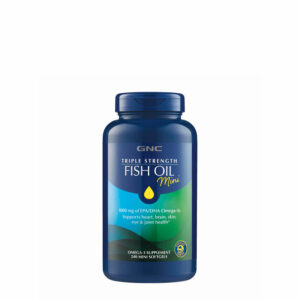
GNC – Triple Super Fish Oil Mini Capsules 240 Capsules
Original price was: $298.00.$245.00Current price is: $245.00. Add to basket -
Sale!

Swisse – Ultiboost Odorless High Concentration Wild Fish Oil 1500mg 400 Capsules
Original price was: $298.00.$220.00Current price is: $220.00. Add to basket