






























































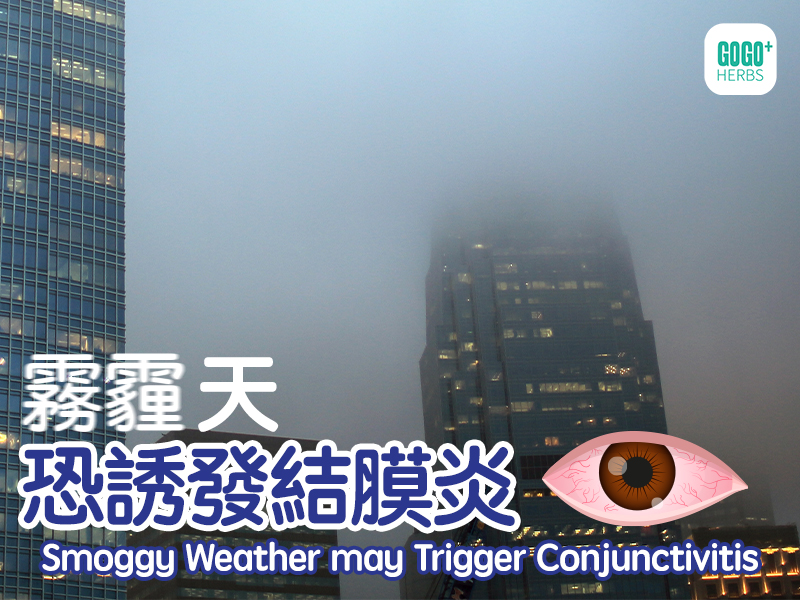
Poor air quality not only exacerbates respiratory problems but also poses a risk of pollutants "draining" tears, triggering dry eye and conjunctivitis. A woman recently spent only ten minutes outdoors on a smoggy day, and her eyes became excessively watery and stinging. Medical examination revealed conjunctivitis, with scratches on her conjunctiva. Ophthalmologists explain that air pollutants not only drain tears and disrupt the eye's oil-water balance, but the resulting foreign body sensation also leads to unconsciously rubbing the eyes, which only worsens the damage. Ophthalmologist Dr. Tam Tak-yau stated that during seasons with severe air pollution, cases seeking medical attention for eye problems increase by 20% compared to other seasons. Carbon compounds, particulate matter, sulfur oxides, nitrogen oxides, and lead in air pollutants come into direct contact with the eye surface, causing the cornea or conjunctiva to become dry and feel like there's something in it, leading to conjunctivitis or keratitis. Repeated rubbing of the eyes causes the foreign object to rub against the cornea or conjunctiva repeatedly, resulting in cracks and scarring.Affects eyesightEarlier this month, there were several days of severe air pollution. A 60-year-old woman experienced severe eye discomfort after being outdoors for only ten minutes and needed medical attention, demonstrating how quickly air pollution can damage the eyes. Dr. Tan advises minimizing outdoor time during periods of severe air pollution to avoid eye damage. If it's uncertain whether the damage is to the cornea or conjunctiva, doctors will use an ophthalmic slit lamp with contrast agent to examine the affected area, followed by treatment with eye drops. Patients can also wear medicated contact lenses to repair damaged corneas or conjunctiva, but these need to be worn continuously for a week without needing to be removed. Dr. Tan points out that in addition to air pollution, keratitis or conjunctivitis can be triggered by incomplete makeup removal or frequent contact lens wear, especially tinted contact lenses (commonly known as "big-eyed lenses"), where dyes or impurities can damage the eyes, making them more prone to inflammation. As for the worsening air pollution...Dry eye syndromeThe cause of dry eye is that pollutants affect the eye's oil-water balance, accelerating tear loss. Prolonged contact lens wear or focused screen time are contributing factors. Doctors typically prescribe medicated eye drops to relieve symptoms. For the most common cause of dry eye, meibomian gland dysfunction, vesicular thermal therapy (VTP) can be used to improve sebaceous gland blockage and increase oil secretion. Doctors usually use a tear secretion test to assess the degree of dryness. Normal tear secretion should wet a test strip up to 10 millimeters; less than 5 millimeters is considered dry eye. Dr. Tan does not recommend that people buy eye drops from the market, as some eye drops contain steroids, preservatives, or antibiotics. Long-term use of steroids can lead to glaucoma. He suggests reducing time spent outdoors during periods of air pollution to avoid eye damage.
Related Post:
![母親用滴管把少量植物藻油滴在食物匙上,幼兒坐在餐桌旁]()
A Complete Guide to Plant-Based Algae Oil Omega-3: Odorless, Vegetarian, and Suitable Omega-3 Choices for Pregnant Women and Infants
![牛樟芝子實體與膠囊製品示意]()
What is Antrodia camphorata? A complete guide to its ingredients, research evidence, and precautions for consumption.
![世界心臟日護心飲食場景,香港中年夫婦享用豆漿、豆腐、雞蛋與堅果,旁有心臟及細胞膜卡通示意]()
World Heart Day: Heart Health in Hong Kong Starts with Daily Life | What are the Benefits of Lecithin? Which of Three 1200mg Products to Choose From?
![香港關節健康洞察報告封面:中年及長者在香港步行]()
How to choose joint health supplements? 8 best-selling formulas and repurchase information help you find the right daily option.