










































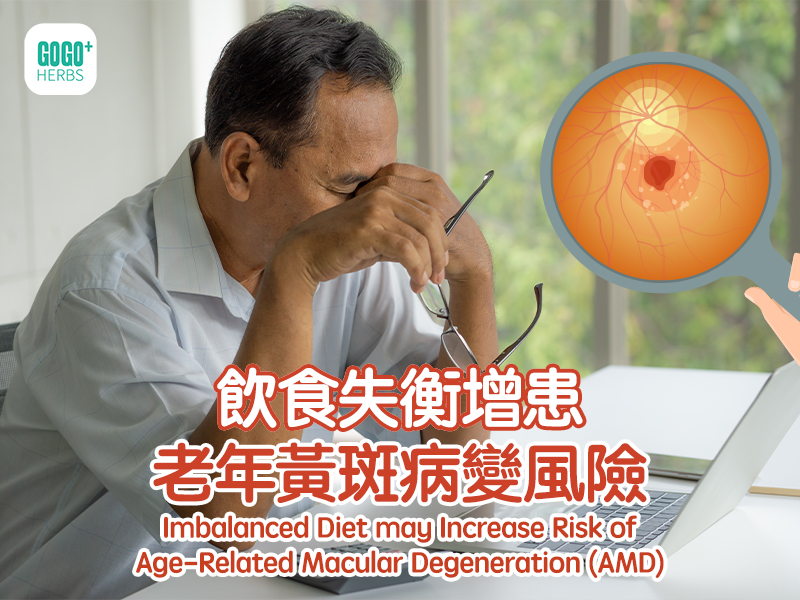
Dietary imbalance increases the risk of age-related macular degeneration.
Age-related macular degeneration is a common condition among the elderly.Visual impairmentOne of the common causes is macular degeneration, and due to genetic factors, the incidence of wet macular degeneration is higher in Hong Kong residents than in other regions. A study from the University of Hong Kong found that a diet high in red meat and low in deep-sea fish and dark green vegetables can lead to nutritional imbalances, increasing the risk of wet macular degeneration. Furthermore, poor dietary habits can promote the production of fatty acid oxides from free radicals, further increasing the risk factors for wet macular degeneration. The findings have been published in *Free Radical Biology & Medicine*, one of the top 61 TP4T physiology and medical journals globally.
The main symptom of age-related macular degeneration is the gradual appearance of central retinal cells due to degeneration.Blurred visionAs the disease progresses, some patients with dry macular degeneration may develop wet macular degeneration, characterized by neovascularization in the macula, leading to rapid vision loss. Although patients with wet macular degeneration can currently control neovascularization through injections of anti-vascular endothelial growth factor, effective disease prevention measures are still relatively lacking.
Dr. Li Zhongying, Assistant Professor of the School of Biological Sciences at the University of Hong Kong, along with doctoral student Liang Haokeng, Dr. Wang Yixuan, Honorary Clinical Associate Professor of the Department of Ophthalmology at the University of Hong Kong, and Dr. Wu Liqi, Honorary Clinical Assistant Professor, conducted the first observational study in Asia. The study found that Hong Kong residents' daily diets, characterized by excessive red meat consumption and insufficient intake of deep-sea fish and dark green vegetables, resulted in an excess of omega-6 fatty acids and a deficiency of omega-3 fatty acids and carotenoids. This nutritional imbalance increases the risk of developing wet macular degeneration.
This study recruited 99 patients with wet macular degeneration and 198 age- and sex-matched healthy individuals. Researchers collected plasma samples from these volunteers, measuring the levels of biochemical substances, including carotenoids, fatty acids, and their oxidation products. They also collected information on the volunteers' dietary habits through questionnaires to assess the relationship between dietary patterns and plasma-related components. The results showed that the participants consumed deep-sea fish less than twice a week on average, which was insufficient to obtain the multiple health benefits of omega-1, T1, and T3 fatty acids.
The University of Hong Kong stated that this is the first study to demonstrate that adjusting the appropriate ratio of omega fatty acids in the diet can significantly reduce the risk of age-related macular degeneration caused by free radicals in older adults. The research team recommends that people regularly consume foods rich in omega-1, 1, and 3 fatty acids, such as salmon and flaxseed, as well as foods rich in carotenoids, such as spinach, tomatoes, and kale, to prevent the development of wet macular degeneration.