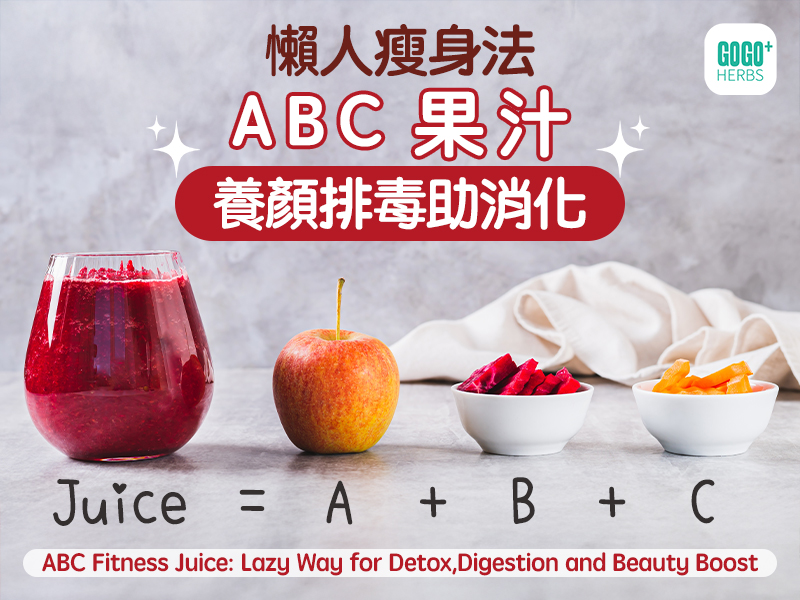
The nutritional truth about ABC juice: What do you get in a glass of apple, beetroot, and carrot?
ABC juice is a smoothie made by blending apples, beets, and carrots (with the peel on) into a puree. It is indeed a nutritious drink: based on the recipe at the end of this article, one cup provides approximately... 7.9 grams of dietary fiber、Approximately 690 mg of potassiumas well asVitamin A exceeding the recommended daily intake for adults。
But it also contains an agreement 22 grams of sugar,about 136 kcalThe two most frequently advertised effects—"detoxification" and "belly slimming"—do not align with our current understanding of how the human body functions. The following will use verifiable figures to explain what this drink truly provides and how to actually drink it.
I. What is ABC Juice? Name, Origin, and Common Variations
The name ABC comes from the first letters of the English words for three ingredients: Apple, Beetroot, and Carrot. It's popular in Europe and America as a "juice," but the preparation method differs from typical clear juice—the three ingredients, peel and all, are blended together in a blender into a puree, resulting in a thick, smoothie-like consistency. Similar recipes are named with different letter combinations, such as ACC or BBC, differing only in the type of ingredient used.
It's worth noting that during the beverage's rise in popularity in Europe and America, many celebrities mentioned in interviews that they had a habit of drinking it. These are matters of personal dietary preference.It cannot be used as a basis for efficacy.This article uses only verifiable nutritional data and research results.
The real difference lies not in the name, but in...Does it retain dietary fiber from the peel and pulp?This will be explained in Section 4.
II. What exactly do you get in a cup of ABC?
First, define the serving size. This site uses "cups" as the unit in recipes, based on the Department of Health's conversion.One cup is approximately equal to 240 milliliters.By chopped amount, 1 cup of apple is approximately 125 grams, 1 cup of carrot is approximately 128 grams, and ⅓ cup of beetroot is approximately 45 grams. All figures below are taken from… USDA FoodData Central A database of food nutrition information.
Table 1: Nutritional contribution of one cup of ABC fruit and vegetable puree (approximately)
| project | content | refer to |
|---|---|---|
| calorific value | Approximately 136 kcal | The calories are roughly equivalent to half a bowl of white rice. |
| 糖 | Approximately 22 grams | Approximately 5.5 teaspoons |
| Dietary fiber | Approximately 7.9 grams | The recommended daily intake for adults is approximately 25 grams of ⅓ |
| 鉀 | Approximately 690 mg | — |
| Vitamin A | Approximately 1,070 micrograms of RAE | This exceeds the recommended daily intake for adults (900 micrograms of RAE for men and 700 micrograms for women). |
| beta-carotene | Approximately 10,650 micrograms | Mainly from carrots |
| Vitamin C | Approximately 16 mg | It helps with the absorption of non-heme iron. |
| folate | Approximately 77 micrograms | Mainly from beetroot |
| 鐵 | Approximately 0.9 mg | Plant-based nonheme iron |
| protein | Approximately 2.3 grams | — |
| Omega-3 (ALA) | Approximately 16 mg | Far below the recommended daily intake of 1.11 TP1T (1.6 grams) for adults. |
Table 2: Nutritional information for 100 grams (raw) of the three ingredients
| project | Apple (with peel) | beetroot | carrot |
|---|---|---|---|
| calorific value | 52 kcal | 43 kcal | 41 kcal |
| 糖 | 10.4 grams | 6.8 grams | 4.8 grams |
| Dietary fiber | 2.4 grams | 2.8 grams | 2.8 grams |
| 鉀 | 107 mg | 325 mg | 320 mg |
| beta-carotene | 27 micrograms | 20 micrograms | 8,285 micrograms |
| Vitamin A (RAE) | 3 micrograms | 2 micrograms | 835 micrograms |
| folate | 3 micrograms | 109 micrograms | 19 micrograms |
| Vitamin C | 4.6 mg | 4.9 mg | 5.9 mg |
| 鐵 | 0.12 mg | 0.81 mg | 0.30 mg |
Three things can be seen from the two tables. First,Vitamin A comes almost entirely from carrots.;second,Folic acid is most abundant in beetroot.(109 micrograms per 100 grams, which is relatively high among common vegetables); Third,Apples have the highest sugar content.This is precisely the focus of the following chapters.
3. What is "detoxification" all about?
The original text described this drink as a "detox miracle," and stated that the combination of three ingredients "helps the body eliminate toxins." This section will explain that clearly.
The British Dietetic Association (BDA) on its official websiteDetox Diet Instructions PageIn the text, it is written quite directly:The concept of detoxification is nonsense.The BDA explained that, unless there is a serious illness, the human body is a fully developed system; the skin, intestines, liver, and kidneys continuously filter, break down, and excrete waste products such as alcohol, drugs, digestive waste, dead cells, pollutants, chemicals, and bacteria. The BDA concluded that:No pill, specific drink, patch, or lotion can do it better or more magically; detox diets are "a marketing myth, not a nutritional reality."。
This is not a new point of view on this site—[the site's internal <...]Drink lemon water to detoxify and aid digestionThe article in question has already reached the same conclusion regarding lemonade. The two articles are consistent, so readers need not be confused.
So, does this drink still have value? Yes, but its value doesn't lie in "detoxification." Its real contribution is:This drink combines the dietary fiber, potassium, and carotenoids of three kinds of fruits and vegetables in an easy-to-drink format.As part of daily fruit and vegetable intake, the argument only holds water if we replace "detoxification" with "supporting the body's own metabolic and excretory functions which are already in operation."
IV. Pureeing with pulp vs. filtering juice: Fiber is the key.
If I could only remember one key point from this article, it would be this one.
A team from the University of Copenhagen in Denmark conducted a crossover trial involving 23 participants, with five phases of four weeks each, directly comparing...Whole apple (550g daily), apple pomace (22g), cloudy juice and clear apple juice (500ml each)Effects on blood lipids (Ravn-Haren et al.,Eur J Nutr, 2013;PubMed 23271615).turn out:
- Whole apples: Lower LDL-C by approximately 6.7%
- Apple pulp: decreased by approximately 7.9%
- Cloudy juice (with pulp retained): Decreases by approximately 2.2%
- Clarified apple juice: actually contains approximately 6.91 TP4T more than whole apples and apple pulp.
The research team's conclusion is clear:Fiber is essential for apples to lower cholesterol in healthy individuals.Clarify that apple juice cannot be used as a substitute for whole apples. The study also observed that apples had no significant effect on high-density lipoprotein cholesterol (HDL-C), triglycerides, body weight, waist-to-hip ratio, blood pressure, or inflammatory markers (hs-CRP).
This result perfectly explains the meaning of "pulverizing the whole thing, skin and all":It doesn't make the juice "more premium," but rather it retains the water-soluble fiber that would otherwise be filtered out.The Centre for Health Protection also pointed out in "Non-Communicable Diseases Insights" that one of the main mechanisms of dietary fiber is in the small intestine.It binds cholesterol particles, preventing them from entering the bloodstream and excreting them in feces.。
V. The Nutritional Roles of the Three Major Ingredients
Apples: Pectin and Polyphenols
Apple's water-soluble fiberpectinApples are the primary food source, and also the subject of the study in the previous section. Furthermore, apples contain phytochemicals such as quercetin and catechins, making them a commonly used food in polyphenol and cardiovascular research. The original text mentioned that apples "can lower inflammatory markers such as CRP"—in the rigorous crossover trial in the previous section,hs-CRP did not show significant changes.Therefore, this statement should be changed to "apple polyphenols are the subject of relevant research" rather than written as established efficacy.
In terms of potassium, apples contain about 107 mg per 100 grams, which is a common source of potassium found in fruits and vegetables;World Health OrganizationIt is recommended to increase potassium intake and balance sodium intake by increasing fruit and vegetable consumption, rather than relying on a single food.
Beetroot: Dietary nitrates and blood pressure
The most studied component of beetroot isDietary nitrates (NO₃⁻)Once inside the body, it can be converted into nitric oxide, which dilates blood vessels. A meta-analysis of 22 randomized controlled trials involving approximately 1,250 participants found that drinking beetroot juice...The average decrease in systolic blood pressure was approximately 3.55 mmHg, and the average decrease in diastolic blood pressure was approximately 1.32 mmHg.The groups that consumed the product for a longer period (14 days or more) and in larger quantities (500 ml per day) showed a more significant reduction (Bahadoran et al.).Adv Nutr, 2017;PubMed 29141968)。
What needs to be noted isDose dropMost of the studies mentioned above used 250 to 500 ml of pure beetroot juice daily, while this recipe only contains ⅓ cups (about 45 grams) of beetroot. Therefore, the research results of "beetroot juice lowering blood pressure" cannot be directly applied to a cup of ABC. It should be understood as "beetroot is the ingredient in this cup that is most associated with vascular health research".
Regarding athletic performance, current evidence focuses onContinuous aerobic exerciseThe meta-analysis for high-intensity interval training (HIIT) showed no significant gain (Wong et al.,Nutrients2021;PubMed 34835931Related research is still accumulating, and readers should not regard beetroot as a shortcut to improving physical fitness.
In addition, beetroot contains about 109 micrograms of folic acid per 100 grams, which is relatively high among vegetables; folic acid is involved in red blood cell production. The original manuscript stated that beetroot "supplements iron and improves anemia"—beetroot only contains 0.81 milligrams of iron per 100 grams, and it is plant-based non-heme iron, which has a low absorption rate.A more practical explanation is that the approximately 16 milligrams of vitamin C in this cup helps with the absorption of non-heme iron in the same cup.If you suspect you have anemia, you should consult a doctor and follow their instructions. It is not advisable to rely solely on vegetable and fruit juices.
Carrots: Beta-carotene and Vitamin A
Carrots are the nutritional star of this drink. Every 100 grams contains approximately 8,285 micrograms of beta-carotene, as well as 256 micrograms of alpha-carotene and lutein/zeaxanthin. Beta-carotene can be converted into...Vitamin AEach 100 grams provides approximately 835 micrograms of RAE. Vitamin A is related to the integrity of epithelial tissues (including mucous membranes), the normal functioning of the immune system, and visual function. (USA) NIH Office of Dietary SupplementsThere are complete character descriptions.
The original manuscript also stated that carrots have a "diuretic function" that can eliminate toxins and prevent cystitis, but there is no verifiable evidence for this. The carrot's contribution to this drink is...Extremely high in vitamin A precursors and fiberThese two points are already worth writing about.
6. Want to "slim your belly" with this? First, understand these three realities.
First, it contains calories.One cup contains approximately 136 kcal. If you drink an extra cup instead of replacing other foods, the calorie intake will be net increased.
Secondly, it is high in sugar.One cup contains about 22 grams of sugar, which is close to 5.5 teaspoons per day. The WHO recommends that free sugars should be less than 101 TP4T of total daily energy, and further reduced to 51 TP4T (about 25 grams per 2,000 kcal) for additional benefits.
Third, the difference between drinking and chewing.Pureed fruits are consumed quickly, but the feeling of fullness is usually not as strong as when you slowly chew a whole fruit, making it easy to unknowingly drink more. This is why "drinking" fruits and vegetables is not equivalent to "eating" them in terms of weight management.
Regarding "reducing fat accumulation and slimming the abdomen," it should be noted that:The increase or decrease of body fat depends on overall calorie balance, and abdominal fat cannot be "localized" by specific foods.To understand the interpretation of waist circumference, central obesity, and metabolic risk, please refer to the following reading:How to measure weight loss results? Waist circumference is a better indicator of metabolic risk than weight.〉。
From another perspective: this drink could become a part of a weight management diet.AlternativeThis is part of the "replacement" process—by replacing a sugary snack or a sugary drink with it, you replace 22 grams of sugar and 136 calories with fiber, potassium, and vitamin A. The key is "replacement," not "extra."
7. Sugar and Teeth: Fruit and vegetable purees with pulp are still considered beverages that should be restricted.
Many people mistakenly believe that "no added sugar, no residue" means it's safe to drink anytime. However, the UK's National Health Service (NHS) has stated..."5 A Day: What Can Be Calculated?"The page states:Crushing fruits and vegetables into juice or smoothies releases the sugar, which can damage teeth. Even without added sugar, juice and smoothies are still sugary drinks. It is recommended to consume no more than 150 ml per day, and to consume them with meals rather than as a snack between meals.BDA also gives the same upper limit of 150 ml.
The conversion in Hong Kong is also worth noting. The Department of Health's official "2+3 daily" guideline states that one serving of fruit is approximately equal to ¾ cup (180 ml) of unsweetened pure fruit juice, but...Since pure fruit juice is lower in dietary fiber and contains fewer nutrients than whole fruit, drinking ¾ cup (180 ml) or more of fruit juice daily should only be counted as one serving of fruit.(See"Living a Healthy New Direction": Common Questions about Healthy Eating)。
This recipe yields approximately 350 to 450 ml.This is already two to three times the recommended upper limit.In practice, there are two approaches: one is to halve the amount of fruits and vegetables so that the finished product is close to 150 to 180 ml; the other is to keep the original amount but divide it into two or three servings and consume it with regular meals.
8. How to drink it practically? Portion size, pairings, and timing.
Recipe (original method retained, with added gram measurements for easy conversion)
- Apples: 1 cup chopped (about 125 grams; or 1.5 cups, about 190 grams)
- Beetroot: ⅓ cup (about 45 grams)
- Carrots: 1 cup chopped (about 128 grams)
- Water: ½ cup (approximately 120 ml)
practice
- Wash the apples, beets, and carrots thoroughly with clean water; you can follow the Food Safety Centre's advice to dry them with a clean towel or paper towel.
- Cut the food into pieces that fit into the food processor, skin and all.
- Put all the ingredients into a blender and blend until smooth. Drink immediately after blending.
Five practical suggestions
- Control the portion sizeThe recommended daily intake is 150 to 180 ml, with the remaining amount of fruits and vegetables consumed whole.
- Sui Zheng CateringDo not drink it like water; this can reduce the impact on teeth and also slow down sugar absorption.
- Do not replace daily 2+3The Department of Health recommends that adults consume at least two servings of fruit and three servings of vegetables daily. Smoothies should only be a part of this diet, not the entire diet.
- Can be eaten with calcium-rich foods(For example, cheese, milk, or calcium-fortified plant-based milk). The US NIDDK points out that adequate calcium can bind with other substances in the digestive tract, and this is especially worth discussing with a doctor for people with a history of calcium oxalate stones.
- Want to reduce sweetness or glycemic index?You can reduce the proportion of apples and increase the proportion of carrots; according to data from the University of Sydney, the glycemic index is about 36 for apples, about 39 for carrots, and about 64 for beets, which are the highest of the three.
IX. Safety and Precautions
Yellowing of the skin: Carotenemia
Long-term consumption of large amounts of vegetable and fruit juices containing high levels of carotenoids may lead to...Carotenemia—Carotenoids deposit in the stratum corneum of the skin, causing the skin (especially the palms and soles) to turn orange-yellow. This is a benign and reversible phenomenon, and will gradually fade as intake is reduced (Silverberg and Lee-Wong).Cutis, 2014;PubMed 24897145This is different from jaundice caused by liver and gallbladder problems: if the skin turns yellow...This may be accompanied by yellowing of the whites of the eyes, dark urine, fatigue, or abdominal pain.If you have a bad complexion, you should seek medical attention as soon as possible and not assume it's just because you have a "good complexion".
Red urine: Beetroot urine
Urine turning pink or red after eating beets is called...BeeturiaThis is due to beet pigment being excreted in urine, and is a harmless and temporary phenomenon.PubMed 30725697However, if you experience pain, fever, difficulty urinating, or persistent hematuria, you should seek medical attention as soon as possible.
Oxalate and history of kidney stones
Beetroot is a vegetable with a relatively high oxalate content. (NIDDK, USA)Dietary guidelines for kidney stonesIt is noted that doctors may recommend reducing oxalate intake for people who have had calcium oxalate stones, and emphasize...Drinking plenty of water is the most important thing to do to prevent kidney stones.。Those with a history of kidney stones should consult a doctor or nutritionist before drinking it daily.
Potassium and kidney function, medication
One cup contains approximately 690 milligrams of potassium.Individuals with impaired kidney function or those taking medications that may affect blood potassium levels (such as potassium-sparing diuretics, ACE inhibitors, and ARBs for blood pressure) should have their potassium intake individually assessed by a doctor or nutritionist.It is not advisable to drink high-potassium beverages every day without consulting a doctor.
Blood pressure medication and nitrate medication
If you are taking antihypertensive medication or nitrate angina medication, you should consult your doctor or pharmacist before drinking large amounts of beetroot juice, as the vasodilatory effects of the two may be combined.
Vulnerable groups
Centre for Food SafetyFood Safety Newsletter (Public Edition)remind:Fresh fruit juice may be contaminated with microorganisms from inside and outside the fresh fruit unless the juice is processed to remove harmful microorganisms. Pregnant women, infants, young children, the elderly, and vulnerable groups with weakened immune systems should avoid eating high-risk foods, including unprocessed fruit juice and fresh fruit salad.
Hygiene guidelines for raw food and food preservation
- Do not wash fruit with soap or detergent; rinse with clean water and dry with a clean towel or paper towel.
- Use different cutting boards and knives when handling ready-to-eat fruits and uncooked foods (such as raw meat).
- Fruit peels are a beneficial source of dietary fiber and can generally be eaten with the peel on after being thoroughly washed. However, if you wish to reduce the risk, especially when you are away from home, you can peel the fruit first.
- Freshly cut or peeled fruit should be eaten immediately; fruit kept at room temperature for less than 2 hours can be refrigerated (total time limit: 4 hours); fruit kept at room temperature for 2 to 4 hours must be eaten within 4 hours and should not be put back in the refrigerator; fruit kept for more than 4 hours should be discarded; refrigerated cut fruit should be eaten within 1 to 2 days.
10. Frequently Asked Questions
Does ABC juice really detoxify?
No. The human body has its own system for processing waste: the liver is responsible for breakdown and metabolism, the kidneys and intestines for excretion, and the skin is also a barrier; this process is continuous. The British Dietetic Association has clearly stated that the concept of "detox" itself is unfounded, and detox diets are a marketing claim. The value of this drink lies in its dietary fiber, potassium, and carotenoids, not in "washing away" toxins.
Can drinking a glass of ABC juice every day help with weight loss?
It depends on where you put it. One cup contains about 136 kcal and 22 grams of sugar; if you drink it "extra," the calorie intake is net increased. If you use it to "replace" a sugary snack or a sugary drink, it's like trading refined sugar for fiber, potassium, and vitamin A, which is a meaningful substitution. Abdominal fat cannot be eliminated locally by a single food; it still requires overall calorie balance and physical activity.
Can ABC juice replace eating fruits and vegetables?
It is not a complete substitute. The Department of Health recommends that adults consume at least two servings of fruit and three servings of vegetables daily, noting that pure fruit juice is lower in dietary fiber and nutrients than whole fruit. Therefore, ¾ cup (180 ml) or more of fruit juice daily should only be counted as one serving of fruit. Pureing retains fiber and is better than clarified juice, but the feeling of fullness and the chewing process are still different, so it should be included as part of your fruit and vegetable intake.
Should apples, beets, and carrots be peeled?
Fruit peels are a good source of dietary fiber and can generally be eaten with the peel on after thorough washing. Apple and carrot peels contain more fiber and phytochemicals, so it's reasonable to keep them after washing; however, if you don't like the texture or want to reduce risk while traveling, you can peel them first. If you leave the peel on, be sure to rinse thoroughly with water and dry with a clean towel, and use a separate cutting board and knife from those used for raw meat.
Is beetroot a good source of iron and blood tonics?
Beetroot contains only about 0.81 mg of iron per 100 grams, which is non-heme iron from plants. Its absorption rate is low, so it's not suitable as a primary source of iron. A more practical explanation is that this serving contains about 16 mg of vitamin C, which helps with the absorption of non-heme iron from the same meal. If iron deficiency anemia is suspected, a doctor should examine the patient and treat according to their instructions.
Is it normal for urine to turn red after drinking something?
This is beetroot urine, caused by beet pigment being excreted in the urine. It is a harmless and temporary phenomenon that usually subsides on its own. However, if it is accompanied by pain, fever, difficulty urinating, or persistent hematuria, it is not beetroot urine and you should seek medical attention as soon as possible.
What causes skin to turn yellow?
Long-term consumption of large amounts of vegetable and fruit juices containing high levels of carotenoids may lead to carotenemia, causing the skin on the palms and soles to turn orange-yellow. This is benign and reversible. It is important to differentiate this from jaundice caused by liver or gallbladder problems: if symptoms such as yellowing of the whites of the eyes, dark urine, fatigue, or abdominal pain occur simultaneously, seek medical attention as soon as possible and do not delay treatment by assuming it is just a sign of "good complexion."
Can I drink this if I have high blood pressure and am taking blood pressure medication?
In general, servings of beetroot juice as part of your diet are fine. However, if you plan to drink large amounts or consume it daily, consult your doctor first. This is because the dietary nitrates in beetroot may have an additive effect on the vasodilatory effects of blood pressure medications and nitrate-based angina drugs. Do not adjust your medication dosage on your own. For more information on blood pressure and overall cardiovascular management, please read the cardiovascular-related content on this website.
Can people with diabetes or those who need to control their blood sugar drink it?
Small amounts are acceptable, but sugar content must be factored in: one cup contains approximately 22 grams of sugar. Even without added sugar, the sugar is released after blending. It's recommended to limit consumption to around 150 ml, consumed with meals, and reduce the proportion of apples. For glycemic index (GI) reference, apples are around 36, carrots around 39, and beets around 64, which are among the higher of the three. The actual amount consumed should be discussed with a doctor or nutritionist.
Can someone with a history of kidney stones drink this?
Beetroot is a vegetable with a relatively high oxalate content. People with a history of calcium oxalate stones may be advised by their doctors to reduce their oxalate intake; drinking plenty of water is also the most important way to prevent kidney stones. It is recommended to consult a doctor or nutritionist first, and consider eating it with calcium-rich foods, as adequate calcium can bind with other substances in the digestive tract.
Can pregnant women and young children drink it?
The Centre for Food Safety advises pregnant women, infants, young children, the elderly, and people with weakened immune systems to avoid unprocessed fruit juices and fresh fruit salads, as fresh fruit juices may be contaminated with microorganisms. Portions for young children should also be smaller, and care should be taken to prevent choking and to avoid excessive sugar intake. If in doubt, please consult a doctor or nutritionist.
XI. Sources of Information
- British Dietetic Association:Detox Diets
- USDA FoodData Central:Food Nutrition Database(Apple 171688 / Beetroot 169145 / Carrot 170393)
- Ravn-Haren G, et al. Intake of whole apples or clear apple juice has contrasting effects on plasma lipids in healthy volunteers. Eur J Nutr. 2013;52(8):1875-1889. PubMed 23271615
- Bahadoran Z, et al. The Nitrate-Independent Blood Pressure-Lowering Effect of Beetroot Juice: A Systematic Review and Meta-Analysis. Adv Nutr. 2017;8(6):830-838. PubMed 29141968
- Wong TH, et al. The Effect of Beetroot Ingestion on High-Intensity Interval Training: A Systematic Review and Meta-Analysis. Nutrients. 2021;13(11):3674. PubMed 34835931
- Silverberg NB, Lee-Wong M. Generalized yellow discoloration of the skin. The diagnosis: carotenemia. Cutis. 2014;93(5):E11-12. PubMed 24897145
- StatPearls: Beeturia. 2023. PubMed 30725697
- NIH / NIDDK:Eating, Diet, & Nutrition for Kidney Stones
- NIH Office of Dietary Supplements:Vitamin A、Iron
- NHS:5 A Day: What counts?、High blood pressure
- World Health Organization:Healthy diet
- Centre for Health Protection:Summary of Healthy Eating Principles;"Non-Communicable Diseases in Focus" - Fruits and Vegetables Special (April 2023)
- Department of Health's "Living a Healthy New Direction":Common questions about healthy eating (the amount of fruit served)
- Centre for Food Safety:Food Safety Newsletter (Public Edition): Food Safety of Fruits and Fruit Products
Extended reading within the site
- Drink lemon water to detoxify and aid digestion
- Sugar and fructose metabolism in fruits: Can fruits replace vegetables or regular meals?
- Causes of constipation, dietary care, and timing of seeking medical attention
- How to measure weight loss results? Waist circumference is a better indicator of metabolic risk than weight.
- Causes and symptoms of edema: When to seek medical attention for facial or leg swelling.
- Understanding the actual composition of apple stem cells
- What are the functions of lutein and zeaxanthin? Eye-protecting nutrition and 3C (computer, communication, and consumer electronics) eye care guidelines.
- 6 major benefits of a balanced diet
- Cardiovascular problem prevention
- 6 Tips for a Healthy Heart
- Dietary fiber and bowel movement
Health Disclaimer:This article provides general health and nutrition information and should not replace a doctor's diagnosis, treatment, or personalized advice. Any dietary adjustments, especially for pregnant women, infants, young children, the elderly, those with chronic illnesses, and those taking medications, should be made after consulting a doctor or registered dietitian. If you experience persistent discomfort or any of the above warning signs, please seek medical attention as soon as possible.
Related Products:
-
Sale!

GINAX – Ginseng Tea Bag / Ginseng White Tea Rose Tea Bag | 1bag
Original price was: $13.00.$10.00Current price is: $10.00. 選擇規格 This product has multiple variants. The options may be chosen on the product page -
Sale!

GINAX – Manuka Honey UMF™ 5+ 30g
Original price was: $30.00.$25.00Current price is: $25.00. Add to basket -
Sale!

Single 10% off】aXimed – Recovery Speed 100% Whey Protein Powder 30 sachets
Original price was: $558.00.$502.00Current price is: $502.00. Add to basket -
Sale!

Livinglean – Organic Dietary Mineral Powder 8g x 20 sachets
Original price was: $368.00.$298.00Current price is: $298.00. Add to basket
Related Post:
![母親用滴管把少量植物藻油滴在食物匙上,幼兒坐在餐桌旁]()
A Complete Guide to Plant-Based Algae Oil Omega-3: Odorless, Vegetarian, and Suitable Omega-3 Choices for Pregnant Women and Infants
![牛樟芝子實體與膠囊製品示意]()
What is Antrodia camphorata? A complete guide to its ingredients, research evidence, and precautions for consumption.
![世界心臟日護心飲食場景,香港中年夫婦享用豆漿、豆腐、雞蛋與堅果,旁有心臟及細胞膜卡通示意]()
World Heart Day: Heart Health in Hong Kong Starts with Daily Life | What are the Benefits of Lecithin? Which of Three 1200mg Products to Choose From?
![香港關節健康洞察報告封面:中年及長者在香港步行]()
How to choose joint health supplements? 8 best-selling formulas and repurchase information help you find the right daily option.