





























































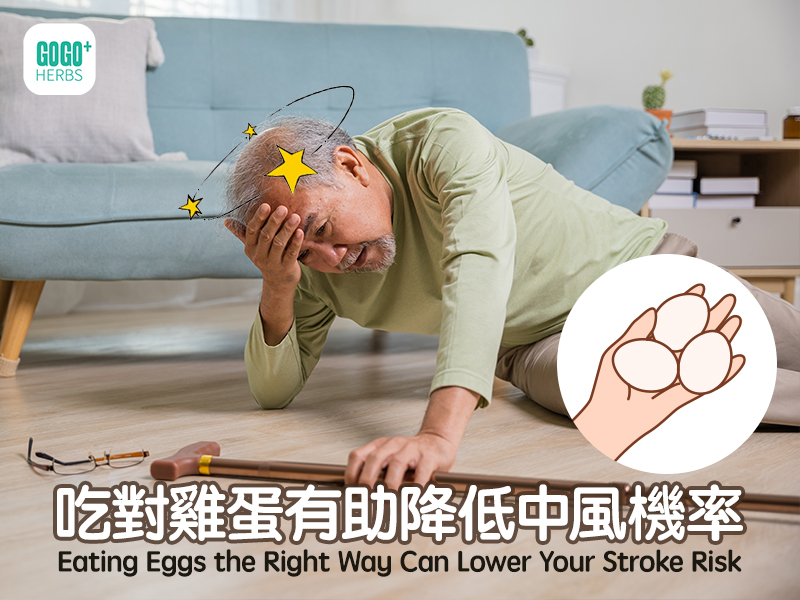
"Does the high cholesterol in eggs increase the risk of stroke?" This question has troubled many people. To put it simply:Based on current large-scale studies of the Chinese population, eating too few or too many eggs both increase the risk of cardiovascular disease, and the range consistently pointed to by studies is about 3 to 6 eggs per week and no more than 1 egg per day.However, these are all observational studies, showing "correlation" rather than "causation"—eating eggs itself does not directly "prevent" strokes; it only makes sense when considered within the context of overall diet and lifestyle habits.
This article will clarify three things: the origin of the common belief that "eating eggs raises cholesterol," the actual findings of two large-scale Chinese studies, and how Hong Kong readers should actually eat eggs. If you or a family member experiences stroke symptoms, please skip to Section Nine.
I. First, the conclusion: How should we view the current state of the research?
The debate surrounding eggs and cardiovascular disease has lasted for decades. In recent years, two large-scale prospective studies in China have provided data more closely aligned with the dietary habits of the Chinese population. The two studies reached consistent conclusions:The relationship between egg consumption and cardiovascular risk is not one of "the less the better," but rather one where the levels at both ends are higher and the level in the middle is the lowest.
- Among 460,000 Chinese adults, those who eat eggs daily (an average of about 0.76 eggs) have a significantly lower average intake compared to those who never eat eggs or eat very few eggs (an average of about 0.29 eggs).The risk of hemorrhagic stroke is low at approximately 261 TP4T.;
- In another group of 100,000 Chinese adults,Eat 3 to 6 eggs per weekPeople who consume the lowest-risk diets have the lowest risk of cardiovascular disease and all-cause mortality; the risk increases for those who consume less than one per week or more than ten per week.
In other words, for most healthy adults,"No more than one per day, and about three to six per week" is a range that is supported by research and is easy to implement.Eggs are a convenient and inexpensive source of high-quality protein, while also providing nutrients such as choline, vitamin D, vitamin B12, and lutein. The key point isn't whether to eat them, but rather...How much to eatas well asWhat to eat with。
Let's first deal with that claim that has been circulating for over a hundred years.
2. Where does the claim that "eating eggs will raise cholesterol" come from?
This claim dates back to 1913. At that time, Russian pathologist Nikolai Anitschkow fed rabbits large amounts of cholesterol and discovered lesions in the rabbits' aorta similar to those in humans with atherosclerosis. This experiment profoundly influenced the notion that "dietary cholesterol is harmful" for decades to come.
However, there are several key limitations when extrapolating this experiment to the human body:
- Rabbits are herbivoresRabbits are naturally unable to ingest cholesterol-containing foods, and their livers lack the ability to process large amounts of dietary cholesterol and convert it into bile acids for excretion. In the study, the rabbits' blood cholesterol levels spiked to approximately 12 to 24 mmol/L, far exceeding normal human levels (approximately 3 to 5 mmol/L), a concentration that is itself toxic.
- The same experiment could not be replicated in dogs and rats.—The livers of these two animals (and humans) have regulatory capabilities that can process excess cholesterol.
- Anichkov himself also believedThe results of this experiment have no direct practical significance for humans.
The modern understanding of cholesterol in the human body is:Cholesterol in the blood is mainly produced by the liver, with only about 30% coming from animal-based foods.The body has a regulatory mechanism; when you eat a lot, the liver will produce less waste.Centre for Health Protection <Understanding Cholesterol>It also points out that blood cholesterol levels only rise when this regulatory function fails. The dietary factors that truly and significantly increase "bad cholesterol" (low-density lipoprotein, LDL) are...Saturated fats and trans fatsIt is not dietary cholesterol itself.
This also explains why dietary guidelines in many regions have gradually removed the hard upper limit on daily cholesterol (for example, the US removed the 300 mg limit in 2015). However, please note:Removing the upper limit does not mean that you can consume without limit.The American Heart Association, in its 2020 scientific statement, still emphasizes that dietary cholesterol should not be "unrestricted." This detail is often omitted in many online articles, and will be explained again in Section 8 of this article.
III. Study 1: A follow-up study of 460,000 people in China over 8.9 years
The first study, a collaboration between Peking University, the Chinese Academy of Medical Sciences, and the University of Oxford, was part of the China Kadoorie Biobank (CBB) study, and the paper was published in the journal *Heart* in 2018.Qin et al., 2018, PubMed 29785957)。
The study recruited over 510,000 adults aged 30 to 79 from 10 regions in China. After excluding those with pre-existing conditions such as cancer, cardiovascular disease, and diabetes, the final analysis... 461,213 peopleParticipants, median tracking time 8.9 yearsDuring this period, 83,977 cardiovascular diseases, 9,985 cardiovascular disease deaths, and 5,103 major coronary events were recorded.
The study found that people with a baseline TP4T of only 13.11 TP4T ate eggs daily (an average of about 0.76 eggs), while those with a baseline TP4T ate eggs rarely or never (an average of about 0.29 eggs). Compared to those who never ate eggs,People who eat eggs daily have a lower risk of cardiovascular disease (approximately 111 TP4T, HR 0.89).According to disease type, the risk changes are as follows:
Table 1: Comparison of cardiovascular risk between those who eat ≤1 egg daily and those who never eat eggs (CKB Study)
| Disease type | Risk changes |
|---|---|
| Cardiovascular disease (overall) | ↓ Approximately 11% |
| ischemic heart disease | ↓ Approximately 12% |
| Major coronary events | ↓ Approximately 14% |
| Hemorrhagic stroke | ↓ Approximately 26% |
| ischemic stroke | ↓ Approximately 10% |
| Cardiovascular disease death | ↓ Approximately 18% |
| Hemorrhagic stroke death | ↓ Approximately 28% |
The research team concluded that among Chinese adults,Moderate egg consumption (less than one egg per day) is associated with a lower risk of cardiovascular disease.Furthermore, this association is largely independent of other risk factors. It is important to emphasize that this is a [missing information - likely a specific type of risk factor].Observational cohort study—It shows that "people who eat eggs have a lower risk," but it cannot prove that "the risk is reduced because people eat eggs."
IV. Study 2: U-shaped curve of 3 to 6 birds per week
The second study, conducted by a team from Fuwai Hospital, Chinese Academy of Medical Sciences, was based on the "China-PAR Study on Risk Prediction of Atherosclerotic Cardiovascular Disease" and published in the English edition of *Science in China: Life Sciences*.Xia et al., 2020)。
The study included 15 provinces and municipalities in China. 102,136 peopleAdults, all without cardiovascular disease, cancer, or end-stage renal disease at the start of the study, with the longest follow-up period. 17 years(A total of 777,163 person-years), during which a total of 4,848 cardiovascular diseases and 5,511 deaths occurred.
The results are presented clearly. U-shaped relationshipThe reference group ate 3 to less than 6 eggs per week. Eating too few or too many eggs increased the risk.
Table 2: Weekly Egg Intake and Risks (China-PAR Study)
| Weekly intake | Cardiovascular disease risk | Total mortality risk |
|---|---|---|
| Less than 1 | ↑ Approximately 22% | ↑ Approximately 291 TP4T |
| 3 to less than 6 | Lowest (Reference Group) | Lowest (Reference Group) |
| 10 or more | ↑ Approximately 391 TP4T | ↑ Approximately 13% |
The research team pointed out that previous studies in China mostly lacked participants with high intake levels, thus failing to assess the potential effects of "eating too much." This study is the first to observe this effect in the general Chinese population.Adverse link between high egg consumption and cardiovascular healthThey recommend that Chinese adults consume 3 to less than 6 eggs per week, and suggest that those who eat too few eggs should consider increasing their intake.
Looking at the two studies together, the message is actually quite clear:Eggs are not a food that should be avoided, nor are they a food that "the more the better."The two studies have slightly different recommended ranges (one says less than 1 per day, the other says 3 to 6 per week), but they both fall within the same range—which corresponds exactly to the Hong Kong government's recommended intake (see Section 8).
V. Why are the results different for Asians compared to those for Europeans and Americans?
You may have seen reports that "eating eggs increases cardiovascular risk," or you may have seen conclusions that "eating eggs is fine." This inconsistency stems in part from...Differences in the study population and dietary background。
A meta-analysis of 24 prospective cohort studies found a relationship between egg consumption and stroke risk.It varies by region:existAsiaIn population studies, higher egg consumption was associated with a lower risk of stroke; while...North America and EuropeThis association was not observed in population studies. (A 2023 review of the egg topic for the Nordic Nutrition Guidelines)Nordic Nutrition Recommendations 2023, scoping reviewSimilar findings suggest that overall evidence is "limited but suggestive" that moderate egg consumption (maximum of one egg per day) is not associated with an increased risk of cardiovascular disease; in Asian studies, it has even been associated with a decreased risk of stroke.
Researchers speculate that the differences may stem from several factors:
- Different dietary backgrounds—In Europe and America, eggs are often eaten with processed meats and saturated fats, while in Asian diets, eggs are usually served as a standalone dish.
- Different distributions of stroke types—The proportion of hemorrhagic stroke is significantly higher in Asian populations than in European and American populations;
- Genetic and metabolic differencesIndividual responses to dietary cholesterol vary greatly; studies have shown that about two-thirds of people have very little response.
This also reminds us:When you see a report that "foreign studies say eating eggs increases the risk," you should first look at who the study subjects were.For Hong Kong readers, the findings from studies on Chinese populations are more valuable than those from Europe and America.
VI. Classification of stroke: hemorrhagic and ischemic strokes, in opposite directions.
Both studies observed a very interesting phenomenon:Egg intake has the opposite effect on different types of stroke.
Stroke is divided into two main categories:ischemic stroke(Blood clots block blood vessels in the brain, accounting for about 80% of stroke cases) andHemorrhagic stroke(Rupture of a blood vessel in the brain, also known as "bursting blood vessel"). The former is more common in Europe and America, while the latter accounts for a significantly higher proportion in Asian populations.
Table 3: Relationship between egg intake and stroke type
| Egg intake | Hemorrhagic stroke | ischemic stroke/coronary heart disease |
|---|---|---|
| Too few (less than one per week) | High risk | — |
| Appropriate quantity (≤1 per day / 31 TP1T6 per week) | Low risk | Low risk |
| Too many (more than 10 per week) | — | High risk |
Specifically:People who eat too few eggs have a significantly higher risk of hemorrhagic stroke; people who eat too many eggs have a higher risk of coronary heart disease and ischemic stroke.This explains why research findings on "eggs and stroke" often seem contradictory—if different types of stroke are simply considered together, the effects of both sides cancel each other out.
For Hong Kong readers, this is particularly noteworthy: given the higher rate of hemorrhagic stroke in Asian populations, and the correlation between "eating too few eggs" and an increased risk of hemorrhagic stroke,Blindly giving up eggs may not be the right way to protect your cardiovascular system.。
VII. Can observational studies prove causality?
It must be stated frankly: both studies cited in this article are...Observational cohort studyThese are not randomized controlled trials. They can show an association between egg consumption and cardiovascular risk, but...Cannot prove causation。
This is because observational studies cannot completely eliminate confounding factors. For example, people who "frequently eat eggs" in the study tended to have higher levels of education and family income, healthier diets, were more likely to take nutritional supplements, and had a lower rate of hypertension—factors that themselves influence cardiovascular risk. Although the research team had made statistical adjustments as much as possible, there may still be unmeasured factors remaining.
Therefore, the correct way to understand it is:Eating eggs in moderation is part of a healthy diet, not a way to "prevent" strokes by simply eating eggs.Put the eggs inBalanced diet,CooperateRegular exerciseControlling blood pressure and blood lipids is the direction that research and guidelines consistently support.
8. How to actually eat it: portion size, cooking method and pairing
Based on the research findings and Hong Kong official recommendations, the following are practices that can be directly followed:
Servings
- No more than one per day, approximately three to six per week.—This is the same range as two Chinese studies and the Dietary Guidelines for Chinese Residents.
- Compared to Hong KongCentre for Health Protection's Healthy Eating PyramidThe recommended daily intake of "meat, fish, eggs and substitutes" for adults is 5 to 8 ounces, while One tael is approximately equal to one egg.Eggs are part of this food group, not an extra addition.
- An extra-large egg (about 56 grams) contains approximately 237 milligrams of cholesterol.Centre for Health Protection: "Preventing High Cholesterol Levels in the Blood"Knowing this number is much more useful than remembering "egg yolks are terrible".
Cooking
- chooseBoiled eggs, steamed eggs, poached eggsReduce the use of butter and large amounts of oil for frying;
- When using oil, choose vegetable oil and use an appropriate amount; avoid repeatedly using oil at high temperatures when frying eggs.
Pairing
- EggsVegetables, whole grains, and legumesInstead of serving with sausage, bacon, or buttered toast;
- At the same time, pay attentionSaturated fats and trans fatsTotal intake—this is the dietary factor that most significantly raises bad cholesterol. The World Health Organization recommends that saturated fat should not exceed 101 TP4T of daily calories and trans fat should be less than 11 TP4T.WHO Healthy Eating)。
- To learn more about the relationship between cholesterol and diet, please refer to the information on this website.<Cholesterol Diet Myths>與Understanding and Managing Bad Cholesterol Levels。
As for the nutritional distribution of eggs and the respective strengths of egg white and yolk, please refer to...<Nutritional Value of Eggs and Cholesterol Myths>與Nutritional Comparison of Egg White and Yolk。
IX. Safety Reminders and Timing for Seeking Medical Attention
You need to consult a doctor first.
- ConfirmedDiabetes, hypercholesterolemia, or cardiovascular diseaseSome studies have shown that high egg intake is associated with an increased risk in this group. The actual amount of eggs should be recommended by your doctor or registered dietitian based on your blood lipids and medical condition.
- Takinglipid-lowering drugsDo not stop or reduce medication on your own; consult with your doctor before making any dietary adjustments.
- 有Family history of early-onset cardiovascular diseaseThose with a medical history should have their blood lipids checked regularly.
The Hong Kong College of Cardiology recommends that people start having their blood lipids checked every 4 to 6 years from age 20; those already diagnosed should follow their doctor's instructions for more frequent checks. For information on overall risk management and lifestyle adjustments, please refer to the resources on this website.Preventing Cardiovascular Problems Through Lifestyle Habits與Waist circumference is a better indicator of metabolic risk than weight.。
Stroke is an emergency: Call 999 immediately if any of the following symptoms occur.
In its October 2025 edition of "Non-Communicable Disease Report," the Centre for Health Protection summarized the warning signs of stroke into a four-character mnemonic.Talk, laugh, use, and war」(Non-communicable Diseases in Focus, October 2025):
- 談—Difficulty expressing or speaking;
- 笑—Asymmetrical facial expressions;
- 用—One side of the body is weak;
- 兵Seek medical help immediately.
Other symptoms requiring immediate help include: sudden severe headache, blurred or double vision, unexplained dizziness or loss of balance, difficulty swallowing, and sudden incontinence.Government Press Release、Hong Kong Fire Services DepartmentStroke treatment is a race against time—approximately 2 million brain cells die every minute due to lack of oxygen. While waiting for the ambulance, the patient should lie flat, and tight clothing should be loosened.Do not give food.Record the time when the symptoms appeared and inform the paramedics.
Overall prevention of strokeThe Centre for Health Protection points out that up to 80% of stroke cases can be mitigated through a healthy lifestyle and proper management of risk factors such as high blood pressure, high cholesterol, diabetes, and obesity. In addition to diet, regular exercise, quitting smoking, and controlling weight are equally important.
10. Frequently Asked Questions
Does eating an egg every day increase the risk of stroke?
Based on current research on the Chinese population, eating no more than one egg per day is associated with a lower (rather than a higher) risk of cardiovascular disease and stroke. The CKB study found that people who ate eggs daily (an average of about 0.76 eggs) had a lower risk of hemorrhagic stroke by about 261 TP4T compared to those who never ate eggs; the China-PAR study showed that the risk was lowest when eating 3 to less than 6 eggs per week. However, these are all observational studies, showing correlations, and should not be interpreted as "eating eggs can prevent stroke."
Where does the claim of "3 to 6 eggs per week" come from?
This study, published in the English edition of *Science in China: Life Sciences* in 2020 (Xia et al., 2020), is based on the China-PAR study. The study tracked 102,136 adults in 15 provinces and cities in China for up to 17 years and found that those who ate 3 to fewer than 6 eggs per week had the lowest risk of cardiovascular disease and all-round death, while those who ate fewer than 1 or more than 10 eggs per week were associated with an increased risk.
Which study involved "460,000 people"?
This refers to the China Kadoorie Biobank study published in the journal *Heart* in 2018 (Qin et al., 2018). An analysis of 461,213 Chinese adults, with a median follow-up of 8.9 years, found that eating fewer than one egg per day was associated with a lower risk of cardiovascular disease, ischemic heart disease, and hemorrhagic stroke. Note that this is different from the previous question.Two different studiesMany articles online confuse the two sets of figures.
Eggs are high in cholesterol, so is it safer to eat only the egg whites?
Almost all the cholesterol in eggs is concentrated in the yolk (the egg white contains almost no cholesterol), but the yolk also contains nutrients such as choline, vitamin D, vitamin B12, lutein, and zeaxanthin. Eating only the egg white will cause you to miss out on these nutrients. For most healthy adults, the key is the overall intake (no more than one egg per day), rather than deliberately removing the yolk.
Will eating eggs raise my cholesterol?
For most people, the impact is minimal. About 70% of blood cholesterol is produced by the liver, with only about 30% coming from food; the body has regulatory mechanisms. Studies show significant individual variability; about two-thirds of people have a minimal response to dietary cholesterol; those with a significant response often see both LDL and HDL rise simultaneously, with the ratio usually remaining constant. The real contributors to higher levels of "bad" cholesterol are saturated and trans fats.
Can people with high blood pressure or high cholesterol eat eggs?
You can eat it, but you need to be more careful with the portion size and overall diet. It's best to consult a doctor or registered dietitian first. The key is to control the intake of saturated and trans fats, increase dietary fiber intake, and take your medication on time to control blood pressure and cholesterol. You should not stop or reduce your medication on your own because you "want to improve it through diet".
Do diabetic patients need to be especially careful when eating eggs?
Some studies have observed a significant increase in cardiovascular risk in people with diabetes who consume high amounts of eggs. Since people with diabetes are already at high risk for cardiovascular disease, it is recommended that they determine their appropriate egg intake under the guidance of a doctor or nutritionist, rather than relying on general advice.
Is there a difference between fried eggs, scrambled eggs, and boiled eggs?
The nutritional differences between eggs themselves are not significant; the main difference lies in the amount of oil added during cooking. Frying with a large amount of butter or oil at high temperatures will increase both saturated fat and calories. Boiling, steaming, and poaching eggs are relatively simple and easier to control the amount of oil used.
Do people who don't eat eggs need to supplement their protein intake?
Not necessarily. There are many sources of protein, including fish, meat, beans, bean products, dairy products, and nuts. The World Health Organization and the Food and Agriculture Organization of the United Nations recommend that adults consume 0.83 grams of protein per kilogram of body weight per day, which can be achieved through various food combinations and does not necessarily have to come from eggs.
What are the symptoms of a stroke that require immediate medical attention?
Remember the "talk, laugh, use, and strategize" rule—if you experience difficulty speaking or expressing yourself, asymmetrical facial expressions, or weakness in one arm or leg, call 999 immediately. Additionally, sudden severe headaches, blurred or double vision, unexplained dizziness or imbalance, and difficulty swallowing are also warning signs. Stroke treatment is a race against time; the earlier you seek medical attention, the greater your chances of recovery.
XI. Sources of Information
- Qin C, et al. Associations of egg consumption with cardiovascular disease in a cohort study of 0.5 million Chinese adults. Heart. 2018;104(21):1756–1763. (PubMed 29785957)
- Xia X, et al. Associations of egg consumption with incident cardiovascular disease and all-cause mortality. Science China Life Sciences. 2020;63(9). (DOI 10.1007/s11427-020-1656-8)
- Eggs – a scoping review for Nordic Nutrition Recommendations 2023. Food & Nutrition Research.
- Centre for Health Protection's "Non-Communicable Disease Focus" October 2025: Stroke Prevention – Early Prevention, Timely Identification, Every Second Counts
- Centre for Health Protection <Understanding Cholesterol>
- Centre for Health Protection's "Prevention of High Cholesterol Levels in the Blood" (Table of Fat and Cholesterol Content in Common Foods)
- Centre for Health Protection's "Healthy Eating Pyramid"
- Hong Kong Special Administrative Region Government Press Release: Department of Health Urges Attention to Stroke Symptoms (October 29, 2021)
- Hong Kong Fire Services Department Stroke First Aid Guidelines
- World Health Organization: Healthy diet
- USDA FoodData Central (Egg Nutrition Database)
Health Disclaimer:The information provided in this article is for health information purposes only and should not replace professional medical advice, diagnosis, or treatment. Most studies on the link between eggs and cardiovascular disease are observational, showing correlation rather than causation. Everyone's health condition, blood lipid levels, and medical history are different. If you have diabetes, high cholesterol, cardiovascular disease, or are taking related medications, please consult your doctor or registered dietitian before adjusting your diet. If you experience stroke symptoms, please call 999 immediately for help.
Related Products:
-
Sale!

GINAX – Ginseng Tea Bag / Ginseng White Tea Rose Tea Bag | 1bag
Original price was: $13.00.$10.00Current price is: $10.00. 選擇規格 This product has multiple variants. The options may be chosen on the product page -
Sale!

GINAX – Manuka Honey UMF™ 5+ 30g
Original price was: $30.00.$25.00Current price is: $25.00. Add to basket -
Sale!

Single 10% off】aXimed – Recovery Speed 100% Whey Protein Powder 30 sachets
Original price was: $558.00.$502.00Current price is: $502.00. Add to basket -
Sale!
Livinglean – Organic Dietary Mineral Powder 8g x 20 sachets
Original price was: $368.00.$298.00Current price is: $298.00. Add to basket
Related Post:
![眼乾食葉黃素有用嗎?」「秋冬天眼乾特別嚴重,點算?]()
What foods are good for dry eyes? The roles and selection of Omega-3, lutein, zeaxanthin, and blueberry extract.
![男士夜尿、滴滴仔:良性前列腺增生的症狀、檢查與保健品選購]()
Nocturia and dribbling in men: Symptoms, examinations, and supplemental evidence of benign prostatic hyperplasia (BPH).
![通宵一晚,血壓會升多少?]()
Staying up late and blood pressure: How much will blood pressure rise after staying up all night on Halloween? Interpreting cardiovascular risk data.
![均衡備餐與體重管理]()
Weight Management Shopping Guide: 8 Selected Probiotics, Apple Cider Vinegar, and Herbal Formulas