



















































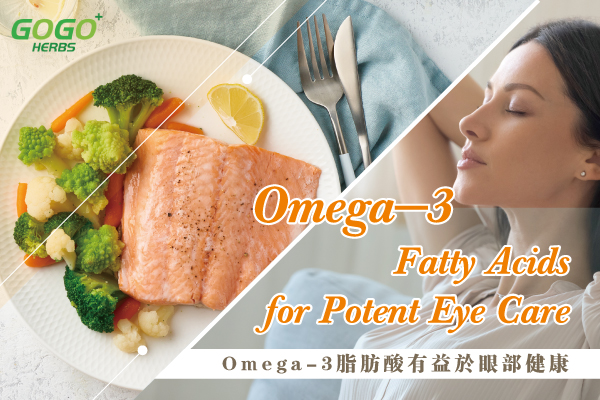
Omega-3 Fatty Acids for Eye Protection
Consuming omega-3 fatty acids and oily fish is not only beneficial for heart health, but also for overall eye care. Older adults are more prone to age-related conditions such as muscle degeneration and high intraocular pressure. Omega-3 fatty acids help drain proper fluid from the eyes, thus contributing to overall eye health. Recently, many studies have supported the use of bioavailable variants of omega-3 fatty acids to prevent dry eye discomfort.
What are omega-3 fatty acids?
Omega-3 fatty acids are a group of polyunsaturated fatty acids that exist in every cell of the human body.
It's worth mentioning that Omega 3 includes three different types:
1. ALA (alpha-linolenic acid)
2. EPA (eicosapentaenoic acid)
3. DHA (docosahexaenoic acid)
Unfortunately, the human body cannot produce these essential nutrients on its own. Therefore, we must rely on a continuous supply from food. In fact, the American Heart Association recommends that all adults eat fish at least twice a week, especially oily fish such as sardines, salmon, and mackerel, to maintain healthy levels of Omega-3. Furthermore, the need for Omega-3 by the cardiovascular, immune, and nervous systems cannot be overstated. This is why residents of the Mediterranean, Greenland, and Japan—those who have access to more oily fish—have lower rates of cardiovascular problems compared to residents of the United States and the United Kingdom, who consume more meat and processed foods.
Incidentally, consuming oily fish isn't limited to obtaining omega-3 fats. These foods are rich in vitamins A, D, and B, calcium, and other minerals. For example, vitamin A helps maintain the transparency of the cornea on the outer anatomical layer of the eye, and some studies suggest that vitamin A may reduce the risk of lens degeneration.
Omega-3 fatty acids and eye care: Check out these findings!
The American Journal of Clinical Nutrition (AJCN) points out that sources of omega-3 fatty acids, rich in EPA and DHA, are beneficial for eye health. For example, DHA can promote healthy retinal function. It is naturally present in the retina and promotes macular health, maintaining visual clarity.
Breast milk contains DHA and EPA (omega-3 fatty acids), therefore, most infant formula contains DHA and EPA. The reasons are compelling. Omega-3 fatty acids can enhance a baby's vision and promote its development. Pediatric research conducted by the Harvard School of Public Health reflects this fact. Studies have shown that infants fed DHA-rich formula had better visual development at 2-4 months of age than infants fed formula containing no DHA or less DHA.
Adults taking omega-3 fatty acids may experience better vision relief. Studies have shown that omega-3 can effectively alleviate certain eye discomfort problems. Results showed that daily intake of 560 mg DHA and 1680 mg EPA normalized tear osmolarity, omega-3 index, tear breakup time, and other eye symptoms. Another study induced dry eye in mice. Research indicated that using omega-3 fatty acids in tropical regions significantly reduced dry eye symptoms in rodents. Furthermore, these essential fatty acids can also help drain eye fluid appropriately, making them an effective way to relieve high intraocular pressure.
What are the sources of omega-3 fatty acids?
Oily fish are an excellent source of Omega-3. Eating fresh fish is better than canned or frozen food. However, if you are eating farmed fish, make sure it is organically farmed. Oily fish include anchovies, flounder, mackerel, salmon, sardines, swordfish, and more. It is recommended to eat fish twice a week, or take a daily supplement.
Plant-based sources of Omega-3 include flaxseed oil, walnuts, soybeans, squash, krill, and algae oil. Omega-3 is also found in nuts such as walnuts, pecans, and hazelnuts. Besides fortified foods containing Omega-3 fats, such as butter, you can also consume soybeans and soy products as a reliable source of essential fatty acids.
Omega-3 fatty acids: Take supplements
When fresh food sources of Omega-3 are scarce, taking supplements is a viable way to meet your weekly nutritional needs. Choosing the right supplement requires a completely different approach. Therefore, you should buy Omega-3 supplements with lower vitamin A content. Also, check the product label for labels like "cod liver oil." These contain less Omega-3 than fish oil and should not be your first choice.
Now, more and more ophthalmologists are paying attention to Omega-3 premium supplements rich in natural extracts. In addition, some over-the-counter supplements contain a gummy candy variant used for children's eye development.
Omega-3 fatty acids are abundant and can meet everyone's nutritional needs, whether from fresh foods or supplements. However, the key is to consume 140 grams of oily fish per week. Therefore, it is recommended that older adults strictly adhere to their chosen sources of omega-3 fatty acids to reduce eye discomfort and the risk of vision deterioration due to eye age.





Author. Michael F. O
Michael F.O is a ravenous health writer with over five years of experience. He has to himself a chain of certification ranging from a university degree in Biochemistry to other professional honours. He has to himself a chain of certification ranging from a university degree in Biochemistry to other professional honors.