」是-2026-年都市人必備的抗氧化防禦?-1024x572.png)
[Liver Metabolic Science] Why is Silymarin an essential antioxidant for urban dwellers in 2026?
"Liver protection" is one of the most frequently searched health topics among urban dwellers, and milk thistle and its main ingredient, silymarin, are at the core of almost all liver-protecting supplements. Common claims online include "stabilizing liver cell membranes," "increasing glutathione levels," and "accelerating the repair of damaged liver tissue"—these descriptions do indeed come from real scientific research, but most of them pertain to mechanisms at the laboratory and animal levels.This does not equate to established efficacy on the human body.。
This article, based on official and academic sources, explains in order: what silymarin is, its relationship with liver metabolism, its mechanism of action and current research evidence, what "45,500mg equivalent" on the product label means, how much and how to take it, and several things you must know about allergies and drug interactions.
II. Why does the liver especially need antioxidant defense?
III. Mechanism of Action of Silymarin
IV. How to interpret research evidence: from laboratory to clinical practice
5. How should we understand "45,500 mg equivalent"? Bioavailability is the key factor.
VI. Who will be interested in silymarin?
VII. Commonly Used Clinical Dosage and Administration
8. How to choose silymarin products
IX. Safety Reminders and Drug Interactions
10. How to Choose Liver Protection Products: Three Formula References
XI. Frequently Asked Questions (FAQ)
XII. Sources of Information
I. What is milk thistle extract? From milk thistle seeds to standardized extraction
Milk thistle (scientific name) Silybum marianumThis is a plant in the Asteraceae family native to Europe, with purple flowers and leaves with white stripes. It's important to note that...Milk thistle belongs to the same plant family as commonly known milk thistle, but it is a different plant from blessed thistle.When purchasing, choosing the English name makes it less likely to be confused.
依The National Center for Compassionate and Integrative Health (NCCIH)The main component of milk thistle extract is...SilymarinIt is not a single substance, but...A mixture of flavonolignansAmong them silibinin (水飞蓟宾)Most active.
Its historical uses are quite ancient—milk thistle has traditionally been used in Europe for liver and gallbladder-related discomfort. Today, it is made into capsules, tablets, liquid extracts, and teas, and is one of the most common herbal liver-protecting ingredients in Europe and America.
II. Why does the liver especially need antioxidant defense?
The liver is the body's metabolic center, responsible for processing alcohol, drugs, food additives, and various foreign substances. This process itself generates free radicals—that is to say,The liver is one of the organs with the highest concentration of oxidative stress in the entire body.It is also equipped with the highest concentration of antioxidants to handle this workload.
When the production of free radicals consistently exceeds the antioxidant defense's capacity, this imbalance is called...Oxidative stressMild oxidative stress is part of normal metabolism and the body can cope with it; however, long-term, significant imbalance can damage cellular lipids, proteins, and DNA. Common aggravating factors include:
- Alcohol:The metabolic process directly generates free radicals, which is the most frequently mentioned factor in most articles on liver protection.
- Irregular work and rest schedules and sleep patterns, and chronic stress.
- A diet high in sugar, fat, and processed foods.
- Environmental pollutants and some long-term used drugs.
依US NIDDKMetabolic fatty liver in its early stagesAlmost no symptomsTherefore, it is often only discovered during physical examinations; NIDDK also clearly points out that currently...There are no approved drugs for the treatment of fatty liver.The core principles of treatment are weight management, dietary adjustments, and regular physical activity. This also explains why liver-protective supplements are best placed "outside of lifestyle choices," rather than as a replacement.
III. Mechanism of Action of Silymarin
The mechanisms of silymarin have been extensively studied, which explains its long-standing importance in the field of hepatoprotection. Based on a comprehensive academic review, the mechanisms currently being discussed include:
| Mechanism direction | illustrate |
|---|---|
| Antioxidant | It directly scavenge free radicals and affects the levels of antioxidants (such as glutathione) in liver cells, helping to maintain the liver's own antioxidant defenses. Glutathione is one of the most abundant low-molecular-weight antioxidants in the liver and plays a key role in processing alcohol and drug metabolites. |
| Support cell membrane stability | Studies have shown that the interaction between silymarin and hepatocyte membranes helps maintain cell membrane stability under oxidative stress. |
| Anti-inflammatory pathway regulation | Multiple studies have explored its regulatory role in inflammation-related pathways such as NF-κB and COX-2. |
| Support protein synthesis | Experimental studies have shown that it helps in the synthesis of proteins (including structural proteins) within hepatocytes, and is considered to be related to the hepatocyte repair capacity. |
IV. How to interpret research evidence: from laboratory to clinical practice
This section is the most important to read carefully because popular opinion often confuses the three levels of research. The stratification method is actually quite simple:
Laboratory and animal studies: The mechanisms are clear, but cannot be directly applied to humans.
In in vitro and animal models, silymarin has shown antioxidant, anti-inflammatory, and hepatic fibrosis pathway-influencing activities. These findings form the basis for subsequent human studies and are the source of the "liver-protective mechanism" theory.
Human studies: Results are still inconsistent and are continuously accumulating.
依 NCCIH The explanation is currently...High-quality evidence is still insufficient to draw definitive conclusions about the health benefits of milk thistle.Two large studies funded by the organization (one for chronic hepatitis C and the other for non-alcoholic steatohepatitis) did not observe any significant benefit; other clinical trials also yielded mixed results, or were too small or too long to draw conclusions.
Meanwhile, retrospective literature also revealed some positive clues: in multiple studies involving patients with alcoholic and non-alcoholic fatty liver disease, silymarin and...Improvement of liver enzyme levels (ALT, AST)A correlation was found; changes in glycemic control indicators were also observed in patients with type 2 diabetes. Furthermore, user record analysis showed that long-term users exhibited better liver histological progression and liver collagen content indicators.
5. How should we understand "45,500 mg equivalent"? Bioavailability is the key factor.
When you open the label of a liver-protecting product, you'll often see eye-catching numbers like "equivalent to 45,500 mg of milk thistle." To understand this correctly, you need to distinguish three concepts:
- Dry herbal equivalent:Indicating the equivalent weight of dried seeds for this batch of extract is a standard practice, and the numbers often appear quite large.
- Silymarin content:The actual total amount of flavonoids and lignans in the extract is usually expressed in milligrams.
- Silibinin content:The actual content of what is considered the most active ingredient often only accounts for a fraction of silymarin.
in other words,"45,500mg" and "silymarin content" are not the same thing.When comparing products, the latter (and its standardization ratio) should be considered, not the former. Furthermore, there is a more fundamental limitation:
Incidentally, since silymarin is fat-soluble,Take with a meal containing a moderate amount of oil.It is generally believed to aid absorption—which is why most products recommend taking them with or after meals.
VI. Who will be interested in silymarin?
Silymarin is not an ingredient that "everyone needs to consume." The following groups are more likely to pay attention to it because their lifestyles or metabolic conditions place a relatively higher burden on their livers:
- People who frequently stay up late and have irregular schedules and sleep patterns.
- People who have a habit of drinking on social occasions.Alcohol metabolism itself depletes the liver's antioxidant resources.
- Those who eat out and consume a high proportion of processed foods.
- People who work or live in environments with poor air quality for extended periods.
- Currently managing weight.Weight and metabolic status are the most direct factors related to fatty liver.
- Those already using liver-protecting health supplement formulasThey want to understand the rationality of the ingredients and dosage.
It is important to emphasize that:The above are scenarios for "lifestyle support," not indications for diseases.If you already have a diagnosis of hepatitis, fatty liver, or cirrhosis, silymarin plays a supportive role, and your overall treatment plan should be assessed by a doctor. Another article on this site, "Liver Health Supplements and Lifestyle: Diet, Sleep, and Fatty Liver Prevention," addresses this from the perspectives of diet and sleep, and you can refer to it as well.
VII. Commonly Used Clinical Dosage and Administration
The dosage used in the study differs from that indicated on commercially available products, but one set of figures is worth remembering:Most clinical trials used a daily dose of 420 mg silymarin, divided into three doses of 140 mg each.Depending on the formulation, the recommended range is approximately 420 mg/day (TP1 600 mg/day).
| project | Common practices in research and practice |
|---|---|
| Daily silymarin dosage | Approximately 4201 TP1T600 mg, divided into 21 TP1T 3 doses. |
| Timing of administration | Take with meals or immediately after meals (to aid in the absorption of fat-soluble components). |
| Observation period | Changes in liver enzyme levels typically require continuous use for several weeks to months before discussion. |
| Safety Limit Reference | The study showed that 700 mg daily for 24 weeks was well tolerated. |
8. How to choose silymarin products
Silymarin is a prime example of a herbal ingredient with highly variable quality. The NCCIH specifically warns that milk thistle supplements sold in various countries have exhibited [unclear - possibly related to quality issues].The labeled content does not match the actual content, or it may be contaminated with pesticides, microorganisms, or mycotoxins.Therefore, when choosing a product, the following points are more important than "total milligrams":
- Standardization ratio:The label should indicate whether the standardized content of silymarin is specified, or even further, the silibinin content. In research, the commonly used standard is the silymarin extract standardized to 70–80%.
- Actual content per capsule:The comparison is based on "how many milligrams of silymarin are provided per capsule", rather than the equivalent of dried herbs.
- Third-party testing and pollution control:Does this include the testing for heavy metals, microorganisms, and mycotoxins?
- Other ingredients in the formula:For compound products, you need to check whether the other herbs and nutrients are compatible with your condition (see the next section on turmeric warnings).
- Tag and Certification Information:For Australian products, look for the AUST L or AUST R number on the label.
IX. Safety Reminders and Drug Interactions
Overall, oral administration of milk thistle was well tolerated in human studies. The most common side effects were gastrointestinal symptoms such as bloating, nausea, flatulence, and diarrhea; a few people experienced headaches or itching. However, the following points should be noted:
- People allergic to plants in the Asteraceae family:Milk thistle belongs to the Asteraceae family and is effective against...Ragweed, chrysanthemum, marigold, daisyPeople with plant allergies may experience allergic reactions, which can be life-threatening in severe cases, so they should avoid using it.
- Those with a history of hormone-related illnesses:Some data are based on the potential estrogenic activity of the above-ground parts of milk thistle, and it is recommended that...Breast cancer, uterine cancer, ovarian cancer, endometriosis, or uterine fibroidsPatients should use with caution. Fortunately, the more commonly used seed extracts have not shown estrogenic effects, but it is still recommended to consult a doctor first.
- Those currently taking medication:Milk thistle may affect some CYP450 enzymes and P-glycoproteins, and...Drugs with a narrow therapeutic window(For example, some anticoagulants and immunosuppressants) should be used in combination with other drugs with extreme caution.diabetic patientsIt should be noted that it may affect blood sugar levels and requires close monitoring.
- Pregnancy and breastfeeding:Due to limited available information, it is recommended to consult a doctor before use.
- Turmeric in the compound:See the product description in the next section—turmeric has been associated with adverse liver reactions in very rare cases, which is information that must be noted.
10. How to Choose Liver Protection Products: Three Formula References
The following three are all Australian-made liver-protecting formulas with milk thistle (Silybum marianum) as the main ingredient. Ingredients and specifications are compiled based on the manufacturers' publicly available information. When selecting, it is recommended to refer back to the principles in Section 8:Make sure you understand the silymarin content in each pill, and whether the compound ingredients are compatible with your own condition.。
1. Charenda — Extra Strong Milk Thistle Complex Hepatoprotective Agent 45500
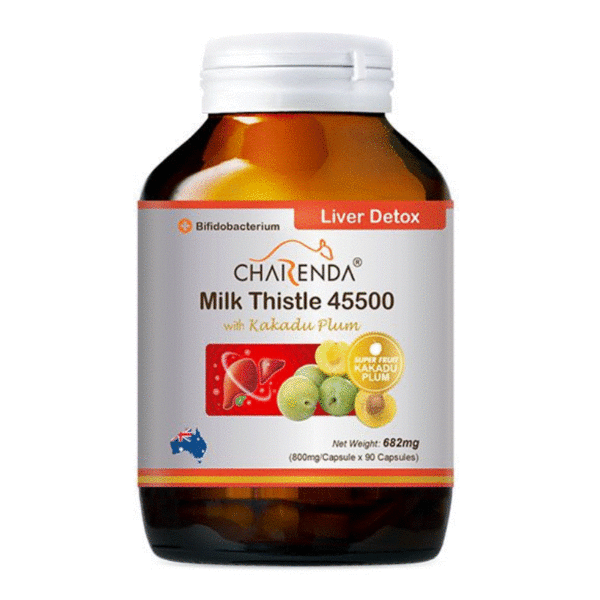
- Specification:Each capsule is labeled with the equivalent of milk thistle (Silybum marianum) extract. 45,500 mg of dry seed equivalent provides 650 mg of silymarin.。
- Formula Features:Compound formula with native Australian fruitsKakadu plumThis fruit is known for its rich content of natural vitamin C, which is part of an antioxidant formula.
- Production Information:100% is made in Australia, with a production facility in Sydney; the manufacturer states that production complies with GMP and the raw materials are Australian ACO organic certified.
- Recommended dosage:Take 2 capsules after meals daily (please refer to the packaging label for actual dosage).
- Points to note:Each capsule provides 650 mg of silymarin, which is a relatively high concentration. Those with allergies to the Asteraceae family, those currently taking medication, or those with a history of hormone-related illnesses should consult a doctor first.
2. Healthy Care — Liver Detox Capsules (100 capsules)
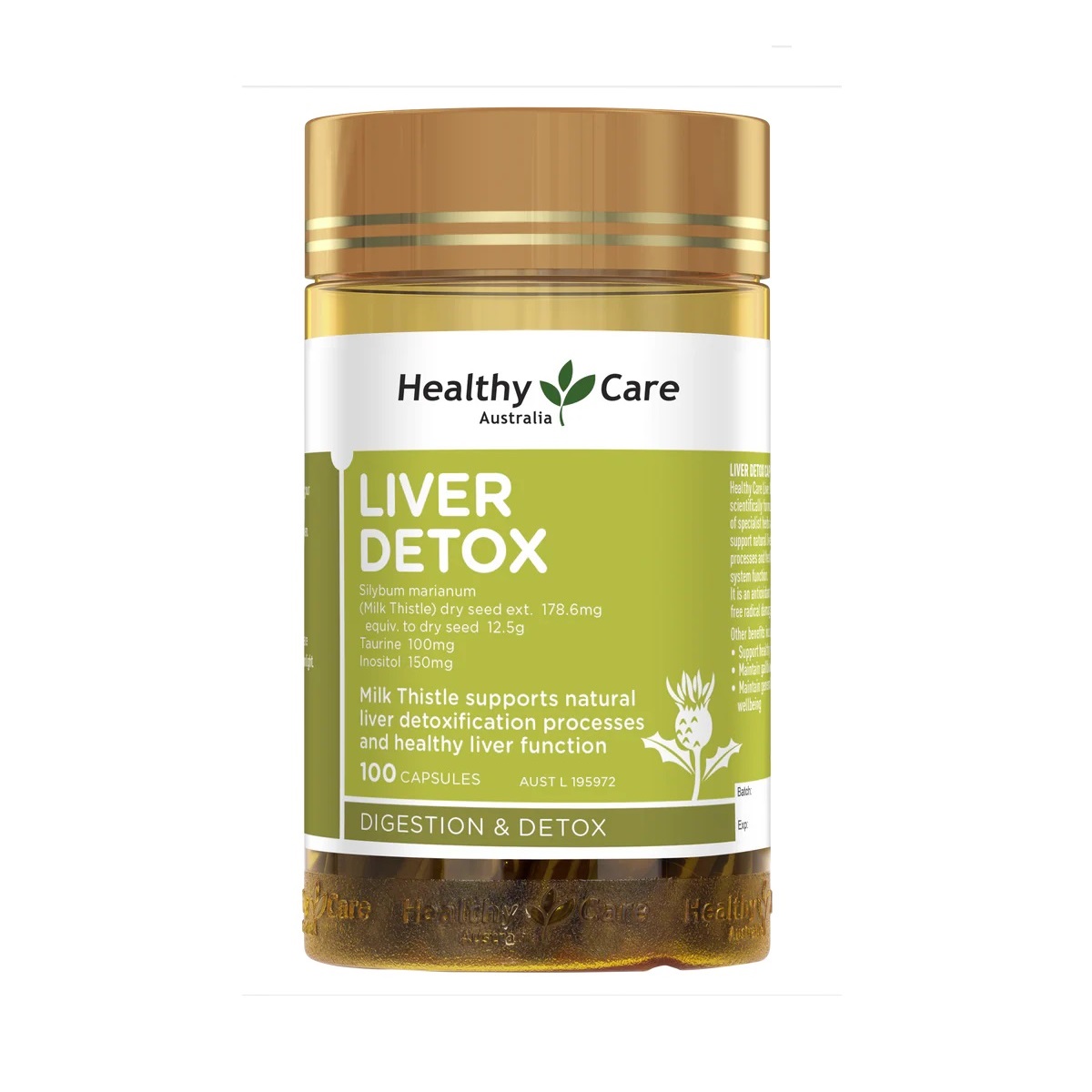
- Ingredients per capsule:Milk thistle (Silybum marianum) dried seed extract 178.6 mg (equivalent to 12.5 g of dried seeds), taurine 100 mg, inositol 150 mg.
- Formula Features:Formulated primarily with milk thistle, combined with taurine and inositol; free of added sugar, starch, lactose, yeast, gluten, dairy products, or preservatives.
- Production Information:Made in Australia.
- Recommended dosage:Adults take 2 capsules of 1– daily with meals (please refer to the packaging label for actual dosage).
- Points to note:This product contains sulfites; if symptoms persist, please consult a medical professional.
3. Swisse — Ultiboost Liver Detox Tablets 200 tablets
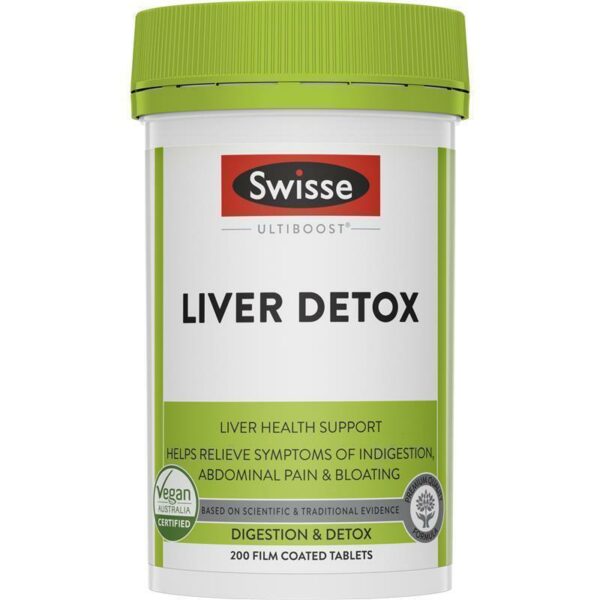
- Ingredients per tablet:Milk thistle extract 35.71 mg (equivalent to 2.5 g of dried fruit), turmeric extract 75 mg (equivalent to 1.5 g of dried rhizome, standardized curcumin content 48.75 mg), and artichoke extract 20 mg (equivalent to 1 g of fresh leaf).
- Formula Features:This formula contains three herbal ingredients, including milk thistle, turmeric, and artichoke; it is suitable for vegetarians.
- Recommended dosage:Adults take 2 tablets daily with or immediately after a meal (please refer to the packaging label for actual dosage).
- Points to note:Manufacturer label special warning—In rare cases, turmeric may affect the liver.If you experience yellowing of the skin or whites of your eyes, or unusual fatigue, nausea, loss of appetite, abdominal pain, dark urine, or itching, please discontinue use and seek medical attention.Do not use if you are pregnant or may become pregnant.If symptoms persist, consult a medical professional.
XI. Frequently Asked Questions (FAQ)
Q1: What exactly is milk thistle extract?
Milk thistle is a plant of the Asteraceae family, and the main component of its seed extract is...SilymarinIt is not a single substance, but a mixture of flavonoids and lignans, with silibinin being the most active. Silymarin has antioxidant properties and is one of the most common herbal liver-protecting supplements in Europe and America.
Q2: Can silymarin treat liver disease?
This is incorrect. In Taiwan and Hong Kong, health supplements are prohibited from claiming therapeutic effects; and according to the US NCCIH, current high-quality evidence is insufficient to definitively conclude the health benefits of milk thistle, and two large-scale studies funded by them did not observe any significant benefits. The proper classification of silymarin is...A part of daily antioxidant and metabolic supportIt must be done in conjunction with diet, rest, weight management, and regular check-ups; if liver disease has already been diagnosed, the treatment should be arranged by a doctor.
Q3: Does "45,500mg milk thistle equivalent" on the label mean that the dosage is very high?
That isDried herb equivalentThis refers to the amount of dried seeds the extract is equivalent to, which is a standard labeling convention. What we really need to compare is the amount of extract provided per seed.silymarin (mg)Taking the product mentioned above as an example, a 45,500 mg equivalent actually provides 650 mg of silymarin; while clinical studies commonly use a daily dose of 420 mg TP1T600 mg. Therefore, when purchasing, looking at the silymarin content is more meaningful than looking at the equivalent number.
Q4: How can silymarin be taken for better absorption?
Silymarin is lipid-soluble and poorly soluble in water; after oral administration, only about 201 TP1T50 TP4T is absorbed. Therefore...Take with a meal containing oil (during or immediately after the meal).It is generally believed to aid absorption, which is why most products recommend taking it with meals. In addition, some manufacturing processes (such as micronization and phytosome forms bound to phospholipids) are designed to improve absorption rates; when purchasing, pay attention to whether the product mentions these technologies.
Q5: Is it safe to consume milk thistle long-term?
In human studies, oral administration of milk thistle was well tolerated; a safety review indicated that even at a daily dose of 700 mg for 24 weeks, no significant toxicity was observed. The most common side effects were gastrointestinal symptoms such as bloating, nausea, flatulence, and diarrhea; a few individuals experienced headaches or itching. It is recommended to follow the dosage instructions on the packaging, not to increase the dosage on your own, and to combine the total dosage when supplementing with multiple milk thistle-containing products.
Q6: Who should not eat milk thistle?
Three types of people need to be especially careful: ① People allergic to chrysanthemum plants(Allergic to ragweed, chrysanthemum, marigold, and daisy) Allergic reactions may occur; ② Those with a history of hormone-related illnesses(Breast cancer, uterine cancer, ovarian cancer, endometriosis, uterine fibroids), some data suggests using this treatment with caution; ③ People currently taking medicationEspecially for those using medications with a narrow therapeutic window (such as some anticoagulants and immunosuppressants) or diabetes medications, it is advisable to consult a doctor first. Data on pregnancy and breastfeeding is limited, so professional advice is also recommended.
Q7: Besides supplements, what else should I pay attention to when protecting my liver?
According to the US NIDDK, metabolic-related fatty liver is mostly...Weight management, dietary adjustments, and regular physical activityThe core principle of treatment is to prevent liver disease, and since it often presents with no symptoms in its early stages, a practically effective liver-protective combination is: limiting alcohol, maintaining a regular sleep schedule, reducing high-sugar and high-fat processed foods, maintaining physical activity, and having regular liver function tests, with supplements used as a supplementary measure. If you experience yellowing of the skin or whites of the eyes, dark urine, persistent fatigue, or pain in the upper right abdomen, please seek medical attention as soon as possible.
XII. Sources of Information
- National Center for Compassionate and Integrative Health (NCCIH) — Milk Thistle: Usefulness and Safety
- National Institute of Diabetes, Digestive and Kidney Diseases (NIDDK) — Nonalcoholic Fatty Liver Disease (NAFLD) & NASH
- Mayo Clinic – Milk Thistle
- Drugs.com Natural Products Database — Milk Thistle
- Gillessen & Schmidt (2020) Silymarin as Supportive Treatment in Liver Diseases: A Narrative Review
- Soleimani et al. (2019) Safety and toxicity of silymarin: an updated review, Phytotherapy Research
- Therapeutic Goods Administration (TGA) Australia — Understanding listed and registered complementary medicine regulation
- Swisse — Ultiboost Liver Detox Product Labelling and Warnings
- Healthy Care — Liver Detox 100 Capsules Product Label
Health Disclaimer:This article provides general health and nutrition information and does not constitute medical advice, diagnosis, or treatment. Dietary supplements are not drugs and cannot be used to diagnose, treat, cure, or prevent any disease, nor should they replace a doctor's prescription or professional medical advice. Everyone's health condition, medication history, and allergy history are different; please consult a doctor or registered dietitian before starting any supplement. If you experience symptoms such as jaundice, dark urine, persistent fatigue, or right upper quadrant pain, please seek medical attention as soon as possible.
Related Products:
-
Sale!

GINAX – Ginseng Tea Bag / Ginseng White Tea Rose Tea Bag | 1bag
Original price was: $13.00.$10.00Current price is: $10.00. 選擇規格 This product has multiple variants. The options may be chosen on the product page -
Sale!

GINAX – Manuka Honey UMF™ 5+ 30g
Original price was: $30.00.$25.00Current price is: $25.00. Add to basket -
Sale!

Single 10% off】aXimed – Recovery Speed 100% Whey Protein Powder 30 sachets
Original price was: $558.00.$502.00Current price is: $502.00. Add to basket -
Sale!

Livinglean – Organic Dietary Mineral Powder 8g x 20 sachets
Original price was: $368.00.$298.00Current price is: $298.00. Add to basket
Related Post:
![牛樟芝子實體與膠囊製品示意]()
What is Antrodia camphorata? A complete guide to its ingredients, research evidence, and precautions for consumption.
![世界心臟日護心飲食場景,香港中年夫婦享用豆漿、豆腐、雞蛋與堅果,旁有心臟及細胞膜卡通示意]()
World Heart Day: Heart Health in Hong Kong Starts with Daily Life | What are the Benefits of Lecithin? Which of Three 1200mg Products to Choose From?
![香港關節健康洞察報告封面:中年及長者在香港步行]()
How to choose joint health supplements? 8 best-selling formulas and repurchase information help you find the right daily option.
![香港素食保健品洞察報告封面:均衡植物性餐桌與閱讀補充品標籤]()
Vegetarian Health Supplement Buying Guide: 8 Best-Selling Products, From Bacterial Strains and Plant Extracts to Daily Nutrition