
Why do some people dislike coriander (cilantro)? Genetics, dietary preferences, and the nutritional value of coriander.
In noodle shops, tea restaurants, or night market food stalls, a bowl of soup noodles is often served with a handful of chopped coriander (cilantro) on top; sometimes, celery is even added when making the soup. Many people's first words are, "No greens, no coriander"—behind this statement lies an interesting scientific question: why do some people smell the fragrance of the same handful of green coriander, while others smell soap or even bedbugs?
Some people dislike pig's feet or Dongpo pork; some abstain from pork and beef due to religion or beliefs; and others avoid dairy, eggs, and seafood due to allergies—these are all understandable. However, the sheer number of people who dislike coriander, celery, and even carrots is often surprising, and they frequently can't articulate a specific reason, simply feeling that "the taste is just wrong." This article will explain: where this aversion comes from, how much of it is genetic, what nutritional value coriander actually contains, and what those who dislike it can do.
I. Disliking coriander is not picky eating: Starting with OR6A2
II. Genes are just one piece of the puzzle.
3. How many people in different regions dislike coriander?
4. Why does it smell like soap?
V. Nutritional Value of Coriander (Coriander)
6. Which of the common health claims about coriander are based on evidence?
7. Why is celery often referred to as "walking away in green"?
8. Dietary Preferences and Genetics: Other Examples
9. What can people who don't like coriander do?
10. Frequently Asked Questions (FAQ)
I. Disliking coriander is not picky eating: Starting with OR6A2
The claim that "disliking coriander is a sign of picky eating" has recently received scientific support. In 2012, a study published in the journal Flavor by a research team from the genetic testing company 23andMe linked the fact that "coriander smells like soap" to olfactory receptor genes.
This study is aGenome-wide association study (GWAS):recruit 14,604 participants of European descentAsk them to report back whether "coriander tastes like soap"; also inA separate group of 11,851 peopleThe sample was used to verify whether or not someone liked coriander. The results were...Chromosome 11Among the previous group of olfactory receptor genes, a single nucleotide polymorphism (SNP) was found that is significantly associated with "soap smell perception"—rs72921001This group of genes includes OR6A2The olfactory receptor encoded by OR6A2 has a high binding specificity for several aldehydes that constitute the characteristic odor of coriander.
The research team also estimated the heritability of "soapy smell perception" (partially marked by common SNPs), and the results...Only about 8.7%This is a relatively low number, and it becomes the key point of subsequent discussions: genes are indeed involved, but they are far from sufficient to explain everything on their own.Original paper (Eriksson et al., Flavour 2012)It can be read for free on arXiv.
II. Genes are just one piece of the puzzle.
If the gene only explains about 8.71 TP4T, what is the rest? Current understanding points to three clues.
(1) Other genes are also involved
Studies involving twins during the same period estimated a high heritability of coriander preference (approximately 0.38 for odor and 0.52 for overall flavor), indicating the presence of genetic factors. Subsequent research further indicated that, in addition to olfactory receptor genes, at least three other genes are related to the acceptability of coriander flavor:TAS2R50(Bitter taste receptors)GNAT3(a component of taste signal transmission), and TRPA1(Receptors that sense spicy flavors). In other words, the liking or disliking of coriander is not determined by a single gene.
(2) Culture and early childhood experiences
The percentage of people who dislike coriander varies greatly from place to place, even though it is a common ingredient in Central and South America, India, and the Middle East. Some studies speculate that long-term and frequent exposure to coriander may cause people to associate its smell with "tasting" during their development, thus reducing the percentage of people who dislike it.
(3) Taste can change.
Many people remember disliking coriander as children, but later grew to accept it more and more. This doesn't contradict the idea that "genes don't change throughout life"—dietary experiences, the ingredients paired with it, and cooking methods all influence how one perceives it. So, it's perfectly normal if someone around you goes from "eating more greens" to "adding more."
3. How many people in different regions dislike coriander?
The figures "Europe 17%, East Asia 21%, Africa 14%" often circulate online, and they actually come from a...Targeting more than 1,600 young adults aged 20 to 29 in CanadaThe study (Mauer & El-Sohemy, Flavour 2012) categorized by ethnic background, rather than a "global random survey":
| Ethnic background | The percentage of people who dislike coriander |
|---|---|
| East Asia | Approximately 21% |
| White people (of Caucasian descent) | Approximately 17% |
| African American | Approximately 14% |
| South Asia | Approximately 7% |
| Latino | Approximately 4% |
| middle East | Approximately 3% |
Converting "approximately 21% in East Asia" directly to "1 in 5 Hong Kong people dislike coriander" is not entirely accurate—that figure is based on a sample of Canadian respondents and grouped by ethnicity, and cannot be directly equated to the local population proportion. However, what is certain is that:Disliking coriander is indeed relatively common among East Asian groups.Moreover, it is not a "quirk" of a few people.The original research paperIt can be viewed for free.
4. Why does it smell like soap?
The characteristic aroma of coriander leaves mainly comes from a group of...Unsaturated aldehydesIn particular, the (E)-2-decenal與 (E)-2-dodecenalThese compounds produce a fresh, grassy scent at low concentrations, but to people with a more sensitive sense of smell, they can be interpreted as smelling soap, earth, or insects.
Interestingly, these aldehydes are also found in the defensive secretions of some insects—the genus name of coriander. Coriandrum It originates from Greek. korisThe word "cilantro" means "bedbug." Therefore, the description that "cilantro smells like a bedbug" is not purely psychological, but rather part of its chemical composition.
Because smell is the primary source of the odor, most studies tend to conclude that the aversion to coriander...The sense of smell (smell) is more important than the sense of taste (taste).Heating will weaken the aroma of coriander leaves, which is why it is usually added just before serving.
V. Nutritional Value of Coriander (Coriander)
Putting aside the controversy surrounding its aroma, coriander leaves are actually a nutrient-dense herb. According to data from the U.S. Department of Agriculture (USDA) database,Per 100 grams of fresh coriander leavesThe nutritional profile is as follows:
| Nutrients | Content per 100 grams | Remark |
|---|---|---|
| calorific value | Approximately 23 kcal | Moisture content approximately 921 TP4T |
| protein | 2.13 grams | |
| Dietary fiber | 2.8 grams | |
| 鉀 | 521 mg | The content is not low |
| 鈣 | 67 mg | |
| 鐵 | 1.77 mg | |
| 鎂 | 26 mg | |
| Vitamin C | 27 mg | The recommended daily intake for adults is approximately 301 TP 4T |
| Vitamin A (RAE) | 337 micrograms | From beta-carotene, etc. |
| Vitamin K. | 310 micrograms | The recommended daily intake is approximately 2581 TP4T. |
| folate | 62 micrograms | |
| 錳 | 0.426 mg |
The most prominent of them isVitamin K.—The content per 100 grams exceeds twice the recommended daily intake for adults, followed by vitamins A and C. Data is available at [date/time]. USDA FoodData Central Verification.
Another thing to note is...QuantityCoriander is mostly used as a flavoring herb, and a small pinch on a bowl of soup noodles is only a few grams, contributing limited nutritional value. The above data is a comparison "per 100 grams," which can be understood as "the nutritional potential if consumed in large quantities as a vegetable," rather than "absorbing this amount by drinking a bowl of soup."
6. Which of the common health claims about coriander are based on evidence?
It's commonly said that coriander can "promote sweating, improve blood circulation, help the body eliminate harmful substances, and regulate the digestive system." These claims mostly originate from...Preclinical studies at the laboratory and animal levelsFor example, studies have observed that coriander extract has antioxidant activity or inhibitory effects on certain microorganisms. These studies are valuable, but they do not mean that "humans will have the same effect"—the scale and number of human trials are still limited.
A more pragmatic way of understanding this is:
- Treat coriander as part of a vegetableIts practical contribution lies in providing vitamin K, vitamin A, vitamin C, folic acid, and dietary fiber, as well as adding flavor to dishes and reducing reliance on high-sodium seasonings.
- The human body has its own system for processing metabolic waste.The liver and kidneys are constantly functioning, which is a normal physiological process and does not require any particular food to "cleanse" them. Instead of pursuing a single "detoxifying product," it's better to ensure adequate water intake, a variety of vegetables, and minimal processed foods.
- A diverse diet should always be the guiding principle.No vegetable, including coriander, is irreplaceable.
In other words, if you already love coriander, eating more is a good thing; if you hate it, you don't have to force yourself for the sake of "benefits"—the same nutrients can be obtained from dark green leafy vegetables, bell peppers, and citrus fruits.
7. Why is celery often referred to as "walking away in green"?
Celery is also a frequently requested ingredient to be avoided, but for different reasons than coriander. The controversy surrounding coriander mainly stems from...The aroma of leavesThe reason why celery is resisted is mostly due to its unique characteristics.Odor compounds與Fiber textureThe coarse fiber and unique spiciness of celery stalks, in particular, are not to the liking of some people.
The nutritional composition of celery, common claims about its blood pressure-lowering properties, and research progress on components such as apigenin have been detailed in another article and will not be repeated here. For further information on the nutritional value and popular claims about celery, please refer to the following reading:<Celery Nutritional Value and Myths>。
Incidentally, aversion to celery, carrots, cauliflower, mustard greens, and even tomatoes may also stem from underlying issues.Individual differences in olfactory perceptionIt's not simply a matter of "picky eating." Each of these vegetables has its own unique volatile components, and the intensity of the effect varies from person to person.
8. Dietary Preferences and Genetics: Other Examples
Coriander is not an isolated case. Numerous studies in recent years have shown a link between dietary preferences and genes, with two examples frequently cited.
(1) MC4R gene and preference for high-fat foods
A team at the Wellcome Trust™ 1TP™ 1RC Institute of Metabolic Sciences at the University of Cambridge, UK, studied a group of... MC4R gene loss-of-function mutationThis group consisted of approximately 1 in 1,000 people. Assuming the meals looked and tasted as similar as possible, this group consumed significantly more high-fat meals than the control group of similar weight—the study report showed they ate approximately [amount missing] more high-fat meals than the lean control group. 95%Approximately more than the obese control group 65%Interestingly, the same group of people...High sugarFood preferences were significantly lower, showing a divergent effect of "preferring fat and disliking sugar".
This finding demonstrates that the brain does indeed have specific pathways that regulate our preferences for different nutrients. The study, led by Professor Sadaf Farooqi, was published in *Nature Communications*.The original article can be read on the journal's website.。However, it must be emphasized that this study focuses on individuals with rare MC4R defects and cannot be used to conclude that "the general public's love for fatty foods is caused by genes."
(2) Sweets and dopamine receptor genes
A research team at McGill University in Montreal, Canada, conducted tests on children and their mothers, observing that children carrying a specific dopamine D2 receptor gene mutation (A1 type) showed a less responsive brain response to sweet foods such as milkshakes, and also consumed larger amounts. This type of research suggests that the intensity of pleasure derived from food is partly related to individual differences in the neurotransmission system.
9. What can people who don't like coriander do?
If your palate simply can't stand coriander, there are practical ways to prepare it that are more meaningful than forcing yourself to eat it:
- Just say so when you order.In Hong Kong, simply saying "走青" (zou qing) will suffice, and noodle shops and tea restaurants will comply. In Taiwan, you can say "不用香菜" (mou fen cai). This isn't asking anyone for help; it's a very common request.
- There's no need to deliberately "practice".Tastes may change over time, but there's no need to force it. The nutrients in coriander can be easily obtained from other vegetables.
- Let's try a different format.Coriander seeds have a very different aroma from the leaves, mainly citrus and woody notes, and are often found in curries and stews; if you just don't like the soapy smell of the leaves, you might be able to accept coriander seeds.
- To increase your vegetable intake, start with the ones you truly enjoy.Dark green leafy vegetables, broccoli, bell peppers, and tomatoes all provide vitamins A, C, and K, as well as folic acid. The vegetables you can eat are the ones that are good for you.
10. Frequently Asked Questions (FAQ)
Is disliking coriander genetically determined?
Genetics is one factor, but not the only one. Studies have found variations related to "soap smell perception" near the olfactory receptor gene, but estimated that this accounts for only a small percentage; other genes, cultural habits, and early dietary exposure also have an impact. Therefore, both "innate" and "nurtured" factors hold true.
What is OR6A2? Does everyone carry this gene?
OR6A2 is a gene that encodes olfactory receptors, responsible for recognizing several aldehyde molecules, and everyone has it. Research indicates that...A specific variant (rs72921001) is located nearby.It's related to being more likely to smell soap and less fond of cilantro, not that "only people who hate cilantro have this gene."
Why does coriander smell like soap or bedbugs?
The main aldehydes are unsaturated aldehydes found in coriander leaves, particularly (E)-2-decenal and (E)-2-dodecenal. These compounds are also present in the defensive secretions of some insects, which is why people with a sensitive sense of smell might associate them with "soap" or "bedbugs." The genus name Coriandrum also comes from the Greek word for "bedbug."
Is it possible to like something you disliked as a child when you grow up?
It's possible, and many people do experience this. Genes don't change, but dietary experiences, food pairings, and cooking methods all influence how people perceive aromas. Heating weakens the aroma of coriander leaves, which explains why the same herb can be appreciated differently in different dishes.
Is it okay to eat too much coriander?
When consumed in a typical amount of herbs, there are no particular concerns for most people. It is important to note that...People who are taking anticoagulants (such as warfarin)Coriander is high in vitamin K, so intake should be kept stable and should not be increased or decreased suddenly. If in doubt, please consult a doctor or pharmacist.
Will I lack nutrition if I don't eat coriander?
No. The vitamins K, A, C, and folic acid provided by coriander can all be obtained from other dark green leafy vegetables, broccoli, bell peppers, and fruits. A diverse diet is always more important than a single food.
Source of information
- Eriksson N, et al. A genetic variant near olfactory receptor genes influences cilantro preference. Flavour 2012;1:22. arXiv:1209.2096
- Mauer L, El-Sohemy A. Prevalence of cilantro (Coriandrum sativum) disliking among different ethnocultural groups. Flavour 2012;1:8. full text
- van der Klaauw AA, et al. Divergent effects of central melanocortin signaling on fat and sucrose preference in humans. Nature Communications 2016;7:13055. full text
- BBC News. Taste for high-fat food 'in our genes'. Report
- USDA FoodData Central — Coriander (cilantro) leaves, raw. database
- NHS Warfarin — Medication and Dietary Considerations. NHS
- NHS. Vitamins and minerals — Recommended daily intake of various vitamins and minerals. NHS
- Hong Kong Centre for Health Protection – Healthy Eating and Nutrition Information. website
- Hong Kong Centre for Food Safety — Food nutrition and safety information. website
Note: Most of the studies cited in this article are observational or designed for specific ethnic groups, and the results should not be directly extrapolated to the entire population; related fields are still accumulating.
Related Products:
-
Sale!

Jamieson – Calcium Concentrate 650mg + Vitamin D3 400IU 120 capsules
Original price was: $108.00.$78.00Current price is: $78.00. Add to basket -
Sale!
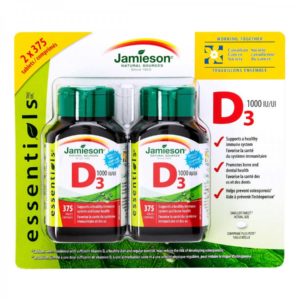
Jamieson – Vitamin D3 1000IU 375 Capsules 2-pack
Original price was: $180.00.$148.00Current price is: $148.00. Add to basket -
Sale!
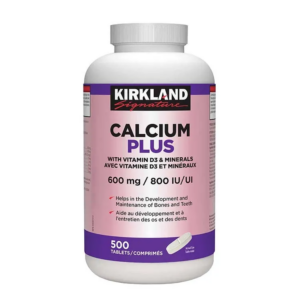
Kirkland Signature – Calcium & Vitamin D3 & Minerals 600mg 800IU 500 Tablets
Original price was: $198.00.$168.00Current price is: $168.00. Add to basket -
Sale!
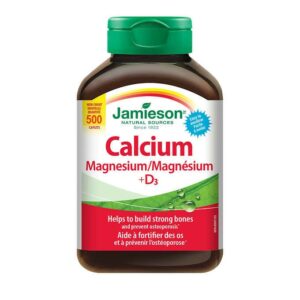
Jamieson – Calcium Magnesium & Vitamin D3 Value Plus 500 Capsules
Original price was: $180.00.$145.00Current price is: $145.00. Add to basket
Related Post:
![牛樟芝子實體與膠囊製品示意]()
What is Antrodia camphorata? A complete guide to its ingredients, research evidence, and precautions for consumption.
![世界心臟日護心飲食場景,香港中年夫婦享用豆漿、豆腐、雞蛋與堅果,旁有心臟及細胞膜卡通示意]()
World Heart Day: Heart Health in Hong Kong Starts with Daily Life | What are the Benefits of Lecithin? Which of Three 1200mg Products to Choose From?
![香港關節健康洞察報告封面:中年及長者在香港步行]()
How to choose joint health supplements? 8 best-selling formulas and repurchase information help you find the right daily option.
![香港素食保健品洞察報告封面:均衡植物性餐桌與閱讀補充品標籤]()
Vegetarian Health Supplement Buying Guide: 8 Best-Selling Products, From Bacterial Strains and Plant Extracts to Daily Nutrition