



































































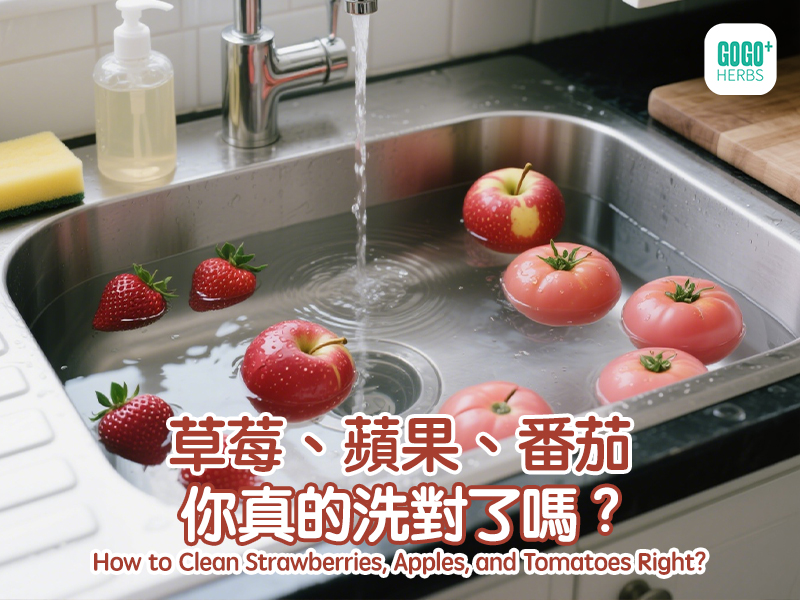
After washing a bowl of strawberries, a layer of sand remains at the bottom of the basin. Most people will have the same thought: Is it clean now?
To find the answer, you'll usually first see a list—the "12 Dirtiest Fruits and Vegetables" and the "15 Cleanest Fruits and Vegetables" published annually by the Environmental Working Group (EWG). The list is easy to remember and share, and it is indeed supported by data: the latest analysis of 54,344 samples from 47 types of fruits and vegetables by the U.S. Department of Agriculture detected 264 types of pesticides and their decomposition products.
But the list only answers half the question. It tells you which fruits and vegetables have "more" residue, but it doesn't tell you "whether eating them will cause problems"—these are two separate things. What truly determines the risk is how you handle them after you buy them.
Therefore, the practical conclusions are only three sentences: rinse with running water, peel what can be peeled, and don't treat the list as a fasting order. As for why these three sentences are necessary, we need to start with how the list was compiled.
1. Being on the list does not mean you can't eat it.
First, let me address something that's easily overlooked: EWG is a non-profit initiative, not a regulatory body. Its ranking is a list of "residual loads," not a risk assessment or a "list of exceeding limits."
The USDA's annual Pesticide Data Program is the original data source. The Alliance for Food and Farming, an industry organization representing traditional and organic farmers, responds annually to this guideline, pointing out that over 99% of the samples in the USDA's data are below the limits set by the EPA, and over 40% show no detectable residues. This rebuttal is based on facts and is worth noting.
EWG itself states that the purpose of the guidelines is to encourage people to eat more fruits and vegetables, not to scare them away. It suggests that consumers choose organic versions of the listed fruits and vegetables within their means, and continue to buy and eat the rest as usual.
Putting both sides' arguments together, the conclusion is actually quite clear: the list can be used to allocate budgets and determine the intensity of cleaning, but it should not be used to remove leafy greens from the table.
II. The latest list: twelve and fifteen types
The following are rankings from the latest guideline (released in March 2026), based on the latest round of testing by the U.S. Department of Agriculture. Chinese names are based on Hong Kong usage, with the common names for other regions listed in parentheses.
The twelve types with the highest residual load
| Ranking | Fruits and vegetables | Reasons for being on the list |
|---|---|---|
| 1 | broccoli | By weight, the residue level was the highest among all fruits and vegetables. |
| 2 | kale, Chinese kale, mustard greens | Nearly 60% of the samples tested positive for a herbicide that is already banned in the European Union. |
| 3 | Strawberry | On average, multiple pesticides were detected per sample. |
| 4 | Grapes | Fluphenazine is most commonly detected on grapes. |
| 5 | nectarine | Similar to peaches, the fuzz on their skin easily traps pesticides. |
| 6 | 桃 | The detection rate of nitrazepam in peaches and plums is nearly 90%. |
| 7 | Cherries | Like grapes and peaches, they belong to the soft-skinned fruit family. |
| 8 | apple | Preservatives will still be applied after harvest. |
| 9 | blackberries | Nine out of ten samples contained residues, with an average of more than four types. |
| 10 | 梨 | Similar to apples in family and processing methods |
| 11 | Potatoes | Nine out of ten samples contained chloranilide, a sprout inhibitor. |
| 12 | blueberry | Traces of multiple pesticides were detected. |
The fifteen types with the lowest residual load
| Ranking | Fruits and vegetables |
|---|---|
| 1 | Pineapple (or pineapple) |
| 2 | Corn (sweet corn, fresh and frozen) |
| 3 | Avocado |
| 4 | pawpaw |
| 5 | onion |
| 6 | Frozen sweet peas |
| 7 | asparagus |
| 8 | Cabbage (Chinese cabbage) |
| 9 | Cauliflower (Broccoli) |
| 10 | watermelon |
| 11 | mango |
| 12 | banana |
| 13 | Carrot (red carrot) |
| 14 | mushroom |
| 15 | kiwi fruit |
Several figures are worth remembering. Among all non-organic samples, 75% tested positive for at least one pesticide; of the top twelve samples, 96% had residues, averaging more than four pesticides per sample. On the other hand, nearly 60% of the fifteen cleanest samples had zero residues, and only 16% tested positive for two or more pesticides.
There's a clear dividing line on the list: those with a shell, thick skin, and that need to be peeled before eating almost all fall on the clean side—pineapple, avocado, corn, banana, onion, and papaya. Conversely, those that are eaten whole, have a large surface area, thin skin, or are eaten with the skin on mostly fall on the other side.
III. How are the rankings calculated?
The algorithm for this list was revised in 2025 to include a "toxicity" criterion. Currently, it uses four indicators for scoring, each standardized to a score of 1 to 100, with the four indicators added together to obtain a total score of 400, and then sorted by the total score.
The four items are:Detection rateWhat percentage of the sample tested positive for at least one pesticide? The overall rate was 75%, while the rate for the top twelve was 96%.diversityThe number of tests detected per sample on average is more than four on average, while the number of tests detected per sample is more than four on average, which is the number of tests detected per sample.concentrationThe total residue levels in a single sample were highest in spinach by weight.toxicityThe dosage is calculated based on the amount of each pesticide that has not shown adverse reactions in animal experiments.
The last calculation method deserves a further explanation. It divides the concentration of each pesticide by the dose with no visible adverse effects, and then adds them all together. Therefore, at the same concentration, pesticides with higher toxicity will have a higher score. After adding this item, the list changed from "how much residue" to "the residue plus the toxicity level," which is the main reason for the ranking change.
However, the sum of these four factors still only constitutes a "burden indicator," not a "health risk indicator." It does not take into account how much you eat, how frequently you eat it, your personal weight and age, nor does it account for the interactions between different pesticides—regulatory agencies approve pesticides one by one, a point that EWG itself has criticized.
IV. Why did the strawberry go from first to third?
Many people have the impression that strawberries have always been number one. This is true: in 2024, strawberries were still number one, but in 2025, spinach took over, and in the latest ranking, they dropped one place to third.
The reason isn't that strawberries suddenly became cleaner, but rather that three things happened simultaneously. First, the algorithm incorporated toxicity weights. Second, the USDA doesn't test all crops every year; different projects use samples from different years, and new data for certain crops was added, causing the rankings to shift. Third, some crops did indeed have new test results—potatoes and blackberries made the list based on data from the last year or two, securing their positions immediately upon entering the rankings.
In other words, the list will change. If the version circulating online says "Strawberries are number one, tomatoes are on the list, 46 kinds of fruits and vegetables, 46,000 samples," that's the 2021 version, and the scope of analysis is different now. You don't have to use the old version or change your grocery shopping habits based on it—most of the items on the list have appeared repeatedly over the years; only the order has changed.
V. Things You Should Know About These Items on the List
Spinach has ranked first for pesticide residues for two consecutive years, with EWG stating that it has "higher residue levels by weight than any other fruit or vegetable." Spinach's large leaf area, short growth cycle, and close-to-the-ground growth make it prone to pesticide residue buildup. It is also an important source of folic acid, vitamin K, and iron—so the answer is to wash it thoroughly and eat it, not to avoid it altogether.
The key to the kale test was a herbicide called DCPA (dimethyl chloride). Nearly 60% of the kale samples tested positive for it. The U.S. Environmental Protection Agency listed it as "possibly carcinogenic" (Group C) as early as 1995; the European Union banned it entirely in 2009; and the U.S. only invoked its emergency suspension power in August 2024, cancelling all registrations in October of the same year. This is an example of "regulation catching up later," illustrating that the residue figures on the list reflect usage from several years ago and may not necessarily indicate continued use today.
In the potato category, 90% of the samples contained chloranilide. This is a post-harvest sprout inhibitor used to prevent potatoes from sprouting, and the EU stopped approving it in 2019. These agents are characterized by being sprayed on the skin, making peeling particularly effective.
Blackberries are a relatively new product. In 2023, the U.S. Department of Agriculture first tested blackberries, finding residues in 90% of the samples, averaging more than four types per sample, a combination of fungicides and pesticides. Like strawberries, blackberries have a surface covered in tiny bumps; rinsing can remove some residue, but it's difficult to completely remove it.
VI. PFAS Pesticides: This Year's New Focus
The latest guidelines focus on a class of pesticides called PFAS, commonly known as "permanent chemicals." Three of the ten most frequently detected pesticides belong to this class.
The most frequently detected pesticide was fludioxonil, a fungicide, which appeared in 14% of all samples; in peaches and plums, the detection rate was close to 90%. The other two were flupyradifurone (8%) and bifenthrin (7%). Of the twelve samples on the list, 63% tested positive for at least one PFAS pesticide.
There are two sides to the story. The U.S. Environmental Protection Agency (EPA) considers these registered pesticides not to be "permanent chemicals"; and the definition of PFAS residues in food is still under discussion in academia. The EWG itself acknowledges that there are significant gaps in toxicity research on PFAS pesticides, especially regarding immunotoxicity. Therefore, at this stage, it's fair to say that they are "worthy of attention and require further research," rather than "already determined to be harmful."
It doesn't have much practical significance for consumers—you won't change your cleaning methods just because you know the name. But it explains why this list has increasingly focused on "toxicity" rather than just "quantity" in recent years.
VII. Three restrictions on this list
The first limitation is the inconsistency in data years. The USDA only samples a portion of crops each year for testing, and results are typically released two years after sampling. For example, the latest spinach data uses 1,295 samples collected between 2015 and 2016; cherry tomatoes use the data collected starting in April 2024. On the same list, some figures are from last year, while others are from ten years ago.
The second limitation is that the samples have been washed. This is rarely mentioned, but it is very important: Before testing, the Department of Agriculture will rinse the samples under running water for 15 to 20 seconds; vegetables that can be eaten with the peel on will be rinsed and drained, while vegetables that cannot be eaten with the peel on will be peeled; inedible ends will be cut off; and then three to five pounds of the same type of fruit and vegetable will be crushed and mixed into a composite sample.
In other words, the figures on the list represent "residue remaining after rinsing or peeling in a home setting," not the original residue from the field. This actually illustrates that rinsing is effective, but not complete. Further reduction relies on peeling, removing outer leaves, and dispersing the source.
The third limitation is composite samples. Three to five pounds of crushed and mixed samples are used to obtain an average value, which does not show individual differences—the one you buy may have no residue at all, or it may be above average.
VIII. The Actual Situation in Hong Kong
The US list can be used as a reference, but Hong Kong's actual test results are more relevant.
The Centre for Food Safety tested approximately 69,600 food samples throughout 2025, with 69 failing, resulting in an overall pass rate of 99.9%, similar to 2024. Looking at December 2025 alone, four of the approximately 6,600 samples failed, three of which had excessive pesticide residues in white radishes.
Even more noteworthy is the second Total Diet Study, released in December 2025. The study examined 374 mixed samples, covering 187 food items, and analyzed 101 pesticides or their metabolites. The results showed that 39 pesticides (39%) were completely absent from all samples, while the remaining 62 (61%) were detected at low levels, primarily from vegetables and fruits. By category, neonicotinoids had the highest detection rate (49%), followed by organophosphates (37%) and carbamates (26%).
The conclusion is that for the general public and those with high intake levels, the amount of these pesticides they ingest from their diet is below the relevant health reference values, and the chance of posing a health risk is not high. The Centre also pointed out that there have been no cases of food poisoning caused by pesticide residues in Hong Kong in the past ten years.
One point needs to be clarified, otherwise the figures will be misinterpreted: Hong Kong's 61% and the US's 75% cannot be directly compared. Hong Kong uses pooled samples, testing multiple foods together, which has a different sensitivity than single-sample testing; moreover, "detected" does not equal "exceeding the limit." Looking at the two sets of figures together, only one conclusion can be drawn—the residue levels in both places are generally low.
9. Cleaning: The three official statements all agree on the same approach.
A review of the recommendations from the Hong Kong Centre for Food Safety, the U.S. Food and Drug Administration, and the U.S. Department of Agriculture reveals that the three parties agree on several key points.
| mechanism | How to wash | soak |
|---|---|---|
| Hong Kong Centre for Food Safety | Rinse thoroughly with running water; for hardened surfaces, scrub with a clean brush. | Starting from the first quarter of 2017, it will no longer be recommended. |
| U.S. Food and Drug Administration | Gently rub under running water; use a vegetable brush to clean the tough skin; pat dry with a clean cloth or kitchen paper after washing. | It is not recommended; soap or fruit and vegetable cleaners are also not recommended. |
| U.S. Department of Agriculture (Pre-testing treatment) | Rinse under running water for 15 to 20 seconds; rinse and drain edible peels, peel inedible peels. | — |
Combining the three recommendations, you get a set of procedures to follow: First, rinse each item under running water, gently rubbing the surface with your hands; use a brush for tough skins; cut and peel only after washing; finally, dry with a clean cloth. No soap, dish soap, or fruit and vegetable cleaners are needed—both the Center for Food Safety and the U.S. Food and Drug Administration explicitly advise against them, arguing that these cleaners themselves may become new sources of chemical residues.
There's a specific reason for the "wash before cutting" step. The U.S. Food and Drug Administration states that rinsing before peeling prevents the knife from bringing dirt from the skin into the flesh. Similarly, strawberries should be washed before removing the stems, and grapes should be cut into bunches rather than torn off individually—once wounds form, water and dirt can easily get inside.
10. The unit "flush for 15 to 20 minutes" is incorrect.
A claim circulating online suggests soaking the food for several minutes, then rinsing it under running water for 15 to 20 minutes. While this number has a source, the units are incorrect—the USDA's pre-test rinsing procedure is 15 to 20 minutes. 秒It's not minutes.
The difference is significant. Rinsing for 20 minutes not only offers no additional benefits but also causes water-soluble vitamins (especially vitamins C and B complex) to be lost with the water. Since the first quarter of 2017, the Centre for Food Safety has stopped recommending soaking vegetables, precisely because nutrients are lost and the method is no more effective than rinsing under running water; this practice has also been approved by the Food Safety Expert Committee.
The center has also clarified a common misconception. Some media outlets cited a study claiming that soaking vegetables for too long would cause pesticide residues dissolved in the water to seep back into the vegetables. The center pointed out that the study only demonstrated one thing—rinsing with running water is more effective than soaking. The reason is simple: running water continuously carries away the residues that are washed away, which still water cannot do.
Blanching is another common practice. The Centre for Food Safety used to recommend rinsing several times and then soaking for an hour, or blanching in boiling water for one minute. However, as the residue levels detected in local samples have remained consistently low, soaking and blanching are no longer considered necessary steps. Blanching is still an option, but the water must be discarded after each blanching, as some nutrients will be lost along with the water.
11. Why can some stains be washed off while others cannot?
Pesticides are broadly divided into two categories, and this classification determines how much cleaning can help.
| Contact pesticides | Systemic pesticides | |
|---|---|---|
| Location | Attached to the surface, especially the outer skin and protruding parts | Absorbed by plants, entering the pulp and tissues |
| Can it be washed off? | Most of them are fine; rinsing and scrubbing are effective. | It can't be washed off; rinsing only cleans the surface layer. |
| response | Rinse with running water and use a brush. | Peel and remove outer leaves; disperse the source |
A study using apples compared baking soda solution (10 mg/mL) with water and diluted bleach, with specific results: soaking for 12 minutes removed about 80% of thiabendazole (a systemic fungicide) residue from the surface, and soaking for 15 minutes removed about 96% of dimethoate (a contact insecticide). Baking soda is indeed superior to water and diluted bleach.
However, the same study also measured that 20% of thiabendazole and 4.4% of tebuconazole had penetrated into the apple 24 hours after spraying. The penetrated portion could not be removed by any surface cleaning method; the researchers concluded that peeling the apple was more effective at removing the penetrated residue.
This explains why there are two practical approaches: For fruits that can be peeled (apples, pears, peaches, carrots, potatoes, cucumbers), peeling is the most thorough; for fruits that cannot be peeled (strawberries, grapes, blueberries, leafy greens), rinsing is the only option, and one must accept the fact that they are not completely washed. As for soaking in baking soda, research conditions require 12 to 15 minutes against two different pesticides. There is no equivalent evidence to support soaking for a few minutes in daily life, and it contradicts the Food Safety Centre's recommendation against soaking. If you want to use it, treat it as an extra step, not a shortcut.
12. How to wash different fruits and vegetables
| category | example | practice |
|---|---|---|
| leafy vegetables | Spinach, kale, bok choy, Chinese cabbage | Separate the leaves one by one and rinse them under running water; gently rub the leaf joints and folds with your fingers; for vegetables like bok choy, you can remove the outermost leaves first. |
| soft-skinned fruit | Strawberries, blueberries, blackberries, cherries | Wash only before eating; rinse with the stem on, and remove the stem only after washing to avoid the wound from absorbing water. |
| bunches of fruit | grapes | Cut into small skewers, do not tear off pieces one by one; gently rub the surface under running water. |
| Pachyderm fruit | Apples, pears, peaches, nectarines | After rinsing, you can peel it; if you're eating it with the peel on, rub it a little longer or gently brush it. |
| Hard-skinned melons | Watermelon, cucumber, carrot, potato | Scrub the fruit with a cleaning brush under running water; wash the skin before cutting to prevent dirt from getting into the flesh. |
| Flower balls | Broccoli, cauliflower | Cut into small pieces, place pleats side down, and rinse under running water to allow water to seep through the crevices. |
| Mushrooms | mushroom | Rinse quickly or wipe with a damp cloth; do not soak for a long time, as this will affect the taste and nutritional value of mushrooms. |
Frozen fruits and vegetables are an often overlooked option. Frozen sweet peas are among the cleanest 15, as are frozen corn; these products are usually washed and briefly blanched before packaging, which reduces some residues, and they are also readily available and cheaper. EWG has also listed "considering frozen versions" as a cost-effective alternative this year.
13. Does organic mean no residue?
No, they are not the same. Organic farming can use approved pesticides from organic sources, and pesticides sprayed in neighboring fields may drift with the wind, so organic fruits and vegetables can also have residues detected, although the types and concentrations are usually lower.
EWG recommends that all fruits and vegetables, whether organic or conventional, should be washed. This aligns with the Centre for Food Safety's recommendations.
If you have a limited budget, a more practical approach is to buy the organic versions of the top twelve items (especially strawberries, leafy greens, grapes, and peaches), and the regular versions of the 15 cleanest items (pineapple, avocado, corn, onions, and papaya). This is EWG's consistent recommendation over the years, and it aligns with the logic of "spending money wisely."
In Hong Kong, organic certification is provided by different organizations. When purchasing, you can pay attention to the certification mark and place of origin on the packaging. However, if you wash them well, you can eat regular fruits and vegetables with peace of mind. You don't have to eat less vegetables just because you can't buy organic ones.
XIV. Pregnant women, children, and the line between seeking medical care
Children are a group that requires special attention. Their developing nervous and endocrine systems are more sensitive to chemicals, and the U.S. Food Quality Protection Act of 1996 required regulatory agencies to provide additional protection for infants and young children. The same applies to pregnant women, which is why the EWG prioritizes children and pregnancy.
However, being "more sensitive" does not mean "abstaining from" them. Leafy greens and berries are important sources of folic acid, iron, vitamins, and antioxidants, so completely avoiding them would be counterproductive. A feasible approach is to wash them thoroughly, peel those that can be peeled, diversify the sources, and eat a variety of different types.
If you experience persistent vomiting, diarrhea, abdominal pain, dizziness, blurred vision, or cramps after eating, do not try to determine if it is related to pesticides yourself. Seek medical attention as soon as possible. In case of emergency, call 999 or go to the emergency room. Such severe symptoms are rare in Hong Kong, and there have been no cases of food poisoning caused by pesticide residues in the past ten years. However, if they occur, you should still consult a doctor.
Frequently Asked Questions
Are the "12 dirtiest foods" inedible?
You can eat them, and you should eat them. The list ranks the types, concentrations, and toxicity of residues, not a list of foods that "will cause illness." Data from the U.S. Department of Agriculture shows that over 99% of samples are below the legal limits, and Hong Kong's overall compliance rate in 2025 was 99.9%. Spinach, kale, and strawberries are all highly nutrient-dense foods; not eating them because they're on the list would result in a greater loss than the risk.
Is washing with salt water, baking soda, or vinegar cleaner than washing with plain water?
The evidence is inconsistent, and most comparisons involve "soaking in still water," not "rinsing under running water." Studies on apples showed that soaking in baking soda water for 12 to 15 minutes achieved 80% to 96% surface removal of two pesticides, superior to plain water; however, another set of studies on leafy vegetables found that rinsing under running water was as effective as or even better than various soaking methods. Neither the Centers for Food Safety nor the U.S. Food and Drug Administration recommends adding anything, only using running water. If you want to use baking soda, consider it an extra step, and still rinse thoroughly with running water afterwards.
Can I use dish soap or fruit and vegetable cleaner?
Not recommended. The Center for Food Safety explicitly advises against using soap, formulated detergents, or produce cleaners to wash fruits and vegetables because these substances can themselves become new sources of chemical residues. The U.S. Food and Drug Administration echoes this sentiment—gentle rubbing under running water is sufficient; soap or produce cleaners are unnecessary.
Should we wash it first or cut it first?
Wash first, then cut. Dirt and residue on the skin are more easily carried into the flesh by the knife after the cut is made, so rinse thoroughly before cutting or peeling. The same principle applies to washing strawberries before removing the stems and cutting grapes into small bunches instead of tearing them off one by one.
How long should it be soaked?
Since the first quarter of 2017, the Hong Kong Centre for Food Safety has stopped recommending soaking vegetables. The reason is that soaking causes the loss of water-soluble vitamins, and the effect is no better than rinsing under running water. The Centre has also clarified a common misconception: some media outlets cited research suggesting that prolonged soaking would cause residues to seep back into the vegetables, but that research only demonstrated that rinsing under running water is superior to soaking. Simply rinsing with running water is more practical than worrying about soaking time.
Are organic fruits and vegetables completely free of pesticide residues?
No. Organic farming can use approved pesticides from organic sources and may be affected by drift from neighboring fields. The difference between organic and conventional farming lies in the range of pesticides that can be used, not in "zero residue." Regardless of which one you buy, you must wash it.
Are there fewer residues in frozen fruits and vegetables?
While not necessarily less abundant, the quality is generally not bad. Both frozen sweet peas and frozen corn fall within the top fifteen cleanest categories; the freezing process and subsequent washing and blanching reduce some residue, and supply and price are relatively stable. For families on a budget, this is a practical alternative.
Are the vegetables I bought in Hong Kong seriously exceeding the standards?
The situation is not serious. In 2025, the Centre for Food Safety tested approximately 69,600 samples, with 69 failing, resulting in an overall pass rate of 99.9%. Of the four failing samples in December 2025, three were white radishes with excessive pesticide residues; the Centre has ordered their removal from sale and is tracing their source. The conclusion of the Second Total Diet Study also indicates that the amount of food consumed by the public is below the healthy reference value.
Source of information
Environmental Working Group (EWG) 2026 Shopper's Guide to Pesticides in Produce: Overview and Key Findings.ewg.org
Environmental Working Group. The 2026 Dirty Dozen: Ranking of Twelve Fruits and Vegetables.ewg.org
Environmental Working Group. The Clean Fifteen: Ranking of Fifteen Fruits and Vegetables.ewg.org
Environmental Working Group. Methodology: Four scoring indicators, sample pretreatment, and toxicity conversion methods.ewg.org
Environmental Working Group. Kale: DCPA Detection Rate and Regulatory Evolution.ewg.org
US Department of Agriculture, Agricultural Marketing Service. Pesticide Data Program: Pesticide residue detection data.ams.usda.gov
US Environmental Protection Agency (EPA) Releases Risk Assessment Showing Significant Risks to Human Health from Herbicide DCPA; DCPA Emergency Suspension and Deregistration.epa.gov
US Food and Drug Administration. 7 Tips for Cleaning Fruits and Vegetables: Rinse before peeling, do not use soap, use a brush for hard skin.fda.gov
Hong Kong Centre for Food Safety. Pesticide Residues in Food (Frequently Asked Questions): Recommendations for Rinsing and Soaking, Why Cleaning Agents Are Not Recommended.cfs.gov.hk
Hong Kong Centre for Food Safety. December 2025 Food Safety Report and 2025 Food Surveillance Programme Annual Summary.cfs.gov.hk
Hong Kong Centre for Food Safety. The Centre for Food Safety released the results of the Second Total Diet Study on pesticide residues.cfs.gov.hk
Yang T, Doherty J, Zhao B, Kinchla AJ, Clark JM, He L. Effectiveness of Commercial and Homemade Washing Agents in Removing Pesticide Residues on and in Apples. Journal of Agricultural and Food Chemistry. 2017;65(44):9744–9752. PMID 29067814
Related Readings
〈A complete nutritional analysis of tomatoes> This discusses the nutritional aspects of fruits and vegetables; <How to choose between large tomatoes and cherry tomatoes> Comparisons are made between variety and quantity; <Nutritional value and health benefits of papayaThe protagonist of the story falls within the fifteen cleanest categories;Blueberries and Cardiovascular Risk> This describes another fruit on the list; <Don't throw away mangosteen shells>Previously mentioned residues and peeling precautions for imported fruits.
Health Declaration:The content of this article is for health education purposes only and should not replace professional medical diagnosis, treatment, or individual advice. For any dietary adjustments, supplement use, or questions about your medical condition, please consult a doctor or registered dietitian.
Related Products:
-
Sale!

GINAX – Ginseng Tea Bag / Ginseng White Tea Rose Tea Bag | 1bag
Original price was: $13.00.$10.00Current price is: $10.00. 選擇規格 This product has multiple variants. The options may be chosen on the product page -
Sale!

GINAX – Manuka Honey UMF™ 5+ 30g
Original price was: $30.00.$25.00Current price is: $25.00. Add to basket -
Sale!
Single 10% off】aXimed – Recovery Speed 100% Whey Protein Powder 30 sachets
Original price was: $558.00.$502.00Current price is: $502.00. Add to basket -
Sale!
Livinglean – Organic Dietary Mineral Powder 8g x 20 sachets
Original price was: $368.00.$298.00Current price is: $298.00. Add to basket
Related Post:
![眼乾食葉黃素有用嗎?」「秋冬天眼乾特別嚴重,點算?]()
What foods are good for dry eyes? The roles and selection of Omega-3, lutein, zeaxanthin, and blueberry extract.
![男士夜尿、滴滴仔:良性前列腺增生的症狀、檢查與保健品選購]()
Nocturia and dribbling in men: Symptoms, examinations, and supplemental evidence of benign prostatic hyperplasia (BPH).
![通宵一晚,血壓會升多少?]()
Staying up late and blood pressure: How much will blood pressure rise after staying up all night on Halloween? Interpreting cardiovascular risk data.
![均衡備餐與體重管理]()
Weight Management Shopping Guide: 8 Selected Probiotics, Apple Cider Vinegar, and Herbal Formulas