


































































A bowl of blueberries is about 150 grams. This amount has become quite popular in the media in recent years because a British-American collaborative trial suggested that eating this much every day could reduce the risk of cardiovascular disease by 12% to 15%.
The study itself is robust: double-blind, placebo-controlled, and lasting six months—the longest of its kind—and the participants were not randomly selected healthy individuals, but rather a group already suffering from metabolic syndrome and overweight. It deserves serious consideration.
However, that " – %" needs to be put back in its original position. The paper states "effect sizes predictive of – % reductions in CVD risk"—based on changes in this set of vascular markers.EstimationThe results showed that, not just a group of people who ate the product for six months experienced a 15% reduction in heart attacks. With only six months and 115 people, there was simply no way to monitor the incidence rate.
This distinction isn't nitpicking. It determines how you understand "eating blueberries for heart health": whether you see it as a guarantee, or as a dietary habit that's on the right track, with specific dosage, but requires long-term coordination with other conditions.
One more thing worth mentioning: the effect only appeared in the 150-gram daily dose group, not in the half-dose (75-gram) group. The dosage is not just a random number.
First, let me clarify: – % is an estimate, not the incidence rate.
To understand this number, we must first know what the study measures. It doesn't measure "how many people have heart attacks," but rather an indicator called flow-mediated dilatation (FMD)—using ultrasound to see how much blood vessels in the arm dilate when blood flow increases, thereby reflecting the state of the vascular endothelium.
Then comes the three-step conversion:
| step | content | number |
|---|---|---|
| 一 | In the experiment, the FMD change in the group receiving 150 grams of blueberries daily | +1.45% (95% CI 0.83 – 2.1) |
| 二 | The relationship between FMD and future cardiovascular events (a meta-analysis of 23 prospective studies and 14,753 participants) | For every 1% increase in FMD, the risk ratio 0.92 (0.88 – 0.95), which is approximately 8% lower. |
| 三 | Substitute the changes from the first step into the relationships from the second step. | Approximately – % lower, on the same order of magnitude as the – % mentioned by the author. |
The conversion itself is sound, and it uses a widely cited synergistic analysis.(PMID 23041097)The problem lies only in its nature: it is "theoretically how much risk difference would correspond if this vascular change could be maintained in the long term," which is a prediction, not an observed result.
Why bother with this comparison? Because the two scenarios have completely different implications for the reader. If it's a practical test, it means the food is safe and effective; if it's a projection, it indicates a signal observed in an intermediate stage (vascular function), a direction worthy of further research. In cognitive and emotional tests conducted six months later on the same group of participants, only the post-meal "sense of calm" showed improvement; other aspects remained unchanged.(PMID 38432713)This demonstrates just how wide a range of effects a single food can have.
II. What did that study do: 115 people, 6 months, three groups
The study, conducted by a team from the University of East Anglia's Norwich School of Medicine in collaboration with the Harvard School of Public Health, was published in the *American Journal of Clinical Nutrition*. The design details are as follows.
| project | content |
|---|---|
| object | 115 adults with metabolic syndrome completed the study, with a mean age of 63 years (±7), 68% of whom were male, and a mean BMI of 31.2 (±3.0). |
| Grouping | Three parallel groups: half a cup (75 grams) daily, one cup (150 grams) daily, and a placebo that matches appearance and calories. |
| form | Double-blind. Blueberries were added to the beverage in freeze-dried powder form, and participants did not know which group they were consuming. |
| time | Six months is the longest duration among studies on this topic. |
| Primary endpoint | Insulin resistance (HOMA-IR), and verified in some subjects using glucose clamp technique. |
| Compliance | 94.1% (based on packaging recycling) |
| Registration number | NCT02035592You can check it yourself. |
One easily overlooked detail: the participants were "obese and had metabolic syndrome," not typical healthy adults. Their average BMI was 31.2, which falls within the obese range. This means the most direct applicability of the results is to people who already have one or more of their blood pressure, blood sugar, or waist circumference exceeding the normal range; it's somewhat unrealistic for a 30-year-old with normal indicators to use this number for self-encouragement.
The funding background is worth noting: the research was funded by the American Highbush Blueberry Council (USHBC) and overseen by the U.S. Department of Agriculture and the UK Biotechnology and Biological Sciences Research Council (BBSRC); both authors also serve as advisors to the council's funding committee. The paper states that the funding agency was not involved in the research design, data collection, analysis, interpretation, or writing. This division of labor does not affect the reliability of the methodology, but the tone of the conclusions can be adjusted accordingly.
The authors also listed two limitations: the subjects were predominantly white, and the proportion was more concentrated among those diagnosed with metabolic syndrome; in addition, adding blueberries to the beverage in the form of freeze-dried powder is not exactly the same as eating fresh fruit directly in terms of chewing, satiety, and eating speed.
Third, the effect appears in the blood vessels, not in the blood sugar.
The result can be summarized in one sentence: there was a signal in the blood vessel segment, but not in the blood sugar segment.
| index | Changes in the 150g daily group | How to understand |
|---|---|---|
| Flow-mediated dilation (FMD) | +1.45% (0.83 – 2.1), p=0.003 | Improved vascular endothelial function is the most significant positive finding of the entire study. |
| Arterial stiffness (enhancement index) | -2.24% (from -3.97 to -0.61), p=0.04 | The lower the value, the better, indicating that the arteries are more elastic. |
| Insulin resistance (primary endpoint) | No change observed | This part of blood sugar metabolism has not progressed for six months. |
| High-density lipoprotein (HDL) | The increase was only 0.08 mmol/L in the 71 people who were not taking statins. | This metric was not observed in people currently taking cholesterol-lowering medication. |
The half-cup (75 grams) group showed no significant changes in any of the above categories. This boundary is more useful than the result itself—it tells you "how much is enough".
As for blood pressure, blueberries are not a strong point. A meta-analysis in 2026 that included nine randomized controlled trials and 547 participants...(PMID 42196965)The study showed that berry supplementation had no statistically significant effect on resting systolic and diastolic blood pressure, with only a decrease of about 1.1 mmHg in 24-hour ambulatory diastolic blood pressure. Expecting blueberries to be a "blood pressure-lowering food" will lead to a significant disappointment; its effects are related to vascular function and blood lipids, not the two numbers shown in the clinic.
IV. Why 75 grams is not enough: Dosage threshold
In the same study, the half-cup group consumed 75 grams, which was consistent with the results of the placebo group. It wasn't until the full-cup group that a significant difference emerged. This suggests that there's a threshold for the effects of blueberries on blood vessels, falling between 70 and 150 grams.
The practical value of this discovery far exceeds the statement "eating blueberries every day is good for you." It transforms a vague suggestion into a quantifiable actionable measure:
- A dozen or so every day, added as a garnish to cheese.—It tastes good, and it contains fiber and anthocyanins, but by the standards of this study, it's not enough to show any changes in blood vessels.
- One bowl a day, about 150 grams—The study showed that FMD was associated with improved arterial stiffness.
- Eat a large box at once, then don't eat it for a few days.—This pattern was not tested in the study. It measured a fixed daily intake for six consecutive months.
The concentrations of anthocyanin metabolites in blood and urine showed a dose-related increase in the study, which explains why there was no signal in the low-dose group: it's not that blueberries were ineffective, but that there weren't enough active metabolites reaching the blood vessels.
5. How much is 150 grams? One bowl, not half a bowl.
The volume of 150 grams of blueberries is often described as "about half a bowl." This description underestimates the quantity by half.
The USDA database records blueberries as "one cup = 148 grams," meaning 150 grams is a full cup. Using a typical Hong Kong household rice bowl (approximately 240 ml capacity), this would be about the same weight when filled to the brim, with an actual count of about 70 to 90 blueberries, depending on the size.
Using the Department of Health's "two plus three daily" calculation method will make it clearer: one serving of fruit is roughly equivalent to half a bowl of diced fruit, or about 120 milliliters. 150 grams of blueberries is close to one bowl, which is...About two servings of fruitAdults are advised to have two servings of fruit a day—this bowl of blueberries will use up your fruit allowance.
This isn't telling you not to eat them, but rather reminding you of two things: First, reduce the amount of other fruits you eat on the same day; don't just "eat blueberries as usual and other fruits as usual." Second, don't cut back on the three servings of vegetables; they are still the main sources of fiber and potassium.
6. Blueberries actually have a higher sugar and calorie content than watermelons.
"Berry is not a high-sugar fruit like watermelon, so it is more suitable for overweight people"—this statement appeared in the circulating version, but in the exact opposite direction.
| per 100 grams | Blueberries (USDA 171711) | Watermelon (USDA 167765) |
|---|---|---|
| calorific value | 57 kcal | 30 kcal |
| 糖 | 9.96 grams | 6.2 grams |
| carbohydrate | 14.49 grams | 7.55 grams |
| Dietary fiber | 2.4 grams | 0.4 grams |
| Glycemic Index (GI) | Approximately 53, low | Approximately – cm high |
Looking at the sugar and calories per 100 grams, blueberries contain almost twice as much as watermelon. But what truly differentiates them isn't sugar, but fiber and anthocyanins: blueberries contain 2.4 grams of fiber per 100 grams, while watermelon only contains 0.4 grams; in the study, 150 grams of blueberries provided 364 milligrams of anthocyanins, while watermelon provided almost none.
As for the glycemic load (GI multiplied by the amount of available carbohydrates), based on 150 grams, blueberries have a GI of about 10 and watermelon about 8, which is actually quite similar. This is because the two factors offset each other: watermelon has a high glycemic index but low carbohydrates, while blueberries have a low glycemic index but high carbohydrates. This also explains why you can't rank them using just one indicator.
Therefore, the three indicators need to be discussed separately:Sugar content is measured per 100 grams; glycemic index (GI) is measured by the rate of glycemic rise; actual impact is measured by serving size and glycemic index (GL).If you combine them into a sentence like "So-and-so is high in sugar," you will arrive at the opposite conclusion.
For people with metabolic syndrome or diabetes, the important thing to remember is this: 150 grams of blueberries contain about 86 kcal and 15 grams of sugar, which is close to four teaspoons of sugar. This should be included in your daily carbohydrate and fruit allowance, not something you can "eat in unlimited quantities".

7. "Preventing bladder infections" is all about cranberries.
Blueberries are often touted as a preventative measure against urinary tract infections, but this credit actually goes to cranberries.
The mechanism is as follows: E. coli needs to adhere to the urinary tract epithelium via pili to establish itself; cranberries contain...Type A proanthocyanidinsIt can interfere with this adhesion process. Blueberries also contain proanthocyanidins, but primarily... Type BThe main components differ in structure, resulting in varying anti-adhesion activities.
The distribution of clinical evidence is equally clear. (CocoBlue Collaborative Review)(PMID 23076891)The study included 24 trials and over 4,000 participants, all involving cranberry products; however, there are currently no trials on the prevention of urinary tract infections using blueberries.
This doesn't mean blueberries have no value for the urinary system. Their water, fiber, and overall dietary position are positive for the body; it's just that attributing "infection prevention" to blueberries can lead people who actually need treatment for recurrent urinary tract infections to spend money on the wrong thing and delay seeking medical help.
8. Frozen blueberries: Vitamin C will be lost, but anthocyanins will be retained.
Hong Kong does not produce blueberries; fresh blueberries are mostly imported seasonally from Chile, Peru, Australia, and other places, while frozen blueberries are available year-round. Whether freezing reduces nutritional value requires further discussion.
| per 100 grams | Fresh blueberries | Frozen Blueberries (No Added Sugar) |
|---|---|---|
| calorific value | 57 kcal | 51 kcal |
| 糖 | 9.96 grams | 8.45 grams |
| Dietary fiber | 2.4 grams | 2.7 grams |
| Vitamin C | 9.7 mg | 2.5 mg |
| 鉀 | 77 mg | 54 mg |
The biggest difference is in vitamin C; frozen fruits and vegetables retain only about a quarter of their vitamin C content. This is related to the pre-freezing treatment: fruits and vegetables are usually subjected to a brief heat treatment before freezing to inhibit enzymes. Water-soluble and heat-sensitive vitamin C is lost at this step, and its content continues to decline during subsequent storage.
However, the situation is the opposite for anthocyanins. Two review articles in the 2007 *Journal of Scientific Food and Agriculture*...(Part I)(Part II)Comparing fresh, frozen, and canned fruits and vegetables, the overall conclusion is that there are no significant differences. However, some individual nutrients may have varying degrees of reactivity, and in some cases, frozen products retain more nutrients. The U.S. Food and Drug Administration describes single-ingredient frozen fruits and vegetables as "comparable to the fresh version and interchangeable in the diet," rather than "identical."
In terms of implementation:For anthocyanins, frozen berries are perfectly usable, and they're cheap, stable, and don't spoil easily; however, if you want to get vitamin C from blueberries, fresh ones are more suitable.If your daily diet already includes other fruits and vegetables, you usually won't be deficient in Vitamin C, so there's no need to exaggerate this difference.
9. Anthocyanins are not only found in blueberries, but they can also be several times more expensive.
First, let me give you a specific figure. In the study, the group that consumed 150 grams daily actually had anthocyanin content of... 364 mgThe half-cup (75g) group received 182mg, while the placebo group received zero. The total phenolic content was 879, 439, and 0 mg, respectively. Dosage was verified by independent laboratory testing, not estimated from the label.
The anthocyanin content of blueberries can vary by several times depending on the variety. (Review from 2025's *Nutrients*)(PMID 41470833)The given range for cultivated highbush and lowbush blueberries is approximately 80 to 300 mg per 100 grams, while wild or darker-colored varieties can reach 400 to 450 mg; a study of 45 varieties measured a wider range, from 167 to 678 mg.
This means that the anthocyanin content of the same bowl of blueberries can vary by two to three times, and you can't tell from the appearance alone in the supermarket. This is also one explanation for why "some people experience benefits while others don't."
If your goal is simply anthocyanins, there are many alternatives available at significantly different prices:
- Blackcurrant— It has a high anthocyanin density, is commonly found in frozen or juiced forms, and is usually cheaper than blueberries.
- Purple sweet potato, purple cabbage, purple onion— Everyday vegetables, with anthocyanins and fiber, come in at the lowest cost.
- Strawberries, raspberries, cherries—It has a lower content of fiber than blueberries, but it also contains fiber and vitamin C, and it is cheaper when it is in season.
Blueberries have the advantage of convenience: they can be eaten after washing, no cooking required, have a pleasing taste, and their quality remains stable even after flash freezing. They are an option that is "easy to maintain long-term," which is often more important than the amount of fruit in a diet.
10. How do Hong Kong people incorporate these into their daily meals?
Breaking the 150 grams into smaller portions makes it easier to maintain a healthy diet than eating a whole bowl at once.
- breakfast—Plain cheese or oatmeal with 80 grams of blueberries and a tablespoon of nuts. The fat and protein help to flatten the glycemic curve of the meal.
- afternoon— Seventy grams of blueberries with unsweetened soy milk or a small handful of walnuts can replace cookies and sweet drinks.
- After exercise— Rotate with other fruits; you don't have to eat blueberries every day.
Three things to avoid:
Use blueberry juice instead of whole blueberries.Juicing removes the fiber, requiring three to four times the amount of fruit per cup, resulting in concentrated sugar and faster consumption. Limit your intake to three-quarters of a cup and treat it as a fruit quota.
Dried blueberries as a snack.After dehydration, the volume shrinks, making it easy to eat half a bag at once. The sugar density is more than three times that of whole fruit. The Department of Health calculates that a quarter bowl of dried fruit equals one serving of whole fruit, which is much less than you might imagine.
Blueberry desserts and blueberry-flavored cheese.Sugar, cream, and flavorings are the main ingredients; anthocyanins are just for color. To get the amount of food tested in the research, you'd have to exceed the recommended sugar intake first.
For products like blueberry extract and anthocyanin capsules, the dosage labeling is not equivalent to that of whole fruit extract; when purchasing, look for the standardized content rather than the number of capsules. For relevant dosage comparisons, please refer to [link/reference needed].Dosage and selection of six eye-protecting ingredientsas well asNutritional components of purple wheat and anthocyanins。
11. Who needs to be especially careful
Blueberries are a safe food, but there are a few things to consider:
- I am currently taking warfarin, a medication to thin my blood.Blueberries are not high in vitamin K, but large and sudden changes in intake can affect the stability of medication efficacy. The principle is to "maintain stability," not to "completely eliminate" them; inform your doctor about any significant dietary changes first.
- Kidney disease patientsBlueberries are a low-potassium fruit (77 mg per 100g), which is safer than bananas and kiwis, but they should still be included in the daily limit, especially when eating more than two servings a day.
- diabetic patients—150 grams contains about 15 grams of sugar, which should be included in the daily carbohydrate intake; if other fruits are eaten at the same time, it is easy to exceed the recommended intake. Medication adjustments must be made by a doctor.
- Taking cholesterol-lowering medication (statins)—The improvement in HDL levels observed in the study only occurred in those not taking statins. This does not mean that the medication and blueberries are incompatible, but rather serves as a reminder that the role of medication cannot be replaced by food.
Finally, it's about seeking medical attention. Blueberries are part of a normal diet, but they are not a treatment for chest tightness, palpitations, or shortness of breath. If you experience chest tenderness lasting more than a few minutes, pain radiating to your arm or jaw, sudden slurred speech, or weakness on one side of your body, please call [medical service name] immediately. 999Do not eat anything before or wait for it to pass. People diagnosed with cardiovascular disease and taking medication should discuss any dietary adjustments with their attending physician or registered dietitian first.
Frequently Asked Questions
How long does it take to see the effects of 150 grams of blueberries per day?
The study measured changes over a six-month period. Changes in vascular endothelial function accumulate over time and will not be noticeable in the short term, nor will they make you "feel better." A more reasonable approach is to use a three-month observation period, combined with actual indicators such as blood pressure, blood lipids, and waist circumference, rather than relying on bodily sensations. Half a serving (75 grams) showed no effect in this study, and extending the observation period will not compensate for insufficient portions.
Can dried blueberries, blueberry juice, or blueberry powder replace fresh blueberries?
None of the three can be substituted for one another. Dried blueberries, after dehydration, have a sugar density that increases more than three times; a quarter bowl is equivalent to a serving of fruit. Blueberry juice, having removed the fiber, requires three to four times the amount of fruit per cup. Blueberry powder production processes vary greatly, and the anthocyanin content labeling may not be clear. To achieve the 150 grams of whole fruit required in the study, the most direct method is still to eat the fruit, even if it's frozen.
Can eating blueberries replace cholesterol-lowering or blood pressure-lowering medications?
No. While studies have shown that blueberries have a positive effect on vascular function and some lipid indicators, no trial has shown that they can replace medication. On the contrary, improvements in HDL only occurred in people not taking statins, indicating that the two are not interchangeable. For people diagnosed with hypertension, hyperlipidemia, or cardiovascular disease, medication and diet are used in parallel, and any decision to stop or reduce medication must be made by a doctor.
Are the anthocyanins in frozen blueberries really the same as those in fresh ones?
They are similar, but not exactly the same. Flash freezing, which occurs shortly after harvesting, inhibits oxidation and microbial activity, and generally preserves polyphenols (including anthocyanins) well. A 2007 review comparing fresh, flash-frozen, and canned fruits and vegetables found no significant differences overall. The most noticeable difference is in vitamin C—frozen blueberries contain only 2.5 mg per 100 grams, about a quarter of that in fresh blueberries. People buy frozen blueberries for their anthocyanins and convenience, not for their vitamin C.
Will blueberries raise blood sugar?
Yes, but the effect is mild. Blueberries have a glycemic index of about 53, which is low; 150 grams contain about 15 grams of sugar and about 22 grams of carbohydrates. The key is portion size and pairing: eating a bowl alone will still cause a rise in blood sugar; eating it with yogurt, soy milk, or nuts will flatten the curve. Diabetics should include these 15 grams of sugar in their daily total and consult a doctor or nutritionist before adjusting their diet.
Can children, pregnant women, and the elderly eat blueberries?
Yes, it's a common fruit. Children should be given according to their age and appetite; there's no need to rigidly adhere to 150 grams. Pregnant women should ensure the fruit is thoroughly washed and avoid eating unwashed imported fresh fruit. Elderly individuals with swallowing difficulties can have it crushed or mixed into cheese. Those taking anti-thinning medication, having kidney disease, or undergoing medical follow-up should discuss the dosage with their doctor beforehand.
Source of information
- Curtis PJ, et al. Blueberries improve biomarkers of cardiometabolic function in participants with metabolic syndrome—results from a 6-month, double-blind, randomized controlled trial. Am J Clin Nutr. 2019. PMID 31136659
- Curtis PJ, et al. Chronic and postprandial effect of blueberries on cognitive function, alertness, and mood in participants with metabolic syndrome. Am J Clin Nutr. 2024. PMID 38432713
- Ras RT, et al. Flow-mediated dilation and cardiovascular risk prediction: a systematic review with meta-analysis. Int J Cardiol. 2013. PMID 23041097
- Effects of oral berry supplementation on blood pressure in adults with hypertension or elevated blood pressure: a systematic review and meta-analysis. Nutrients. 2026. PMID 42196965
- Jepson RG, et al. Cranberries for preventing urinary tract infections. Cochrane Database Syst Rev. 2012. PMID 23076891
- Blueberries and honeysuckle berries: anthocyanin-rich polyphenols for vascular endothelial health and cardiovascular disease prevention. Nutrients. 2025. PMID 41470833
- Rickman JC, et al. Nutritional comparison of fresh, frozen and canned fruits and vegetables. I. Vitamins C and B and phenolic compounds. J Sci Food Agric. 2007. doi:10.1002/jsfa.2825(Part II)
- USDA FoodData Central: Blueberries FDC 171711,watermelon FDC 167765Frozen blueberries FDC 173950
- Department of Health's "Two plus Three Daily":A serving of fruit and a serving of vegetables
- Research registration information:ClinicalTrials.gov NCT02035592
Further Reading
- Blueberry extract and anthocyanins: Dosage and selection of six eye-protecting ingredients
- Waist circumference and metabolic syndrome: How to interpret three indicators
- Miso soup and tomatoes: Three thresholds for interpreting post-meal blood sugar levels
Disclaimer:This article is a compilation of health information and should not replace a doctor's diagnosis and prescription. The figures in this article are from publicly available research and official databases; individual responses may vary depending on age, medical history, medication use, and overall diet. If you have cardiovascular disease, diabetes, kidney disease, or are currently taking prescription medications, please consult your doctor or registered dietitian before adjusting your diet. If you experience acute chest pain, difficulty breathing, slurred speech, or weakness on one side of your body, please call 999 immediately.
Related Products:
-
Sale!
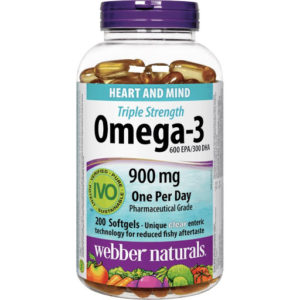
Webber Naturals – Triple Strength Omega-3 (900mg EPA / DHA) 200 capsules Value Pack
Original price was: $398.00.$298.00Current price is: $298.00. Add to basket -
Sale!

Kirkland Signature – Omega-3 Ultra Concentrated Deep Sea Fish Oil Capsules 1300mg 330 Capsules
Original price was: $350.00.$298.00Current price is: $298.00. Add to basket -
Sale!
Vebogen – Omega 3 & Coenzyme Q10 & Phytosterols 200 Capsules
Original price was: $290.00.$245.00Current price is: $245.00. Add to basket -
Sale!

Webber Naturals – Omega-3 Mini Fish Oil Capsules 300mg 220 Softgels
Original price was: $198.00.$168.00Current price is: $168.00. Add to basket
Related Post:
![網購保健品付款前,先核對這 8 件事]()
Before paying for health supplements online, check these 8 things first.
![葡萄糖胺軟骨素MSM點揀?食極都痛先檢查每日劑量]()
Glucosamine chondroitin MSM selection? Eating causes pain; first check the daily dosage.
![gogoherbs-mens-hair-cover]()
How to Choose Hair Care Supplements for Men? A Comparison of 8 Biotin, Saw Palmetto, and Collagen Products
![晨光下的健康早餐时光]()
From hair-nourishing gummies to collagen powder: Comparison of 8 best-selling beauty and health products and their formulas.