






















































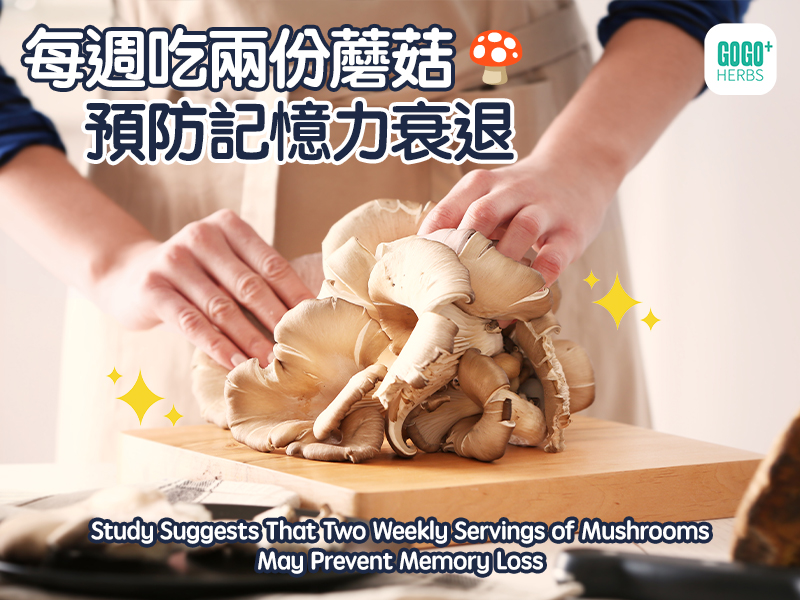
Mushrooms are a common ingredient on our daily dining tables, indispensable in hot pot, stir-fries, and soups. They possess an advantage rarely found in other ingredients:Low in calories and high in water, yet it provides potassium, selenium, and a variety of B vitamins.What's even more special is that mushrooms are one of the few foods that can naturally produce vitamin D—as long as they are exposed to ultraviolet light.
In recent years, the idea that "the gut is the second brain" has become popular, leading to many health-related associations with mushrooms. Among the most discussed topics is a 2019 Singapore study on "eating mushrooms and mild cognitive impairment." This article will explain these two points separately:Mushrooms do indeed possess nutritional value.(Official data is available for direct verification), andResearch on cognitive health claims is still accumulating.(There are positive studies, but they are observational in nature.) We will also correct several widely circulated but inaccurate claims in Chinese popular science.
First, let's clarify: the saying "the gut is the second brain" actually refers to two different mechanisms.
The statement that "the gut has millions of neurons, so it is called the second brain" is correct in the right direction, but the numbers are off by an order of magnitude, and it is actually a different mechanism from "gut bacteria affecting the brain" and is often confused.
The first system is the "enteric nervous system" (ENS).according toDescription from the Cleveland Clinic, USAThe enteric nervous system has approximately 500 million neuronsThe nervous system is the most complex neural network outside the brain, and it can operate to a considerable extent independently of the brain—this is the origin of the metaphor of the "second brain." It is also part of the autonomic nervous system, responsible for controlling the peristalsis and secretion of the intestines.
The second set is "Gut Microbiota-Brain Axis".This explains how the gut microbiota communicates with the central nervous system through metabolic products, immune signals, and nerve signals. This is a different level from the enteric nervous system.
The role of mushrooms in this discussion mainly lies in the extension of the second mechanism: mushrooms contain dietary fiber and polysaccharides, which can serve as a food source for gut bacteria; and ergothioneine, an antioxidant unique to mushrooms, is considered by researchers to be potentially related to neuroprotection. These will be explained in detail below.
II. Nutritional composition of mushrooms: low in calories, high in potassium, and rich in selenium and B vitamins.
The most significant advantage of mushrooms is their "relatively high nutrient density and calorie content." They are about 90% water, so 100 grams typically contains between 22 and 37 kilocalories, while also providing a considerable amount of potassium, dietary fiber, and B vitamins.
The following table is compiled fromHong Kong Department of Health's "Starred Restaurants" CampaignThe USDA nutrition data cited compares several common mushrooms found in Hong Kong:
| Mushrooms | Calories (kcal) | Carbohydrates (grams) | Protein (grams) | Fat (grams) | Potassium (mg) | Dietary fiber (grams) |
|---|---|---|---|---|---|---|
| Shiitake mushrooms | 34 | 6.79 | 2.24 | 0.49 | 304 | 2.5 |
| Giant mushroom (Giant Brown Mushroom) | 22 | 3.87 | 2.11 | 0.35 | 364 | 2.5 |
| White mushrooms | 22 | 3.26 | 3.09 | 0.34 | 318 | 1.0 |
| Golden mushroom | 37 | 7.81 | 2.66 | 0.29 | 359 | 2.7 |
| Oyster mushroom | 33 | 6.09 | 3.31 | 0.41 | 420 | 2.3 |
| This mushroom | 31 | 6.97 | 1.94 | 0.19 | 204 | 2.7 |
Several key points worth noting:
- Potassium content is not low.Oyster mushrooms contain 420 mg of potassium per 100 grams, large mushrooms 364 mg, and white mushrooms 318 mg, similar to bananas (bananas contain approximately 358 mg per 100 grams, see...).<Banana Eating Myths Check>Mushrooms contain only about a quarter of the calories of bananas, but they are an excellent choice for people who want to increase their potassium intake while controlling their calorie intake.
- White mushrooms are one of the few common vegetables and fruits that contain a relatively high amount of selenium.Each 100 grams contains approximately 9.3 micrograms of selenium, which is not commonly found in plant-based foods.
- B vitamins.White mushrooms have relatively high levels of riboflavin (B2) and nicotinic acid (B3) compared to other vegetable foods, which are essential for energy metabolism.
- Pay close attention to the "amount" of protein.While the protein content per 100 grams of mushrooms may seem high (2 to 3 grams), the actual amount consumed per serving is limited due to their high water content. Common claims about "amino acid composition" will be explained in detail in Section 8.
Overall, the positioning of mushrooms can be understood as follows:It's not a "superfood," but it is indeed a practical food that is low in calories, high in potassium, and can supplement dietary fiber and selenium.The most realistic way to use it is to treat it as part of a dish that increases volume and umami while reducing calorie density.
III. Mushrooms and Cognition: How to interpret the 2019 Singapore study?
This section is the most important part to explain in the whole article, because there are often several discrepancies in Chinese popular science when retelling this research that can mislead readers.
What the research actually did
The study was conducted by a team from the Yong Loo Lin School of Medicine at the National University of Singapore, and the results were published in the Journal of Alzheimer's Disease in March 2019.AbstractIt is written very clearly:
- objectThe study included 663 Chinese seniors aged 60 or above residing in Singapore, with data sourced from the local "Diet and Healthy Aging (DaHA)" study.
- design:cross-sectional studyThe analysis focuses on dietary habits and cognitive status at a single point in time, rather than tracking a group of people over a long period to see who develops the disease first. The authors themselves stated their conclusion as "Our cross-sectional data supports…", and in…University Press ReleaseThe text states that the next step is to conduct a randomized controlled trial.
- Comparison methodsCompared to people who "eat less than one serving of mushrooms per week",Eat more than 2 servings per weekPeople who develop mild cognitive impairment (MCI)The odds of winning are 0.43.(95% confidence interval 0.23 to 0.78, p=0.006). In other words, it means "the odds are significantly lower", rather than "the risk is reduced by 43%", which is a way of saying the odds ratio is directly treated as a percentage difference.
- Factors already included in the adjustmentAge, gender, education level, smoking, drinking, high blood pressure, diabetes, heart disease, stroke, physical activity and social activities—in other words, this association is not simply caused by "healthier people also liking to eat mushrooms."
- How much is "one serving"?University press releases are defined as follows:Three-quarters cup of cooked mushrooms (approximately 150 grams on average)Two portions are roughly equivalent to half a plate.
Two common misinterpretations
First, this is not a "six-year longitudinal study".This analysis was designed as a cross-sectional study. The phrase "six-year study" often appears in Chinese reports, but this actually originates from university press releases stating the study period was from 2011 to 2017 (the initial enrollment period for the community study itself), not from "following the same group of people for six years to observe cognitive changes." This distinction is important:Cross-sectional studies can show an association, but cannot prove the causal relationship between eating mushrooms and cognitive impairment.—It's also possible that people with better cognitive abilities simply have a more diverse diet. The authors' team subsequently invested in interventional research precisely to fill this gap.
Second, it is "two servings per week", not "twice a week".The study used "portion" rather than "frequency of eating." Converted to the definition in the press release, two servings of cooked mushrooms, approximately 300 grams each, is roughly half a dish. If interpreted solely as "eating twice a week, a small handful each time," the actual amount is likely far less than what the study observed.
Simply stating these two points doesn't diminish the value of this study—the fact that a significant association was observed in 663 participants and after adjusting for multiple confounding factors is a noteworthy signal. However, interpreting it as "it has been proven that eating mushrooms can prevent dementia" goes beyond what the data can support. Further reading on other aspects of brain nutrition is available.<Omega-3 and Memory>。
IV. Ergothionein: An antioxidant unique to mushrooms
Researchers are most interested in a special compound found in almost all mushrooms—Ergothioneine (ET)What makes it special is that...The human body cannot synthesize it on its ownErgothionein must be obtained from food, and mushrooms are the most important known dietary source. The human body has even evolved a set of specialized transport proteins (OCTN1) to actively absorb and retain it—which is thought to suggest that ergothionein has a specific role in the body.
according to A review by Halliwell, Cheah, and Tang published in FEBS Letters in 2018The ergothioneine content varies greatly among different types of mushrooms (the following is per 100 grams).dry weight):
| Mushrooms | Ergothioneine |
|---|---|
| Boletus edulis | 181.24 |
| King oyster mushroom | 54.17 |
| Shiitake | 35.35 |
| Enoki mushrooms | 34.64 |
| Portobello mushroom | 19.09 |
| White button | 15.44 |
| Black fungus | 9.42 |
| Maitake | 2.02 |
| White fungus (Tremella fuciformis) | 0.58 |
Please note the units: The table above isdry weightThis is because most studies test dried mushrooms. Fresh mushrooms contain about 90% water, so the value will be an order of magnitude lower when converted back to fresh weight. However, even so, mushrooms are still the food category with the highest ergothioneine content in the daily diet, and the content in other foods (garlic, fermented black beans, asparagus, etc.) is usually much lower than that in mushrooms.
By the way,Black fungus also contains ergothioneine.(Approximately 9.42 mg per 100 grams dry weight), this provides a modern perspective on the traditional Chinese belief that "black and white fungus help regulate the digestive system"; however, traditionally, these two are primarily valued for their dietary fiber and polysaccharides, which can be referenced...Traditional Chinese Medicine Gastrointestinal Health Care。
From Observation to Intervention: Follow-up Research Progress
The same research team published a result in 2016.Cheah et al., *Biochem Biophys Res Commun*In the elderly population, plasma ergothioneine concentrationAs age decreasesMoreover, the levels were significantly lower in individuals showing signs of cognitive decline; the team therefore raised the question of whether ergothioneine deficiency is a risk factor for neurodegeneration.
Subsequent research continued along this line:
- 2022 (Wu et al., *Antioxidants*)In older adults at memory clinics, lower plasma ergothioneine levels are a predictor of subsequent cognitive and functional decline.
- 2024 (Yau et al., *J Alzheimers Dis*): oneDouble-blind, randomized, placebo-controlled pilot trialNineteen participants aged 60 and older with mild cognitive impairment took 25 mg of ergothioneine three times a week or a placebo for one year. Results showed that the ergothioneine group showed improved performance on the Rey Auditory-Verbal Learning Test (REM), and plasma levels of neurofilament light chains, which reflect neural damage, remained stable; the placebo group showed no cognitive improvement, but a significant increase in neurofilament light chains. The study also confirmed that no safety indicators were abnormal with long-term use.
To be fair, this isConsistent and encouraging early signsThe transition from observing "low blood concentration" to achieving interventional results such as "improved learning performance and stable neurological damage indicators after supplementation" is a crucial step in the research. However, the pilot trial was small-scale (19 participants) and lasted for one year, leading to the general consensus in the academic community that larger-scale trials are still needed for confirmation. Currently, the following can be reasonably stated:Mushrooms are a major dietary source of ergothioneine, a component that continues to receive attention in research on cognitive aging.It is reasonable to expect it to be a worthy ingredient in a balanced diet.
V. Mushrooms and Gut Health: Dietary Fiber and Prebiotics
The most direct contribution of mushrooms to the gut is dietary fiber. As can be seen from the table in Section 2, shiitake, enoki, and shiitake mushrooms all contain between 2.5 and 2.7 grams of dietary fiber per 100 grams, while the calories are only about 30 kcal; the fiber content of enoki and shiitake mushrooms is even slightly higher than that of white mushrooms of the same weight.
The fibrous structure of mushrooms containsβ-glucanIt contains water-soluble polysaccharides and chitin, a substance unique to fungal cell walls. Water-soluble fiber can form a gel-like substance in the intestines, delaying gastric emptying, and also serves as a food source for intestinal bacteria—that is, it plays a role in…PrebioticsThe role.
Here we need to specifically distinguish a group of commonly confused terms:Prebiotics are not probiotics.Probiotics are live microorganisms (such as specific strains of lactobacillus and bifidobacteria), while prebiotics are the "food that feeds these microorganisms." Eating mushrooms supplements prebiotics, not directly probiotics. For complete information on strains, timing of consumption, and product selection, please refer to [link to relevant documentation].<Probiotics and Gut Health>。
Regarding the relationship between fiber and bowel movements, the direction is positive, but remember that fiber needs to be paired with sufficient water to be effective. For a more comprehensive understanding of the role of dietary fiber, please refer to further reading.Causes of constipation, dietary care, and timing of seeking medical attention。
VI. Mushrooms and Blood Sugar: Low-calorie, low-carbohydrate food choices
For people who need to monitor their blood sugar, mushrooms are a very practical food, because they...Nutritional structure itselfIt contains only 3 to 8 grams of carbohydrates per 100 grams, including dietary fiber; only 22 to 37 kilocalories; and is extremely low in fat. In terms of energy density and carbohydrate density, it is much lower than most staple foods of the same weight.
The most valuable practical use isUse it to replace part of the high-carb side dishes on your plate.For example, when making fried rice, risotto, stew, or braised potatoes, replacing some of the rice or potatoes with mushrooms can reduce the overall carbohydrate and calorie density of the meal without sacrificing satiety or flavor. This is a practice of "adjusting the plate structure," rather than treating mushrooms as a special food for controlling sugar intake.
A key consideration is the cooking method: mushrooms easily absorb oil. Deep-frying them in large amounts of oil or pairing them with high-sugar sauces (such as teriyaki sauce or sweet and sour sauce) will significantly increase their calorie and sugar content, negating their original benefits. Steaming, stir-frying, making soup, or cold salads are more suitable cooking methods. If you are also managing your weight and waistline, you can read further.Waist circumference and metabolic syndrome。
7. Sun-dried mushrooms: a natural source of vitamin D2
This is one of the most underestimated and most noteworthy characteristics of mushrooms.Mushrooms are one of the few non-animal foods that can naturally produce vitamin D.(Another common non-animal source is fortified foods.)
The principle is similar to that of human skin: mushroom cell walls contain...ErgosterolIts chemical structure is similar to 7-dehydrocholesterol in human skin, both being precursors to vitamin D. When mushrooms are exposed to ultraviolet light (especially the UV-B band), ergosterol is converted into...Vitamin D2。
The study by Simon et al. published in the Journal of Agricultural and Food Chemistry in 2011Three groups of white mushrooms were compared: a control group, a commercial UV-B treatment group, and a sunlight-exposed group. The results showed that the vitamin D concentration (per 100 grams dry weight) was approximately 5 micrograms in the control group, approximately 410 micrograms in the UV-B group, and approximately 374 micrograms in the sunlight group—meaning that the content increased by tens of times after UV treatment. The study also tested other components and found that under UV-B treatment, there were no significant changes in vitamin C, folic acid, B6, B5, riboflavin, niacin, amino acids, fatty acids, and ergosterol, indicating...The effects of UV-B treatment were limited to vitamin D and did not cause the loss of other nutrients.(Incidentally, the sunlight exposure group actually observed a loss of approximately 26% of riboflavin, which is why commercial processes use precise UV-B instead of direct sunlight.)
There are also relevant studies in Hong Kong:A master's thesis from Hong Kong Polytechnic UniversityThe study investigated the dynamic relationship between UV-B irradiation and the accumulation of vitamin D2 and D4 in king oyster mushrooms, and found that the vitamin D2 content increased linearly over time within 30 minutes of irradiation.
How to use it in daily life:
- Pay attention to the markings when purchasing.Some mushroom products on the market are labeled as "treated with ultraviolet light," and their vitamin D content is significantly higher than that of conventionally cultivated products.
- You can dry the mushrooms you buy yourself.Slicing mushrooms and placing them in sunlight (or using a UV lamp) for about 15 to 60 minutes can increase their vitamin D2 content. Given Hong Kong's humid climate, it is recommended to do this during dry periods and avoid prolonged exposure to hot, humid environments. Cook or refrigerate as soon as possible after processing.
- Be aware of the difference between vitamin D2 and D3.Mushrooms provide vitamin D2 (ergocalciferol); animal sources and the body's own synthesis of vitamin D3. Both can increase the body's vitamin D levels, but D3 is generally more efficient at maintaining blood concentrations. The choice can be made based on individual dietary habits.
As for the daily requirement of vitamin D, please refer to the Dietary Supplementation Office of the National Institutes of Health (NIH).NIH ODSThe recommended values should be adjusted based on individual sun exposure and a doctor's advice. For a more complete understanding of the relationship between vitamin D and bones, please refer to further reading.<Calcium and Vitamin Supplementation for Osteoporosis in the Elderly>。
8. The Protein and Amino Acids of Mushrooms: How to Say It Accurately
Two common claims circulating online are: "Mushrooms have a higher protein content than many fruits and vegetables" and "Mushrooms contain 18 essential amino acids, and some of their amino acid composition is even superior to that of beef." The first statement is largely true, but the second needs revision.
Let's start by talking about the number of "essential amino acids".The essential amino acids that the human body cannot synthesize on its own and must obtain from food include: 9 types(Infants require additional histamine, but the standard is still 9 types). "18 types" refers to amino acids.totalIt is not a "necessary" number—the two are often confused.
Furthermore, it is "superior to beef".This claim is unfounded. While mushrooms do contain all nine essential amino acids,Sulfur-containing amino acids (methionine, cysteine) are usually low.Therefore, in nutrition, it is generally classified asIncomplete proteinsFurthermore, fresh mushrooms contain about 90% water, and only 2 to 3 grams of protein per 100 grams, nearly ten times less than beef (about 26 grams per 100 grams). Whether in terms of protein concentration or amino acid balance, mushrooms cannot compare to meat.
So what are the advantages of mushroom protein? They lie in…"Protein efficiency per calorie" and its synergistic valueWhite mushrooms contain only 22 kcal per 100 grams but 3.09 grams of protein, which is quite outstanding among low-calorie foods. Cooking them with grains, beans, eggs, or lean meat can complement each other's amino acids, improving overall protein utilization efficiency. Therefore, the accurate statement is:Mushrooms are a great protein "partner" and a low-calorie food, but they are not suitable as a primary source of protein.
IX. Food Safety and the Boundary Between Seeking Medical Treatment
Mushrooms are generally a safe food, but there are two levels of risk that need to be addressed separately:Do not pick wild mushrooms.as well asProper handling and storage。
according toHong Kong Centre for Food Safety, Food Safety Focus, Issue 241: Wild Mushrooms – Diverse Varieties and Toxins:
- Mushroom toxins cannot be eliminated by cooking, canning, or refrigeration.This is the most crucial point—the idea that "it's fine once cooked" doesn't apply to wild mushrooms.
- Do not pick and eat wild mushrooms.Edible mushrooms are difficult to distinguish from poisonous varieties; the center also pointed out the common identification methods (bright appearance, no insect damage, tarnishing silver, etc.).All are incorrect.Even using photo recognition software for identification is unreliable; there have been past cases of poisoning caused by consuming food that was identified as edible by the software.
- Purchase from reputable and reliable retailersAvoid buying mushrooms that are suspected of being mixed with unknown varieties; do not buy mushrooms that look unsanitary or show signs of spoilage.
- Wash and cook thoroughly before eating.If you need to soak mushrooms overnight, you should put them in the refrigerator.
- If you suspect that you have been poisoned by eating mushrooms, you should seek medical attention immediately.Severe cases can be fatal, while mushroom toxin poisoning is mainly treated with supportive care.
The Centre for Food Safety also mentioned that between January 2023 and June 2026, more than 150 mushroom samples were collected in Hong Kong for testing of mushroom toxins.The test results for all samples were satisfactory.In other words, the risk mainly comes from picking the mushrooms yourself, rather than from commercially available mushrooms.
A few other practical tips:
- People with gout or high uric acidMushrooms have a moderate purine content, and eating them in moderation is generally fine. However, it is not advisable to eat large quantities at once, and the actual amount should be discussed with a doctor or nutritionist.
- People who are taking anticoagulants (such as warfarin)Maintaining a stable diet is a very important principle. If you plan to significantly increase your intake of mushrooms or any health supplements, you should first inform your doctor so they can assess whether adjustments are necessary.
- Mushroom allergyAlthough rare, it can still occur; if you experience a rash, itchy mouth, swelling, or difficulty breathing after eating, seek medical attention immediately.
In what situations should you seek medical attention?If you experience abdominal pain, vomiting, diarrhea, convulsions, altered consciousness, or any other symptoms suggestive of poisoning after consuming mushrooms,Seek medical attention immediately(Severe cases can lead to liver failure, see below)Centre for Health Protection leaflet: "Beware of Wild Mushroom Poisoning"If you have long-term memory or cognitive problems, you should consult a doctor for a formal evaluation, rather than trying to treat them by adjusting your diet on your own.
10. How to eat it on a daily basis: selection, processing and pairing
Turning the above into everyday practice is actually quite simple:
- SelectThe mushroom caps should be dry, not sticky, odorless, and not sticky or discolored. Mushrooms easily absorb moisture and odors from the environment, so they should be refrigerated after purchase and consumed as soon as possible.
- deal withRinse quickly with running water or wipe with a damp cloth before cutting.Do not soak for a long timeMushrooms lose their texture and water-soluble nutrients after absorbing water. If you plan to use the water from soaking dried mushrooms for cooking, you should filter out any impurities first; if you soak them overnight, be sure to refrigerate them.
- CookingMushrooms are highly heat-resistant, and heating does not easily destroy their main nutrients. They are suitable for blanching, braising, stir-frying, making soup, and even drying as snacks. It's important to avoid prolonged frying in large amounts of oil or cooking with high-sugar sauces.
- Quantity and frequencyThe recommended daily intake is "several times a week, about half a bowl to a bowl each time," which aligns with the observed intake of "more than two servings per week" in the aforementioned study and also conforms to the general recommendation of "diverse vegetable intake." Further reading on daily dietary principles is available.6 Major Benefits of a Balanced Diet。
XI. Frequently Asked Questions
Can mushrooms really prevent memory decline?
A large community study has shown that older adults who eat more than two servings of mushrooms per week have a significantly lower chance of developing mild cognitive impairment. However, this study is a cross-sectional design, showing an association rather than a causal relationship. Subsequent small-scale randomized controlled trials have yielded positive results regarding ergothioneine, and research is ongoing. Including mushrooms in a balanced diet is a reasonable approach, but it is not a guarantee against dementia.
Why is it said that "you should eat two servings of mushrooms per week"? How much is one serving?
"Two servings" comes from a 2019 Singapore study: one serving is three-quarters of a cup of cooked mushrooms, averaging about 150 grams; two servings are roughly equivalent to half a plate. It is important to note that the study used "serving size" rather than "frequency of eating." If interpreted as "eating twice a week, a small handful each time," the serving size would be far lower than what was observed in the study.
Do mushrooms contain 18 essential amino acids?
There are 9 essential amino acids for the human body, not 18. Mushrooms contain all 9 essential amino acids, but are low in sulfur-containing amino acids, making them an incomplete protein. A more accurate way to consume them is to combine them with grains, legumes, eggs, or lean meat to complement their amino acid composition.
Can eating mushrooms replace meat as a source of protein?
It is not recommended as a primary source of protein. Fresh mushrooms contain only 2 to 3 grams of protein per 100 grams, nearly ten times less than the approximately 26 grams found in beef. Mushrooms are advantageous because they are low in calories, high in potassium and dietary fiber, and are suitable as a complementary ingredient in protein-rich dishes.
Do sun-dried mushrooms really contain vitamin D?
Yes. Mushrooms contain ergosterol, which is converted into vitamin D2 after exposure to ultraviolet light (especially UV-B). Studies have shown that UV-B treatment can increase the content of ergosterol by dozens of times, while other nutrients are not significantly lost. Slicing mushrooms and sun-drying them for 15 to 60 minutes after purchase can also increase the content of ergosterol.
Are mushrooms considered low-glycemic foods?
Nutritionally, yes: every 100 grams contains only 3 to 8 grams of carbohydrates (including dietary fiber), only 22 to 37 kilocalories, and is extremely low in fat. In practice, its most valuable use is to replace part of the rice or potatoes on your plate to reduce the overall carbohydrate and calorie density of the meal; avoid using large amounts of oil and high-sugar sauces when cooking.
Do black fungus and white fungus also contain ergothioneine?
Black fungus contains ergothioneine (approximately 9.42 mg per 100 grams of dry weight), while white fungus contains much less (approximately 0.58 mg). Both have traditionally been used to regulate the digestive system, but from a modern perspective, their dietary fiber and polysaccharides are the main focus.
Can people with gout eat mushrooms?
Mushrooms have a moderate purine content, and moderate consumption is generally fine. The key is to avoid eating large quantities at once and to pay attention to your overall diet and fluid intake; it is recommended to discuss the appropriate portion size with a doctor or nutritionist.
Is it okay to eat wild mushrooms that I picked myself after cooking?
No. The Centre for Food Safety clearly states that...Mushroom toxins cannot be eliminated by cooking, canning, or refrigeration.Edible mushrooms and poisonous varieties are difficult to distinguish, and commonly used identification methods and photo identification programs are unreliable. Never pick and eat wild mushrooms yourself; please purchase them from reputable retailers.
If I feel unwell after eating mushrooms, when should I see a doctor?
If you experience symptoms resembling poisoning, such as abdominal pain, vomiting, diarrhea, convulsions, or altered consciousness, seek immediate medical attention—severe cases can lead to liver failure. Even if you only experience persistent memory or cognitive impairment, you should still consult a doctor for a formal evaluation and not attempt to treat it with dietary adjustments instead of seeking medical help.
XII. Sources of Information
- Hong Kong Department of Health's "Starred Restaurants" campaign— Are raw mushrooms the most beneficial? (Nutritional comparison table of common mushrooms in Hong Kong)
- Hong Kong Centre for Food Safety — Food Safety Focus, Issue 241: Wild Mushrooms—Diverse Varieties and Toxins
- Hong Kong Centre for Food Safety — Food Safety Newsletter, Issue 96 (The Most Toxic Mushroom Stories)
- Hong Kong Centre for Health Protection — Beware of wild mushroom poisoning (single image)
- Cleveland Clinic, USA — The Gut-Brain Connection (approximately 500 million neurons in the enteric nervous system)
- The National Institutes of Health's Office of Dietary Supplements (NIH ODS) — Vitamin D Fact Sheet
- Feng L, Cheah IK, Ng MM, et al. The Association between Mushroom Consumption and Mild Cognitive Impairment: A Community-Based Cross-Sectional Study in Singapore. J Alzheimers Dis. 2019;68(1):197–203. — PubMed|Press release from the National University of Singapore School of Medicine
- Cheah IK, Feng L, Tang RMY, et al. Ergothioneine levels in an elderly population decrease with age and incidence of cognitive decline; a risk factor for neurodegeneration? Biochem Biophys Res Commun. 2016;478(1):162–167. — PubMed
- Halliwell B, Cheah IK, Tang RMY. Ergothioneine – a diet-derived antioxidant with therapeutic potential. FEBS Lett. 2018;592(20):3357–3366. — PubMed
- Wu LY, Kan CN, Cheah IK, et al. Low Plasma Ergothioneine Predicts Cognitive and Functional Decline in an Elderly Cohort Attending Memory Clinics. Antioxidants (Basel). 2022;11(9):1717. — PubMed
- Yau YF, Cheah IK, Mahendran R, et al. Investigating the efficacy of ergothioneine to delay cognitive decline in mildly cognitively impaired subjects: A pilot study. J Alzheimers Dis. 2024;102(3):841–854. — PubMed
- Simon RR, Phillips KM, Horst RL, Munro IC. Vitamin D mushrooms: comparison of the composition of button mushrooms (Agaricus bisporus) treated postharvest with UVB light or sunlight. J Agric Food Chem. 2011;59(16):8724–8732. — PubMed
- Hong Kong Polytechnic University Vitamin D accumulation in king oyster mushroom stimulated by UV radiation (Master's thesis)
Health Disclaimer:This article is for general health information only and does not constitute medical advice for diagnosis, treatment, or prevention of any disease, nor can it replace a professional assessment by a doctor or registered dietitian. The studies mentioned are mostly observational or small-scale pilot trials; the results are not applicable to everyone and should not be considered a guarantee of the efficacy of any food or supplement. Do not pick and eat wild mushrooms yourself; if you suspect mushroom poisoning, or experience symptoms such as abdominal pain, vomiting, diarrhea, convulsions, or altered consciousness, seek medical attention immediately. Individuals with chronic diseases, gout, high uric acid, those taking anticoagulants or other medications, pregnant or breastfeeding, or those with memory or cognitive impairment should consult a doctor or relevant professional before making any dietary adjustments.
Related Products:
-
Sale!

GINAX – Ginseng Tea Bag / Ginseng White Tea Rose Tea Bag | 1bag
Original price was: $13.00.$10.00Current price is: $10.00. 選擇規格 This product has multiple variants. The options may be chosen on the product page -
Sale!

GINAX – Manuka Honey UMF™ 5+ 30g
Original price was: $30.00.$25.00Current price is: $25.00. Add to basket -
Sale!
Single 10% off】aXimed – Recovery Speed 100% Whey Protein Powder 30 sachets
Original price was: $558.00.$502.00Current price is: $502.00. Add to basket -
Sale!
Livinglean – Organic Dietary Mineral Powder 8g x 20 sachets
Original price was: $368.00.$298.00Current price is: $298.00. Add to basket
Related Post:
![母親用滴管把少量植物藻油滴在食物匙上,幼兒坐在餐桌旁]()
A Complete Guide to Plant-Based Algae Oil Omega-3: Odorless, Vegetarian, and Suitable Omega-3 Choices for Pregnant Women and Infants
![牛樟芝子實體與膠囊製品示意]()
What is Antrodia camphorata? A complete guide to its ingredients, research evidence, and precautions for consumption.
![世界心臟日護心飲食場景,香港中年夫婦享用豆漿、豆腐、雞蛋與堅果,旁有心臟及細胞膜卡通示意]()
World Heart Day: Heart Health in Hong Kong Starts with Daily Life | What are the Benefits of Lecithin? Which of Three 1200mg Products to Choose From?
![香港關節健康洞察報告封面:中年及長者在香港步行]()
How to choose joint health supplements? 8 best-selling formulas and repurchase information help you find the right daily option.