


























































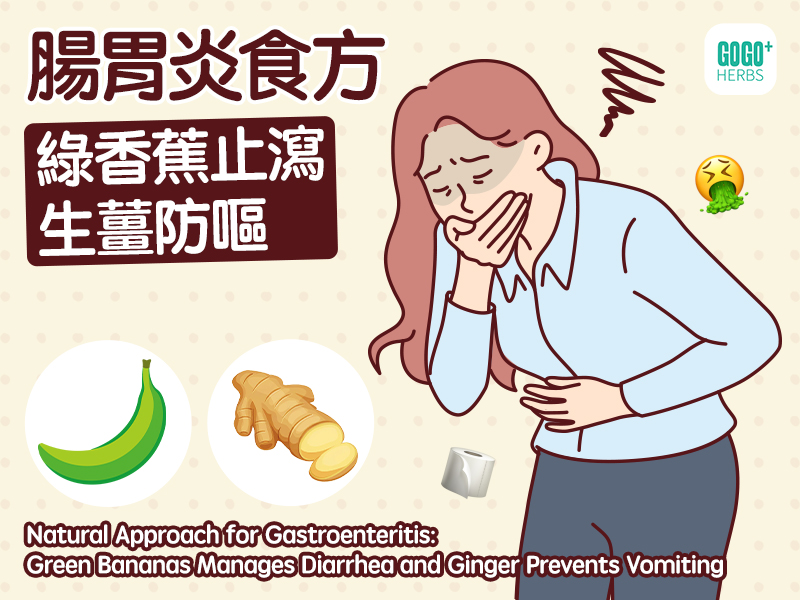
Dietary recommendations and care for gastroenteritis: How to use green bananas to stop diarrhea and ginger to prevent vomiting?
Summer's high temperatures make food spoil easily, leading to a surge in gastroenteritis (acute intestinal infectious diseases). Typical symptoms include vomiting, diarrhea, fever, and abdominal pain. Once it occurs, it not only affects eating but can also prevent people from working normally for several days.
The most common advice is to "drink sports drinks to replenish fluids and electrolytes after vomiting and diarrhea." This approach...The direction was half right, but the drink was wrong.Sports drinks are designed for "excessive sweating," but diarrhea causes the loss of water and electrolytes in a different way than sweating. This article will explain clearly: what to supplement and what not to supplement when you have diarrhea, when not to take antidiarrheal medication, and why the widely circulated "fast for 8 hours first" method has been phased out.
Why are there so many cases of gastroenteritis in the summer?
Acute gastroenteritis can be caused by a variety of pathogens. According to...Hong Kong Centre for Health Protection: Acute Enteric Infectious Diseases (Acute Diarrhea)Common pathogens include bacteria (such as Salmonella and Vibrio parahaemolyticus) and viruses (such as norovirus, rotavirus, Sapporo virus, and astrovirus); less common pathogens include bacteria that cause bacillary dysentery, cholera, and Shiga toxin-producing Escherichia coli infections. People of any age can contract the disease, with the most common causes being...Children are most vulnerable。
Symptoms include frequent, loose, or watery stools, possibly accompanied by vomiting and fever. Most cases are mild and resolve spontaneously, but some more severe cases may require further investigation.Dehydration or even shockRegarding the incubation period: bacterial infections typically last from several hours to 5 days, while viral infections last from 1 to 3 days.
The risk is particularly high in summer due to temperature and food handling methods.Hong Kong Centre for Food Safety's "Food Safety Focus"A review of restaurant-related food poisoning cases in 2025: a total of 113 cases were received throughout the year, involving 649 people; among themBacterial pathogens remain the primary cause.(64 cases, 56.61 TP4T), the top three were Vibrio parahaemolyticus (21.21 TP4T), Salmonella (19.51 TP4T), and Clostridium perfringens (10.61 TP4T); of the viral infection cases (55 cases, 48.71 TP4T), 54 were related to norovirus, and more than half involved eating ready-to-eat oysters. The three most common causes were "eating raw food" (38.91 TP4T), "improper storage temperature" (25.71 TP4T), and "contamination of raw food" (23.91 TP4T) - all three are directly related to the fact that food is more prone to bacterial growth in hot weather.
Traditional Chinese medicine offers a different but similar explanation: it believes that summer gastroenteritis is mostly caused by...Damp-heat, food stagnation, cold-dampnessThree major external factors contribute to this: contact with unclean food allows "damp-heat and turbidity" to invade the body; overeating or consuming hard-to-digest foods causes "food stagnation"; and excessive consumption of iced drinks leads to the accumulation of "cold-dampness." Furthermore, a weak spleen and stomach make one more susceptible to these factors—this is precisely the meaning of "illness enters through the mouth." It should be noted that...This belongs to the theoretical system of Traditional Chinese Medicine.This refers to the same thing as the modern medical concept of "infection through contaminated hands, food, or drinks," just expressed in different terms. For a complete explanation of the TCM theory of spleen and stomach, please refer to [link to relevant documentation].Traditional Chinese Medicine Gastrointestinal Health Care。
Second, the core treatment is to replenish fluids and electrolytes, rather than rushing to stop the diarrhea.
First, remember this official statement. The Centre for Health Protection clearly states on the aforementioned page: Acute diarrhea..."The main treatment is to replenish fluids and electrolytes. Patients with severe diarrhea should consult their family doctor and should not buy and take medication on their own."This statement covers almost all the key points of home care.
Why is it important to "hydrate correctly" rather than just drinking more water? The World Health Organization (WHO) states in its report...Diarrhea Treatment ManualThe text explains that diarrhea causes the simultaneous loss of both water and electrolytes, and the intestinal mucosa is damaged during diarrhea.Still retains absorption capacity—As long as sodium and glucose are provided in the correct ratio, both will be absorbed together, and water will also be absorbed into the body. This is why oral rehydration is considered the cornerstone of diarrhea management: except in severe cases,Oral rehydration can safely and effectively treat more than 90% of cases.。
The WHO and UNICEF currently recommend thatHypoosmolar oral rehydration salts (ORS)formula:Sodium 75 mmol/L, glucose 75 mmol/L, total osmolarity approximately 245 mOsm/LCompared to the old standard formulation (sodium 90 mmol/L, osmolarity 311 mOsm/L), the hypotonic formulation can...The incidence of vomiting decreased by about 30%, stool volume decreased by about 20%, and the need for unplanned intravenous fluid replacement decreased by about 30%.。
How to do it in practice:
- Purchase oral rehydration salts (ORS) from a pharmacy.It is in powder or granule form, and should be dissolved in the specified amount of clean water as indicated on the packaging (commonly one packet to 200 ml of water).Do not adjust the water volume on your own.Otherwise, the concentration will be off.
- Small quantities, multiple times.Giving a large amount of medicine at once can easily cause vomiting. Adults can drink a few sips every ten to fifteen minutes; infants and young children can be fed small amounts frequently with a small spoon or dropper.
- Vomiting is not a contraindication to oral rehydration.If you vomit immediately after drinking, pause for five to ten minutes and then try again at a slower pace—most of the rehydration fluid has already been absorbed. The true need for intravenous rehydration (such as shock, loss of consciousness, inability to swallow, or persistent vomiting preventing the intake of water) should be determined by medical staff.
- Continue supplementation during the duration of diarrhea.Taking an extra dose of ORS after each bowel movement is closer to the actual amount lost than "drinking enough at once".
3. Can sports drinks replace oral rehydration salts?
Not recommended. The reason is not that sports drinks are "bad," but rather...Its design goal is to replenish what is lost through sweat.However, the characteristics of water and electrolyte loss caused by diarrhea are completely different.
The two most crucial differences are:
- High sugar content and high osmotic pressure.Commercially available sports drinks typically contain between 51 TP4T and 81 TP4T of sugar, and their overall osmotic pressure is often higher than that of oral rehydration salts (ORS) (reaching 350 to 750 mOsm/L, while ORS is approximately 245 mOsm/L). Fluids with excessively high osmotic pressure create a hypertonic environment in the intestinal lumen.Instead, it draws water from the body into the intestines.This can worsen diarrhea—which is why both the WHO handbook and the UK NICE guidelines advise against avoiding sugary drinks.
- The sodium content is low.The sodium content of sports drinks is usually no more than about 20 mmol/L per liter, which is far lower than the 75 mmol/L of ORS, and therefore cannot effectively promote water absorption.
A common misconception needs correction: it's often said that "sugar-coated drinks have a diuretic effect, thus exacerbating dehydration." The mechanisms of diuresis and diarrhea are different; the real problem with diarrhea is...osmotic pressure—High sugar content draws water into the intestines and out in feces, exacerbating osmotic diarrhea rather than acting as a diuretic. This difference influences the approach: the goal is not to "go to the toilet more often after drinking it," but rather to "make diarrhea worse after drinking it."
Similarly,Fruit juice, soda, and sugary energy drinks are also unsuitable.The UK's NICE guidelines for gastroenteritis explicitly recommend avoiding fruit juices and carbonated drinks during diarrhea, as they can worsen the condition.
To be fair, sports drinks are valuable for their original purpose—replenishing fluids and sodium after prolonged exercise and heavy sweating, which is precisely what they are designed for. However, when the situation changes to diarrhea, and the need becomes "low sugar, appropriate sodium ratio, and osmotic pressure close to body fluids," oral rehydration salts are the appropriate choice.
4. Can I prepare my own salt water solution?
It can be used as an emergency measure, butHomemade items are not recommended.The World Health Organization inQuestions and Answers about Cholera and DiarrheaThe text states: If oral rehydration salt packets are unavailable, you can use...½ teaspoon salt, 6 teaspoons sugarjoin in1 liter of safe drinking waterMix well in (or lightly salted rice water) as a substitute. The WHO also cautions that the main risk of homemade remedies is...Misremembering the proportionTherefore, if available, oral rehydration salts from pharmacies should still be used first.
Homemade recipes have three inherent limitations that are worth knowing:
- It contains no potassium and no citrate.Standard ORS contains potassium and citrate, which can simultaneously address some of the mineral loss and acid-base imbalance caused by diarrhea; sugar-salt water cannot do this.
- The concentration is difficult to be precise.Adding too much salt will increase the burden on the body, while adding too little will result in poor absorption efficiency; using "a pinch" or "half a spoon" to measure can lead to a large margin of error.
- Salt should not be added without sugar.Sodium needs glucose to effectively promote water absorption; simply adding salt to a diluted solution is far less effective than the correct formula.
Therefore, the practical advice is:Always keep a box of oral rehydration salts at homeIt is more reliable than making it on the spot; homemade sugar-salt water should only be used when it is really unavailable, and you must remember the recipe of "1 liter of water, half a teaspoon of salt, and 6 teaspoons of sugar".
5. Should I take antidiarrheal medication?
The original text mentioned that "antidiarrheal medications should not be taken in the early stages of the illness," which is correct and supported by multiple official guidelines. The Centre for Health Protection's position is..."You should not buy and take medication on your own."The UK NICE guidelines for childhood gastroenteritis clearly state...Antidiarrheal medications should not be used.Antibiotics should not be prescribed routinely.
The underlying reason is not complicated: diarrhea itself is a bodily ailment.Expel pathogens and toxins from the bodyThe mechanism of action is as follows: antidiarrheal drugs that inhibit intestinal motility can cause these substances to remain in the intestines longer, potentially prolonging the course of the illness and increasing risks. In children, there are even more serious concerns regarding these drugs (including paralytic ileus), so their use is generally not recommended.
There are several situations in which you should avoid self-medicating with antidiarrheal drugs:
- Fever, bloody or mucus in stoolThese symptoms may indicate an invasive bacterial infection (such as dysentery) and require a doctor's evaluation, rather than suppressing the symptoms.
- I recently experienced diarrhea after using antibiotics.—It is necessary to rule out specific causes of infection.
- Infants, the elderly, pregnant women and patients with chronic diseases—Due to the high risk of dehydration and complications, medication decisions should be made by healthcare professionals.
So, "Is medication an option?" In some cases, doctors might recommend short-term medication for mild watery diarrhea in adults after evaluation; however, the final decision rests with the doctor.The key issue is that it's "not up to one's own decision."If you experience discomfort, the first correct action is to rehydrate, and the second is to seek medical attention if necessary.
6. Is fasting required? The idea of "fasting for 8 hours beforehand" is outdated.
This section corrects a widely circulated old practice. In the past, some nursing guidelines recommended "fasting (including drinking water) for 6 to 8 hours" during the acute phase, and the original document also stated that "food should be gradually introduced after about 8 hours of fasting".Modern guidelines no longer recommend doing this.。
The World Health Organization, in its "Manual for the Treatment of Diarrhea," includes...Oral rehydration therapy and continued feeding are considered fundamental elements of diarrhea management.And pointed out that the research has confirmedContinuing to eat can reduce the adverse effects of diarrhea on nutritional status.In other words, there is no need to "let the stomach and intestines rest" by stopping eating during diarrhea—prolonged fasting may actually prolong diarrhea and make you feel weaker.
The UK's NICE recommendations provide a clearer timeline:
- Children without obvious dehydrationMaintain normal feeding (e.g., continue breastfeeding or other milk products) and encourage hydration, while avoiding fruit juice and carbonated drinks.
- Children who are already dehydratedFirst, administer hypotonic oral rehydration solution (generally 50 ml per kilogram of body weight, to be completed within four hours).Resume normal diet immediately after fluid replacement.Both breast milk and formula are examples of this, and formula does not need to be diluted.
For adults, the practical arrangement could be:During the hours when vomiting is most severe, oral rehydration salts should be the primary treatment, taken slowly.When the nausea subsides and you are able to swallow, start by eating small, light meals, such as rice water, white porridge, noodles, steamed eggs, bananas, and other easily digestible foods. Then, gradually return to your normal diet over two or three days.There's no need to deliberately starve yourself for a whole day, nor is it necessary to eat only plain porridge for an extended period.The latter will actually lead to insufficient protein and calorie intake, slowing down recovery.
VII. What to eat during diarrhea: Green bananas, rice water, and white porridge.
When resuming normal eating, the following types of food are more suitable:
| food | Why is it suitable? |
|---|---|
| Oral rehydration salts | The key to replenishing fluids and electrolytes. Continue replenishment during the period of resuming eating until diarrhea stops. |
| Rice water, white porridge | It is easily digestible and provides hydration and a small amount of electrolytes. Even when ORS kits were unavailable, the WHO listed "lightly salted rice water" as one of the available home rehydration solutions. |
| Green bananas (cooked/mashed) | Suitable potassium and energy sources during diarrhea. The study used...Cooked green bananas with rice porridgeThe study focused on hospitalized infants; research on functional constipation in older children and adolescents also observed that green bananas helped improve hard, dry stools. Detailed information on varieties, ripeness, and research background is available in [the original text is missing].<Banana Eating Myths Check>The full explanation will not be repeated here. |
| Bananas (moderate ripeness) | Soft, easy to eat, and contains potassium. Potassium is lost in feces during diarrhea, and bananas are a convenient source (see the link above for relevant potassium content and kidney function precautions). |
| probiotics | A position paper from the European Society for Paediatric Gastroenterology, Hepatology and Nutrition (ESPGHAN) states that certain strains of bacteria, when used as an adjunct to oral rehydration therapy (ORS), can shorten the course of acute diarrhea (especially rotavirus-induced diarrhea). When using these products, it is advisable to choose those that specify the strain and dosage, and to use them concurrently with, rather than as a replacement for, ORS. For information on strain and product selection, please refer to [link to relevant documentation].<Probiotics and Gut Health>。 |
It is recommended to temporarily reduce your intake during diarrhea:
- Fruit juice, soft drink, sugary drinksHigh osmotic pressure can worsen diarrhea; NICE recommends avoiding it until diarrhea completely stops.
- Oily and fried foods—When the intestinal mucosa is damaged, the tolerance to fat decreases.
- dairy products—During diarrhea, the activity of lactase in the intestines may temporarily decrease, making it easier to experience bloating and worsen diarrhea after drinking milk. Breastfeeding should continue (as explicitly recommended by NICE). For information on the causes and management of lactose intolerance, please refer to [link to relevant documentation].Can I drink milk and eat eggs when I have a cold and fever?。
8. How does Traditional Chinese Medicine (TCM) view this? Three types, acupoints, and ginger and perilla.
The following belong toTraditional Chinese Medicine Theoretical SystemThis compilation is intended to help understand how gastroenteritis is traditionally viewed; however, actual diagnosis and medication must be prescribed by a registered TCM practitioner and should not be applied arbitrarily.
Syndrome Differentiation and Commonly Used Prescriptions
Traditional Chinese medicine emphasizes "treatment based on syndrome differentiation" in treating gastroenteritis; the same set of symptoms may be treated with different prescriptions depending on the patient's constitution and the triggering factors. The three types mentioned in the original manuscript are:Humid heat type(The commonly used Ge Gen Huang Qin Huang Lian Decoction clears heat and stops diarrhea.)Indigestion type(Baohe Pills are commonly used to aid digestion and relieve stagnation.)Cold and damp type(The commonly used herbal formula is Huoxiang Zhengqi San, which dispels cold and dampness). These three fall under the category of Traditional Chinese Medicine (TCM) prescriptions and must be prescribed by a registered TCM practitioner based on your individual constitution. Self-prescribing is not recommended. If you are taking Western medicine concurrently, you should proactively inform your TCM practitioner—TCM and Western medicines can indeed interact; see related reminders below.<Drug-Alcohol Interactions>。
Acupressure points: Neiguan (PC6) and Shangjuxu (ST37)
Traditional Chinese medicine believes that pressing two acupoints can help with vomiting and diarrhea:
- Neiguan acupointLocated about three finger-widths from the inner wrist crease towards the elbow, between two tendons, it is used in Traditional Chinese Medicine for discomfort related to the heart, chest, and stomach, taking its meaning from "harmonizing the stomach, relieving nausea and vomiting".
- Shangjuxu pointFirst, locate the Zusanli acupoint, about four finger-widths below the outer knee eye, and then about four finger-widths down from there. It belongs to the Stomach Meridian and is also the lower He-Sea point of the Large Intestine Meridian. Traditional Chinese medicine believes that it can regulate intestinal excretion function in both directions.
Modern research has observed the effect of "Neiguan acupoint in stopping vomiting," but it's important to understand its applicability. A 2025 systematic review by Cochrane (77 studies, 9,847 participants) indicated that stimulation of the PC6 acupoint on the wrist (Neiguan acupoint) with a needle or wristband...May reduce postoperative nausea and vomitingThe effect is more pronounced when used in conjunction with antiemetics; however, the quality of evidence is low, and the research contexts are concentrated in postoperative situations rather than gastroenteritis. As for the Shangjuxu acupoint, modern research is still accumulating, and is currently mainly based on traditional Chinese medicine theory and clinical experience. Acupressure is a routine health care practice; in cases of severe abdominal pain and persistent vomiting, one should not rely solely on acupressure but should seek medical attention as soon as possible.
Ginger and Perilla: From "Holy Medicine for Vomiting" to Randomized Controlled Studies
Traditional Chinese medicine refers to ginger as a "holy medicine for vomiting" and often uses ginger and perilla leaves to cook porridge to relieve nausea and regulate the spleen and stomach; adding chopped ginger and perilla leaves to white porridge is the method mentioned in the original manuscript.
It is worth mentioning that,The effectiveness of ginger in relieving nausea is supported by positive randomized controlled trials in modern research, with the subjects being children with acute gastroenteritis.A double-blind, randomized, placebo-controlled trial (see...) Nocerino et al. 2021, Aliment Pharmacol TherThis study included 150 outpatients aged 1 to 10 years who experienced vomiting due to acute gastroenteritis. Results showed that the proportion of children in the ginger group who vomited again after the first dose was [percentage missing]. 67%The placebo group was 87%(Absolute risk decreased by 20%, P=0.003), which translates to approximately one less child vomiting for every five children who received ginger. The study concludes that oral ginger can improve vomiting in children with acute gastroenteritis.Effective and safe。
To put it in perspective: this is a single study, the sample consists of outpatient children, and the role of ginger is...SupportIt can help relieve nausea and make it easier for patients to drink rehydration solutions, but it cannot replace oral rehydration or, when necessary, medical evaluation. Ginger is safe for most people when used in moderation as a seasoning and ingredient; however, consuming large amounts of concentrated ginger at once may cause heartburn or discomfort.
IX. Dehydration Symptoms and the Boundary Between Seeking Medical Attention
The most serious complication of diarrhea is dehydration. If any of the following symptoms appear, you should...Seek immediate help or go to the hospital.:
- Altered consciousness: abnormal drowsiness, unresponsiveness, confusion, convulsions
- Breathing becomes too fast or too slow, hands and feet are cold, skin is pale and mottled.
- Completely unable to drink water, or experiencing persistent and severe vomiting, unable to retain even water.
- Prolonged lack of urination (significantly reduced diaper changes in infants), sunken eye sockets, or sunken fontanelle in infants.
The following situations are consideredSeek medical attention as soon as possible:
- Diarrhea persisting for more than 48 hours without improvement
- Stools containing blood or mucus, black stools, or tarry stools
- Persistent high fever, severe abdominal pain, or significant abdominal distension.
- Symptoms appearInfants, the elderly, pregnant women, people with weakened immune systems, or those with chronic diseasesOn body
The Centre for Health Protection advises that "patients with severe diarrhea should consult their family doctor and should not self-medicate"; in case of an emergency (such as the above-mentioned dehydration symptoms), call immediately. 999 Or go to the emergency room. Extra caution is needed if you have infants or young children at home: their body water ratio and metabolic characteristics differ from adults, and dehydration can progress rapidly.
10. Home Prevention: Norovirus and Food Poisoning
After recovering from gastroenteritis, the most practical step is to prevent family members from infecting each other. Norovirus is highly contagious and can easily cause outbreaks in schools, nursing homes, hotels, and other similar places.
according toCentre for Health Protection (Norovirus Infection)The incubation period is usually 12 to 48 hours. Symptoms include nausea, vomiting, diarrhea, abdominal pain, mild fever, and malaise. Most patients recover within 1 to 3 days. With adequate hydration and supportive treatment, it usually resolves on its own.Antibiotics are ineffective against this disease.。
Several key points that are most easily overlooked at home:
- Alcohol-based hand sanitizers cannot replace handwashing.The Centre for Health Protection clearly stated thatAlcohol failed to effectively kill norovirusTherefore, to clean your hands, you should still rub them with soap and water for at least 20 seconds.
- Gloves and surgical masks should be worn when handling vomit and feces.Wash your hands thoroughly afterward. When cleaning, first use a highly absorbent disposable wipe to remove visible dirt, then use... 1 part household bleach diluted 49 partsDisinfect the contaminated area and surrounding area, wait 15 to 30 minutes, then rinse and dry with water; for general surface disinfection, use bleach diluted 1:99. Keep others away from the contaminated area during the cleaning process.
- Patients should not go to work or school.And do not handle food or care for children, the elderly, or people with weakened immune systems.
- Food thoroughly cookedEspecially seafood and shellfish; drink only boiled tap water or bottled drinks from reliable vendors, and avoid ice of unknown origin. The five key points of food safety—smart choices, keeping clean, separating raw and cooked foods, cooking food thoroughly, and keeping it at safe temperatures—are the most basic lines of defense in daily life.
Regarding "what to eat and how to recover during diarrhea," if you have chronic gastrointestinal problems (such as constipation or irritable bowel syndrome), please refer to the relevant dietary care principles.Causes of constipation, dietary care, and timing of seeking medical attention。
XI. Frequently Asked Questions
Is it okay to drink sports drinks after vomiting and diarrhea?
Sports drinks are not recommended as the primary form of rehydration. They are high in sugar and low in sodium, and their osmotic pressure is usually higher than that of oral rehydration salts (ORS), which may worsen diarrhea. For diarrhea, it is recommended to use over-the-counter ORS; sports drinks are the preferred choice for their original purpose (replenishing fluids and sodium after exercise).
If oral rehydration salts are unavailable, can I prepare saline solution myself?
It can be used as an emergency solution: 1 liter of clean drinking water with half a teaspoon of salt and 6 teaspoons of sugar. However, it does not contain potassium or citrate, and the ratio is easy to get wrong, so if it is available, you should still give priority to using oral rehydration salts from the pharmacy.
Is it necessary to fast when you have diarrhea?
No. The WHO lists "continue feeding" as a fundamental element of diarrhea management; NICE recommends resuming normal eating after rehydration, and formula does not need to be diluted. "Fasting for 6 to 8 hours" is an outdated practice, and prolonged fasting may actually slow down recovery.
What's the best thing to eat during diarrhea?
Feed easily digestible, bland foods such as rice water, white porridge, noodles, steamed eggs, and bananas, while continuing to supplement with oral rehydration salts. Temporarily avoid fruit juice, soft drinks, greasy foods, and dairy products (breastfeeding should continue).
Can I take antidiarrheal medication?
Self-medication is not recommended. The Centre for Health Protection advises against self-medicating for diarrhea; NICE guidelines for children explicitly state that antidiarrheal medications should not be used. Diarrhea is the body's mechanism for expelling pathogens, and inhibiting intestinal motility may prolong the illness. If fever, bloody or mucous stools are present, a doctor's evaluation is necessary.
Can ginger really stop nausea?
There is positive evidence. A double-blind, randomized, controlled trial involving 150 children aged 1 to 10 years with acute gastroenteritis showed that oral administration of ginger reduced the rate of recurrent vomiting (67% vs. 87%). It is a good adjunct, but it is adjunctive—rehydration remains the primary focus, and medical attention should still be sought if vomiting persists or signs of dehydration appear.
Can pressing the Neiguan acupoint stop vomiting?
Modern research focuses primarily on postoperative nausea and vomiting: a 2025 Cochrane systematic review (77 studies, 9,847 participants) suggests that stimulating the PC6 acupoint may be helpful, but the quality of evidence is low. Acupressure can be used for daily health maintenance and relief, but it cannot replace fluid replacement and medical evaluation.
Is drinking plain water enough when you have diarrhea?
That's not enough. Diarrhea causes the loss of both water and electrolytes such as sodium and potassium, and simply drinking plain water cannot replenish the lost electrolytes. The correct approach is to use oral rehydration salts, prepared according to the dosage instructions on the package.
In what situations should you definitely see a doctor?
If you experience signs of dehydration such as altered consciousness, abnormal breathing, cold and pale hands and feet, inability to drink water, or prolonged lack of urination, seek immediate medical help (call 999 or go to the emergency room). If diarrhea persists for more than 48 hours, or if your stool contains blood or mucus, or if you have a persistent high fever, severe abdominal pain, or if these symptoms occur in infants, the elderly, pregnant women, or patients with chronic illnesses, seek medical attention as soon as possible.
How can I prevent the spread of the virus if someone in my family has contracted it?
Wash hands with soap and water for at least 20 seconds (alcohol-based hand sanitizers cannot kill norovirus); wear gloves and a surgical mask when handling vomit and feces, and disinfect contaminated areas with bleach diluted 1:49; patients should not go to work or school, nor handle food or care for young children or the elderly; food should be thoroughly cooked, especially seafood and shellfish.
XII. Sources of Information
- Hong Kong Centre for Health Protection — Acute intestinal infectious diseases (acute diarrhea)
- Hong Kong Centre for Health Protection — Norovirus infection
- Hong Kong Centre for Food Safety — Food Safety Focus, Issue 236: A Review of Food Poisoning Cases in Restaurants and the Food Industry in 2025
- World Health Organization (WHO) — The Treatment of Diarrhoea: A manual for physicians and other senior health workers(Low osmotic pressure ORS formula, continued feeding, and oral rehydration can treat more than 90% of cases)
- World Health Organization (WHO) — Cholera outbreaks (including homemade oral rehydration solutions)
- World Health Organization (WHO) — Diarrhoeal disease
- NICE UK — Diarrhoea and vomiting caused by gastroenteritis in under 5s: preventing and treating dehydration(Replenish fluids and resume eating; avoid fruit juice and carbonated drinks)
- UK NHS — Diarrhoea and vomiting|Gastroenteritis
- UK NHS (Cambridge University Hospitals)— Diarrhoea and vomiting in children(Dehydration warning sign; antidiarrheal medication not recommended)
- Cochrane Library — Stimulation of the wrist acupuncture point PC6 for preventing postoperative nausea and vomiting (2025 update)
- Nocerino R, et al. Efficacy of ginger as antiemetic in children with acute gastroenteritis: a randomized controlled trial. Aliment Pharmacol Ther. 2021;54(1):24–31. — PubMed
- Szajewska H, et al. Use of probiotics for management of acute gastroenteritis: a position paper by the ESPGHAN Working Group for Probiotics and Prebiotics. J Pediatr Gastroenterol Nutr. 2014;58(4):531–539. — PubMed
- Hong Kong Chinese Medicine Council — Registered Traditional Chinese Medicine Practitioners Directory
Health Disclaimer:The content of this article is for general health information only and does not constitute medical advice for diagnosis, treatment, or prevention of any disease, nor can it replace a professional assessment by a doctor or registered Chinese medicine practitioner. Acute gastroenteritis can lead to dehydration and even shock; if you experience persistent vomiting, diarrhea, bloody stools, high fever, altered consciousness, or signs of dehydration, please seek medical attention immediately. If you have a chronic illness, are taking medication, are pregnant or breastfeeding, or have infants or elderly family members, any dietary or medication adjustments should be discussed with a doctor or relevant professional first.
Related Products:
-
Sale!

GINAX – Ginseng Tea Bag / Ginseng White Tea Rose Tea Bag | 1bag
$13.00Original price was: $13.00.$10.00Current price is: $10.00. 選擇規格 This product has multiple variants. The options may be chosen on the product page -
Sale!
GINAX – Manuka Honey UMF™ 5+ 30g
$30.00Original price was: $30.00.$25.00Current price is: $25.00. Add to basket -
Sale!
Single 10% off】aXimed – Recovery Speed 100% Whey Protein Powder 30 sachets
$558.00Original price was: $558.00.$502.00Current price is: $502.00. Add to basket -
Sale!
Livinglean – Organic Dietary Mineral Powder 8g x 20 sachets
$368.00Original price was: $368.00.$298.00Current price is: $298.00. Add to basket
Related Post:
![牛樟芝子實體與膠囊製品示意]()
What is Antrodia camphorata? A complete guide to its ingredients, research evidence, and precautions for consumption.
![世界心臟日護心飲食場景,香港中年夫婦享用豆漿、豆腐、雞蛋與堅果,旁有心臟及細胞膜卡通示意]()
World Heart Day: Heart Health in Hong Kong Starts with Daily Life | What are the Benefits of Lecithin? Which of Three 1200mg Products to Choose From?
![香港女士在家規劃日程與Jamieson維柏健Kirkland維他命B12產品]()
Where to choose Vitamin B12 in Hong Kong? Supplementation and testing guidelines for memory loss, fatigue, and numbness in the hands and feet.
![香港女士益生菌選購指南:蔓越莓與益生菌膠囊]()
Hong Kong Women's Probiotic Recommendations and Purchasing Guide: How to Choose Cranberry, Strain, and Dosage Form?