
































































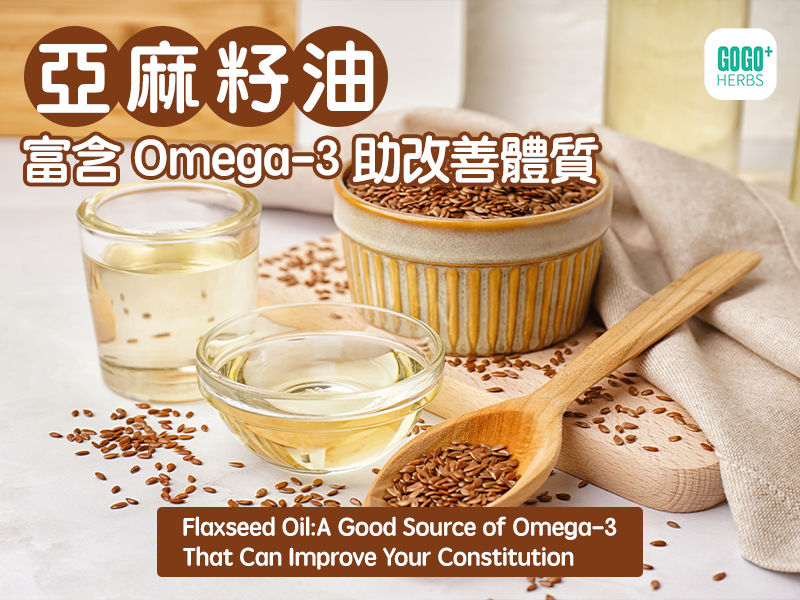
Fats and oils are often seen as the antithesis of health, but their role in the body is irreplaceable: each gram provides approximately 9 kilocalories of energy (the most concentrated source of the three macronutrients), helps transport fat-soluble vitamins A, D, E, and K, and is also a building block of cell membranes. The problem rarely lies in the "oil consumption" itself, but rather in...What kind of oil to use and how to use it?。
Based on the official statements from the Hong Kong Centre for Food Safety and the Department of Health, this article clarifies three key points separately:The difference between saturated and unsaturated、What are the respective responsibilities of Omega-3/6/9?(Including a widely circulated "ratio" for which no official basis can be found), andWhy is flaxseed oil not a substitute for fish oil, and how should it be used?。
1. Fats are not the enemy: First, distinguish between saturated and unsaturated fats.
II. What do Omega-3, 6, and 9 do?
Third, the widely circulated "1:1 ratio" is not actually an official recommendation.
IV. Plant-based ALA is not the same as fish oil: the most common misconception when choosing oil.
5. Flaxseed oil: What are its benefits, and what should you know before using it?
6. Smoke point: When choosing cooking oil, consider "how you cook it".
VII. Practical Oil Selection: Four Steps
8. Who should pay attention? Safety reminders for flaxseed oil.
IX. Frequently Asked Questions (FAQ)
1. Fats are not the enemy: First, distinguish between saturated and unsaturated fats.
Dietary fats can be classified into four categories based on their structure, and they have different effects on the body. The Hong Kong Centre for Food Safety cites recommendations from the World Health Organization:Total fat should account for 15% to 30% of total energy intake (TP4T).,inSaturated fat should be less than 101 TP4T、Trans fats should be less than 11 TP4TBased on a daily intake of 2000 kcal, this equates to no more than approximately 65 grams of fat, including no more than approximately 22 grams of saturated fat and no more than approximately 2.2 grams of trans fat.
| Types of fat | room temperature | Common sources | Effects on blood lipids |
|---|---|---|---|
| Saturated fat | Mostly solid-state | Beef, lamb, pork, poultry, butter, lard, cheese, whole milk; coconut oil, palm oil | It will increase low-density lipoprotein ("bad" cholesterol). |
| Monounsaturated fats | liquid | Olive oil, canola oil, peanut oil, avocado, nuts | Replacing saturated fats helps lower "bad" cholesterol. |
| Polyunsaturated fats | liquid | Corn oil, sunflower seed oil, soybean oil, safflower oil; fatty fish, walnuts, seeds | Replacing saturated fats helps lower "bad" cholesterol. |
| Trans fats | Mostly solid-state | Foods containing partially hydrogenated oils: margarine, vegetable shortening, baked and fried foods. | At the same time, it increases "bad" cholesterol and lowers "good" cholesterol. |
Here is an often overlooked key point: the core of the official advice is..."Replace" rather than "reduce"The World Health Organization points out that polyunsaturated fats and monounsaturated fats are the main components of the diet.replaceSaturated and trans fats are good for the heart. In other words, replacing butter with olive oil and potato chips with a handful of walnuts is closer to the recommendation than simply "eating less oil".
II. What do Omega-3, 6, and 9 do?
The number following "Omega" refers to the position of the first double bond on the fatty acid molecule (counting from the methyl end).This is just a classification method, not a ranking of good or bad.All three are unsaturated fatty acids, but they have different sources and roles.
Omega-3: ALA is different from EPA and DHA.
The Omega-3 family has three main members, derived from completely different foods:
- ALA (alpha-linolenic acid)Plant-based sources include flaxseed, flaxseed oil, chia seeds, walnuts, rapeseed oil, and soybean oil. (ALA genus)Essential fatty acids—The human body cannot synthesize it on its own and must obtain it from food. The recommended daily intake listed by the US NIH Office of Dietary Supplements is 1.6 grams for adult men and 1.1 grams for adult women, with slightly higher amounts during pregnancy and lactation.
- EPA and DHADHA is mainly derived from oily fish (salmon, mackerel, sardines, herring, tuna) and seafood, while algal oil is a direct source for vegetarians. DHA is particularly abundant in the retina and brain cell membranes.
Regarding health benefits, the direction supported by more empirical evidence is...Maintaining heart health and lowering triglyceridesEpidemiological studies have consistently observed that people who regularly eat fish have lower cardiovascular risk. ALA itself also has its value, and the difference between the two will be explained in Section 4 later.
Omega-6: Not a "bad fat," but an essential fatty acid.
The main members of Omega-6 areLinoleic acidIt accounts for 85% to 90% of dietary Omega-6, and its sources include corn oil, sunflower oil, soybean oil, salad dressings, nuts, and many baked goods. It is also...Essential fatty acidsIt participates in the skin barrier and growth and development.
In recent years, many health articles have stated that "Omega-6 can promote inflammation and should be consumed in moderation," which aligns with the official conclusion of the American Heart Association.On the contrary—See the next section for details.
Omega-9: The human body can synthesize it on its own, and its characteristics include stability and heat resistance.
The main members of Omega-9 areOleic acidIt is abundant in olive oil, canola oil, avocado oil, and camellia oil. One point is often overlooked:Omega-9 is not an essential fatty acid.The human body can synthesize it on its own, so there is no need to deliberately "supplement" it.
Its practical significance lies in cooking—with only one double bond, its structure is relatively stable and heat-resistant, making oils rich in Omega-9 (such as olive oil, camellia oil, and canola oil) suitable for everyday cooking. Extra virgin olive oil also contains polyphenols, which are components of interest in antioxidant research.
| Omega-3 | Omega-6 | Omega-9 | |
|---|---|---|---|
| Key members | ALA, EPA, DHA | Linoleic acid | Oleic acid |
| Is it necessary? | ALA is; EPA/DHA can be converted in small amounts from ALA. | 是 | No, the human body can synthesize it on its own. |
| Common sources | Fatty fish and algae oil; flaxseed, chia seed, walnut, and rapeseed oil | Corn oil, sunflower seed oil, soybean oil, nuts | Olive oil, canola oil, avocado oil, camellia oil |
| Cooking characteristics | Not heat resistant (especially ALA). | Not heat resistant | Relatively stable and heat resistant |
Third, the widely circulated "1:1 ratio" is not actually an official recommendation.
When searching for information about fats, you will easily see this statement: "According to the American Heart Association, the optimal ratio of fat intake is polyunsaturated fatty acids: monounsaturated fatty acids: saturated fatty acids = 1:1.5:0.8, with the ideal ratio of Omega-3 to Omega-6 being 1:1."
After verification, three points need to be clarified:
- The American Heart Association (AHA) has not published this fatty acid ratio.Its official dietary recommendations are "saturated fat less than 61 TP 4T of total calories, avoid trans fats, and replace saturated and trans fats with unsaturated fats"—an upper limit, not a set of proportions.
- There is another version of the same number in Chinese materials.Official health textbooks, also citing "American Heart Association recommendations," describe saturation as: monounsaturated: polyunsaturated =1:1.3:1(SeeNational Health ServiceThe fact that the two versions contradict each other indicates that it is not an established official figure.
- More importantly, the AHA's stance on Omega-6 is the opposite of "eat less of it".The scientific advice published by the AHA in 2009 (Harris et al., in Circulation) explicitly recommends...At least 5 to 101 TP4T of calories come from Omega-6.It also points out that "viewing Omega-6 fatty acids as pro-inflammatory is..."Incorrect"—Because linoleic acid also produces anti-inflammatory molecules; the consultation further states that reducing Omega-6 intake below current levels is 'more likely to increase rather than decrease' the risk of coronary heart disease. The lead author of the consultation even directly describes the concept of the 'optimal Omega-6 to Omega-3 ratio' as a 'misinterpretation of science.'"
IV. Plant-based ALA is not the same as fish oil: the most common misconception when choosing oil.
Flaxseed oil is often called "vegetable fish oil," which sounds like they're interchangeable, but they provide different fatty acids:Flaxseed oil provides ALA, while fish oil provides EPA and DHA.The body can convert ALA into EPA and then into DHA, but the efficiency is very low.
The original text from the US NIH Office of Dietary Supplements states: The body can only...Very small amount"ALA is converted into EPA and DHA, so obtaining EPA and DHA directly from food or supplements is the only way to actually increase their levels in the body. The conversion rate for the average adult is approximately:"ALA to EPA conversion costs approximately 5 to 101 TP4T, while conversion to DHA costs even less.(often below 1 to 5%); conversion rates are higher among women of childbearing age.
Using serving sizes will make it clearer. One tablespoon of flaxseed oil contains about 7.3 grams of ALA, which seems higher than a serving of fish, but the proportion that can actually be converted into EPA and DHA after conversion is very small; in contrast, 3 ounces (about 85 grams) of cooked salmon directly provides about 1.8 grams of EPA and DHA without needing to be converted.
| Food (per serving) | Omega-3 types | Approximate content |
|---|---|---|
| 1 tablespoon of flaxseed oil | ALA | 7.3 grams |
| Chia seeds 1 ounce | ALA | 5.1 grams |
| Walnut (English variety) 1 ounce | ALA | 2.6 grams |
| 1 tablespoon of whole flaxseeds | ALA | 2.4 grams |
| 1 tablespoon canola oil | ALA | 1.3 grams |
| Farmed salmon 3 ounces cooked | EPA+DHA | 1.8 grams |
| 3 ounces of sardines (canned) | EPA+DHA | 1.2 grams |
This makes it clear:The two numbers cannot be directly compared.ALA has its own value—it is an essential fatty acid, and there are observational studies supporting this in cardiovascular studies; however, if your goal is to "supplement EPA and DHA," eating fatty fish directly, or choosing fish oil and algal oil, is a more direct approach. Vegetarians and those who don't eat fish can consider algal oil—which is the original source of Omega-3 in fish.
For information on recommended daily intake of EPA and DHA and how to choose supplements, please refer to the website's <Fish oil benefits and product recommendations>; For the relationship between Omega-3 and eyesight and memory, see <Omega-3 Eye Health>and<Omega-3 and memoryThis will not be repeated here.
5. Flaxseed oil: What are its benefits, and what should you know before using it?
Among common edible vegetable oils, flaxseed oil has one of the highest ALA contents—ALA accounts for more than half of its total fatty acids, far exceeding that of olive oil. This is also why it is popular: for people who rarely eat fish, it is a convenient plant-based source of ALA.
Flaxseed and flaxseed oil are not the same thing.
Both come from the same seed, but their compositions differ significantly:
- Flaxseed (seeds)In addition to ALA, it also containsDietary fiber與LignansLignans are phytoestrogens and are the subject of antioxidant research. However, related human studies are still accumulating, and flaxseed or flaxseed oil should not be regarded as a method of cancer prevention or treatment.
- Flaxseed OilAfter pressing, the fiber and lignans remain in the seeds.These two ingredients are not present in the oil.。
Therefore, if your goal is to consume both fiber and lignans, you shouldEat flaxseed directlyInstead of just consuming oil, it's also recommended to choose...grindingFlaxseed: Whole seeds are often excreted undigested, resulting in less nutrient absorption. Ground flaxseed can be added to oatmeal, cheese, soups, or baked goods.
Portion size, calories and storage
- Flaxseed OilThe common recommendation is about 1 tablespoon (about 15 ml) per day.
- Calories need to be included.One tablespoon of oil contains approximately 120 kcal, which is pure fat and should be included in the daily fat intake (the recommended daily fat intake should not exceed 301 TP4T of total energy).
- FlaxseedGenerally, take 1 to 2 tablespoons per day; like other fiber sources, it should be consumed with plenty of water.
- saveFlaxseed oil is high in polyunsaturated fats and is very sensitive to light, heat, and oxygen. It is recommended to buy small bottles, choose dark glass bottles, refrigerate after opening, and use within a few weeks. If a distinctly bitter or paint-like odor develops, the oil has oxidized and should be discarded.
Regarding blood pressure and inflammation
There is research to support the claim that flaxseed oil is effective in this regard, but the results are inconsistent: some studies have observed a correlation between it and improvements in blood pressure and inflammatory markers, while others have not shown a consistent effect. It is suitable for positioning as...Part of a balanced dietIt can be used to replace saturated fat; butIt cannot replace medication and regular medical careIf you have high blood pressure or are currently taking medication, please discuss any dietary adjustments with your doctor or registered dietitian.
6. Smoke point: When choosing cooking oil, consider "how you cook it".
The same oil only realizes its value when used correctly. The key is...Smoke Point—The temperature at which the oil begins to smoke and shows obvious decomposition. The basic principle is:Oils with a higher content of polyunsaturated fatty acids are less heat-resistant.
Flaxseed oil has a particularly low smoke point (approximately 107°C), while the typical oil temperature for frying and stir-frying is above 180°C, significantly exceeding its tolerance range.Not suitable for heatingThis is also the biggest difference in usage between it and olive oil and canola oil.
| grease | Smoke point approximately | Suggested usage |
|---|---|---|
| Flaxseed Oil | 107℃ | It can be served cold or mixed into food that has been removed from the heat. |
| Extra Virgin Olive Oil | Approximately 190℃ | Cold dishes, stir-fries at medium to low temperatures |
| rapeseed oil | Approximately 200 to 230°C | Stir-fry and baking |
| Peanut oil | Approximately 230℃ | Pan-frying, stir-frying |
| bitter tea oil | Approximately 250℃ | High-temperature stir-frying |
| Corn oil, sunflower seed oil | Approximately 230℃ | Although its heat resistance is not low, it has a high proportion of polyunsaturated compounds and is easily oxidized at high temperatures, so it is recommended to use low to medium heat. |
Note: The smoke point may vary depending on the degree of refining, variety, and batch. The figures listed above are approximate and are for reference only.
Three practical suggestions:Don't use the same oil for everything.(For cold dishes, use flaxseed oil or extra virgin olive oil; for home cooking, use canola oil or peanut oil.)Avoid excessive cooking fumes;Do not reuse oil that has been used for frying.Oxidation of oils when heated is a normal chemical process. The key is to avoid prolonged high temperatures and repeated use, rather than treating a certain oil as "forbidden".
VII. Practical Oil Selection: Four Steps
- First, consider its intended use.Different oils are needed for cold dishes, medium-low temperature dishes, and high-temperature dishes. Before buying, think carefully about what you mainly want to use this bottle of oil for.
- It is mainly composed of unsaturated fats.Canola oil, olive oil, peanut oil, corn oil, sunflower oil, and soybean oil all belong to this category; when comparing them, you can look at the fatty acid composition on the packaging.
- Replace saturated and trans fats with unsaturated fats.Reduce your intake of butter, lard, coconut oil, palm oil, and cookies, pastries, and fried foods containing partially hydrogenated oils. This step is more effective than choosing "which bottle is the healthiest."
- Diversify and rotate production, and control the total amount.Fat should account for 15 to 301 TP4T of total daily energy, of which less than 101 TP4T is saturated fat and less than 11 TP4T is trans fat. Alternating between different oils makes it easier to obtain different fatty acids simultaneously.
8. Who should pay attention? Safety reminders for flaxseed oil.
- Pregnant women and breastfeeding womenMayo Clinic explicitly recommendsdon't wantUse flaxseed and flaxseed oil; the US NCCIH also points out that some studies suggest flaxseed use during pregnancy may be unsafe (possibly due to mild hormonal effects), while safety data for breastfeeding mothers is insufficient. Consult your doctor first if needed.
- Currently taking anticoagulants or antiplatelet drugs(For example, warfarin and aspirin): Flaxseed oil may weaken the blood’s clotting ability, which theoretically increases the risk of bleeding. Consult a doctor or pharmacist before use.
- If you are about to undergo surgery, or have a wound or are bleeding,You should inform healthcare professionals that you have been taking flaxseed oil and may need to stop using it.
- Taking blood pressure or blood sugar medicationFlaxseed may have the effects of lowering blood pressure and blood sugar at the same time. Using them together may have a synergistic effect. It is advisable to monitor and follow the doctor's instructions.
- Using estrogen medication or birth control pillsFlaxseed may affect the effects of estrogen.
- People with sensitive stomachsFlaxseed (especially whole seeds and those with insufficient moisture) may cause bloating, flatulence, and diarrhea. Excessive consumption of flaxseed oil at one time may also cause gastrointestinal discomfort.
- Do not eat raw or immature flaxseeds.It may contain potentially toxic compounds.
- People allergic to flaxseedIt should be avoided; start with a small amount when consuming for the first time.
- Infants under one year oldVegetable oil should not be used as a supplement; please follow the dietary instructions of medical staff.
- If you experience unexplained bleeding, severe gastrointestinal discomfort, or allergic reactions, please seek medical attention as soon as possible.
IX. Frequently Asked Questions (FAQ)
Can flaxseed oil be used for stir-frying or frying?
Not recommended. Flaxseed oil has a smoke point of only about 107℃, while the temperature of oil used for frying is generally above 180℃. Heating will cause the ALA in flaxseed oil to oxidize rapidly and easily produce an off-flavor. The best uses are in salads, mixed with cheese, or added to soups, porridges, and pasta dishes that have been removed from the heat. If you want to use flaxseed in baking, it is recommended to use [other suitable oils].Grinded flaxseedInstead of liquid flaxseed oil.
Can flaxseed oil replace fish oil?
It's not recommended as a substitute. Flaxseed oil provides ALA, while fish oil provides EPA and DHA. The body can convert ALA into EPA and DHA, but the efficiency is very low (ALA to EPA conversion is about 5 to 101 TP4T, and to DHA conversion is even lower). If your goal is to supplement EPA and DHA, oily fish, fish oil, or algae oil are more direct pathways. Flaxseed oil has its own value, just in a different role.
How much flaxseed oil can you consume in a day?
A common recommendation is about 1 tablespoon (about 15 ml) per day, which can be mixed into food. Note that 1 tablespoon of oil contains approximately 120 kcal, which is pure fat and should be included in your daily fat intake. The actual serving size can be adjusted according to individual calorie needs. Those with chronic illnesses or who are taking medication should consult their doctor or registered dietitian first.
Which is better, flaxseed or flaxseed oil?
It depends on your purpose. If you want to get dietary fiber and lignans, then eat...Grinded flaxseedIf you only want to supplement ALA and easily control the amount, flaxseed oil is a good choice. It's important to note that after pressing, the fiber and lignans are no longer present in the oil; they cannot replace each other.
Do I have to take Omega-3 to Omega-6 in a 1:1 ratio?
No need. This ratio is often attributed to the American Heart Association, but after verification, it is not their official recommendation; there is also another set of contradictory figures circulating in Chinese materials. The American Heart Association's 2009 scientific advisory actually recommended that at least 5 to 101 TP4T of calories come from Omega-6, and pointed out that lowering Omega-6 below current levels is more likely to increase rather than decrease the risk of coronary heart disease. In practice, the focus should be on…Replace saturated and trans fats with unsaturated fats.It is more meaningful than pursuing proportions.
Is Omega-6 a "bad fat" that should be consumed in moderation?
No. Linoleic acid in Omega-6 is an essential fatty acid that the human body cannot synthesize on its own, and it participates in skin barrier function and growth. Scientific advisors from the American Heart Association clearly state that it is incorrect to consider Omega-6 as a pro-inflammatory molecule, as it also produces anti-inflammatory molecules. What truly needs to be reduced is...Saturated fats and trans fats。
Should flaxseed oil be refrigerated after opening?
Yes. Flaxseed oil is high in polyunsaturated fats and is very sensitive to light, heat, and oxygen. It is recommended to choose small, dark glass bottles, refrigerate after opening, and use within a few weeks. If you smell a distinctly bitter or paint-like odor, it indicates oxidation and should be discarded.
Can olive oil be used for stir-frying at high temperatures?
Extra virgin olive oil has a smoke point of approximately 190℃, making it suitable for general low- to medium-low temperature stir-frying. However, for prolonged high-temperature frying, oils with a higher Omega-9 content and more stable structure (such as camellia oil or canola oil) are more appropriate. All oils should be protected from prolonged smoking and repeated use.
Source of information
- Hong Kong Centre for Food Safety's "Food Safety Focus" Issue 158 (September 2019) — Different Types of Dietary Fats and Health. Food Safety Centre
- Hong Kong Department of Health "Healthy Working Scheme" - Fat (Total fat 151 TP1T301 TP4T, Saturated fat less than 101 TP4T, Trans fat less than 11 TP4T). Healthy Working Plan
- Hong Kong Department of Health "Healthy Working Scheme" - Calories and Nutrients. Healthy Working Plan
- Hong Kong Department of Health Student Health Service Newsletter, Issue 73 (Daily Limits for Saturated and Trans Fat). Department of Health Student Health Services
- Taiwan's Ministry of Health and Welfare's Health Promotion Administration—Is olive oil the healthiest, and can all cooking be done with olive oil? (This is a version that cites the American Heart Association's recommendations, but in a 1:1.3:1 ratio). National Health Service
- American Heart Association — Saturated Fats (Recommended: Saturated fat intake should be less than 61 TP 4 T of total calories). American Heart Association
- Harris WS, et al. Omega-6 Fatty Acids and Risk for Cardiovascular Disease: A Science Advisory From the American Heart Association. Circulation. 2009. PubMed
- National Institutes of Health, Office of Dietary Supplements — Omega-3 Fatty Acids (Fact Sheet for Consumers). NIH ODS
- National Institutes of Health, Office of Dietary Supplements — Omega-3 Fatty Acids (Health Professional Fact Sheet). NIH ODS
- National Center for Complementary and Integrative Health — Flaxseed and Flaxseed Oil: Usefulness and Safety. NCCIH
- Mayo Clinic — Flaxseed and flaxseed oil (Benefits, Pregnancy and lactation, Drug interactions, Side effects). Mayo Clinic
- NHS — Different fats: the facts. NHS
- USDA FoodData Central — Food Composition Database (Fatty Acid Content). USDA
Note: The fatty acid content, recommended amounts, and smoke points mentioned in this article are approximate figures and may vary depending on the variety, processing method, and batch. Please refer to the product label and the latest official announcements for actual values. Most research results are observations of specific groups or dosages and should not be directly extrapolated to all people.
Related Products:
-
Sale!

GINAX – Ginseng Tea Bag / Ginseng White Tea Rose Tea Bag | 1bag
Original price was: $13.00.$10.00Current price is: $10.00. 選擇規格 This product has multiple variants. The options may be chosen on the product page -
Sale!

GINAX – Manuka Honey UMF™ 5+ 30g
Original price was: $30.00.$25.00Current price is: $25.00. Add to basket -
Sale!
Single 10% off】aXimed – Recovery Speed 100% Whey Protein Powder 30 sachets
Original price was: $558.00.$502.00Current price is: $502.00. Add to basket -
Sale!
Livinglean – Organic Dietary Mineral Powder 8g x 20 sachets
Original price was: $368.00.$298.00Current price is: $298.00. Add to basket
Related Post:
![母親用滴管把少量植物藻油滴在食物匙上,幼兒坐在餐桌旁]()
A Complete Guide to Plant-Based Algae Oil Omega-3: Odorless, Vegetarian, and Suitable Omega-3 Choices for Pregnant Women and Infants
![牛樟芝子實體與膠囊製品示意]()
What is Antrodia camphorata? A complete guide to its ingredients, research evidence, and precautions for consumption.
![世界心臟日護心飲食場景,香港中年夫婦享用豆漿、豆腐、雞蛋與堅果,旁有心臟及細胞膜卡通示意]()
World Heart Day: Heart Health in Hong Kong Starts with Daily Life | What are the Benefits of Lecithin? Which of Three 1200mg Products to Choose From?
![香港成年人在家閱讀與休息,從日常習慣開始理解腦部健康]()
Fish oil, mini capsules, or B12? Formulas and daily choices for 8 best-selling brain health products.