































































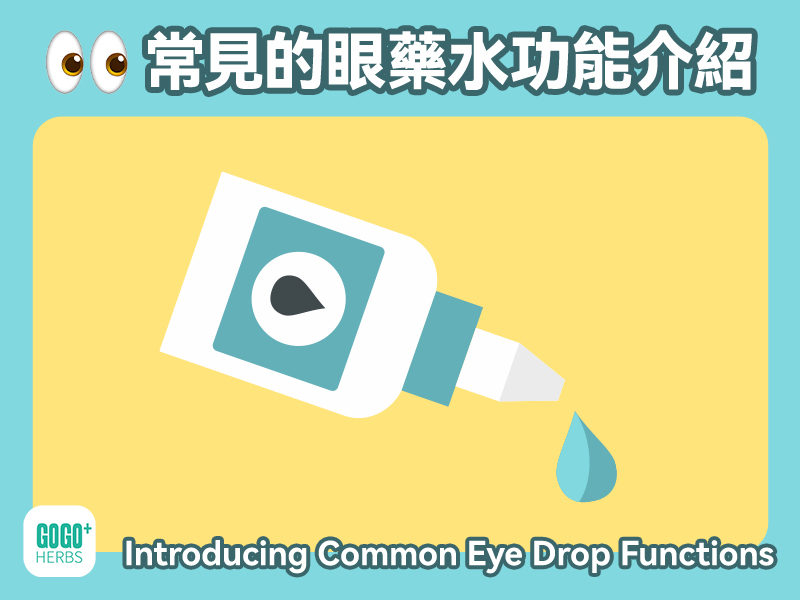
Urban dwellers often appearEye fatigueFor discomfort such as dryness or allergies, many people choose to buy eye drops to relieve the discomfort. However, there is a lot to know about choosing eye drops. You must pay special attention to the type, ingredients, and expiration date. In this issue, an ophthalmologist will explain how to choose the right eye drops for you and the correct way to use them.
It is very common for citizens to buy and use eye drops on their own. Dr. Chan Chung-yan, an ophthalmologist at Hong Kong Sanatorium & Hospital, said that most eye drops available in pharmacies are over-the-counter medications and are mainly divided into two categories: anti-allergy eye drops and eye drops for lubricating the eyes, the latter often referred to as artificial tears. As for eye drops containing steroids, antibiotics, or those for specific eye conditions, they must be used with a doctor's prescription.
Common ingredients in anti-allergy eye drops include antihistamines, mast cell stabilizers, and vasoconstrictors. These are primarily used to soothe discomfort caused by eye allergies, such as itching, redness, and watery eyes. They also help constrict blood vessels in the eyes, reducing redness and swelling. Lubricating or artificial tears, on the other hand, mainly moisturize and replenish the eyes. Common ingredients include hyaluronic acid, but they generally do not have pharmacological effects.
Dr. Chen Songen reminds consumers that many eye drops on the market contain preservatives, which are used to prevent bacterial contamination. While preservatives are beneficial for...eye healthIt will not have an immediate and obvious effect, but if used frequently over a long period of time, the preservatives may gradually accumulate and eventually damage the cornea.
Therefore, he advises citizens to choose preservative-free eye drops whenever possible. These products are usually sold in individual packets, and it is recommended to use one fresh packet daily. Currently, some preservative-free eye drops have special filter membrane designs on their bottles to prevent bacteria from entering, but it is generally recommended to use these products within three months of opening.
In addition, regardless of whether it contains preservatives, all eye drops should be used within one month of opening. Even if not finished, they should be discarded to avoid using potentially contaminated drops. If it is an individually packaged eye drop, it should be used on the same day and discarded immediately.
Regarding storage, unless otherwise specified, eye drops generally do not need to be refrigerated. Simply store them at room temperature (around 20 degrees Celsius) and avoid direct sunlight. Dr. Chen specifically reminds everyone that many people easily overlook the fact that eye drops also have an expiration date, which is usually indicated on the packaging along with usage precautions. Using expired eye drops may not only reduce their effectiveness but also increase the risk of bacterial infection, with consequences that should not be ignored.
Dr. Chen Songen emphasized that although there are many types of eye drops on the market, their ingredients are mostly similar, so the most important thing when choosing is to select the right one for your specific needs. He advised consumers to consult an ophthalmologist before purchasing any eye drops to understand their specific symptoms.Eye discomfortThe root cause is that a doctor should recommend suitable products. Products of unknown origin or with unclear ingredients should be avoided.
Furthermore, if an allergic reaction occurs after using eye drops, such as increased redness, swelling, itching, or even impaired vision, discontinue use immediately and seek medical attention as soon as possible. Choosing and using eye drops correctly is essential to truly protect eye health.
Related Post:
![母親用滴管把少量植物藻油滴在食物匙上,幼兒坐在餐桌旁]()
A Complete Guide to Plant-Based Algae Oil Omega-3: Odorless, Vegetarian, and Suitable Omega-3 Choices for Pregnant Women and Infants
![牛樟芝子實體與膠囊製品示意]()
What is Antrodia camphorata? A complete guide to its ingredients, research evidence, and precautions for consumption.
![世界心臟日護心飲食場景,香港中年夫婦享用豆漿、豆腐、雞蛋與堅果,旁有心臟及細胞膜卡通示意]()
World Heart Day: Heart Health in Hong Kong Starts with Daily Life | What are the Benefits of Lecithin? Which of Three 1200mg Products to Choose From?
![香港關節健康洞察報告封面:中年及長者在香港步行]()
How to choose joint health supplements? 8 best-selling formulas and repurchase information help you find the right daily option.