
































































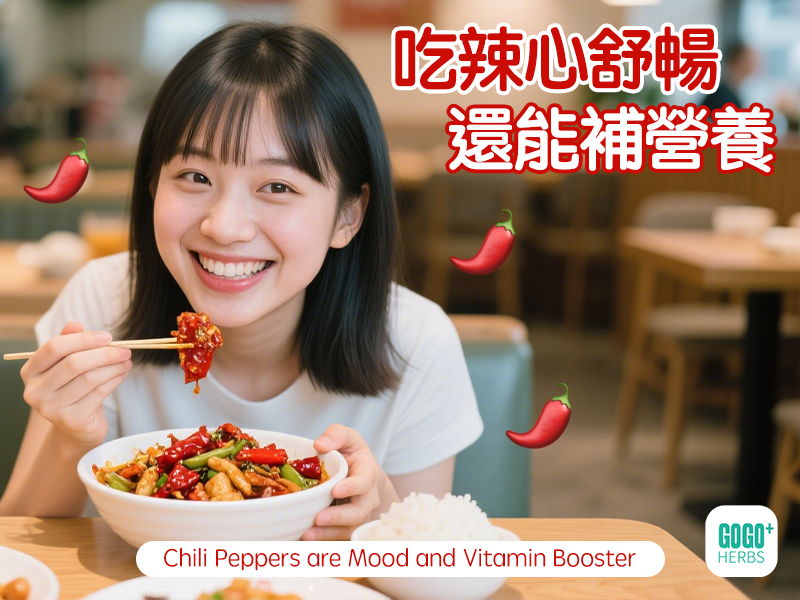
Adding a spoonful of chilli when eating hotpot will make you sweat, as if all the toxins in your body have been pushed out; the aroma of hotpot will even upgrade the taste of the ingredients, which will make people's appetite go up. Although many people think that eating spicy food is easy on the stomach, according to many studies, as long as you choose the right kind of chilli and eat it in the right way, not only will it not harm your body, but it may also help you to live longer.
Potential Benefits of Eating Spicy Food
When people think of spicy cuisine, they often think of Sichuan, Yunnan or Southeast Asia. The climate in these places is generally humid and stuffy, so in order to promote sweating and maintain body circulation, the local people are accustomed to using spicy food to help regulate their body constitution. Taiwan also belongs to the subtropical climate, the weather is humid and hot, coupled with a diet high in sugar drinks and sweets, which tends to slow down the metabolism and build up moisture in the body.
Chen Wangquan, executive director of the National Federation of Chinese Medicine Practitioners Association, pointed out that, in the Chinese medicine point of view, excessive intake of sugar will slow down the body's metabolism, humidity and heat are more likely to make the body aggravated by dampness. At this time, if the moderate intake of some spicy ingredients, such as chilli, can promote blood circulation, help dispel moisture in the body, to achieve a certain degree of regulation.
Western medicine perspective: health potential of capsaicin
In addition to Chinese medicine, modern Western medicine has also conducted in-depth research on capsaicin, the active ingredient in chilli peppers. Capsaicin is the main ingredient that gives chilli peppers their pungent taste, which not only stimulates the taste buds, but also has various health potentials, including anti-tumour and cardiovascular protection.
As early as the 1990s, scientists began to discover that capsaicin has a potential anti-cancer mechanism. Studies have shown that capsaicin can inhibit the growth of tumour cells, induce apoptosis, and block the formation of neovascularisation and metastasis of cancer cells. For example, in 2004, the journal Nature mentioned that capsaicin can interfere with the cell cycle of cancer cells; in 2011, the journal Cell pointed out that capsaicin is related to the hallmark characteristics of cancer; and in 2010, the journal Cancer explored the inhibitory effect of capsaicin on cancer metastasis.
Many people worry that eating spicy food will hurt their stomachs and even cause stomach cancer, but this is not the case. Research has found that an appropriate amount of capsaicin can promote blood circulation in the stomach, help repair gastric ulcers, and stimulate the gastric mucosa to secrete protective mucus, reducing the erosion of gastric acid on the stomach lining, which in turn plays a role in protecting the stomach.
Correlation between spicy food and longevity
In 2015, the British Medical Journal (BMJ) published a study by the School of Public Health at Peking University, in collaboration with the University of Oxford, which found that people who regularly ate spicy food had an overall risk of death that was 14% lower than those who ate less spicy food, with the risk of dying from cancer and cardiovascular disease also being significantly lower. Another 2019 study suggests that capsaicin may even help inhibit lung cancer metastasis. Jamie Friedman of Marshall University in West Virginia found that rats fed capsaicin in an experiment showed a dramatic reduction in lung tumour metastasis, which may be one of the strategies to aid lung cancer treatment in the future.
How to eat spicy food correctly?
However, not all forms of "spiciness" can bring health benefits. The study highlighted that only the capsaicin in "fresh chillies" has significant health benefits. Processed products such as commercially available chilli sauces and chilli oils, which have been seasoned or refined, may not only be low in capsaicin, but may also contain excessive salt, oil or additives, which can be detrimental to health.
In addition, fresh chillies are rich inVitamin CCarotenoids andVitality Group BThese are important nutrients for boosting immunity and antioxidant activity. However, these nutrients are easily lost during the cooking process, so if you want to get the most out of chilli peppers, it is recommended that they are eaten fresh as a priority.
It is worth noting that spicy food should be eaten according to one's ability. Everyone has a different body type and a different tolerance for spicy food. If you consume too much, it will not only fail to enhance the cancer prevention effect, but may also irritate the gastrointestinal mucosa, resulting in heartburn, diarrhoea or indigestion and other discomforts. If you feel uncomfortable after eating spicy food, you can drink some milk to help ease the pain and adjust the spiciness next time to avoid overburdening the body.
Conclusion
In conclusion, chilli peppers are not only good for flavouring, but a moderate intake of fresh chilli peppers can bring about a variety of health benefits, including promoting circulation, anti-inflammatory, anti-cancer and may even help prolong life. As long as you choose the right form of chilli and control your intake according to your own circumstances, you can enjoy the fun of spicy flavours and be healthy at the same time.
Related Products:
-
Sale!
Unichi – Teddi Lab® Gummy Bears Gummy Bears for Hair Growth Upgraded Sea Salt and Green Titanium Flavour 60 Capsules
Original price was: $170.00.$125.00Current price is: $125.00. Add to basket -
Sale!
Jamieson – Long Lasting Vitamin C 1000mg 100 Tablets
Original price was: $138.00.$108.00Current price is: $108.00. Add to basket -
Sale!
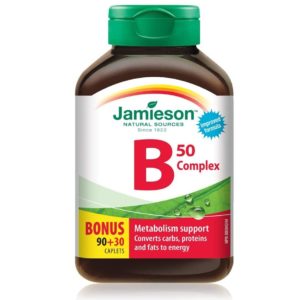
Jamieson – Natural Vitamins B complex 50 120 capsules
Original price was: $168.00.$98.00Current price is: $98.00. Add to basket -
Related Post:
![母親用滴管把少量植物藻油滴在食物匙上,幼兒坐在餐桌旁]()
A Complete Guide to Plant-Based Algae Oil Omega-3: Odorless, Vegetarian, and Suitable Omega-3 Choices for Pregnant Women and Infants
![牛樟芝子實體與膠囊製品示意]()
What is Antrodia camphorata? A complete guide to its ingredients, research evidence, and precautions for consumption.
![世界心臟日護心飲食場景,香港中年夫婦享用豆漿、豆腐、雞蛋與堅果,旁有心臟及細胞膜卡通示意]()
World Heart Day: Heart Health in Hong Kong Starts with Daily Life | What are the Benefits of Lecithin? Which of Three 1200mg Products to Choose From?
![香港成年人在家閱讀與休息,從日常習慣開始理解腦部健康]()
Fish oil, mini capsules, or B12? Formulas and daily choices for 8 best-selling brain health products.