



















































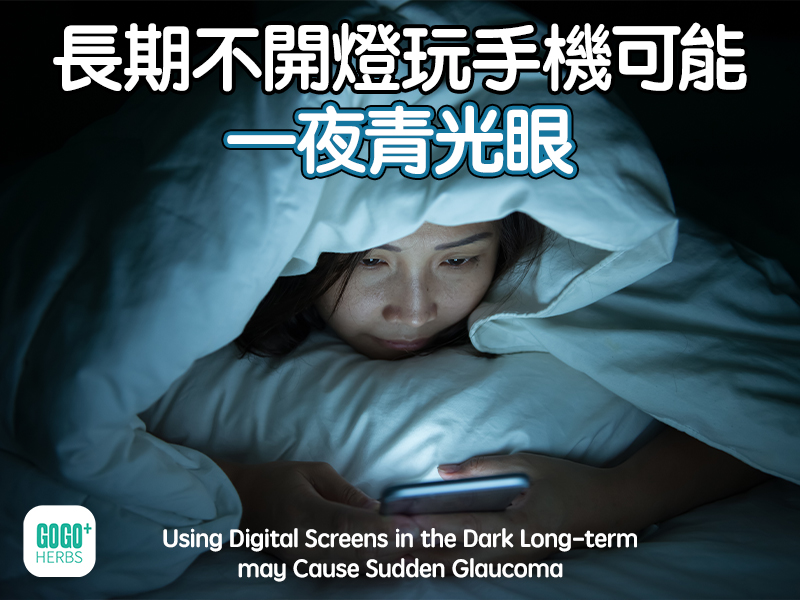
Playing mobile phones without lights for a long time may cause glaucoma overnight.
Glaucoma is known as "Sight ThiefBecause its initial symptoms are often subtle, patients may not immediately notice their vision deteriorating. However, acute glaucoma is like...Vision robberGlaucoma can be incredibly severe—potentially causing blindness overnight and rapidly damaging vision. Ophthalmologists point out that glaucoma isn't just a disease of the elderly; prolonged reading or mobile phone use in dimly lit environments at night can cause a rapid spike in intraocular pressure, triggering an acute attack. Furthermore, winter, with its differences in day and night length and the effects of cold medications, is a potentially high-risk period for this condition.
Clinical observations show that glaucoma is mainly divided into two types: chronic and acute. Chronic glaucoma is the more common type, with an insidious course. In the early stages, there are almost no obvious discomforts, but the patient's vision gradually deteriorates over time, as if being "silently eroded." In contrast, acute glaucoma develops rapidly, with symptoms erupting in a short period of time: patients not only experience redness and swelling of the eyes and significant pain, but may also experience blurred vision, iridescent halos, severe headaches, nausea, and vomiting, among other systemic reactions. Pathologically, chronic glaucoma typically includes open-angle, primary, and secondary types; while acute glaucoma is mostly angle-closure.
The root cause of glaucoma lies in the abnormal closure of the anterior chamber angle (the narrow passage between the cornea and iris), which obstructs the outflow of aqueous humor (the transparent fluid that maintains pressure within the eyeball), causing a sustained increase in intraocular pressure and ultimately damaging the optic nerve. When the closure suddenly worsens (such as in acute anterior chamber angle obstruction), intraocular pressure can spike from the normal range (approximately 10 to 21 mmHg) to 40 to 60 mmHg in a short period, triggering an acute glaucoma crisis.
Ophthalmologist Li Wanwei further explained that winter is a critical period for increased glaucoma risk. On the one hand, when there is insufficient light at night, the pupil naturally dilates to increase the amount of light entering the eye. However, this process can cause the anterior chamber angle to become narrower, hindering the flow of aqueous humor and thus increasing intraocular pressure. On the other hand, winter is also a flu season, and some people may take cold medicines that have the side effect of increasing intraocular pressure, further exacerbating the possibility of developing glaucoma. She specifically reminded people that if they use their eyes for a long time in dim environments (such as reading while lying down or using their phones late at night), the pupils will remain dilated, which will significantly increase the risk of impaired aqueous humor outflow, requiring extra caution.
For glaucoma treatment, doctors typically employ a step-by-step approach based on the stage of the disease. The first-line treatment is medication, including intraocular pressure-lowering eye drops and oral medications, supplemented by pupil-constricting and anti-inflammatory measures to help clear the aqueous humor pathways. If medication is ineffective, laser treatment may be considered to improve aqueous humor drainage. For elderly patients who also have cataracts, doctors often recommend cataract surgery to address both conditions simultaneously—this type of surgery not only improves vision but also helps alleviate glaucoma symptoms. Li Wanwei shared a real-life case: an 80-year-old woman developed acute glaucoma in her left eye due to cataracts; her intraocular pressure surged from normal to dangerous levels within just 2 to 3 days.rapid decline in visionAfter a comprehensive treatment combining eye drops and cataract surgery, her vision recovered by about 30%. She emphasized, "The golden period for glaucoma treatment is early medical intervention; the earlier the patient receives intervention, the higher the success rate of visual function recovery."
Regarding prevention for high-risk groups, Li Wanwei pointed out that individuals over 40 years of age, those with high hyperopia, small eye structure (congenital narrowing of the anterior chamber angle), severe cataracts, and those with a family history of glaucoma are all potential high-risk groups for acute glaucoma. She recommends that these individuals undergo regular professional eye examinations, especially those diagnosed with anterior chamber angle stenosis, who need to closely monitor changes in intraocular pressure. Furthermore, for the general public's daily protection, she specifically urged avoiding prolonged use of the eyes in dimly lit environments—if using a mobile phone, it is recommended to increase screen brightness and turn on eye protection mode to reduce the chance of excessive pupil dilation in dark environments, thereby reducing the risk of abnormally high intraocular pressure from the source. Early screening and lifestyle adjustments are essential to building a stronger protective barrier for precious vision.