

















































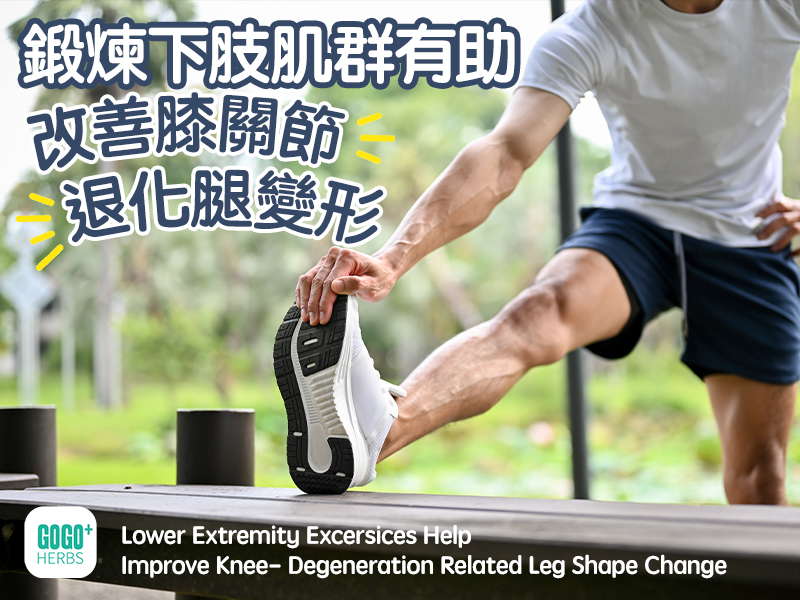
Exercises for lower limb muscles can help improve knee degeneration and leg deformity.
Bowlegs (O-shaped) and knock-knees (X-shaped) not only affect physical appearance, but may also...Joint strainAnd warning signs of degeneration. An orthopedic specialist stated that many patients with knee problems are prone to developing bowlegs (O-shaped feet), while knock-knees (X-shaped feet) may be caused by issues with the ankle or...Hip problemsThis can cause problems, especially for people with rheumatoid arthritis. Foot deformities can put extra pressure on the knee joint, affecting mobility and, in severe cases, even causing pain when walking. Doctors point out that...Knee osteoarthritisPatients with degenerative conditions can resolve the problems caused by knee replacement surgery, while also achieving the effect of correcting body shape.
While most people are born with perfectly straight legs, severe deformities in the feet can indicate underlying health problems. Dr. Sha Huiliang, an orthopedic specialist at Hong Kong Adventist Hospital (Stubbs Road), explains that foot deformities can generally be assessed visually: when the feet are pressed together, a normal knee joint should have a gap of about one centimeter, enough to fit a hand. Knee valgus (or bowlegs), commonly known as O-shaped feet, occurs when the knees cannot touch, with a gap as large as a fist. Knee valgus (or knock-knees), commonly known as X-shaped feet, occurs when the knees can touch, but the inner ankles cannot.
Sha Huiliang pointed out that the vast majority of foot deformities caused by knee joint strain and degeneration are O-shaped feet. Acquired factors such as being overweight, poor posture, and improper exercise can also lead to foot deformities. Knee joint degeneration commonly occurs in middle age. When the inner side of the knee is subjected to long-term pressure, the cartilage gradually degenerates due to cumulative wear and tear, eventually forming an O-shaped foot. At this time, the supporting capacity of the lateral ligaments becomes weak and unstable. If the condition deteriorates rapidly, normal mobility may be lost in a short period of time, leading to difficulty walking.
As for the acquired causes of X-shaped feet, they are generally related to foot, ankle, or hip joint problems, and may also be caused by fractures or rheumatoid arthritis. Sha Huiliang also mentioned that people with flat feet are not necessarily a high-risk group. Although having flat feet or high arches does not mean that the feet will definitely be deformed, the pressure on the knees will be different, which can easily cause pain.
Sha Huiliang stated that early-stage patients can alleviate pain with medication and undergo physical therapy to strengthen muscles and improve flexibility. Some patients with severe conditions may use orthotic braces to slightly adjust the stress level, but this process is relatively strenuous. Patients can also resolve the issue through knee replacement surgery. Patients with general overuse injuries and degeneration may consider partial knee replacement to relieve pain, but this surgery cannot correct body shape. Furthermore, most patients are already in the later stages of their condition, so most require total knee replacement, which can solve the pain problem and achieve a corrective effect. Sha Huiliang reminded the public to exercise regularly to strengthen muscle groups and improve flexibility to prevent foot deformities and reduce the risk of joint degeneration.





Author. gogoherbs
Related Products:
-
Sale!
![維柏健 - 健骨至尊 葡萄糖胺軟骨素膠囊 (500/400毫克) + D3 [特強配方] 300粒](https://gogoherbs.com/wp-content/uploads/2019/10/Glucosamine-3-1-300x300.png)
Webber Naturals – Glucosamine Chondroitin Capsules (500/400mg) + D3 [Extra Strength] 300 Capsules
Original price was: $298.00.$265.00Current price is: $265.00. Add to basket -
Sale!
Kirkland Signature – Glucosamine & Chondroitin & MSM 500/400/400mg 300 Capsules
Original price was: $330.00.$258.00Current price is: $258.00. Add to basket -
Sale!

BLACKMORES – Joint Care Formula 120 capsules
Original price was: $258.00.$198.00Current price is: $198.00. Add to basket