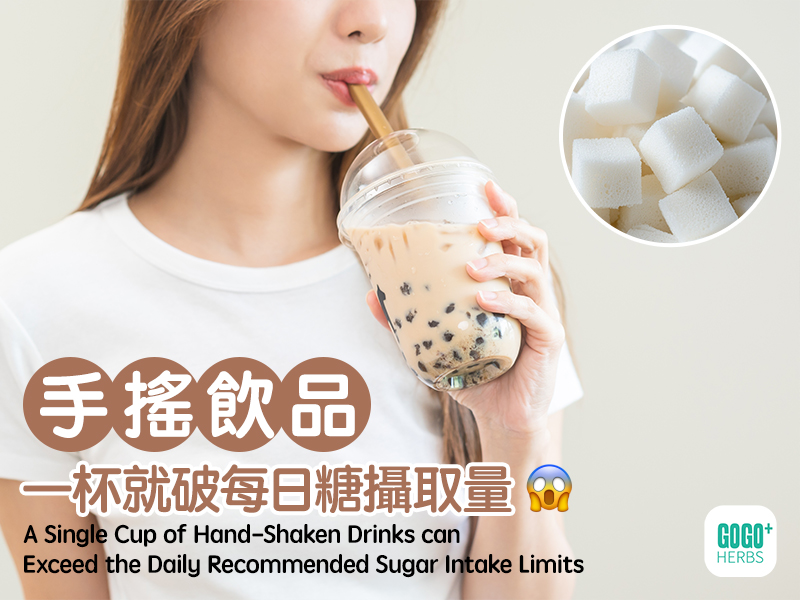
How high is the sugar content in hand-shaken beverages? Reasons why one cup exceeds the recommended sugar limit and healthier choices.
As temperatures rise, the frequency of beverage purchases also increases. The coolness and sweetness of hand-shaken drinks can easily lead people to unknowingly consume more sugar and calories than intended—the Hong Kong Consumer Council and the Centre for Food Safety jointly tested 127 flavored tea drinks on the market and found that 5 of the "original flavor" samples...The sugar content of just one cup already exceeds the World Health Organization's recommended daily limit for free sugars.The highest-priced one is equivalent to 14 sugar cubes.
This article will clarify three questions: How much sugar is actually in a cup of hand-shaken beverage? Why are "sour" and "added-topping" drinks particularly prone to exceeding the recommended sugar limit? And, if you don't want to completely give them up, how can you choose the right ones?
1. What is the daily limit? First, distinguish between "free sugars".
II. Local testing in Hong Kong: A cup contains a maximum of 72 grams of sugar and 600 kcal.
III. Why are "sour" drinks the sweetest?
IV. The hidden calories are in the toppings: tapioca pearls, red beans, and taro balls.
5. "Less sweetness" and "less sweetness" do not necessarily mean less sugar.
6. Why are there no nutrition labels on hand-shaken cups?
VII. Health Risks of Sugary Drinks: Where Does the Evidence Go?
8. How to choose a hand-shaken drink?
9. Who should be paid special attention to?
10. Frequently Asked Questions (FAQ)
1. What is the daily limit? First, distinguish between "free sugars".
To discuss "one cup is too much," we first need to know what the upper limit is. The World Health Organization (WHO) issued sugar intake guidelines in 2015, offering two levels of recommendations for adults and children:
| Recommended level | content | Based on 2,000 kcal per day |
|---|---|---|
| Key Recommendation (Strong) | Reduce free sugar intake to a percentage of total daily energy intake. Below 10% | less than 50 grams(Approximately 10 sugar cubes) |
| Additional suggestions (conditional) | Further reduce to total daily energy Below 5% | less than 25 grams(WHO estimates it to be about 6 teaspoons) |
The key lies in the definition of "free sugars." The WHO defines them as:Monosaccharides and disaccharides added to food and beverages by manufacturers, chefs, or consumers(e.g., sucrose, glucose, fructose).And sugars that are naturally present in honey, syrup, fruit juice, and concentrated fruit juice.。
There are two aspects of this definition worth noting:The sugars in whole, fresh fruits and vegetables, as well as the lactose in milk, are not considered free sugars.;butThe sugar in fruit juice, concentrated fruit juice, honey, and syrup is considered...The fructose syrup, sucrose, honey, and concentrated fruit juice used to sweeten hand-shaken drinks all fall into the category of free sugars—in other words, the sugar in one hand-shaken drink directly consumes your daily 50-gram (or even 25-gram) sugar allowance.
The Hong Kong Centre for Food Safety relayed the same set of recommendations in its report, "Reducing Sodium and Sugar in the Diet," and used the analogy of "about 10 sugar cubes" to help the public understand the figure of 50 grams. The WHO also pointed out that keeping free sugars below 10% can reduce the risk of overweight, obesity, and tooth decay; this recommendation was rated as "strong" in terms of evidence quality.
II. Local testing in Hong Kong: A cup contains a maximum of 72 grams of sugar and 600 kcal.
The Hong Kong Consumer Council and the Centre for Food Safety collaborated on a local study, sampling eight types of beverages from various beverage shops and restaurants.Non-prepackagedA total of 127 samples of prepared tea beverages were tested, including bubble tea, cheese foam/milk foam green tea, matcha latte, taro milk tea, jasmine green tea, honey green tea, mango green tea, and passion fruit black tea (78 "original" flavors, 39 "unsweetened" flavors, and tapioca pearls from 10 unsweetened bubble teas were also tested). The results are as follows:
(1) A cup contains up to 72 grams of sugar, which is equivalent to 14 sugar cubes.Of the 78 original flavor samples, there were Five of these contain 50 grams or more of sugar per cup.This means that drinking just one glass already exceeds the WHO's recommended daily limit for free sugars.
| Beverage Category | Sugar content of this cup | Equivalent to sugar cubes |
|---|---|---|
| Matcha Latte (highest sample size) | 72 grams | Approximately 14 pills |
| Passion fruit black tea | 55 grams | Approximately 11 pills |
| Mango Green Tea | 51 grams | Approximately 10 pills |
| Honey Green Tea | 51 grams | Approximately 10 pills |
| Jasmine Green Tea | 50 grams | Approximately 10 pills |
In addition, there are Each of the 48 samples contained 25 grams or more of sugar.This means that drinking just one cup consumes half or more of your daily sugar limit. The sugar content of the 78 original flavor samples ranged from 1.4 grams to 11 grams per 100 grams.The difference is nearly 7 times.This indicates that "shaken drinks" do not have a uniform sugar level, and the choice of which one you choose can make a big difference.
(2) The highest energy value of a cup is 600 kcal.The energy value of each of the 78 original flavor samples ranged from a minimum of 87 kcal to a maximum of 600 kcal. Based on a daily intake of 2,000 kcal, the highest energy value provided by one sample accounts for 30% of the daily requirement; if calculated over three meals a day, it equals 90% of the energy required for one meal. The average energy values (per 100 grams) of the eight beverage categories are as follows:
| Beverage Category | Average energy (per 100 grams) | Average sugar content (per 100 grams) |
|---|---|---|
| Bubble Tea | 78 kcal | 5.0 grams |
| Taro Milk Tea | 74 kcal | 5.1 grams |
| Cheese milk foam / Milk foam green tea | 57 kcal | 3.5 grams |
| Matcha Latte | 56 kcal | — |
| Passion fruit black tea | — | 7.1 grams |
| Jasmine Green Tea | — | 6.0 grams |
There is one key point to reading this table:Sugar content and energy value are not the same thing.Cheese-based milk foam drinks have the lowest average sugar content among the eight categories, but because they contain milk foam powder or creamer, they are high in fat and therefore not low in calories. Conversely, tea-based drinks are usually high in sugar but may be low in calories. Which one is the healthiest depends on whether you want to control sugar or total calories.
(3) "Drinks with high sugar content" have a clear definition in Hong Kong.According to the Department of Health's "Nutritional Guidelines for Student Snacks," if 100 ml of beverage contains...More than 7.5 grams of sugarThis falls under the category of "drinks containing high sugar content." Among the above tests, there were... 10 Original Flavor SamplesIt contains 7.6 to 11 grams of sugar per 100 grams, falling within this range; another 34 are "low sugar" (meaning no more than 5 grams of sugar per 100 milliliters as defined by law).
III. Why are "sour" drinks the sweetest?
Many people believe that "sour" equals "less sugar," but the test results are exactly the opposite.The category with the highest average sugar content is passion fruit black tea.(7.1 grams of sugar per 100 grams), followed by jasmine green tea (6.0 grams).
The reason is not hard to understand: drinks with a sour base, such as lemon, passion fruit, roselle, and plum, are inherently acidic. To make them palatable, a lot of sugar (fructose syrup, honey, concentrated fruit juice) is often added to neutralize the acidity. The sourness "hides" the sweetness, making it difficult for the taste buds to detect.
The John Tung Foundation in Taiwan has previously conducted a survey on hand-shaken beverages and reached a consistent conclusion: drinks with a sour base (such as lemon, plum, and roselle) generally have a high sugar content. In this survey, the drink with the highest sugar content was "Honey Lemon Aloe Vera." Drinks with names containing "honey," "aloe vera," or "fruit" tend to give people a healthier impression, but their actual sugar content is often quite high.
It is also important to note thatThere is more than one source of sugar.The sugar in a beverage may come from: fructose syrup or sucrose added by the barista, honey, concentrated fruit juice or syrup, the sugar in the ingredients themselves, and lactose in dairy products or creamer. This also explains why "no sugar" drinks still contain sugar.
IV. The hidden calories are in the toppings: tapioca pearls, red beans, and taro balls.
The most easily overlooked aspect of hand-shaken drinks is...Ingredients。
Hong Kong tests have found that a cup of "original" bubble tea contains an average of about 400 kcal, of which...Pearls contain 170 kcal, more than 40% of the total calories.The energy comes from the toppings, not the drink itself. Sugar is usually added during the pearl production process, so even in "sugar-free" drinks, the toppings still contain sugar—a study analyzing pearls from 10 sugar-free bubble tea samples found…The sugar content of each serving of pearls varies from 1.1 grams to 11 grams, a difference of up to nine times.The highest serving is already equal to the daily limit of free sugars, 221 TP4T.
| Common types of ingredients | Its main purpose is | Why is it easily overlooked? |
|---|---|---|
| Tapioca pearls | Starch + sugar; one cup contains approximately 170 kcal. | Sugar is already added during preparation, so even if the drink is "unsweetened," it still contains sugar. |
| Red beans, mung beans | Carbohydrates + Sugar | Most of them have been cooked in sugar water |
| Taro balls, sweet potato balls, and vermicelli | starch + sugar | Items that are considered "ingredients" rather than "drinks" are usually not included in the calculation. |
| Milk foam, creamer | Fat-based | The sugar content may not be high, but the energy value will increase significantly. |
| Fruit pulp, concentrated fruit juice | Free sugars | It is considered "juice" rather than added sugar. |
In other words, a drink with "light sugar + pearls" may not necessarily have much less sugar and calories than a drink with "full sugar + no toppings".What determines the burden of a drink is often what you add, not just the level of sweetness you choose.
5. "Less sweetness" and "less sweetness" do not necessarily mean less sugar.
It's common practice to request "more sweet" or "less sweet" when placing an order, which is a good approach, but it's important to understand its limitations.
The Hong Kong tests also sampled 39 "sugar-free" (i.e., products that require sugar to be removed during preparation) products, and the results showed:Samples without added sugar typically have lower sugar content, but this is not always the case.Among them, jasmine green tea, when not sweetened, can reduce the average sugar content by 991 mg/4 oz, showing a significant effect; however...For samples containing concentrated fruit juice, honey, or fruit syrup, the reduction in sugar content is limited because the raw materials already contain sugar.—Taking passion fruit black tea as an example, without added sugar, the sugar content is reduced by an average of only about 17% per 100 grams, and the sugar content of each cup still reaches 60% of the daily upper limit for free sugars.
The study also found that a small number of "no sugar" samples actually had a higher sugar content than the "original" samples. One reason is that since it is handmade, the amount of sugar added to each cup may not be the same every time; another reason is that "no sugar" usually means no additional syrup is added, but the sugar in the raw materials such as fruit pulp, concentrated juice, and honey is still present.
Another more practical variable isQuantityThe tested beverage serving sizes ranged from 350 grams to 700 grams, a difference of more than double. For example, two honey green tea samples: a 600-gram "low-sugar" sample contained 4.8 grams of sugar per 100 grams (29 grams per cup), while a 410-gram non-low-sugar sample contained 5.5 grams of sugar per 100 grams (22 grams per cup).Drinking a large "low-sugar" beverage can result in consuming more sugar than drinking a small "non-low-sugar" beverage.
6. Why are there no nutrition labels on hand-shaken cups?
The labeling requirements for packaged beverages and hand-shaken beverages are different.
Hong Kong's nutrition labelling system is governed by the definition in the Food and Drugs (Composition and Labelling) Regulation.Prepackaged foodAccording to the Centre for Food Safety, pre-packaged food must meet two conditions simultaneously: the food inside cannot be altered without opening or changing the packaging; and the food can be readily served as a single serving to the end consumer.Food that is not packaged on its own and is only packaged after the customer has purchased it is not considered pre-packaged food.。
Hand-shaken drinks, prepared on-site and delivered to customers immediately, fall outside this category.It does not need to be labeled with a "1+7" nutrition label.In other words, you may not find the complete figures for sugar and calories on the cup or menu.
Conversely, nutrition claims on labels are regulated by law. According to the same regulations:
| claim | Conditions (per 100 grams or 100 milliliters) |
|---|---|
| low sugar | No more than 5 grams of sugar |
| Sugar-free | No more than 0.5 grams of sugar |
Pay attention to terms like "less sweet," "slightly sweet," and "no added sugar."Claims regarding nutrient content that are not subject to regulationThis is a sensory description and may vary from person to person; it may not be directly related to the actual sugar content. "No added sugar" only means that no additional sugar has been added, not that the finished product is sugar-free—the sugar in the raw materials (juice, pulp, honey, dairy products) is still present.
The Consumer Council, in its study, recommended that businesses display energy and sugar content information for beverages on menus, price lists, and other printed materials, and offer smaller portion sizes such as 250 ml, giving consumers more information and options. This also means:At present, the responsibility for judging the burden of a beverage largely falls on the consumer.
VII. Health Risks of Sugary Drinks: Where Does the Evidence Go?
When discussing health risks, it is important to distinguish between strong and weak evidence to avoid equating "related" with "will lead to".
The more established parts:The WHO states that reducing free sugar intake to below 101 TP4T of total energy can lower the risk of overweight, obesity, and tooth decay, a recommendation at the "strong" level. Evidence comes from studies showing that "adults with lower sugar intake have lower body weight," "increased sugar intake in the diet is associated with weight gain," and "those with free sugar intake above 101 TP4T have a higher rate of tooth decay." The WHO also explicitly recommends...Children under 2 years old should not drink any sugary drinks.。
Type 2 diabetes:A systematic review and meta-analysis including 17 prospective generational studies and a total of 38,253 cases of type 2 diabetes (Imamura et al.,BMJ A 2015 study found that drinking one extra sugary drink per day is associated with an increased risk of developing type 2 diabetes. 18% Related; still increased after adjusting for obesity factors 13%In other words, this association cannot be fully explained by weight gain. The study also points out that artificially sweetened beverages and fruit juices also show a positive correlation, but this is more likely to be biased, and "neither is likely to be a healthy alternative for preventing type 2 diabetes."
Weight and Cardiometabolic Risk:A large umbrella review encompassing 73 meta-analyses and 83 health outcomes (Huang et al.,BMJ (2023) indicates that dietary sugar is associated with a number of health outcomes.Medium quality evidenceThe study showed that those who consumed the most sugary drinks were associated with weight gain.Low-quality evidenceThe study showed that for every additional 250 ml of sugary drinks consumed daily, the risk of coronary heart disease increased by 171 TP4T and the risk of all-cause mortality increased by 41 TP4T; for every additional serving consumed per week, the risk of gout increased by 41 TP4T. The authors of the review also cautioned that the existing evidence is largely from observational studies of low quality, and recommended reducing free or added sugar intake to below 25 grams per day and limiting sugary drinks to less than one serving per week.
Bones and Emotions:The same review listed "skeletal" and "neuropsychiatric" as one of the outcome categories in which harmful associations were observed, including bone mineral density and aspects such as depression and attention.The quality of this part of the evidence is low to very low.It is appropriate to understand this as a direction that is "worth noting and under continued research" rather than a conclusion that can be drawn.
Regarding two common exaggerated claims:
- The original text mentioned "increased risk of Alzheimer's disease." A review of the list of outcomes in the aforementioned large-scale review...Alzheimer's disease was not listed as a significantly associated independent outcome.Observations related to the nervous system focus on areas such as depression and attention. Directly linking sugary drinks to dementia is a step too far, and this paper does not adopt this approach.
- The statement "decreased immunity" is also too general and lacks specific research endpoints. A more appropriate statement would be: hand-shaken drinks mainly provide sugar and calories, but lack nutrients such as protein, dietary fiber, and vitamins;The real issue to be concerned about is replacing regular meals or nutrient-dense foods with it.This section can be further read.6 major benefits of a balanced diet〉。
8. How to choose a hand-shaken drink?
Completely abstaining from alcohol is neither the most sustainable nor necessary approach. Here are a few principles that can be applied immediately:
- Look at the total amount of sugar in the cup, not just the sweetness level.Sweetness is just a flavoring option and doesn't reflect the sugar content of the raw ingredients. If the restaurant provides information, check the overall sugar content of the cup; otherwise, it's better to assume it's high.
- Choose a smaller serving size in a cup.The portion size is the variable that varies the most and is also the easiest to control. The difference between 350 grams and 700 grams is twice the amount of sugar and calories.
- Avoid adding any ingredients, especially pearls.A cup of original bubble tea has an average of 400 kcal, of which 170 kcal comes from the tapioca pearls; and since sugar is added to the tapioca pearls during production, removing the sweetness won't change that.
- If you want a sweeter taste, choosing a light tea or pure tea base will produce the most noticeable effect.For beverages that already contain concentrated fruit juice, honey, or fruit pulp, the reduction in sugar content after removing sweetness is limited and may still be relatively high.
- Pay attention to options that are "sour" or "sound healthy".Drinks containing lemon, passion fruit, roselle, or plum, as well as drinks that claim to contain "honey," "aloe vera," or "fruit," are often high in sugar.
- Sugar-free tea is a relatively reasonable choice.Unsweetened tea, unsweetened sparkling water, and plain water, which do not contain free sugars, are transitional ways to reduce the frequency of hand-shaken drinks.
- Use water to replenish the overall fluid.The Centre for Health Protection recommends drinking at least 6 to 8 cups of fluids daily (approximately 240 ml per cup), with more needed in hot weather or during periods of high activity levels; it also reminds people to...Reduce consumption of sugary drinksThe Department of Health's Student Health Service put it more directly:Clean water is the best choice.It is recommended that each serving of beverages other than water not exceed 250 ml.
If you want to adjust your overall diet as well, rather than just focusing on drinks, you can refer to this website.The nutritional truth about ABC juice> (Similarly, discussing the difference between "drinking fruit" and "eating fruit") and <Dieting and weight regain〉。
9. Who should be paid special attention to?
- People with diabetes or high blood sugar.Sugary drinks cause a rapid rise in blood sugar, and liquid sugar is absorbed more quickly. If you intend to drink them occasionally, it's advisable to discuss it with your doctor or registered dietitian to include it in your overall carbohydrate intake and adjust other components accordingly. For related information on blood lipids and metabolism, please refer to [link to relevant article/reference].Waist circumference and metabolic syndrome〉。
- People with gout or high uric acid.The aforementioned large-scale review observed a dose-related association between sugary drinks and the risk of gout, and that fructose metabolism is associated with uric acid production; therefore, individuals in this category should pay special attention to their intake.
- Children and adolescents.The WHO recommends that children under the age of 2 should not drink any sugary beverages. The Hong Kong Department of Health's "Healthy Drinks in Schools" charter encourages kindergartens and childcare centers not to provide children with beverages containing added sugar or high sugar content, and to prioritize water as the primary choice.
- People who are trying to control their weight.Beverages don't provide a feeling of fullness, making it easy to consume extra calories in addition to regular meals. For a daily intake of 2,000 kcal, a 500 kcal shaken beverage is already a quarter of that.
- People who are prone to cavities or are currently undergoing dental treatment.Free sugars are the most common risk factor for tooth decay. Drinking sugary beverages in slow, sips over a long period prolongs the time that sugar is in contact with teeth. The WHO indicates that reducing free sugar intake to below 51 TP4T of total energy can provide additional benefits in reducing tooth decay.
If you have multiple of the above conditions at the same time, or are taking medications (including blood sugar lowering drugs and uric acid lowering drugs), you should consult medical staff before making any adjustments to your diet. It is not advisable to make decisions on your own based solely on an article.
10. Frequently Asked Questions (FAQ)
How many bubble teas can you drink a day?
There's no such thing as a "safe number of cups"; the key is how much of your daily free sugar intake it consumes. Based on a daily intake of 2,000 kcal, the upper limit is 50 grams (with a further target of 25 grams). In Hong Kong local testing, 5 original flavor samples contained 50 grams or more per cup, and another 48 samples contained 25 grams or more per cup. If you want to drink it every day, a practical approach is to choose smaller cup sizes, no toppings, and a lower-sugar base, making it your sole source of free sugar for the day.
Does "going sweet" mean there's no sugar at all?
No. "Unsweetened" usually means no added syrup, but the sugar in drinks can still come from concentrated fruit juice, fruit pulp, honey, toppings, and dairy products. Hong Kong tests found that unsweetened samples generally have lower sugar content, but the reduction is limited for drinks with added concentrated fruit juice or honey—passion fruit black tea without sugar only reduces the sugar content by an average of about 171 TP4T per 100 grams, still reaching 60% of the daily limit per cup; some unsweetened samples even have higher sugar content than the original flavor.
Does choosing a drink labeled "low sugar" mean it's safe?
"Low sugar" is a legally regulated claim, provided that it contains no more than 5 grams of sugar per 100 grams or 100 milliliters. It reflects...concentrationThis refers to both the total amount in the cup and the sugar content. In the same test, a 600-gram "low-sugar" honey green tea contained 29 grams of sugar, which was higher than a 410-gram non-low-sugar sample (22 grams). Therefore, when looking at sugar content, both concentration and quantity should be considered. "Less sweet" or "slightly sweet" are not regulated claims and cannot be directly equated with low sugar content.
Is bubble tea the sweetest drink?
Regarding sugar content, no. In Hong Kong testing, bubble tea averaged 5.0 grams of sugar per 100 grams, which is relatively low compared to other teas in the eight categories; the highest average sugar content was found in passion fruit black tea (7.1 grams) and jasmine green tea (6.0 grams). However, bubble tea...Energy valueIt has the highest content of carbohydrates among the eight categories (78 kcal per 100 grams), due to the carbohydrates and fats from pearls and dairy products. Therefore, its "heavy burden" is mainly reflected in calories rather than simply sugar.
Are fruit teas healthier than milk teas?
It depends on the specific recipe; generalizations are not possible. Fruit-based drinks with a tea base often contain fructose syrup, honey, or concentrated fruit juice, resulting in a higher sugar content compared to drinks with milk. Milk tea, on the other hand, generally has a higher calorie content due to the presence of creamer or milk foam powder. Rather than judging by whether it's categorized as "fruit" or "milk tea," it's better to look at the sugar and calorie count, and whether you've added any toppings.
Is it safe to drink beverages with artificial sweeteners?
Sweetened beverages are generally lower in calories, which helps reduce sugar and calorie intake, making them a popular transitional choice for many. However, it's important to note that...BMJ The 2015 meta-analysis found a positive correlation between artificially sweetened beverages and type 2 diabetes (one serving per day increases TP4T by 251 TP4T, or 81 TP4T after adjusting for obesity). The study authors suggested this might be due to bias, but the conclusion was...It is "unlikely to be a healthy alternative for preventing type 2 diabetes."Furthermore, if artificial sweeteners replace water, they won't bring you any closer to the goal of "drinking enough water." Moderation, and avoiding making it your primary beverage choice, is a safer approach.
Can hand-shaken drinks replace regular meals?
Not recommended. Even though the energy figures may seem similar to a meal, the nutritional composition of the two is vastly different. Shaken drinks primarily provide sugar and calories, lacking protein, dietary fiber, fat, and various vitamins and minerals; replacing a meal with one is like filling the space that other nutrients should occupy with sugar. If you want to control your weight, replacing shaken drinks with water or unsweetened tea is more practical and easier to maintain long-term than replacing a meal with one.
Can children drink bubble tea?
The WHO explicitly recommends that children under the age of 2 should not drink any sugary beverages. The Hong Kong Department of Health's "Healthy Drinks in Schools" charter encourages kindergartens and childcare centers not to provide beverages containing added sugar or high sugar content. For older children, the Department of Health's Student Health Service recommends that students aged 6 to 11 drink at least 6 to 8 cups of fluids daily, with water being the best choice; for beverages other than water, it is recommended that each serving not exceed 250 ml, and drinks containing more than 7.5 grams of sugar per 100 ml should be avoided.
How can a diabetic person drink it?
Consult with your doctor or registered dietitian first; do not make your own judgment. Generally, the principle is to choose the smallest cup size, without added ingredients or sugar, and include it in your daily carbohydrate intake, adjusting other foods accordingly. If your blood sugar control is not ideal, or if you have recently adjusted your medication, you should consult a healthcare professional first. Sugary drinks usually cause blood sugar fluctuations faster than solid foods of the same sugar content.
How much water should I drink every day?
The Centre for Health Protection recommends drinking at least 6 to 8 cups of fluids daily (approximately 240 ml per cup), increasing this amount in hot weather or when losing more fluids through sweating. The Centre also advises reducing consumption of sugary drinks such as soft drinks and sweetened fruit juices; caffeinated beverages have a diuretic effect, so it's advisable to drink extra fluids when consuming them; alcoholic beverages are not considered a source of fluids. To develop a habit, carry a water bottle with you, add lemon slices or mint leaves to the water for flavor, and drink small amounts frequently rather than waiting until you're thirsty.
Data Sources and Health Disclaimer
- World Health Organization. <WHO calls on countries to reduce sugar intake in adults and children> (2015 Free Sugars Guidelines: 10% Strong Recommendation, 5% Conditional Recommendation).Web page
- World Health Organization. Sugars and dental caries(Free sugars and tooth decay; children under 2 years old should not drink sugary drinks).Live report
- Hong Kong Centre for Food Safety. <Reducing Sodium and Sugar in the Diet> (Common Industry Issues; WHO Recommendation Equivalent to 50g/10 sugar cubes).Web page
- Hong Kong Consumer Council. "Flavored Tea Drinks Hide High Sugar Risk: 5 Types Exceed Daily Sugar Intake Limit" (Joint study with the Centre for Food Safety, *Choice* Monthly Issue 508, February 2019).Press release
- Hong Kong Centre for Food Safety. <Reducing Sugar in Beverages> (Sugar and Nutrient Claims in Flavored Tea Beverages).briefing
- Hong Kong Centre for Health Protection's "Non-Communicable Diseases Spotlight," August 2015. "The Bitter Truth About Sugar" (Sources of Sugar Intake and Sugary Beverage Consumption Patterns among Hong Kong Adults).PDF
- Hong Kong Centre for Food Safety, Food Safety Focus, Issue 101 (December 2014). "Reducing Sodium (Salt) and Sugar in Hong Kong Diets."Web page
- Hong Kong Centre for Food Safety. <Nutrition Labelling Information for the Industry> (Definition and Exemptions for "Prepackaged Foods").Web page
- Hong Kong Centre for Health Protection. <Liquid> (6 to 8 cups of liquids daily; reduce added sugar beverages).Web page
- Hong Kong Department of Health Student Health Service. "Healthy Drinks on Campus" (including definitions and recommended serving sizes for high-sugar drinks).Single
- Hong Kong Department of Health. "Maintaining a healthy lifestyle is key to preventing diabetes" (2016 Press Release; Public Consumption of Sugary Beverages and Physical Activity).Press release
- Imamura F, O'Connor L, Ye Z, et al. Consumption of sugar sweetened beverages, artificially sweetened beverages, and fruit juice and incidence of type 2 diabetes: systematic review, meta-analysis, and estimation of population attributable fraction. BMJ 2015;351:h3576.PubMed Summary
- Huang Y, Chen Z, Chen B, et al. Dietary sugar consumption and health: umbrella review. BMJ 2023;381:e071609.PubMed Summary
This article is a compilation of health information and does not constitute diagnosis or medical advice. Individuals with diabetes, gout, high blood pressure, dyslipidemia, kidney disease, or currently taking medication, as well as children, pregnant women, and the elderly, should consult a doctor or registered dietitian before adjusting their beverage and sugar intake. If you experience persistent thirst, unexplained weight loss, blurred vision, or other discomfort, seek medical attention immediately. This article does not provide individual dietary or medical advice.
Related Products:
-
Sale!

GINAX – Ginseng Tea Bag / Ginseng White Tea Rose Tea Bag | 1bag
Original price was: $13.00.$10.00Current price is: $10.00. 選擇規格 This product has multiple variants. The options may be chosen on the product page -
Sale!

GINAX – Manuka Honey UMF™ 5+ 30g
Original price was: $30.00.$25.00Current price is: $25.00. Add to basket -
Sale!

Single 10% off】aXimed – Recovery Speed 100% Whey Protein Powder 30 sachets
Original price was: $558.00.$502.00Current price is: $502.00. Add to basket -
Sale!

Livinglean – Organic Dietary Mineral Powder 8g x 20 sachets
Original price was: $368.00.$298.00Current price is: $298.00. Add to basket
Related Post:
![母親用滴管把少量植物藻油滴在食物匙上,幼兒坐在餐桌旁]()
A Complete Guide to Plant-Based Algae Oil Omega-3: Odorless, Vegetarian, and Suitable Omega-3 Choices for Pregnant Women and Infants
![牛樟芝子實體與膠囊製品示意]()
What is Antrodia camphorata? A complete guide to its ingredients, research evidence, and precautions for consumption.
![世界心臟日護心飲食場景,香港中年夫婦享用豆漿、豆腐、雞蛋與堅果,旁有心臟及細胞膜卡通示意]()
World Heart Day: Heart Health in Hong Kong Starts with Daily Life | What are the Benefits of Lecithin? Which of Three 1200mg Products to Choose From?
![香港關節健康洞察報告封面:中年及長者在香港步行]()
How to choose joint health supplements? 8 best-selling formulas and repurchase information help you find the right daily option.