







































How to care for a child with asthma at home?
"My child coughs all year round, and when it gets really bad, I can hear a 'whooshing' sound. He coughs all night and can't sleep. He just recovered from a cold and then got sick again. I don't dare let him go out or go to school..." This is probably the common sentiment of many parents of children with asthma. The fact that children often have asthma attacks and go to the emergency room or even be hospitalized is a nightmare that many parents can't get rid of.
With changes in the external environment, the prevalence of asthma in Taiwan has been rising year by year. In recent years, the PM2.5 problem has become increasingly serious. When PM2.5 storms occur, the number of children with asthma attacks in outpatient clinics also increases. What methods can effectively reduce asthma attacks?
Asthma is a common chronic disease in children. In Taiwan, on average, one in ten children aged 7-15 has asthma. Asthma is mainly caused by an overreaction of the respiratory tract to triggering factors such as allergens (dust mites, cockroaches, mold, etc.), viral infections, and exercise, resulting in bronchoconstriction and chronic inflammation. Symptoms include recurrent coughing, which is especially severe in the middle of the night or early morning, wheezing, chest tightness, and difficulty breathing.
If a child under two years old has had repeated episodes in the past six monthswheezing attackIf a child experiences this more than three times, asthma should be considered. If the child has a history of atopic dermatitis or if one of their parents has a history of asthma, the child has a higher chance of developing asthma.
How does Traditional Chinese Medicine (TCM) view asthma?
Traditional Chinese medicine (TCM) has a long history and rich experience in treating asthma. In TCM, asthma is called "asthma," a term first appearing in the Jin-Yuan dynasty text *Danxi Xinfa*, and recorded as "sighing cough" in the Sui dynasty text *Zhubing Yuanhou Lun*. Asthma is related to the lungs, spleen, and kidneys in TCM. When these organs are dysfunctional, latent phlegm is produced in the body. When exposed to external pathogens, this latent phlegm is triggered, leading to asthma. These external pathogens are similar to modern-day allergens, cold air, air pollution, and infections.
Traditional Chinese medicine classifies asthma into "heat-type asthma" and "cold-type asthma". "Heat-type asthma" is characterized by cough with thick yellow phlegm, reddish complexion, thirst, and a tendency to drink ice water, and is more prone to constipation. "Cold-type asthma" is characterized by copious, thin, and sometimes frothy phlegm, pale complexion, aversion to cold, and frequent cold hands and feet.
Traditional Chinese medicine practitioners will prescribe Chinese medicine according to the different characteristics of asthma and the patient's constitution, and treat it in stages. During the "acute phase", Chinese medicine that promotes lung function, lowers qi, and resolves phlegm will be added to alleviate the patient's wheezing and coughing symptoms. During the "remission phase", Chinese medicine that strengthens the spleen and replenishes qi will be added to enhance the patient's resistance and adjust the immune system, prevent the patient from catching colds repeatedly and triggering asthma, and reduce the excessive reaction of the bronchi, so as to achieve the goal described in Chinese medicine classics: "When the body's vital energy is abundant, pathogens cannot invade."
AsthmaWhat dietary precautions should be taken?
Most asthma is triggered by allergies. Children who have previously experienced asthma triggered by food should be more careful with their diet. Common allergenic foods include protein-rich foods such as fish, eggs, and seafood. Those with allergies should try to avoid eating these foods.
Most children with asthma have a constitution that is deficient in cold and dampness, making them unsuitable for cold drinks or ice cream. Raw and cold foods can easily damage the spleen and produce phlegm. Foods with cooling properties, such as watermelon, oranges, tangerines, kiwis, pears, bamboo shoots, bitter melon, and tofu, should not be consumed in excess. If "heat-type asthma" occurs, and the phlegm begins to turn yellow and thick, foods with warming properties should be avoided, such as spicy and stimulating foods, fried foods, longan, and lychees, to prevent the body from generating more heat and worsening the condition.
Integrated Traditional Chinese Medicine Asthma Enhancement Clinic to Help Control Asthma
In the past, China Medical University Hospital has published a series of studies on allergies and asthma in international journals such as Allergy and Pediatric Allergy and Immunology. Since 2013, the National Health Insurance Administration of the Ministry of Health and Welfare has also promoted the "Intensive Care Clinic for Children with Asthma," which provides children under the age of 12 with asthma with integrated traditional Chinese medicine treatment services under the care of qualified physicians to help control their asthma. The treatment includes Chinese medicine, acupuncture, acupoint application, acupoint massage, and aerosol inhalation. Our past research has also shown that children who receive intensive care treatment for asthma can help stabilize their asthma control and improve the quality of life for children with asthma and their parents.
Parents of children with asthma need to be prepared for a long-term battle. They need to control the surrounding environment, keep it clean, regularly wash bedding and clothes with hot water (>56℃), reduce the use of plush toys, and keep indoor humidity below 50% TP4T. They need to reduce the growth of allergens such as dust mites, cockroaches, and mold, avoid exposure to secondhand smoke and dirty air, ensure that the child has a balanced diet and appropriate and regular exercise to strengthen their body, and combine this with integrated treatment of traditional Chinese and Western medicine. Asthma can be effectively controlled and prevented from recurring.



Author. gogoherbs
Related Products:
-
Sale!
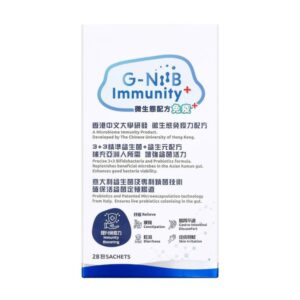
G-NiiB – Immuno+ 28 packs
Original price was: $498.00.$365.00Current price is: $365.00. Add to basket -
Sale!
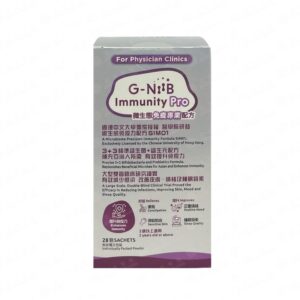
G-NiiB – Immunity Pro Immunity Pro Formula 28 packs
Original price was: $598.00.$498.00Current price is: $498.00. Add to basket -
Sale!
 Out of stock
Swisse – Ultiboost Odorless High Concentration Wild Fish Oil 1500mg 400 Capsules
Original price was: $298.00.$220.00Current price is: $220.00. Read more -
Sale!
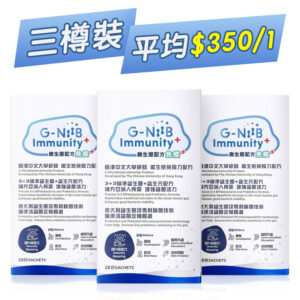
G-NiiB – Immuno+ 28 packs x 3 bottles
Original price was: $1,494.00.$1,050.00Current price is: $1,050.00. Add to basket