

































































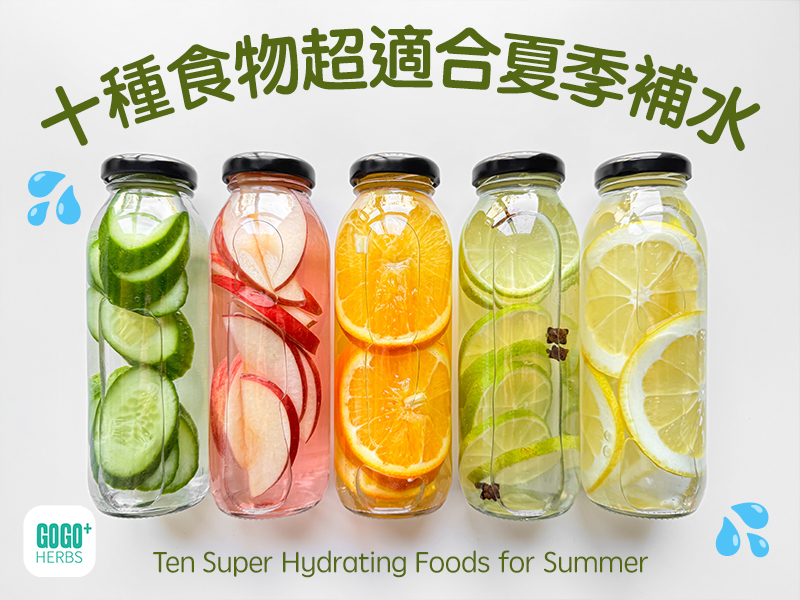
Every summer, the question of "how much water to drink a day" becomes a hot topic, with online suggestions ranging from a little over 1000 ml to 3000 ml, leaving people confused. In reality, these numbers are not absolute; ultimately, it depends on individual constitution, activity level, and health condition. More importantly,Water doesn't just come from the water in your glass—the vegetables and fruits you eat every day are also important sources of water.。
This article will first clarify the Hong Kong government's recommendations for daily liquid intake, then introduce 10 fruits and vegetables with particularly high water content, explaining their nutritional highlights and consumption tips, and finally filling in the most easily overlooked aspect:Who should pay special attention to portion sizes?This also outlines the safety limits for ingredients like star fruit. In the text, "liquid" refers to liquids such as water, tea, and broth, and "moisture content" is calculated based on the USDA FoodData Central estimate per 100 grams of edible raw portion.
This article contains
- 1. Why can't we just rely on drinking water to stay hydrated in the summer?
- II. Food is also a source of water: how much of the total daily intake does it account for?
- III. A List of 10 Fruits and Vegetables with High Water Content
- IV. Detailed Explanation: Nutritional Content, Water Content, and Consumption Tips
- V. Practical ways to stay hydrated in summer
- 6. Who should pay special attention to the portion size?
- VII. Safety Boundaries: Star Fruit and Kidney Disease Patients
- 8. Frequently Asked Questions (FAQ)
- Source of information
1. Why can't we just rely on drinking water to stay hydrated in the summer?
Water makes up a significant proportion of the human body and plays a role in regulating body temperature, transporting nutrients, and excreting waste. In hot weather and when sweating increases, insufficient water intake may lead to symptoms such as thirst, dark urine, fatigue, and dizziness.Centre for Health Protection: Take precautions against heatstroke during the hot summer months.It is pointed out that prolonged activity in high-temperature environments without timely hydration can lead to heat exhaustion and eventually heatstroke, which can be life-threatening in severe cases. The report also reminds people to "replenish fluids in a timely manner" to prevent dehydration.
So, how much should you drink in a day? The figures circulating online—"1600 ml," "2500 ml," and "3000 ml"—have various sources, but none are universally applicable. The Hong Kong government uses a more flexible approach:
- 據Department of Health Student Health Services (Diet and Nutrition)According to the recommendations of the "healthy eating pyramid", one shouldDrink 6 to 8 cups of liquid beverages daily.(Including water and clear broth, etc.).
- 據Department of Health Family Health Services: Healthy Lifestyles for Parents,One cup equals 240 millilitersThat is, approximately 1.4 to 1.9 liters of liquid per day.
Why isn't there a "standard answer"?The actual amount of fluid needed depends on factors such as weight, activity level, sweating level, temperature, and diet. During strenuous exercise, outdoor work, or hot weather, more fluid is lost, naturally increasing the need for replenishment. Conversely, some patients with heart, kidney, or liver diseases may need to restrict their fluid intake. Therefore, "adjusting as needed" is more practical than rigidly adhering to a single number.
The Centre for Health Protection also reminds the public to avoid caffeinated beverages (such as coffee and tea) and alcoholic drinks during strenuous outdoor activities, as these can accelerate fluid loss through the urinary system. If symptoms such as dizziness, headache, nausea, shortness of breath, or confusion occur, rest immediately, seek help, and consult a doctor as soon as possible. For a more comprehensive understanding of daily hydration and dehydration management, please refer to the website's [link/section].Daily hydration and drinking habits〉。
II. Food is also a source of water: how much of the total daily intake does it account for?
Many people think that hydration is the same as "drinking water," but the water in our daily diet is just as important. When discussing "total water intake" internationally, it actually includes two parts: the water contained in beverages and the water contained in the food itself.
Vegetables and fruits generally have a water content between 801 L/4T and 951 L/4T, making them a major source of water in food. It is generally estimated that...Food provides approximately 10-20% of your total daily water intake.(The proportion depends on dietary patterns), with the remainder coming from various beverages. For those who don't like to drink water or experience a decreased appetite in high temperatures, hydrating through fruits and vegetables with high water content is a practical and feasible method. Related studies also show that, estimated using cooking conversion factors, water intake from food accounts for a fixed share of total water intake (see...).This study)。
It's important to note that fruits and vegetables are good for hydration.It cannot completely replace drinking waterThese foods provide sugar, potassium, and dietary fiber, but the quantity and target foods are important. This will be discussed further in sections five and six.
III. A List of 10 Fruits and Vegetables with High Water Content
The table below is arranged from highest to lowest water content. It's worth noting that many vegetables actually have a water content that is comparable to, or even higher than, that of fruits—contrary to the intuitive notion that "fruits always have more water than vegetables."
| Ingredients | Moisture content (approximately) | Calories (approximately) | Highlights beyond water content |
|---|---|---|---|
| celery | 95.4% | 14 kcal | High in dietary fiber, folic acid, and vitamin K; extremely low in calories. |
| cucumber | 95.2% | 15 kcal | High in water content and low in calories; eating it with the skin on provides a small amount of dietary fiber. |
| White radish | 94.6% | 18 kcal | Vitamin C, dietary fiber |
| tomato | 94.5% | 18 kcal | Lycopene, Vitamin C |
| Green pepper | 93.9% | 20 kcal | High in Vitamin C |
| Cauliflower | 92.1% | 25 kcal | Plant-based ingredients such as Vitamin C and glucosinolates |
| watermelon | 91.4% | 30 kcal | Lycopene, potassium |
| broccoli | 91.4% | 23 kcal | Lutein, potassium, dietary fiber, folic acid |
| Star fruit | 91.4% | 31 kcal | Dietary fiber, vitamin C;Kidney disease patients should pay attention |
| Strawberry | 91.0% | 32 kcal | Vitamin C, folic acid |
Note: Some Chinese online sources list cucumber as having the highest water content (e.g., 96.71 TP4T), a figure slightly higher than official database data. Minor discrepancies between different databases are normal; this article uses figures from the USDA FoodData Central, and readers are advised to compare data from the same source.
IV. Detailed Explanation: Nutritional Content, Water Content, and Consumption Tips
1. Celery
Celery has a water content of approximately 95.41 TP4T and is extremely low in calories—a single celery stalk (about 40 grams) contains only about 6 kilocalories. It also provides dietary fiber, folic acid, and vitamin K, making it suitable for adding a sense of volume to dishes. To correct a common misconception: while celery helps with hydration,Not a rich source of Vitamin C(It contains only about 3 mg per 100 grams), so it's inaccurate to call it a "vitamin C vegetable." Furthermore, celery contains plant components such as apigenin, but related research is mostly in its preliminary stages, and it's inappropriate to interpret its therapeutic effects based on this.
2. Cucumber
Cucumbers contain approximately 95.21 TP4T of water and are low in calories, making them a common ingredient in summer salads and salads. It's often claimed online that cucumbers contain "malonic acid," which can inhibit the conversion of carbohydrates into fat, thus aiding in weight loss—this claim is flawed.Currently, reliable human evidence is lacking.Animal and cell studies, however, show that under specific dietary conditions, the metabolic role of malonic acid does not conform to this claim (see...).This studyTherefore, a more accurate description is that cucumbers are valuable because of their high water content, low calories, and the small amount of dietary fiber provided when eaten with the peel, rather than being a "fat-burning food."
3. White radish
White radish (Japanese variety: daikon) contains approximately 94.61 TP4T of water and about 18 kcal of energy. It is rich in vitamin C and dietary fiber, and is suitable for stewing, salads, or pickling. One correction needs to be made: the original text stated that white radish is "rich in protein," but in fact...Its protein content is extremely low.(Approximately 0.6 grams per 100 grams), insufficient as a protein source. Incidentally, white radishes have a significantly higher water content than red radishes (approximately 88.31 TP4T for red radishes).
4. Tomato
Tomatoes contain approximately 94.51 TP4T of water, are low in calories, and provide...LycopeneVitamin C and a small amount of dietary fiber. Lycopene is the most studied component of tomatoes; systematic reviews and meta-analyses have shown a positive association between tomato and lycopene intake and some cardiovascular risk indicators (see...).This integrated analysisHowever, most of these studies are observational or short-term interventions, and cannot directly conclude that "eating tomatoes can prevent diseases." In addition, tomatoes also contain lutein and zeaxanthin, but the content is much lower than that of dark green leafy vegetables, so tomatoes should not be the main source of nutrients for eye health.
5. Green bell pepper
Green bell peppers contain approximately 93.91 TP4T of water.Vegetables with a particularly high vitamin C content(Approximately 80 mg per 100 grams, higher than many fruits). There are also claims online that "green bell peppers contain silicon, which can nourish hair roots"; existing literature does mention a possible correlation between hair silicon content and hair loss and shine, but this is mostly speculative, with limited clinical evidence, and the absorption of different forms of silicon supplementation varies greatly (see...).This review(This should not be taken as an established effect.)
6. Cauliflower (Broccoli)
Cauliflower contains approximately 92.11 TP4T of water and provides plant-based components such as vitamin C, dietary fiber, and glucosinolates. Two corrections are needed: First, the original text stated that "studies have confirmed it can lower cholesterol," but the relevant evidence mostly comes from observational studies and small-scale interventional studies. A more accurate statement is that "cruciferous vegetables are among the more cardiovascular-friendly vegetables in a balanced diet," rather than a guarantee of therapeutic efficacy. Second, the main glucosinolates in cauliflower are indoles.Sulforaphane actually mainly comes from broccoli.(Especially broccoli sprouts), the two should not be confused. For a more complete understanding of cauliflower, please refer to the website's <...>Nutritional and health benefits of cauliflower〉。
7. Watermelon
Watermelon contains approximately 91.41 TP4T of water and is one of the most popular summer fruits for cooling off. It also provides lycopene and potassium. To correct a common misconception: the original text stated that "watermelon has a moderate glycemic index, so diabetics can eat it without worry"—in fact...Watermelon has a high glycemic index (GI).However, because each serving contains few carbohydrates, the glycemic load (GL) is relatively low. The key is...Control the portion size each timeTo learn about the differences between red and yellow meat varieties, and how to preserve them after cutting, please refer to the information on this website.Nutritional value, cooling properties, and food safety of watermelon〉。
8. Spinach
Spinach contains approximately 91.41 TP4T of water (which is why it releases water easily when cooked), and provides lutein, potassium, dietary fiber, and folic acid. Lutein and zeaxanthin are the main pigments in the macula of the eye, and dark green leafy vegetables are good sources of them. Furthermore, the green membrane structure (thylakoids) of spinach has been associated with increased satiety in some studies (see...).This studyThis could serve as a preliminary clue that "spinach helps control appetite," but more research is needed to confirm it.
9. Star fruit
Star fruit contains approximately 91.41 TP4T of water, is low in calories, and contains dietary fiber and vitamin C. The original article claimed that star fruit "helps improve high blood pressure and high cholesterol"—this type of statement...Lack of sufficient human evidenceIt should be revised to "a low-calorie, high-water-content fruit that can be included in a balanced diet." What really needs to be emphasized is the safety boundary: the potassium and certain components of star fruit may pose a risk to people with renal insufficiency, as detailed in Section 7.
10. Strawberry
Strawberries have a water content of approximately 91.01 TP4T.It has a very high vitamin C content.(Approximately 59 mg per 100 grams) and provides folic acid and dietary fiber, making it a delicious and nutritious choice for summer. The original text listed trace elements such as "chromium," but the USDA database does not actually list the chromium content of strawberries, so this information is not used in this article.
V. Practical ways to stay hydrated in summer
To incorporate "hydration through food" into your daily routine, you can refer to the following methods:
- Add a high-water-content vegetable to each meal.For example, stir-frying cucumbers, tomatoes, white radishes, or spinach can both replenish water and increase fiber.
- Fruit is priced per "portion"The Department of Health recommends "two plus three" daily, meaning at least two servings of fruit and three servings of vegetables per day; for example, watermelon...Half a bowl of fruit pieces is roughly equivalent to one serving.After a meal, eating three or four slices is almost enough to fill two servings.
- Water is the main source of sustenance, supplemented with fruits and vegetables.While hydrating with fruits and vegetables is a plus, it cannot replace daily drinking water; you should still carry enough fresh water when you go out.
- Avoid replacing water with sugary drinks.Hand-shaken drinks and juices often contain a lot of free sugar, so while you're getting hydration, you're also getting sugar, which is counterproductive.
- Actively replenish water before and after outdoor activities.: Don't wait until you're thirsty to drink; avoid coffee, strong tea, and alcohol when active in high temperatures.
To learn about the best combinations of summer cooling foods and their corresponding body types, please refer to the information on this website.Summer cooling and cold/heat constitution>; For further reading on the topic of edema and fluid metabolism, please refer to <Causes and Evidence of Edema〉。
6. Who should pay special attention to the portion size?
Fruits and vegetables are safe for most people to hydrate, but the following groups should pay attention to the quantity and selection:
| person | Precautions |
|---|---|
| Patients with renal insufficiency/chronic kidney disease | Potassium and some electrolytes need to be restricted. High-potassium fruits and vegetables (such as spinach, tomatoes, and star fruit) should be consumed after consulting a doctor or registered dietitian.Star fruit should be avoided(See Section 7) |
| diabetic patients | Pay attention to the sugar content and portion size of fruits. Watermelon, strawberries, and the like should be measured by "portion" and included in the overall diet plan. |
| Those who need to restrict water intake | For individuals with heart, liver, or kidney disease who need to restrict water intake, the water content of fruits and vegetables should also be included in their daily total intake, following medical advice. |
| Those taking anticoagulants (such as warfarin) | Vegetables rich in vitamin K, such as spinach, should be consumed at a stable rate, avoiding fluctuations in intake, and regular check-ups are recommended. |
| People with sensitive stomachs | Eating a large amount of raw or cold fruits and vegetables at once may cause bloating or discomfort; it is advisable to do so gradually. |
If you have a chronic illness or are taking medication, please consult your doctor or registered dietitian before adjusting your diet.
VII. Safety Boundaries: Star Fruit and Kidney Disease Patients
Star fruit is not suitable for everyone.For people with normal kidney function, moderate consumption is generally harmless; however, for those with normal kidney function...Star fruit may cause severe neurotoxicity in individuals with chronic kidney disease or renal insufficiency.Symptoms include hiccups, vomiting, dizziness, confusion, convulsions, and even status epilepticus.
This is not an isolated rumor. A global case study analyzing over 130 star fruit poisoning patients, about 70 of whom already had kidney damage, indicated that star fruit contains...oxalic acid與CaramboxinIt is a major substance that causes nephrotoxicity and neurotoxicity. Carbatoxin affects the central nervous system, and hemodialysis can improve neurotoxicity symptoms (see...).This review及This ingredient study)。
therefore:
- Patients with chronic kidney disease and those undergoing dialysis should avoid consuming star fruit and its products (including star fruit juice).。
- Even those with normal kidney function should not drink large amounts of concentrated star fruit juice on an empty stomach.
- If persistent hiccups, vomiting, dizziness, confusion, or convulsions occur after eating star fruit, you should...Seek medical attention immediatelyIn case of emergency, please call 999。
8. Frequently Asked Questions (FAQ)
1. How much water should you drink in a day during the summer?
Hong Kong officials do not have a fixed figure. The Department of Health recommends drinking 6 to 8 cups of fluids per day (1 cup is 240 ml, or about 1.4 to 1.9 liters), but the actual amount needs to be adjusted according to weight, activity level, temperature, and degree of sweating. More fluids are needed during high temperatures or exercise; some patients with heart or kidney disease may need to restrict fluid intake and should follow their medical advice.
2. Can eating fruits and vegetables with high water content replace drinking water?
Fruits and vegetables cannot completely replace water. While they are an important source of hydration, they also provide sugar, potassium, and dietary fiber, and the amount consumed should be limited. Daily hydration should primarily rely on water, with fruits and vegetables serving as a supplement.
3. Are vegetables really more "hydrating" than fruits?
Many vegetables do indeed have a water content comparable to fruits. For example, according to the U.S. Department of Agriculture, celery has a water content of approximately 95.41 TP4T, higher than watermelon's approximately 91.51 TP4T. Therefore, the impression that "fruits always have more water than vegetables" is inaccurate.
4. Can cucumbers help with "fat burning and weight loss"?
This claim lacks reliable human evidence. The value of cucumbers lies in their high water content and low calorie content; they can help increase satiety and replace high-calorie snacks, but they cannot directly "inhibit fat production." Healthy weight loss still revolves around overall diet and activity levels.
5. Watermelon is very sweet, can diabetics eat it?
You can eat it in moderation, but you should control the portion size. Watermelon has a high glycemic index, but each serving contains few carbohydrates, so the glycemic load is relatively low. The key is "how much to eat at one time"—controlling the portion size and coordinating it with your overall diet plan.
6. Why does spinach release water when stir-fried?
Because spinach has a high water content of approximately 91.41 TP4T, its cell structure loosens when heated, making it easy for water to be released. This is unrelated to its nutritional value.
7. Why should patients with kidney disease avoid eating star fruit?
Star fruit contains oxalic acid and carbamate, which are difficult for people with renal insufficiency to metabolize and excrete, potentially causing neurotoxic reactions such as hiccups, vomiting, dizziness, and convulsions. People with chronic kidney disease and those undergoing dialysis should avoid consuming star fruit and its products.
8. Can eating green peppers "nourish" your hair?
Current evidence is limited. Some literature has suggested a possible link between hair silicon content and hair loss and shine, but these are mostly speculative, and the absorption of different silicon forms varies greatly, insufficient to support the conclusion that "eating green peppers can nourish hair." The truly outstanding nutrient in green peppers is vitamin C.
9. Is cauliflower high in sulforaphane?
Not high. Sulforaphane mainly comes from broccoli (especially broccoli sprouts), while the glucosinolates in cauliflower are mainly indoles; the two should not be confused. Cauliflower is still a nutritious vegetable, but its composition needs to be accurately identified.
10. If you don't like drinking water, what methods can you use to increase your water intake?
You can approach this from three aspects: First, include high-water-content vegetables in every meal; second, eat fruit in portions (such as watermelon, strawberries, etc.); and third, keep water readily available and primarily consume water and tea, minimizing the use of sugary drinks. If you have any questions about your water intake, or if you have a medical condition that requires water restriction, you should consult a healthcare professional.
Source of information
- Department of Health Student Health Services (Diet and Nutrition)(Healthy eating pyramid; 6 to 8 cups of liquids per day)
- Department of Health Family Health Services: Healthy Lifestyles for Parents(1 cup = 240 ml; recommended serving size for each food category)
- Centre for Health Protection: Take precautions against heatstroke during the hot summer months.(Replenish fluids as needed in high temperatures; heat exhaustion and symptoms of heatstroke)
- U.S. Department of Agriculture FoodData Central(Water content and nutrients of each ingredient, per 100 grams for raw consumption)
- Tartronic acid and lipid metabolism research (Life Sciences, 2020)
- A review of silicone in skin and hair care (An Bras Dermatol, 2016)
- A review of the nephrotoxicity and neurotoxicity of star fruit (Trans R Soc Trop Med Hyg, 2021)
- Study on caramboxin, a neurotoxic component of star fruit (Angew Chem, 2013)
- A study on spinach thylakoids and satiety (Appetite, 2015)
- Synchronized analysis of tomatoes, lycopene, and cardiovascular risk factors (Atherosclerosis, 2017)
- A study on estimating food water intake using cooking conversion factors (J Food Sci, 2021)
Health Reminder:This article provides general dietary and lifestyle information and does not constitute advice for the diagnosis, treatment, or prevention of disease, nor can it replace the professional advice of a doctor or registered dietitian. Everyone's constitution, medical history, and medication use are different; actual fluid intake and dietary arrangements should be adjusted according to individual circumstances. If you have chronic diseases (especially kidney disease, heart disease, diabetes), are taking medication, or are pregnant, breastfeeding, elderly, or a child, please consult a healthcare professional before adjusting your diet. If you experience dehydration, heatstroke, or neurological symptoms after eating star fruit, seek medical attention immediately; in emergencies, call 999.
Related Products:
-
Sale!

GINAX – Ginseng Tea Bag / Ginseng White Tea Rose Tea Bag | 1bag
Original price was: $13.00.$10.00Current price is: $10.00. 選擇規格 This product has multiple variants. The options may be chosen on the product page -
Sale!

GINAX – Manuka Honey UMF™ 5+ 30g
Original price was: $30.00.$25.00Current price is: $25.00. Add to basket -
Sale!
Single 10% off】aXimed – Recovery Speed 100% Whey Protein Powder 30 sachets
Original price was: $558.00.$502.00Current price is: $502.00. Add to basket -
Sale!
Livinglean – Organic Dietary Mineral Powder 8g x 20 sachets
Original price was: $368.00.$298.00Current price is: $298.00. Add to basket
Related Post:
![眼乾食葉黃素有用嗎?」「秋冬天眼乾特別嚴重,點算?]()
What foods are good for dry eyes? The roles and selection of Omega-3, lutein, zeaxanthin, and blueberry extract.
![男士夜尿、滴滴仔:良性前列腺增生的症狀、檢查與保健品選購]()
Nocturia and dribbling in men: Symptoms, examinations, and supplemental evidence of benign prostatic hyperplasia (BPH).
![通宵一晚,血壓會升多少?]()
Staying up late and blood pressure: How much will blood pressure rise after staying up all night on Halloween? Interpreting cardiovascular risk data.
![均衡備餐與體重管理]()
Weight Management Shopping Guide: 8 Selected Probiotics, Apple Cider Vinegar, and Herbal Formulas