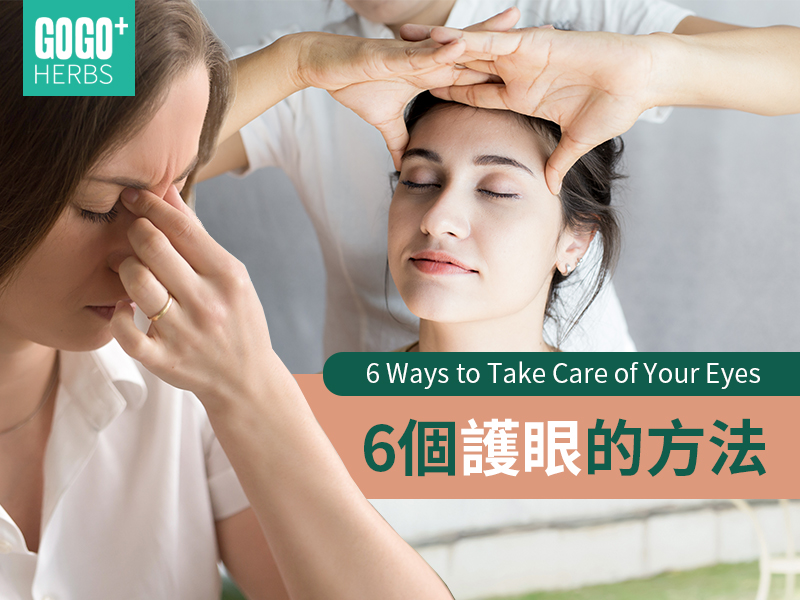
6 ways to protect your eyes: Daily strategies for dealing with prolonged screen time, dry eyes, and vision deterioration
Modern people spend long hours staring at mobile phones and computers every day, easily leading to eye discomfort such as dryness, soreness, and temporary blurred vision. Our eyes are the most direct window to the world—light travels through the cornea, pupil, and lens, finally forming an image on the retina and being transmitted to the brain via the optic nerve. With age and changes in eye habits, changes in the eyes deserve our attention early on. Gogo Herbs has compiled common eye changes for you, as well as... 6 ways to protect your eyes that you can start todayIt also explains how to choose eye-protecting nutrients and supplements.
1. How do eyes see?
After light is reflected from an object and enters the eye, it passes through several structures in sequence:cornea(The transparent layer at the very front of the eyeball, responsible for initial focusing)Iris and Pupil(Adjust the amount of light entering, like an aperture)Crystal(Adjustable focus allows us to see clearly at different distances), and finally at...retinaImage formation occurs when the retina converts light signals into neural signals, which are then transmitted to the brain via the optic nerve, allowing us to "see" an image. National Eye Institute (NEI))。
The central part of the retinamaculaThe lens is responsible for the finest central vision, which is essential for reading, seeing faces, and recognizing details; and the aging of the lens and retina is the starting point for many vision problems.
2. Common eye changes and diseases
As we age and use our eyes for extended periods, the following conditions become quite common. Most of them are related to "aging," but we shouldn't wait until certain warning signs appear.
(1) Floaters
Floaters are the appearance of black dots, lines, spider webs, or circles floating in the field of vision. NEIIt is usually caused by the aging of the vitreous humor inside the eye, where tiny fibers accumulate and cast shadows on the retina. People with high myopia, diabetes, or who have previously undergone cataract surgery are at higher risk.
Most floaters are benign and do not require special treatment; however, if the following conditions occur, you should seek medical attention as soon as possible, as they may be related to retinal tears or retinal detachment:
- A sudden surge in new casesFlying mosquitoes, sometimes accompanied by flashes of light;
- Field of vision appearsA curtain-like shadowOr a blur.
(2) Macular degeneration (AMD)
Age-related macular degeneration is the process by which the macula deteriorates with age, leading to blurred central vision. NEIAMD is divided intodry(This is relatively common; the macula thins with age, and is divided into early, middle, and late stages.)wet(Less common but progresses rapidly and is associated with abnormal angiogenesis).
- Risk factors:Those aged 55 and older, with a family history of smoking; the NEI also points out that maintaining healthy blood pressure and cholesterol, regular exercise, and eating more leafy green vegetables and fish can help reduce the risk.
- Warning:In the early stages, there are often no symptoms; in later stages of macular degeneration,Straight lines appear curved or skewedIf you experience any of the following symptoms: a blurred or blank area in the center, colors that are less vibrant, or difficulty seeing in low light, you should see an ophthalmologist as soon as possible.
- Processing direction:For wet AMD, there are medical options such as anti-vascular endothelial growth factor injections and photodynamic therapy; for intermediate AMD or late-stage AMD in one eye, doctors may recommend specific nutritional supplement formulas (see Section 4 below for details).
(3) Presbyopia
Presbyopia is caused by the hardening and decreased elasticity of the lens as we age, making it difficult for the eye to focus on near objects. NEIIt is part of normal aging, usually occurring in After age 45Symptoms gradually appear, including blurred near vision, needing to hold objects further away to see them clearly, eye fatigue, and headaches. Treatment primarily involves wearing appropriate reading glasses or contact lenses; in the early stages, enlarging the font and using a brighter reading light can also help.
(4) Lens degeneration (cataract)
Cataracts are cloudy areas in the lens of the eye, preventing light and images from reaching the retina clearly. NEICataracts are very common. Around the age of 40, the lens protein begins to change, and most people over 80 years old have cataracts or have undergone surgery.
- Common symptoms:Blurred vision or vision as if seeing through fog, colors becoming dull, difficulty seeing clearly at night, feeling that headlights or sunlight are too glaring, seeing halos, and sometimes double vision.
- Risk factors:Age, smoking, excessive alcohol consumption, diabetes, family history, eye injury or surgery, prolonged sun exposure, and use of steroid medications.
- Processing direction:In the early stages, stronger lighting, anti-glare glasses, or a new prescription can help. If it affects daily life, surgery is currently the only way to remove cataracts, but most people are not in a hurry to have surgery immediately and should discuss it with an ophthalmologist.
(5) High intraocular pressure and glaucoma
Glaucoma is a group of eye diseases that damage the optic nerve and thus affect vision. NEIMany patients are accompanied byHigh intraocular pressureTreatment to lower intraocular pressure can help slow down the damage; however, high intraocular pressure does not necessarily mean that one will develop glaucoma. There is also "normal-tension glaucoma," so a comprehensive evaluation by an ophthalmologist is necessary.
- Features:The most common type of open-angle glaucomaThere are almost no symptoms in the early stages.Therefore, about half of the patients are unaware that they have the disease; their field of vision will gradually narrow from the periphery.
- Risk factors:Age (over 60 years old, especially Latinos), age over 40 years old for African Americans, family history, and high intraocular pressure.
- Processing direction:Medication (mostly eye drops), laser treatment, or surgery aim to control intraocular pressure and protect the optic nerve. The earlier it is detected, the better the chances of preserving vision.
3. Six practical ways to protect your eyes
The following methods are mostly adjustments to "eye habits," which everyone can do and can help reduce daily discomfort. They are part of maintenance and cannot replace eye examinations and medical treatment.
Method 1: Blink consciously and follow the 20-20-20 rule.
依 American Academy of Ophthalmology (AAO)We normally blink about 15 times per minute, but when looking at a computer or mobile phone, we often only blink 5 to 7 times, causing the surface of the eyeball to become dry due to insufficient tear film lubrication. Therefore, when using electronic products, you can consciously remind yourself to blink more often.
At the same time, the methods often recommended by ophthalmologists can be used. 20-20-20 ruleEvery 20 minutes of screen use, shift your gaze to an object at least 20 feet (approximately 6 meters) away and maintain that gaze for at least 20 seconds (depending on the time spent using the screen). AAOAdditionally, the screen should be placed about an arm's length away and slightly below eye level to reduce strain on the eyes and neck.
Method 2: Improve the environment to prevent your eyes from being "dryed out".
Air-conditioned rooms, heated rooms, and dry weather all accelerate tear evaporation. NEIOne approach is to start with the environment:
- Avoid direct airflow from air conditioners or fans onto your face and eyes;
- Use a humidifier indoors to avoid excessively dry air;
- Go outdoors for a walk and breathe fresh air; when outdoors, wear cover-up sunglasses to reduce the effects of wind and dry air.
- Drink enough water (NEI recommends about 8 to 10 cups of water per day);
- When your eyes are dry, you can use artificial tears (eye drops) to soothe them. If needed, consult a pharmacist or ophthalmologist.
Method 3: Gently relax the area around your eyes; do not press on your eyeballs.
Prolonged close-range use of the eyes can cause tension in the muscles around the eyes. Adequate rest and relaxation can help relieve fatigue. The recommended approach is to...Gentle and safeAs a principle:
- First, thoroughly clean your hands;
- Close your eyes and rest, using your fingertips to...Around the orbital boneGently massage in circular motions to relax, about 5 to 10 times is sufficient;
- Rub your palms together to warm them, then gently place them on the outer sides of your closed eyes for ten seconds to help relax.
Method 4: Quit smoking and avoid secondhand smoke.
Smoking not only affects the lungs but is also associated with an increased risk of various eye diseases. According to the National Eye Institute (NEI), smoking is...Macular degeneration與cataractSmoking is one of the risk factors for eye problems; it also affects blood flow and tissue health in the eyes. Therefore, quitting smoking is an important step in protecting eyesight, and it is also important to reduce exposure to secondhand smoke.
Method 5: Protect against ultraviolet rays
依 AAOLong-term excessive exposure to ultraviolet rays can increaseCataracts, ocular surface hyperplasia (such as pterygium), corneal sunburn (photokeratitis, also known as "snow blindness")And the risk of skin cancer around the eyes. Ultraviolet rays can also be reflected by snow, sand, and water, potentially increasing in intensity (depending on...). World Health Organization (WHO)Practical methods:
- Selection Indicators 100% UV protection or UV400Sunglasses that can block both UVA and UVB rays; polarized lenses can reduce glare, but they are not the same as UV protection.
- Wearing a wide-brimmed hat, especially when paired with sunglasses, will enhance the overall look.
- The strongest ultraviolet radiation occurs from mid-morning to early afternoon. Snow, beaches, and water surfaces reflect light strongly, so extra caution should be taken when engaging in activities such as diving, skiing, and fishing.
- Clouds do not completely block ultraviolet rays, so it is still advisable to take precautions when going out on cloudy days; children and the elderly need to take precautions as well.
Method 6: Sufficient sleep and regular sleep schedule
Sleep is the time for the eyes to rest and repair. According to the NEI, people with dry eyes can pay attention to sleeping about 10 minutes each night. 7 to 8 hoursGet enough sleep and stay hydrated. Irregular sleep patterns and chronic sleep deprivation can easily lead to drier and more tired eyes, and often this is accompanied by increased screen time, creating a vicious cycle. Managing both sleep and screen time is an easily overlooked yet very practical aspect of eye care.
4. How to choose eye-protecting nutrients and supplements?
Eye health is closely related to daily nutrition. A balanced diet, rich in fruits, vegetables, and fish, is the foundation of eye care (according to NEI). The following categories of nutrients are frequently discussed in relation to eye health:
| Nutrients | Relationship with eye health | Examples of food sources |
|---|---|---|
| Lutein, Zeaxanthin | These are carotenoids found in the macula; NEI's AREDS 2 formula contains 10 mg of lutein and 2 mg of zeaxanthin, studies have shown...Intermediate macular degenerationCentral vision loss is less common after taking this medication. | Dark green leafy vegetables such as spinach and kale, corn, and egg yolks |
| Vitamins C, E, Zinc, and Copper | The same ingredients in the AREDS 2 formula (Vitamin C 500 mg, Vitamin E 400 IU, Zinc 80 mg, Copper 2 mg) are associated with slowing the progression of macular degeneration. | Citrus fruits, nuts, seeds, whole grains, seafood |
| Omega-3 (EPA/DHA) | DHA is an important structural component of the retina; a sufficient intake of Omega-3 in the diet is associated with eye health, and some studies have also explored its benefits in relieving dry eye. | Oily fish such as salmon, mackerel, and sardines; walnuts and flaxseeds. |
| Vitamin A | Vitamin A is necessary to maintain normal corneal and retinal function; the NEI indicates that insufficient vitamin A intake is one of the contributing factors to dry eye. | Carrots, sweet potatoes, pumpkins, dark green leafy vegetables, liver |
- 依 NEIThe research object of AREDS 2 formulation isMid-stage macular degeneration or late-stage unilateral macular degenerationThe purpose of this treatment is to slow down the progression of macular degeneration, not for everyone, and it cannot prevent early macular degeneration from becoming intermediate.
- The dosage of the formula is too high, which may affect the effects of other medications. It is advisable to consult a doctor or pharmacist before taking it.
- The old-style AREDS formula contains beta-carotene, which may increase the risk of lung cancer in smokers or former smokers;Smokers should choose the AREDS 2 formula which does not contain beta-carotene.(According to NEI).
- Supplements are for daily nutritional purposes and cannot replace eye examinations, diagnosis, or medical treatment.
5. In what situations should you see a doctor as soon as possible?
The following situations should not be observed or waited for on your own; you should seek medical attention as soon as possible (according to NEI and AAO):
- A large number of new flying mosquitoes suddenly appearedIf accompanied by flashes of light or curtain-like shadows in the visual field, it may be related to a retinal tear or retinal detachment and requires immediate treatment.
- Severe eye pain, nausea, red eyes, blurred visionThe simultaneous appearance of these symptoms may indicate acute angle-closure glaucoma, which is an emergency and requires immediate medical attention or a trip to the emergency room.
- Straight lines appear curvedIf your central vision becomes blurred or blank, see an ophthalmologist as soon as possible to assess the condition of your macula.
- Sudden decrease in vision, visual field defects, persistent redness, swelling and pain in the eyes, photophobia and excessive tearing;
- If eye discomfort persists for several days without improvement, it may affect daily activities such as reading and driving.
In addition, even without obvious symptoms, it is recommended to have regular eye exams; the NEI recommends that people over 60 years of age have a cycloplegic refraction test every one to two years in order to detect problems such as cataracts, macular degeneration and glaucoma early.
6. gogoHerbs Eye Care Product Recommendations
If you find it difficult to obtain enough eye-protecting nutrients from your daily diet, or if you want to take extra precautions for eye care, you may consider the following formula. Before purchasing, please consult your doctor or pharmacist if you are taking medication, have a chronic illness, are pregnant, or are breastfeeding.

For more information on eye care and nutritional supplements, please visit [website address]. gogoHerbs Online Health Products StoreAlternatively, you can consult our team of health advisors online.
7. Frequently Asked Questions (FAQ)
Can prolonged screen time damage the retina and cause permanent harm?
依 AAOProlonged use of computers or mobile phones can cause eye discomfort (dryness, soreness, temporary blurred vision), butIt will not cause permanent damage.It won't "damage your eyes." What you really need to pay attention to are your eye habits: blink more often, take regular breaks, and adjust the screen distance and lighting.
What is the 20-20-20 rule?
This refers to shifting your gaze to an object at least 20 feet (about 6 meters) away for at least 20 seconds every 20 minutes of screen use (according to AAO). This habit helps relax focusing muscles and reduce eye strain.
Can taking lutein prevent macular degeneration?
依 NEIThe AREDS 2 formula, containing lutein and zeaxanthin, has been shown in studies to have beneficial effects on...Intermediate macular degenerationIt can help slow down vision loss in people with advanced unilateral vision loss, and may help protect the other eye in those with advanced unilateral vision loss; however, itIt cannot prevent early macular degeneration from progressing to intermediate macular degeneration.Whether supplementation is needed and which formula to use should be consulted with an ophthalmologist first.
Does high intraocular pressure always mean glaucoma?
Not necessarily. According to the NEI, glaucoma is damage to the optic nerve, and many patients also have high intraocular pressure. However, high intraocular pressure does not necessarily mean that the disease is present; normal-tension glaucoma also exists. Because open-angle glaucoma is almost asymptomatic in its early stages, regular eye examinations are extremely important.
Does floater syndrome require treatment?
Most floaters are benign, caused by age-related vitreous degeneration, and usually do not require special treatment. However, if...A sudden surge in the number of floating mosquitoesIf accompanied by flashes of light or curtain-like shadows in the field of vision, it may be a retinal tear or detachment, and you should seek medical attention immediately.
Is it necessary to buy blue light blocking glasses?
According to the American Academy of Sciences (AAO), screen fatigue primarily stems from prolonged close-up work and reduced blinking, rather than damage caused by blue light itself. The key is to take breaks regularly, maintain proper distance, and adjust ambient lighting. If you have presbyopia or myopia, wearing appropriate computer glasses (for mid-range focusing) may further reduce eye strain; you can discuss this with an ophthalmologist.
What can be done about vision decline in the elderly?
There are three main approaches: First, have regular eye exams, especially for those over 60, who should have a dilated eye exam every one to two years; second, take daily precautions (avoiding ultraviolet radiation, quitting smoking, and controlling blood pressure and blood sugar); and third, supplement your diet with eye-protecting nutrients and consider appropriate supplement formulas under the guidance of a doctor. If you experience sudden changes in vision, visual field defects, or severe eye pain, seek medical attention immediately.
8. Sources of information
- National Eye Institute (NEI)— Floaters
- NEI — Age-Related Macular Degeneration
- NEI — AREDS 2 Supplements for AMD (Eye Health Formula)
- NEI — Presbyopia (old age)
- NEI — Cataracts
- NEI — Glaucoma
- NEI — Dry Eye
- American Academy of Ophthalmology (AAO)— Computers, Digital Devices, and Eye Strain
- AAO — Eye Strain and Sleepy Eyes (including the 20-20-20 rule)
- AAO — The Sun, UV Light and Your Eyes
- World Health Organization (WHO)— Radiation: Ultraviolet (UV) radiation
This article is for health information sharing and does not constitute any diagnosis, treatment, or medical advice, nor can it replace the assessment of an ophthalmologist or other professional medical personnel. If you experience eye discomfort, sudden changes in vision, or any of the above warning signs, please seek medical attention as soon as possible. Any nutritional supplements are for daily health maintenance and are not medications; if you are taking medication, have a chronic illness, are pregnant, or are breastfeeding, please consult a doctor or pharmacist before taking any supplements.
Related Post:
![母親用滴管把少量植物藻油滴在食物匙上,幼兒坐在餐桌旁]()
A Complete Guide to Plant-Based Algae Oil Omega-3: Odorless, Vegetarian, and Suitable Omega-3 Choices for Pregnant Women and Infants
![牛樟芝子實體與膠囊製品示意]()
What is Antrodia camphorata? A complete guide to its ingredients, research evidence, and precautions for consumption.
![世界心臟日護心飲食場景,香港中年夫婦享用豆漿、豆腐、雞蛋與堅果,旁有心臟及細胞膜卡通示意]()
World Heart Day: Heart Health in Hong Kong Starts with Daily Life | What are the Benefits of Lecithin? Which of Three 1200mg Products to Choose From?
![香港關節健康洞察報告封面:中年及長者在香港步行]()
How to choose joint health supplements? 8 best-selling formulas and repurchase information help you find the right daily option.