





















































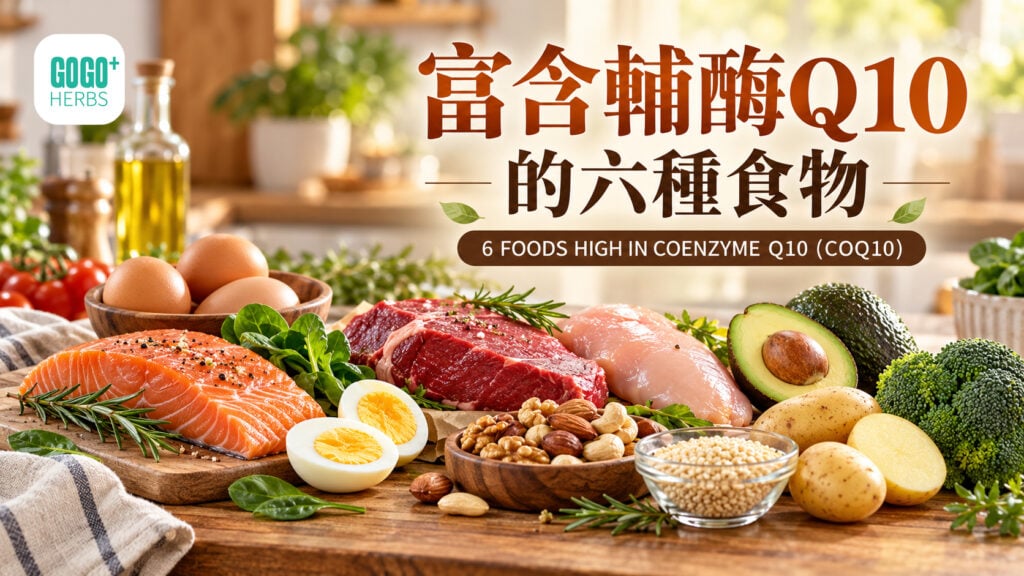
Coenzyme Q10 (CoQ10) is a fat-soluble compound synthesized by the body itself. It is mainly located in the mitochondrial membrane of cells and participates in the production of energy (ATP). It is also one of the antioxidants in cells. Organs with high metabolic rates, such as the heart, liver, and kidneys, have particularly high concentrations of it.
But when many people search for "coenzyme Q10 foods," they are actually thinking about something else entirely:Is it possible to get enough coenzyme Q10 through diet alone?The answer is more complex than most articles suggest—foods do contain it, but the amount is far less than that found in supplements.
This article lists the actual content (in milligrams per 100 grams) of six types of food, corrects three widely circulated claims, and finally explains the safety issues that really need attention—especially for people taking blood thinning medication.
This article contains
1. What is Coenzyme Q10? How much should I consume daily?
Coenzyme Q10 is not a vitamin; the body can produce it itself, therefore...There is no internationally established recommended daily intake for it.(Unlike vitamin C or calcium, which have specific numerical values). It is found in food, with higher concentrations in meat, fish, offal, and some vegetable oils.
Published dietary surveys show thatThe recommended daily dietary intake for most adults is approximately 3 to 6 milligrams.Moreover, about half of it is the reduced form (ubiquinol). This figure is several times higher than the 100 mg or 200 mg tablets of supplements on the market—this is key to understanding the entire article.PMID 20301015)。
The body's ability to synthesize coenzyme Q10 declines with age, and tissue concentrations also change. Therefore, older people and those who take certain medications long-term may have lower levels of coenzyme Q10 in their bodies. However, "lower levels" does not mean "need to take supplements," which will be discussed further in Section 4.
II. Actual content of six food categories
The following values are based onper 100 grams of edible portionCalculations compiled from a food composition review. Please note:The content of the same food can vary several times depending on its origin, part of the animal, and feeding method.Therefore, the table often uses range representations and should not be treated as exact values.
1. Meat and Offal
| food | Coenzyme Q10 (mg/100g) |
|---|---|
| Beef heart | Approximately 11.3 |
| pig heart | 1.2 to 12.8 (a huge difference) |
| Chicken Heart | Approximately 9.2 (up to 19.2) |
| Chicken Liver | Approximately 11.6 |
| Beef liver | 3.9 to 5.1 |
| pig liver | 2.3 to 5.4 |
| Beef (general cut) | 2.6 to 4.0 |
| Chicken Breast | 0.8 to 1.7 |
| Chicken thigh meat | Approximately 2.4 |
Offal is the most concentrated source of dietary coenzyme Q10, which is related to the high energy requirements of offal itself. However, offal also contains high levels of cholesterol and purines, so people with gout or high blood lipids should not consume large amounts of it in order to obtain coenzyme Q10.
2. Fish and Seafood
| food | Coenzyme Q10 (mg/100g) |
|---|---|
| Mackerel (red flesh) | Approximately 6.8 |
| Mackerel (white flesh) | 1.1 to 1.6 |
| Sardine | 0.5 to 6.4 |
| Herring | 1.1 to 1.6 |
| tuna (loanword) | Approximately 0.5 to 0.6 |
| salmon (loanword) | 0.4 to 0.8 |
| flounder | 0.2 to 0.6 |
Among fish,The difference between "red-fleshed fish" and "white-fleshed fish" is obvious.—The red flesh of mackerel can contain four to six times more protein than the white flesh. While salmon is rich in oil, its coenzyme Q10 content is actually relatively low, which is a common misconception.
3. Vegetable oil
| oils | Coenzyme Q10 (mg/100g) |
|---|---|
| soybean oil | 5.4 to 28 |
| olive oil | 4.0 to 16 |
| Rapeseed oil (canola oil) | 6.4 to 7.3 |
| Grapeseed oil | 6.4 to 7.3 |
| Sunflower seed oil | 0.4 to 1.5 |
Vegetable oils have the highest content of fatty acids among non-animal foods, but it's important to note that "mg/100g oil" does not equal "the amount consumed in one meal." One tablespoon of oil contains approximately 14 grams of fat; even using soybean oil, which has the highest content, one tablespoon only contains about 1 to 4 milligrams. For information on the fatty acid composition of different edible oils, please refer to the website.How to Choose Cooking Oils? The Roles of Omega-3, 6, and 9 and Flaxseed Oil。
4. Nuts and Seeds
| food | Coenzyme Q10 (mg/100g) |
|---|---|
| peanuts | Approximately 2.7 |
| Sesame | 1.8 to 2.3 |
| pistachio | Approximately 2.0 |
| walnut | Approximately 1.9 |
| hazelnuts | Approximately 1.7 |
| apricot kernel | 0.5 to 1.4 |
5. Soybeans and soy products
Whole soybeans (cooked) approximately 1.2 mg/100 gHowever, processing reduces the content—about 0.3 mg in tofu and about 0.25 mg in soy milk. In other words,Soy milk is almost not a source of Coenzyme Q10.Even though it also provides high-quality protein.
6. Vegetables
Vegetables had the lowest overall content, but there were still differences:
- Parsley0.8 to 2.6 mg/100g, the highest among vegetables.
- PerillaIt belongs to the same category as Cuscuta, with a relatively high content.
- broccoliApproximately 1.0 mg or less
- Broccoli0.6 to 0.9 mg
- Cauliflower0.2 to 0.7 mg
- Cabbage0.2 to 0.5 mg
How do I read this table?Don't just look at "which one is the highest", look at...Actual serving size100 grams of parsley is about a handful, which most people wouldn't eat in one meal; in contrast, 100 grams of beef heart or mackerel is a normal serving and easier to achieve. The content label is just a starting point; the quantity is the key.
III. Three Common Misconceptions
Misconception 1: "The human body needs 500 mg of coenzyme Q10 daily."
This is wrong, and very wrong.There is no recommended daily intake for Coenzyme Q10.The average person obtains about 3 to 6 milligrams from their diet, and the body also synthesizes some. 500 milligrams is...Some supplements or dosages used in clinical studiesThis is not the "daily requirement". Confusing the two can lead people to believe that their daily diet is "severely deficient" and thus over-supplement.
Misconception 2: "A cow's heart contains 12 milligrams."
This confuses "per 100 grams" with "a whole heart." A cow's heart typically weighs over 1 kilogram; extrapolating from 11.3 milligrams per 100 grams, a whole heart would contain over 100 milligrams. Similarly, the figure for "reindeer meat having the highest content" is...157 mg per kilogramThat is, approximately 15.7 mg per 100 grams, not "158 mg per serving".
A single misplaced unit can lead to a tenfold difference in the conclusion. Before seeing any claim that "food X contains X mg of coenzyme Q10," ask yourself:Is it per 100 grams, per kilogram, or per serving?
Myth 3: "Deep-frying is the worst cooking method, but the difference isn't that big."
Coenzyme Q10 is a fat-soluble substance, and cooking can indeed affect its content.Deep-frying can reduce the amount of coenzyme Q10 in food by approximately 141 TP4T to 321 TP4T.Boiling will cause some of the liquid to dissolve into the broth, resulting in a significant loss if the broth is discarded. In contrast, steaming, stir-frying, and eating the food with the broth retain more liquid.
IV. Is food alone enough?
Let's start with the numbers. To get 100 mg of Coenzyme Q10 from food (equivalent to the amount in one common supplement), you would need approximately:
| food | Required serving size (approximately) |
|---|---|
| Beef heart | Approximately 900 grams |
| Chicken Liver | Approximately 860 grams |
| Mackerel (red flesh) | Approximately 1.5 kg |
| peanuts | Approximately 3.7 kg |
| Broccoli | 11 kg or more |
It is obvious thatReaching the required supplement dosage through daily diet is unrealistic.Moreover, the accompanying burden of calories, fat, cholesterol, and purines comes at a health cost. Conversely, the 3 to 6 milligrams provided by a daily diet, plus the body's own synthesis, are usually sufficient for healthy adults to meet their basic physiological needs.
So, what is the role of food? It is...Put Coenzyme Q10 back into your overall dietEating fish provides Omega-3 fatty acids, eating organ meats provides iron and vitamin B12, and eating nuts provides unsaturated fats. Consuming large amounts of a single food group for the sake of a single component is usually counterproductive.


What is the function of coenzyme Q10 itself?
Its physiological role is quite clear:Electron transport in the mitochondrial electron transport chain, assisting in ATP productionIt acts as an antioxidant in its reduced form. These mechanisms are undisputed at the biochemical level. As for whether it helps with disease after consumption, that needs to be considered separately:
- Heart HealthSome studies have explored the relationship between heart failure and post-cardiac surgery, but the overall conclusions are inconsistent, and more high-quality research is needed.NCCIH)。
- MigraineA 2021 meta-analysis (6 randomized controlled trials, 371 participants) found that coenzyme Q10 failed to significantly reduce headaches.Severity,butThe duration and frequency of attacks have improved.(PMID 33402403)。
- Blood pressure, blood sugarThe results of existing reviews are inconsistent and cannot be considered as a method for controlling blood pressure or blood sugar.
- Statin-related muscle painThe research results generally do not support treating this problem with coenzyme Q10.
in other words:Coenzyme Q10 is necessary for the body to function properly, but "supplementing" and "treating diseases" are two different things.If you are seeking treatment for a medical condition, you should be evaluated by a doctor, rather than relying on adjusting your diet with coenzyme Q10.
V. The most practical way to eat: five methods
1. Eat fish two to three times a week, choosing red-fleshed fish.
Mackerel, sardines, and herring are all red-fleshed fish, rich in coenzyme Q10 and Omega-3; they also meet the general recommendations for eating fish per week. Canned sardines and canned mackerel are convenient and inexpensive options; pay attention to the sodium content when choosing canned or canned fish.
2. Offal should be eaten occasionally, but not as a primary source of nutrition.
Beef heart and chicken liver are high in purines, but they are also high in cholesterol and purines. People with gout, high cholesterol, or those taking anticoagulants should consult a doctor or nutritionist before deciding on the frequency. A reasonable serving size is about 50 to 100 grams once or twice a week.
3. Eat with a meal containing fat.
Coenzyme Q10 is fat-soluble, so it is better absorbed when eaten with fatty foods. This is why cooking with oil (rather than boiling and draining) helps retain and absorb it better—but the oil temperature should not be too high, and frying should be avoided.
4. Use oils in rotation; don't rely on just one type.
Soybean oil, olive oil, and rapeseed oil all contain coenzyme Q10, but their fatty acid ratios differ. Alternating between them is more in line with the principles of a balanced diet than using only one type for a long period.
5. Don't replace a doctor with "food".
If you are taking prescription medications or have been diagnosed with cardiovascular disease or diabetes, dietary adjustments should be considered in conjunction with your treatment plan, rather than trying to "replace" your medication with a certain food.
A holistic approach to heart health (including diet, exercise, and smoking cessation) is also available on this site for reference.6 Tips for a Healthy HeartFor details on the relationship between Coenzyme Q10 and cardiovascular disease, and key points for choosing supplements, please see [link to relevant information].<Coenzyme Q10 and Cardiovascular Health: Can Supplements Prevent Heart Problems?>。
VI. Safety and Drug Interactions
Coenzyme Q10 is generally well tolerated, with no serious adverse reactions reported in large studies; more common mild reactions includeInsomnia and gastrointestinal discomfort(Nausea, diarrhea, stomach upset). What you really need to be concerned about isn't the side effects, but...Drug interactions。
| Condition | Why should we pay attention? | suggestion |
|---|---|---|
| Taking blood thinning medications (such as warfarin) | The structure of coenzyme Q10 is similar to that of vitamin K.It may weaken the anticoagulant effect of warfarin.The NCCIH explicitly states that the two may interact. | You must consult a doctor before taking it.It may be necessary to monitor INR using encryption; do not adjust the INR value yourself. |
| Diabetes and the use of insulin | NCCIH refers to the possibility that coenzyme Q10 may interact with insulin. | Consult a doctor first and increase blood sugar monitoring. |
| Received cancer treatment | May be incompatible with some cancer treatments | You must inform the oncologist first. |
| Preparing to undergo surgery | Medications that may affect blood clotting and blood pressure | Inform the doctor and anesthesiologist before surgery. |
| Pregnancy or breastfeeding | Insufficient long-term safety data | Consult your doctor before taking supplements; there are no special restrictions on obtaining them from food. |
| child | It is generally not recommended to take Coenzyme Q10 supplements on your own. | If necessary, an assessment by a pediatrician will be conducted. |
People who are taking blood thinning medication should pay special attention.This section is not "off-topic"—many people believe that "natural foods" will not affect medications, but Coenzyme Q10 is one of the few exceptions.It will interact with warfarinOne of the substances. If you are taking warfarin,Significant changes to your diet's coenzyme Q10 intake (such as suddenly eating large amounts of organ meats every day) should be discussed with your doctor first.Adjust the monitoring frequency if necessary.
VII. Frequently Asked Questions
Can you get enough Coenzyme Q10 through diet alone?
For healthy adults, a daily diet provides about 3 to 6 milligrams, which, combined with the body's own synthesis, is generally sufficient to meet basic physiological needs. However, if the goal is to reach the dosage of supplements or clinical studies (100 to 300 milligrams), diet alone is not realistic—it would require eating nearly 1 kilogram of beef heart or 1.5 kilograms of mackerel to be equivalent to one 100-milligram supplement.
Which foods have the highest content?
On a per 100-gram basis, the highest amounts are found in offal (beef heart approximately 11.3 mg, chicken liver approximately 11.6 mg, and chicken heart approximately 9.2 mg), followed by red-fleshed fish (mackerel red flesh approximately 6.8 mg) and vegetable oils (soybean oil 5.4 to 28 mg). Common cuts of meat, nuts, and vegetables have significantly lower content.
Why do different articles state vastly different nutritional contents for the same food?
Because origin, breed, cut, feeding method, and analytical method can all affect the results. For example, literature values for pig heart range from 1.2 mg to 12.8 mg per 100 grams. Therefore, content tables should be viewed as indicating "which category is higher" and "approximate range," and should not be used as precise values.
Does salmon contain coenzyme Q10?
It contains Omega-3, but in low amounts, about 0.4 to 0.8 mg per 100 grams, much less than mackerel red meat. The nutritional value of salmon lies primarily in Omega-3, not Coenzyme Q10. Similarly, oysters, shrimp, scallops, and other seafood also have low levels of Coenzyme Q10.
Are vegetables useless?
Vegetables generally have the lowest overall content of coenzyme Q10, but this shouldn't be ignored. Parsley, perilla, spinach, and broccoli all contain some, and vegetables provide nutrients beyond coenzyme Q10, such as dietary fiber, folic acid, and potassium. Eating large amounts of parsley solely for coenzyme Q10 would be counterproductive.
Does deep-frying destroy coenzyme Q10?
Yes. Studies show that frying can reduce the amount of coenzyme Q10 in food by about 141 TP4T to 321 TP4T. Boiling will cause some to dissolve into the broth, and if the broth is discarded, a significant amount will be lost. Steaming, stir-frying, and eating with the broth result in a relatively higher retention rate.
I'm currently taking medication to thin my blood. Can I eat more foods containing coenzyme Q10?
You should consult a doctor first. Coenzyme Q10 has a structure similar to vitamin K, which may weaken the anticoagulant effect of warfarin. The amount in your daily diet (3 to 6 mg) generally has a limited effect, but if you suddenly increase it significantly (e.g., by eating a lot of organ meats every day) or start taking supplements at the same time, you should inform your doctor and monitor your INR as needed.
Where can vegetarians get coenzyme Q10?
It mainly comes from vegetable oils (soybean oil, olive oil, rapeseed oil), nuts and seeds (peanuts, sesame seeds, pistachios), soy products, and some vegetables (coriander, spinach, broccoli). Overall intake is usually lower than for omnivores, but healthy adults can generally still get enough through their bodies' synthesis. If considering supplements, it is recommended to consult a doctor or registered dietitian first.
As we get older, is it necessary to take supplements?
Not necessarily. The body's ability to synthesize nutrients declines with age, but "decline" does not equate to "deficiency," nor does it mean everyone needs supplements. A more practical approach is to first examine overall diet and exercise habits; if you have cardiovascular disease, are taking statins or blood thinners, you should have your doctor assess whether you need them, rather than buying them on your own.
VIII. Data Sources
international authoritative organizations
- The National Center for Complementary and Integrative Health (NCCIH):Coenzyme Q10(Physiological role, research findings, safety and interaction with warfarin/insulin/cancer treatment)
- Department of Health Student Health Services:<Diet and Nutrition>(Local recommendations for a balanced diet and adequate fruit and vegetable portions)
Research literature (titles, journals, and years have been verified one by one)
- Pravst I, Žmitek K, Žmitek J. Coenzyme Q10 contents in foods and fortification strategies. Crit Rev Food Sci Nutr. 2010;50(4):269-280. PMID 20301015(Estimated daily intake of 3 to 6 mg for various foods)
- Berger MM, et al. ESPEN micronutrient guideline. Clin Nutr. 2022;41(6):1357-1424. PMID 35365361(Micronutrient guidelines, including principles for the absorption and supplementation of coenzyme Q10)
- Coenzyme Q10 supplementation for prophylaxis in adult patients with migraine—a meta-analysis. BMJ Open. 2021;11(1):e039358. PMID 33402403(6 randomized controlled trials, 371 participants)
Health Declaration:This article is for health education purposes only and does not constitute medical advice, nor can it replace a doctor's diagnosis and treatment. The coenzyme Q10 content in food varies significantly depending on origin, variety, cut of meat, and cooking method. The figures in the table are for reference only and should not be considered precise values. Coenzyme Q10 is not a drug and cannot diagnose, treat, or prevent any disease, nor should it replace a balanced diet, exercise, or a doctor's prescription. Individuals taking blood thinning medications (such as warfarin), blood sugar lowering medications, or undergoing cancer treatment, as well as pregnant women, breastfeeding women, and children, should consult a doctor or registered pharmacist before changing their diet or taking any supplements. If you experience chest pain, palpitations, persistent headaches, or other discomfort, seek medical attention immediately; in emergencies, call 999.
Related Products:
-
Sale!
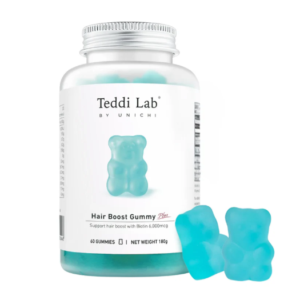
Unichi – Teddi Lab® Gummy Bears Gummy Bears for Hair Growth Upgraded Sea Salt and Green Titanium Flavour 60 Capsules
Original price was: $170.00.$125.00Current price is: $125.00. Add to basket -
Sale!
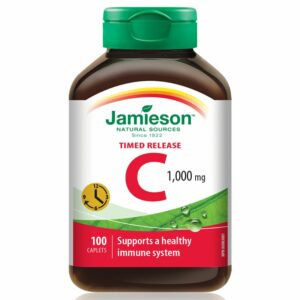
Jamieson – Long Lasting Vitamin C 1000mg 100 Tablets
Original price was: $138.00.$108.00Current price is: $108.00. Add to basket -
Sale!
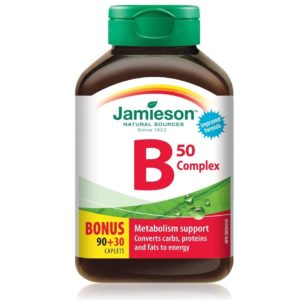
Jamieson – Natural Vitamins B complex 50 120 capsules
Original price was: $168.00.$98.00Current price is: $98.00. Add to basket -
Related Post:
![眼乾食葉黃素有用嗎?」「秋冬天眼乾特別嚴重,點算?]()
What foods are good for dry eyes? The roles and selection of Omega-3, lutein, zeaxanthin, and blueberry extract.
![男士夜尿、滴滴仔:良性前列腺增生的症狀、檢查與保健品選購]()
Nocturia and dribbling in men: Symptoms, examinations, and supplemental evidence of benign prostatic hyperplasia (BPH).
![通宵一晚,血壓會升多少?]()
Staying up late and blood pressure: How much will blood pressure rise after staying up all night on Halloween? Interpreting cardiovascular risk data.
![均衡備餐與體重管理]()
Weight Management Shopping Guide: 8 Selected Probiotics, Apple Cider Vinegar, and Herbal Formulas