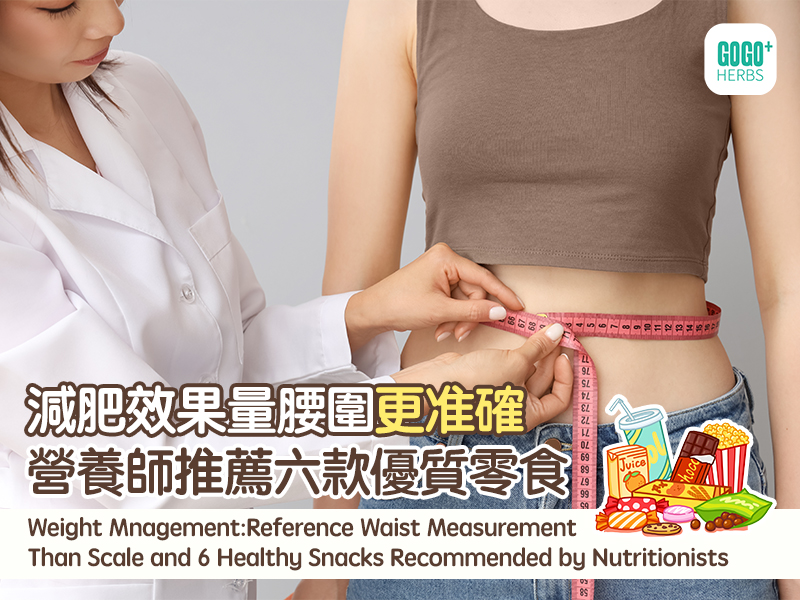
How to measure weight loss results? Waist circumference is a better indicator of metabolic risk than weight.
Many people weigh themselves every day when trying to lose weight, and feel discouraged when the number goes up. But weight is actually a very rough indicator—it adds up all weight and can't distinguish between fat, muscle, and water. For people who exercise regularly, weight gain is often due to muscle gain; while the fat that is truly associated with the risk of chronic diseases, especially visceral fat stored in the abdominal cavity, cannot be measured on the scale at all.
Therefore, experts generally recommend that instead of focusing solely on weight, one should also pay attention to other factors.waistlineThis article will explain why waist circumference better reflects metabolic risk, what the five indicators of metabolic syndrome are, what standards Hong Kong uses, how to correctly measure waist circumference and waist-to-hip ratio, and how to choose snacks during weight loss.
First, the conclusion: Why waist circumference is a better indicator of risk than weight.
II. What does waist circumference measure? Visceral fat and central obesity.
III. Metabolic Syndrome: Five indicators; exceeding three of them constitutes a diagnosis.
IV. Waist Circumference Standards and Current Status in Hong Kong
V. How to correctly measure waist circumference, hip circumference, and waist-to-hip ratio
VI. How to improve an excessive waist circumference?
VII. How to choose snacks during weight loss
8. Frequently Asked Questions (FAQ)
Source of information
First, the conclusion: Why waist circumference is a better indicator of risk than weight.
Weight, body mass index (BMI), and waist circumference reflect three different things:
| index | What does it reflect? | Limitations |
|---|---|---|
| Weight | Total body weight | The inability to distinguish between fat and muscle can be affected by water content, diet, and time. |
| BMI | weight to height ratio | Similarly, it's difficult to distinguish between muscle and fat; people with high muscle mass may be misdiagnosed as "overweight". |
| waistline | Abdominal fat, especiallyVisceral fat | Due to the influence of measurement position and posture, measurement must be performed according to standard methods. |
The key point is:Even if your BMI is within the normal range, an excessive waist circumference still indicates a higher metabolic risk.The Hong Kong Department of Health explicitly stated that, for Chinese adults,Regardless of BMIMen should keep their waist circumference below 90 cm and women below 80 cm. This situation of "normal weight but excessive waist circumference" is sometimes described as "thin outside, fat inside"—they are not fat on the outside, but have a lot of visceral fat.
The relationship between waist circumference and risk is supported by concrete data: epidemiological studies show that...For every 10 centimeters increase in waist circumference, the risk of all-cause mortality increases by approximately 11%.;For every 0.1 increase in waist-to-hip ratio, the risk of death increases by approximately 201 TP4T.This is why measuring your waist circumference is a simple yet valuable self-assessment method.
II. What does waist circumference measure? Visceral fat and central obesity.
Abdominal fat can be broadly divided into two categories:
- Subcutaneous fat:Located under the skin, it can be pinched and mainly affects appearance.
- Visceral fat:It is hidden deep in the abdominal cavity, surrounding organs such as the liver, pancreas, and intestines, and cannot be pinched.
Waist circumference is important because it is related to the amount of visceral fat, andVisceral fat is the type of fat most closely associated with the risk of chronic diseases.It is not simply an energy storehouse, but an active tissue that releases free fatty acids and inflammatory factors, affecting insulin sensitivity, blood lipids, and blood pressure, creating a vicious cycle of "metabolic dysfunction."
In medicine, "Central obesityThe term "belly fat" (also known as "abdominal obesity") is used to describe excessive fat accumulation in the abdomen. A common body type metaphor is:
- Apple-shaped (central obesity):Fat concentrated in the abdomen and around internal organs is associated with increased cardiovascular and metabolic risk.
- Pear shape:Fat concentrated in the hips and thighs carries a relatively lower risk.
The Hong Kong Department of Health pointed out that central obesity is associated with an increased risk of various chronic diseases, including cardiovascular diseases (such as hypertension and coronary heart disease), stroke, type 2 diabetes, non-alcoholic fatty liver disease, and some cancers (such as colorectal cancer, pancreatic cancer, and postmenopausal breast cancer).
III. Metabolic Syndrome: Five indicators; exceeding three of them constitutes a diagnosis.
When abdominal obesity, high blood pressure, high blood sugar, and abnormal blood lipids occur simultaneously, it is medically termed "abdominal obesity, high blood pressure, high blood sugar, and abnormal blood lipids."Metabolic syndrome"(Commonly known as "metabolic syndrome" in Taiwan) It is not a single disease, but a group of interconnected cardiovascular risk factors. It usually has no obvious symptoms and is only discovered through examination.
Currently, Hong Kong and other Asian regions generally adopt standards designed for Asians. Among the following five indicators,If three or more of these criteria are met, a person is diagnosed with metabolic syndrome.:
| index | Threshold (Applicable to Asia/Hong Kong) |
|---|---|
| Central obesity | Men's waist circumference ≥ 90 cm; women's waist circumference ≥ 80 cm |
| High triglycerides | ≥ 1.7 mmol/L (or currently receiving relevant treatment) |
| Low levels of high-density lipoprotein cholesterol (good cholesterol) | Male < 1.0 mmol/L; female < 1.3 mmol/L (or currently receiving relevant treatment) |
| High blood pressure | systolic blood pressure ≥ 130 mmHg or diastolic blood pressure ≥ 85 mmHg (or diagnosed with hypertension and receiving treatment) |
| High fasting blood sugar | ≥ 5.6 mmol/L (or diagnosed with type 2 diabetes) |
It needs to be emphasized that,Of these five items, waist circumference is the only one that can be measured at home.The other four items require blood pressure monitoring or blood tests. Therefore, waist circumference is often regarded as the first "sentinel" of metabolic health.
Regarding the level of risk, large-scale studies have found that people with metabolic syndrome have approximately the same risk of developing coronary heart disease and stroke as the general population. 3 timesOther data from different studies show that the risk multiple varies by disease—about 5 times for type 2 diabetes, about 2 to 4 times for stroke, about 2 times for heart disease, and about 2 times for overall mortality.
IV. Waist Circumference Standards and Current Status in Hong Kong
The Hong Kong Department of Health uses the following central obesity standards:
| gender | waistline | Waist-to-hip ratio |
|---|---|---|
| a male | ≥ 90 cm (approximately 36 inches) | ≥ 0.90 |
| female | ≥ 80 cm (approximately 32 inches) | ≥ 0.85 |
This standard also applies to people who are "not overweight"—in other words, weight alone is not enough to determine whether you are centrally obese.
Currently, the Department of Health's Population Health Survey shows that the average waist circumference of people aged 15 to 84 is...Male 86.4 cm, Female 77.7 cmDefined by waist circumference,Approximately 37.81 TP4T in adults is considered centrally obese.More notably, the proportion of central obesity increases with age: from approximately 15.71 TP4T in people aged 15 to 24 to approximately 49.21 TP4T in people aged 65 to 84.In other words, as you get older, it becomes increasingly easier for your waistline to exceed the standard.Therefore, it is even more necessary to pay attention proactively.
V. How to correctly measure waist circumference, hip circumference, and waist-to-hip ratio
Waist circumference measurement seems simple, but if the measurement is taken in the wrong place or by the wrong method, the number can differ by several centimeters. According to the Hong Kong Department of Health:
Measuring waist circumference
- useGraduated but not elasticA soft measuring tape;
- Measure directly on the skin; if this is not possible, measure through light clothing.
- Stand with your legs together, distributing your body weight evenly on both feet;
- Place the measuring tapeThe lower edge of the last rib is midway between the top of the hip bone (ilium).Make sure the measuring tape is at the same level on the other side as well;
- The measuring tape must be held firmly against the skin, butDon't pull it too tight.To avoid squeezing the skin;
- After a normal exhalationMeasure and record to the nearest 0.1 cm (do not hold your breath or consciously tighten your abdomen).
Measuring hip circumference and calculating waist-to-hip ratio
- Stand with your legs together and place the measuring tape along...The most prominent part of the buttocksWrap it around your skin, ensuring it fits snugly without squeezing it.
- Waist-to-hip ratio = waist circumference ÷ hip circumference. For example, if the waist circumference is 90 cm and the hip circumference is 71 cm, the waist-to-hip ratio is 1.27.
Common measurement errors include: placing the measuring tape at navel level, measuring while inhaling or holding your breath, pulling the measuring tape too tightly, or measuring through heavy clothing. To track changes, it is recommended to measure at the same time and with the same measuring tape to ensure comparable results.
VI. How to improve an excessive waist circumference?
The good news is that central obesity can be improved. The methods are actually quite simple; the key is perseverance.
- Gradual weight loss:There's no need to pursue rapid weight loss. As long as there is a certain degree of weight loss, waist circumference, blood lipids, blood pressure, and blood sugar will usually improve along with it. Instead of looking at the daily numbers, look at the trend over several weeks.
- Aerobic exercise:The World Health Organization recommends that people aged 18 or older engage in at least 150 to 300 minutes of moderate-intensity aerobic physical activity (such as brisk walking) or at least 75 to 150 minutes of vigorous-intensity physical activity (such as jogging) per week.
- Walking is also effective:A meta-analysis of 11 randomized controlled trials found that walking 2 to 7 days a week for 20 to 60 minutes each time was associated with an average reduction of approximately [missing information - likely related to waist circumference]. 1.51 cmRelated.
- Reduce sedentary time:Studies have shown that even when the total sedentary time is the same as the amount of physical activity, [the following is a separate, unrelated sentence:] ...People who frequently get up to break their sedentary lifestyle tend to have smaller waistlines.Standing up or taking small steps while watching TV or working are all small, feasible changes.
- Reduce sugary drinks:Studies have found that people who drink sugary drinks daily have approximately [a higher percentage] more visceral fat volume than those who do not. 10%Replacing sweetened drinks with water or unsweetened tea is a relatively easy step.
- Balanced diet:Following the principles of the healthy eating pyramid, eat more fruits, vegetables, and whole grains, and reduce oil, salt, and sugar.
One point needs to be clarified:Abdominal exercises such as sit-ups can tighten abdominal muscles, but they do not selectively reduce visceral fat.To reduce abdominal fat, it's still necessary to combine overall dietary adjustments with aerobic exercise.
If your waist circumference is already excessive, or if you also have abnormalities in blood pressure, blood sugar, or blood lipids, it is recommended that you consult your family doctor for further evaluation. If you have chronic diseases such as cardiovascular disease or diabetes, or are currently taking medication, you should discuss any adjustments to your diet and exercise plan with your healthcare professional.
VII. How to choose snacks during weight loss
Dietary control is key during weight loss, but completely eliminating snacks is often unsustainable and can easily lead to stress-induced binge eating. Instead of forcibly abstaining, it's better to...Choose the right type and control the portion sizeHere are a few practical principles:
- Prioritize those containing protein or dietary fiber:Both protein and fiber can prolong the feeling of fullness, making them more satiating than simple sugary snacks.
- Control portion sizes and include them in your daily calorie intake:Even the healthiest snacks are still "extra calories," the key is the total amount. It's recommended to snack between meals to avoid affecting regular meals.
- Beware of the "pseudo-health" trap:Some products that claim to be healthy (such as fruit and vegetable chips, flavored nuts, and sweetened dried fruit) actually have a high sugar and oil content. When purchasing, you should check the nutrition label and ingredient list.
As for the common "low-calorie snacks," they each have their merits, but the key is to understand their true function:
| choose | Features | take note of |
|---|---|---|
| Edamame | Each 100 grams contains approximately 121 kcal, about 11.9 grams of protein, and 5.2 grams of dietary fiber, making it a rare plant-based snack that simultaneously provides both protein and fiber. | Pay attention to seasoning; salt-baked or heavily seasoned dishes will increase sodium intake. |
| Dark Green Vegetables | Spinach, mustard greens, and leeks contain dietary fiber and various vitamins. | Eating it alone doesn't provide much satiety; it's more suitable as a side dish than a main snack. |
| Unripe bananas | Green bananas are high in resistant starch and dietary fiber, resulting in a relatively mild glycemic response. | The riper the fruit, the higher its glycemic index; the serving size should be taken into account in the Department of Health's "two plus three fruits a day" recommendation. |
| kiwi fruit | Rich in dietary fiber and vitamin C, it is a low glycemic index fruit. | Contains vitamin K; those taking warfarin must maintain a stable intake. |
| Black Chocolate | Chocolates high in cocoa are lower in sugar and contain minerals such as magnesium and potassium. | It's actually quite high in fat and calories, so it's best to eat it in smaller portions. |
| oat | It contains soluble fiber beta-glucan, which swells after absorbing water, helping to prolong the feeling of fullness. | It's high in calories, so choose sugar-free products and control portion sizes. |
inoat beta-glucanThis is one of the more well-supported evidences: both the European Food Safety Authority (EFSA) and the U.S. Food and Drug Administration (FDA) have approved daily intake of [a certain substance]. 3 gramsBeta-glucan from oats or barley helps maintain healthy blood cholesterol levels. For reference, 40 grams of oatmeal typically contains about 1.2 to 1.5 grams of beta-glucan, while it would take about 80 grams of oats to reach 3 grams.
What needs to be guarded against are the "mechanism" claims circulating online. For example, some claim that "the tryptophan in edamame helps to generate GABA, which can calm nerves," but this actually confuses two different metabolic pathways:GABA is produced by the enzymatic decarboxylation of glutamate, while tryptophan is a precursor to serotonin.The two are not equivalent. Tryptophan and vitamin B6 do participate in the synthesis of serotonin, which is related to mood and sleep, but to say that "eating it will make you relax" is to oversimplify the complex mechanism.
For detailed nutritional information and precautions regarding individual ingredients, please refer to the website's <Banana ripeness differences and eating tips〉、〈Nutritional value and consumption tips for kiwifruit>and<Empirical Evidence on Chocolate and CoughThis will not be elaborated upon again in this article.
8. Frequently Asked Questions (FAQ)
Why is waist circumference more important than weight when trying to lose weight?
Weight includes fat, muscle, and water, making it difficult to pinpoint its exact origin. Waist circumference, however, is related to the amount of visceral fat, which is the type of fat most closely linked to cardiovascular and metabolic risks. The Hong Kong Department of Health also points out that even with a normal BMI, an excessive waist circumference still indicates a higher risk, so it is recommended to monitor both factors.
Where should you measure your waist circumference for accuracy?
The measuring tape should be placed midway between the lower edge of the last rib and the top of the hip bone, circling the body horizontally, close to the skin but not pressing. Stand with your legs together, breathe naturally, and take the reading after a normal exhale. Do not take the measurement on a full stomach, while holding your breath, or when consciously contracting your abdominal muscles.
If my weight is normal, do I need to worry about my waistline?
Yes. The central definition of obesity only considers waist circumference, not BMI. The Hong Kong Department of Health recommends that, regardless of BMI, men should have a waist circumference below 90 cm and women below 80 cm. People with normal weight but excessive waist circumference may still have high visceral fat.
What is metabolic syndrome? Can I diagnose it myself?
Metabolic syndrome is a group of interconnected metabolic risk factors, including central obesity, high triglycerides, low good cholesterol, high blood pressure, and high fasting blood glucose. Meeting three out of five criteria is sufficient for diagnosis. Only waist circumference can be measured at home; the other four require blood pressure monitoring or blood tests. Therefore, a diagnosis should be made by a doctor and should not be self-diagnosed.
Can doing sit-ups every day reduce belly fat?
Sit-ups can strengthen abdominal muscles, but they don't selectively reduce visceral fat. Reducing abdominal fat primarily relies on overall dietary adjustments and aerobic exercise. Studies show that walking and reducing sedentary time are both associated with lower waist circumference.
Is it okay to eat snacks while trying to lose weight?
Yes, it's possible, but the key is in the selection and portion size. It's recommended to prioritize snacks containing protein or dietary fiber (such as edamame), place them between meals, and include them in your daily calorie intake. Also, be wary of processed snacks labeled "healthy," as their sugar and oil content may not be low.
Does eating oatmeal really help lower cholesterol?
There is ample evidence to support the presence of soluble fiber beta-glucan in oats. Both the European Food Safety Authority and the U.S. Food and Drug Administration have approved that daily intake of 3 grams of beta-glucan from oats or barley helps maintain healthy blood cholesterol levels. However, oats are not low in calories, so it is advisable to choose sugar-free products and control portion sizes.
Do I always need to see a doctor if my waist circumference is too large?
It is recommended to consult a doctor for further evaluation. An excessive waist circumference is a warning sign, especially when accompanied by abnormal blood pressure, blood sugar, or blood lipids, as the risks are compounded. Your doctor can arrange appropriate tests based on your overall situation and provide personalized advice. Adjustments to your daily diet and exercise can begin simultaneously.
Source of information
- Hong Kong Department of Health — NCD Watch: Waistline, Body Shape, and Health(Central obesity standard, mortality risk for every 10 cm increase in waist circumference and every 0.1 increase in waist-to-hip ratio, measurement methods, walking and sedentary studies, sugary drinks and visceral fat)
- Hong Kong Department of Health — Keep a Healthy Waistline(Regardless of BMI waist circumference recommendations, measurement location, and end-tidal reading)
- Hong Kong Department of Health Colorectal Cancer Screening Program Preventing colorectal cancer(Central definition of obesity, method of measuring waist circumference)
- Hong Kong Department of Health District Wellness Centres Central Obesity and Waist Circumference (Adult)(Steps for measuring waist circumference)
- The Li Ka Shing Faculty of Medicine, University of Hong Kong You Need to Know the Hidden Killer in the City—Metabolic Syndrome(5 indicators and 3 thresholds, complications)
- Isomaa B, Almgren P, Tuomi T, et al. Cardiovascular morbidity and mortality associated with the metabolic syndrome. Diabetes Care. 2001;24(4):683–689. PubMed Summary(Metabolic syndrome and the risk of coronary heart disease and stroke)
- Chien KL, Hsu HC, Sung FC, et al. Metabolic syndrome as a risk factor for coronary heart disease and stroke: an 11-year prospective cohort in Taiwan community. Atherosclerosis. 2007;194(1):214–221. PubMed Summary(Metabolic syndrome and the risk of coronary heart disease and stroke in Asian populations)
- The National Institute of Diabetes, Digestive and Kidney Diseases (NIDDK) — Health Risks of Overweight & Obesity(Abdominal fat and health risks)
- The UK National Health Service (NHS) — Metabolic syndrome(Overview and management of metabolic syndrome)
- World Health Organization (WHO) — Obesity and overweight(Physical activity recommendations and definition of obesity)
- Heart UK — Oats & barley(Study on cholesterol and health claims of 3 grams of beta-glucan daily)
- USDA-ARS — FoodData Central(Nutritional data for foods such as edamame)
Note: The research results cited in this article are mostly observations of specific groups or conditions, and some are observational studies. They cannot be directly interpreted as causal relationships, nor should they be directly extrapolated to all people. The interpretation of waist circumference and metabolic indicators should be based on professional assessment by medical personnel.
Related Products:
-
Sale!

GINAX – Ginseng Tea Bag / Ginseng White Tea Rose Tea Bag | 1bag
Original price was: $13.00.$10.00Current price is: $10.00. 選擇規格 This product has multiple variants. The options may be chosen on the product page -
Sale!

GINAX – Manuka Honey UMF™ 5+ 30g
Original price was: $30.00.$25.00Current price is: $25.00. Add to basket -
Sale!

Single 10% off】aXimed – Recovery Speed 100% Whey Protein Powder 30 sachets
Original price was: $558.00.$502.00Current price is: $502.00. Add to basket -
Sale!

Livinglean – Organic Dietary Mineral Powder 8g x 20 sachets
Original price was: $368.00.$298.00Current price is: $298.00. Add to basket
Related Post:
![牛樟芝子實體與膠囊製品示意]()
What is Antrodia camphorata? A complete guide to its ingredients, research evidence, and precautions for consumption.
![世界心臟日護心飲食場景,香港中年夫婦享用豆漿、豆腐、雞蛋與堅果,旁有心臟及細胞膜卡通示意]()
World Heart Day: Heart Health in Hong Kong Starts with Daily Life | What are the Benefits of Lecithin? Which of Three 1200mg Products to Choose From?
![香港女士在家規劃日程與Jamieson維柏健Kirkland維他命B12產品]()
Where to choose Vitamin B12 in Hong Kong? Supplementation and testing guidelines for memory loss, fatigue, and numbness in the hands and feet.
![香港女士益生菌選購指南:蔓越莓與益生菌膠囊]()
Hong Kong Women's Probiotic Recommendations and Purchasing Guide: How to Choose Cranberry, Strain, and Dosage Form?