
































































The benefits of magnesium, its food sources, and key points for choosing health supplements.
Magnesium is the fourth most abundant mineral element in the body, and also...The second most abundant cation in cells(Second only to potassium). According to The Office of Dietary Supplements (NIH ODS) of the National Institutes of HealthMagnesium isCofactors of more than 300 enzyme systemsMagnesium is involved in protein synthesis, muscle and nerve function, blood sugar control and blood pressure regulation, and is also essential for energy metabolism, DNA and RNA synthesis, and bone development. Adults need approximately 3101 mg of magnesium per day (TP1 420 mg), but with the refinement of modern diets, it's not easy to get enough from the food. This article summarizes the benefits and current research on magnesium, symptoms of magnesium deficiency, daily intake, differences in magnesium forms, food sources, and how to choose magnesium supplements.
- What is magnesium? Why is it easy to be deficient in it?
- The benefits of magnesium: What research says
- Who should pay special attention to their magnesium intake?
- What are the symptoms of magnesium deficiency? What happens if there is an excess?
- How much magnesium should I consume daily? Which type should I choose?
- Food sources and absorption rate of magnesium
- Magnesium supplement recommendations
- When should you see a doctor?
- Frequently Asked Questions (FAQ)
- Source of information
1. What is magnesium? Why is it easy to be deficient in it?
Magnesium is concentrated in the human body: according to NIH ODS,An adult body contains approximately 25 grams of magnesium, of which 50%–60% is stored in bones.The rest are mostly in soft tissue.Magnesium in the blood accounts for less than 11% of the total TP4T.This distribution explains two things—the importance of magnesium in bone structure, andA blood test for serum magnesium may not accurately reflect the body's overall magnesium levels.(Normal serum magnesium range is approximately 0.751 TP1T 0.95 mmol/L).
Magnesium's main role in cells is as a...Pairing ions of the energy molecule ATPATP must combine with magnesium to form Mg-ATP in order to be effectively used by enzymes in the body; therefore, all processes involving energy production, consumption, and transfer are inseparable from magnesium. It is also responsible for stabilizing the structure of DNA and RNA and participates in the transport of calcium and potassium ions across the cell membrane—this is precisely...Nerve conduction, muscle contraction, and normal heart rhythmThe foundation.
Why do modern people often feel like they don't eat enough?
The problem mainly lies in "processing" and "refining." According to NIH ODS,The refining process that removes the germ and bran from grains significantly reduces the magnesium content in food.:
| food | Whole Valley Version | Deluxe Version |
|---|---|---|
| wheat flour | Approximately 120 mg/100 g | Approximately 20 mg/100 g |
| 米 | Approximately 107.8 mg/100g | Approximately 37.7 mg/100g |
| Corn flour | Approximately 127 mg/100 g | Approximately 93 mg/100g |
Magnesium is mainly found inchlorophyllAmong these, dark green vegetables are a major source of magnesium; whole grains, legumes, nuts, and seeds are also rich in magnesium. When daily staples consist mainly of white rice and white bread, and dark green vegetables and nuts are consumed in moderation, intake naturally declines. According to the NIH ODS, many adults in the United States have dietary magnesium intake below the recommended level.Men over 70 and teenagers are the groups most prone to insufficient intake.。
2. The benefits of magnesium: What research says
Magnesium is one of the few minerals that simultaneously possesses both an "officially recognized nutritional role" and "supported by numerous large-scale studies." The following is a summary of areas with empirically supported evidence.
(1) Maintaining normal muscle function, including cardiac muscle
This is magnesium's most basic and undisputed role. According to the NIH ODS, magnesium is responsible for regulating muscle and nerve function. On a biochemical level, magnesium is...Natural calcium antagonists—It competes with calcium for binding sites, helping muscles relax smoothly after contraction. In Canada's Natural Health Products License label, "helps maintain normal muscle function (including cardiac muscle)" is one of the officially claimed uses of magnesium. This also explains why muscle tightness or cramps are more likely to occur when there is insufficient magnesium in the diet.
(2) Bone health: Magnesium and calcium are partners
Since more than half of magnesium is stored in bones, it is naturally closely related to bone density. According to NIH ODS:People with higher magnesium intake also have higher bone mineral density (BMD).Bone density is key to reducing the risk of fractures and osteoporosis; increasing magnesium intake through food or supplements...It may help older women improve bone density.Mechanistically, magnesium not only participates in bone formation but also affects the activity of osteoblasts and osteoclasts; in addition, magnesium affects the concentration of vitamin D in the body (see the next paragraph), and vitamin D is essential for calcium absorption.
(3) Blood pressure and cardiovascular
According to NIH ODS:
- Regarding blood pressure:Clinical trials show that magnesium supplementsIt can lower blood pressure, but not significantly.—Comprehensive analysis showed a decrease in systolic blood pressure of approximately 3–4 mmHg and a decrease in diastolic blood pressure of approximately 2–3 mmHg. In 2022, the U.S. Food and Drug Administration (FDA) approved a qualified health claim: "A diet containing adequate magnesium may reduce the risk of high blood pressure," while noting that the existing evidence is inconsistent.
- Regarding heart disease and stroke:Multiple prospective studies have found that higher dietary magnesium intake or higher serum magnesium levels are associated with a lower risk of sudden cardiac death, ischemic heart disease, and stroke—in other words,For every additional 100 mg of dietary magnesium per day, the risk of total stroke is reduced by approximately 81 TP4T, and the risk of ischemic stroke is reduced by approximately 91 TP4T.。
These are observational studies and their associations still need to be confirmed by large-scale clinical trials; however, as part of a daily diet, "eating enough magnesium" is a clear step in supporting cardiovascular health.
(4) Blood glucose and metabolism
Magnesium participates in multiple stages of glucose metabolism and also affects insulin signal transduction. According to NIH ODS:People with higher dietary magnesium levels have a lower risk of developing type 2 diabetes.—A meta-analysis of prospective studies shows that for every 100 mg increase in daily total magnesium, the risk of diabetes decreases by approximately 151 TP4T; comparing the highest and lowest intake groups, the risk difference is approximately 231 TP4T. As for…Patients diagnosed with diabetesThere is currently insufficient evidence to suggest that magnesium supplementation can improve blood sugar control. Treatment should primarily rely on a doctor's prescription, and supplements should only be considered as part of daily nutrition.
(5) Inflammation markers
This is often written as "Magnesium can lower C-reactive protein (CRP)," but in reality, two studies should be considered separately:
- Dietary intake (positive aspect):One included Seven cross-sectional studies involving 32,918 adultsSynchronization analysis (Dibaba et al., 2014,European Journal of Clinical Nutrition)Discover,Dietary magnesium intake was significantly negatively correlated with serum CRP.The group with the lowest magnesium intake was more likely to have CRP levels above 3 mg/L than the group with the highest intake.Approximately 491 TP4T higherThe research team believes that the potential benefits of magnesium for chronic diseases may be partly related to suppressing inflammation.
- Supplementation level (inconsistent results):Another item included 18 randomized controlled trials, 927 adultsA dose-response meta-analysis (Talebi et al., 2022,Biological Trace Element ResearchNo statistically significant effect of magnesium supplementation on CRP, IL-6, or TNF-α was observed.
A reasonable interpretation is:"Long-term adequate magnesium intake through diet" is associated with lower inflammatory markers.However, there is still no established evidence that relying solely on short-term supplements can lower inflammatory markers. This is why this article devotes considerable space to the diet section.
(6) Metabolism of Vitamin D
This is a link that has garnered significant attention in recent years regarding magnesium. Enzymes involved in the synthesis and metabolism of vitamin D.Magnesium is required as a cofactor.;according to A review of vitamin D metabolismWhen magnesium is insufficient, the transport and activation of vitamin D are hindered, and the synthesis and release of parathyroid hormone are also affected, forming a cycle of "magnesium deficiency and vitamin D deficiency mutually aggravating each other." Early research (Rude et al., 1985, ...)PubMedIt has been found that individuals with magnesium deficiency have lower concentrations of active vitamin D (1,25-(OH)₂D).
A more recent randomized trial (Dai et al., 2018,American Journal of Clinical Nutrition)by 180 people aged 40– 85 years oldUsing magnesium as the subject, the effect of magnesium supplementation on vitamin D concentration was investigated.Depends on the starting levelWhen the initial 25(OH)D level is close to 30 ng/mL, magnesium supplementation will cause it to rise. The research conclusion is—An ideal magnesium state may help maintain an ideal vitamin D state.Therefore, if you are supplementing with vitamin D, it is worth noting that you should also consume enough magnesium.
(7) Migraine
According to NIH ODS,People with migraines sometimes have low levels of magnesium in their blood and tissues.Several small studies have found that magnesium supplementsIt can slightly reduce the frequency of migraine attacks.Since migraines require diagnosis, magnesium supplementation may be necessary.It should be carried out under the guidance of medical staff.Instead of taking high doses for a long period of time on one's own.
(8) Sleep
Magnesium has become a popular sleep aid ingredient in recent years due to social media discussions. It's important to distinguish between "evidence-based" and "still accumulating":
- 依 The National Center for Compassionate and Integrative Health (NCCIH)Research on magnesium and sleep remains limited. A 2021 study covering... 3 studies, 151 seniorsA review of the observations revealed magnesiumpossibleIt helps shorten the time required to fall asleep (sleep latency), but the quality of the study was low; another study in 2022 covered... 9 studies, 7,582 peopleThe results of the review were inconsistent.
- It is certain that magnesium helps maintainNormal nerve and muscle functionThe body can relax at night, which is a prerequisite for good sleep. It's more reasonable to consider magnesium as "a part of daily nutrition" than as "a sleep aid." If you have persistent difficulty falling asleep or sleep interruptions, you should first find the cause and consult a doctor.
3. Who needs to pay special attention to their magnesium intake?
According to NIH ODS, the following groups are more likely to have insufficient magnesium intake or greater magnesium loss:
- Patients with gastrointestinal diseases:Crohn's disease and celiac disease can affect magnesium absorption.
- Patients with type 2 diabetes:Abnormal blood glucose metabolism can increase magnesium loss through urine.
- Long-term drinkers:Alcohol increases magnesium excretion, and chronic alcoholism is a common cause of magnesium deficiency.
- Senior citizens:As we age, our intestinal absorption efficiency decreases, our food intake decreases, and we are also affected by commonly used medications.Men over 70 years oldThis requires special attention.
- People who take certain medications long-term:Long-term useProton pump inhibitors (PPIs, such as omeprazole)It may lead to hypomagnesemia; somediureticsIt will increase the loss of magnesium in urine (see the interaction description in Section 5).
From a dietary perspective, the following conditions can also easily lead to magnesium deficiency:
- Staple foods are mainly refined grains:White rice, white bread, and white noodles have replaced whole grains, which means removing the germ and bran, which are high in magnesium.
- Eat less dark green vegetables, nuts, and legumes:These three categories are the main sources of dietary magnesium (see Section 6 for details).
- Middle-aged and elderly people who are taking calcium supplements:Calcium and magnesium can affect each other in terms of absorption.An imbalance in the ratio of the two may actually affect absorption efficiency.If supplementing with both, pay attention to the calcium and magnesium ratio of the product itself, rather than doubling the dosage of each.
- People who exercise a lot and sweat a lot:Magnesium is lost through sweat, so electrolyte replenishment is important after prolonged high-intensity exercise.
- People who frequently drink coffee, strong tea, or alcohol:Both caffeine and alcohol can increase magnesium excretion.
4. What are the symptoms of magnesium deficiency? What happens if there is an excess?
(1) Symptoms of magnesium deficiency
According to NIH ODS, insufficient magnesium intakeNo obvious symptoms in the short termHealthy kidneys reduce magnesium loss in urine to maintain balance. ThereforePeople with a balanced diet are generally not prone to significant magnesium deficiency.The high-risk groups mentioned above are the ones that truly need attention. Hypomagnesemia is defined as serum magnesium levels below 0.75 mmol/L, and the symptoms worsen with increasing severity.
- Early days:Loss of appetite, nausea, vomiting, fatigue, and weakness.
- In severe cases:numbness, tinglingMuscle twitching and crampsEpilepsy, personality changesHeart rhythm abnormalityThis may also lead to low blood calcium or low blood potassium levels.
It's important to note that while muscle cramps are often attributed to magnesium deficiency, the causes are actually quite diverse (fluid and electrolyte imbalance, posture, exercise intensity, certain medications, etc.). If cramps are frequent or persistent, it's advisable to have a doctor assess the cause rather than trying to manage them yourself with supplements.
(2) Excess magnesium
According to NIH ODS:Magnesium, which is naturally present in food and drinking water, poses no harm and does not require limits.Healthy kidneys excrete excess magnesium in urine. However, it's important to limit the amount.Magnesium in supplements and medications:
- The most common symptom is gastrointestinal reaction:High doses of supplements or magnesium-containing medications can cause...Diarrhea, nausea and abdominal crampsThe UK's NHS states that short-term use of magnesium supplements exceeding 400 mg daily may cause diarrhea.
- Extremely high dose:It can lead to arrhythmia or even cardiac arrest. There have been reports of magnesium poisoning from long-term, high-dose use of magnesium-containing laxatives and antacids (e.g., more than 5,000 mg per day).
- Who faces the highest risk:Severe hypermagnesemia is most commonly seen inPeople with poor kidney functionAfter taking magnesium-containing medications, the kidneys are unable to excrete the excess magnesium. Therefore...Patients with kidney disease should not supplement magnesium on their own.。
5. How much should I consume daily? Which type of magnesium should I choose?
(1) Recommended intake
According to the NIH ODS Recommended Dietary Allowance (RDA):
| ethnic groups | Recommended daily intake |
|---|---|
| Adult male (19– 30 years old) | 400 mg |
| Adult males (31 years and older) | 420 mg |
| Adult female (19– 30 years old) | 310 mg |
| Adult women (31 years and older) | 320 mg |
| Pregnant women | 350–360 mg |
| breastfeeding women | 310–320 mg |
Recommended values vary slightly from country to country. The UK NHS standard is 300 mg daily for adult men and 270 mg daily for adult women (191 mg/day over 64 years), focusing primarily on the minimum requirement to "avoid deficiency." The US RDA aims to "meet the needs of healthy individuals," with higher values. In practice, as long as one eats a varied diet with sufficient dark green vegetables and whole grains, these requirements can generally be met.
(2) Safety limits for supplements
This is the most easily misunderstood point:The upper limit for magnesium only considers sources from "supplements and medications," not from food and drinking water.。
- Adults (19 years and older): 350 mg daily(From supplements and medicines).
- 9– 18 years old: 350 mg; 4– 8 years old: 110 mg; 1– 3 years old: 65 mg.
According to the NHS, daily intake should be obtained from supplements.400 mg or lessGenerally, it won't cause harm, but doses exceeding 400 mg may cause diarrhea even in a short period. Therefore...When purchasing, look at the "elemental magnesium" content on the label, not the total weight of the compound.— "500 mg magnesium citrate" is not the same as 500 mg elemental magnesium; the difference between the two can be significant.
(3) Which type of magnesium should be selected?
| form | Absorption characteristics and common applications |
|---|---|
| Magnesium citrate, magnesium aspartate Magnesium lactate, magnesium chloride |
NIH ODS points out these typesEasily absorbed by the human body and has high bioavailabilityMagnesium citrate also has a mild laxative effect, making it suitable for those who occasionally suffer from constipation. |
| magnesium oxide | It has low solubility and poor absorption, but a high proportion of elemental magnesium; it is also commonly used in laxatives and antacids. If the goal is to supplement magnesium, it is not the first choice. |
| Magnesium sulfate | Absorption is also poor, and this is commonly found in topical or bath products such as Epsom salt. |
| Magnesium glycine | It is chelated with amino acids, which is gentler on the stomach and intestines, and is a common form in recent years. |
The overall principle is very simple:First, check the milligram count of elemental magnesium; second, choose a form that dissolves and is absorbed well; third, taking it in divided doses is more ideal than swallowing a large dose at once.(A single large dose is more likely to cause diarrhea). Furthermore,People with low stomach acid(For example, elderly people who take gastric acid inhibitors for a long time) have higher requirements for solubility, and forms such as magnesium citrate are more practical.
(4) Drug interactions: Those taking the following medications must consult a doctor first.
According to NIH ODS, magnesium supplements and medications may interact with the following categories:
- Bisphosphonates (commonly used medications for osteoporosis):Taking it with magnesium will reduce absorption; both should be taken separately.At least 2 hours apart。
- antibiotic:Tetracyclines (such as doxycycline) and quinolones (such as ciprofloxacin and levofloxacin) can form insoluble complexes with magnesium. Antibiotics are recommended.Take magnesium supplements at least 2 hours before, or 4 to 6 hours after.Take it.
- Diuretics:Long-term use of cyclic diuretics (such as furosemide) and thiazides (such as hydrochlorothiazide) can increase magnesium loss; potassium-sparing diuretics, on the other hand, can reduce magnesium excretion.
- Proton pump inhibitors (PPIs):Long-term use (usually more than one year) may lead to hypomagnesemia; the US FDA recommends regular monitoring of serum magnesium before and during long-term treatment.
- High dose of zinc:Studies have shown that extremely high doses of zinc (142 mg daily) can interfere with magnesium absorption and balance.
In addition, the original manuscript mentionedAnticoagulants, cardiac medications, sedatives, antimalarial drugs, penicillamine, levothyroxine, calcium channel blockersThese are also categories that need attention—the focus is not on memorizing the list, but rather...Tell your doctor or pharmacist about all the medications and supplements you are taking.The timing of administration should be determined by professionals. Additionally,Intravenous infusion of magnesium sulfate is a medical procedure.(For example, the management of specific complications during pregnancy) must be performed by healthcare professionals in a medical setting, and is completely different from the use of daily oral supplements. Do not attempt to do it on your own.
6. Food sources and absorption rate of magnesium
Foods rich in magnesium are mainly plant-based:Legumes, nuts, seeds, whole grains, dark green leafy vegetablesIn addition, fortified breakfast cereals, milk, and cheese also provide some nutrients. The following is a reference for the content of nutrients in common foods:
| food | Servings | Magnesium content |
|---|---|---|
| apricot kernel | 1 ounce (approximately 28 grams) | Approximately 80 mg |
| Spinach (cooked) | ½ cup | Approximately 78 mg |
| Soy milk | 1 cup | Approximately 61 mg |
| Black beans (cooked) | ½ cup | Approximately 60 mg |
| Broccoli (chopped and cooked) | ½ cup | Approximately 12 mg |
Among the foods commonly eaten by Hong Kong people,Seaweed, kelp, white and black sesame seeds, peanuts, cashews, pine nuts, and dried shrimp.These are also among the groups with relatively high content and can be included in daily pairings.
(1) Why is “ingested magnesium” not the same as “absorbed magnesium”?
This is the most significant difference between magnesium and other minerals. A review of dietary magnesium intake及 Bohn's dietary factors review:
- Phytate:It is found in whole grains, legumes, nuts, and seeds, and can form insoluble complexes with magnesium.Phytic acid can reduce magnesium absorption by up to 601 TP4T.And it is directly proportional to the amount.
- Oxalic acid:Spinach and beet leaves are high in oxalic acid. Studies comparing spinach and kale show differences in oxalic acid content.Spinach has a low magnesium absorption rate of approximately 351 TP4T.However, spinach itself has about 261 TP4T more magnesium than kale, so the two content roughly cancel each other out—so the key point is...Don't eat only one type of vegetable.。
- Dietary fiber and calcium, phosphorus:Excessive intake may also affect absorption; calcium and magnesium compete for absorption, and the efficiency is poor when the ratio is unbalanced.
- Factors that promote absorption:Fermentable fiber (if oligosaccharides) in researchIt can enhance magnesium absorption 10%–25%Some amino acids in proteins (such as aspartic acid and glutamic acid) can form soluble complexes with magnesium, which facilitates absorption.Vitamin D upregulates the performance of the intestinal magnesium transport channel TRPM6.Assist in active absorption.
Therefore, the statement that "animal-based foods have higher magnesium bioavailability than plant-based foods" is generally correct—but...Although whole grains and legumes contain more phytic acid, their magnesium content is several times higher than that of refined grains, making them still a good value overall.。
(2) Practical approach: Improve the actual absorption of magnesium
- Replace staple foods with whole grains:Replacing some white rice and white flour with brown rice, oats, and whole wheat bread is the most direct step—the magnesium content can differ by several times for the same amount.
- Nuts as everyday snacks:A small handful of almonds or cashews (about 1 ounce) provides about 80 milligrams of magnesium.
- Alternate between legumes and dark leafy greens:Don't just eat spinach all the time; you can alternate with leafy greens that are low in oxalic acid, such as kale, collard greens, and amaranth.
- Soaking, sprouting, fermentation:Soaking beans and grains, and choosing fermented foods (such as cheese) can reduce phytic acid content and improve magnesium utilization.
- Pair with Vitamin D:Sunlight-rich, oily fish and eggs, when eaten with magnesium-rich foods, can help with the absorption of magnesium and calcium.
- Drinking water also contributes:The magnesium content varies greatly among tap water, mineral water, and bottled water (from about 1 mg to over 120 mg per liter). In hard water areas, drinking water itself is also a source of magnesium; conversely, softened water has a lower magnesium content.
- Eat less highly processed foods:Refined sugar and refined grains lose a significant amount of minerals during processing; reducing these foods indirectly increases magnesium intake density.
7. Recommended magnesium supplements
The following two are common magnesium-related formulas, representing three different approaches: "calcium, magnesium, and zinc in one," "calcium, magnesium, and vitamin D," and "single magnesium citrate." You can choose according to your personal diet and needs.
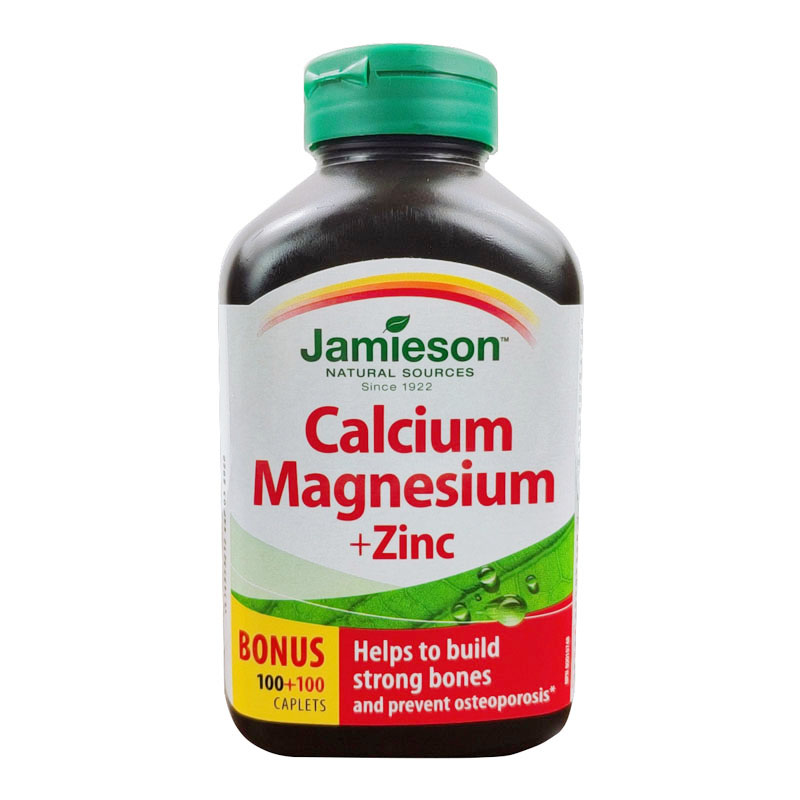
Jamieson – Calcium Magnesium Zinc 200 Capsules
- Ingredients per capsule:Elemental calcium 333 mg (calcium carbonate, calcium citrate, calcium fumarate, calcium malate, calcium succinate), magnesium 167 mg (magnesium oxide, magnesium citrate, magnesium fumarate, magnesium malate, magnesium succinate), zinc 17 mg (zinc gluconate). (NPN 80015748)
- Formula characteristics:Calcium and magnesiumApproximately 2:1 ratioThis is a common mineral combination; the addition of zinc can simultaneously address immune and skin health needs. It is gluten-free, lactose-free, and free of animal gelatin, making it suitable for vegetarians.
- Recommended dosage:Adults take 3 tablets of 1– daily.Take with mealsIt should be kept several hours apart from other medications. Store at 15°C or 25°C, out of reach of children.
- Applicable scenarios:This is suitable for adults whose diets contain little dairy and dark green vegetables and who wish to supplement all three minerals at once; as well as adults who are concerned about bone and muscle function.
- Notice:Some people may experience diarrhea. Long-term high-dose zinc supplementation may affect copper absorption. If you are taking other zinc-containing products at the same time, please pay attention to the total daily intake and consult your doctor.
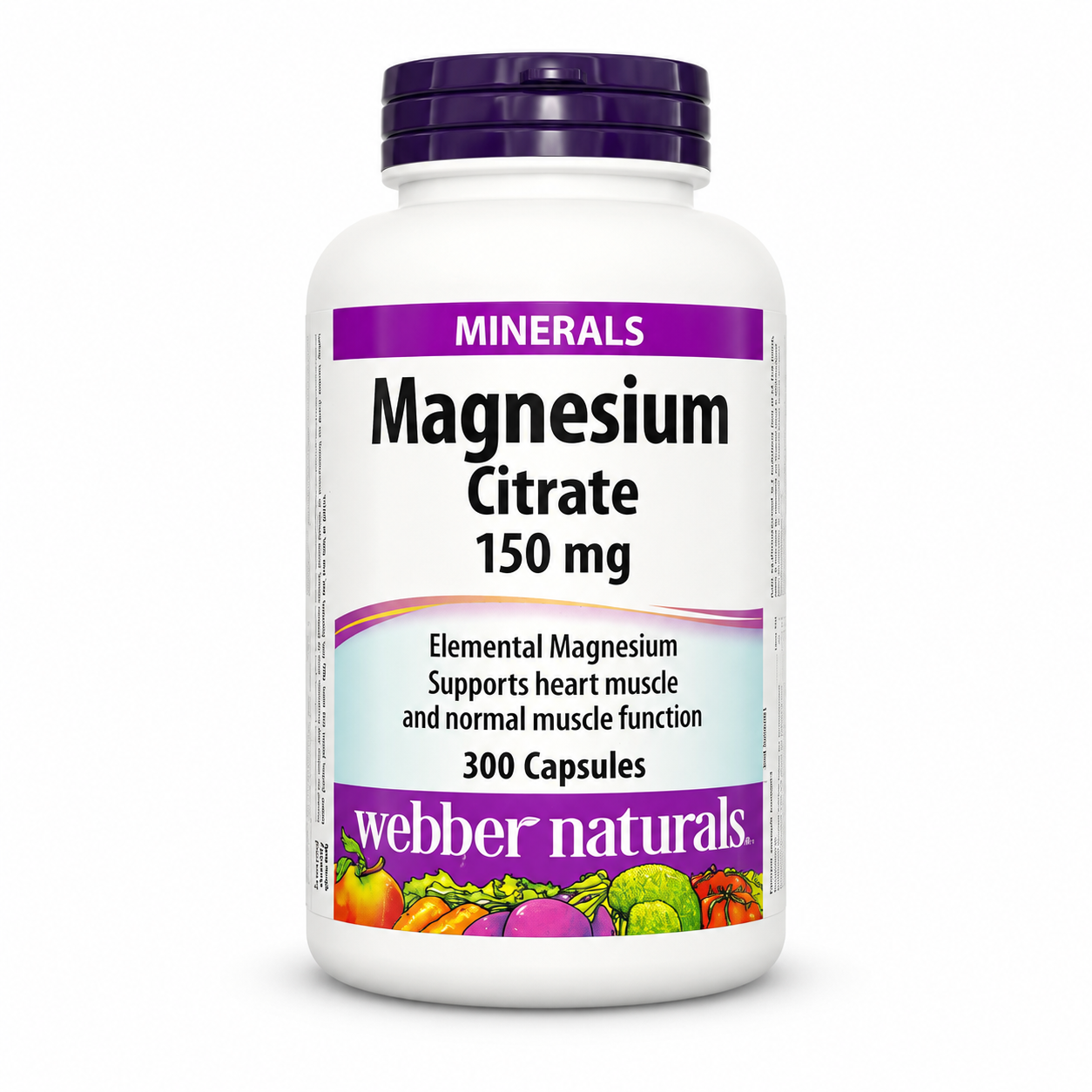
Vebegen – Health Supplement Magnesium Citrate 150 mg 300 Capsules (Extra Strength)
- Ingredients per capsule:150 mg of elemental magnesium,Magnesium citrateProvided in the form of (NPN 80005581).
- Formula characteristics:This is a single-ingredient magnesium supplement with a clear dosage that is easy to adjust. Magnesium citrate is listed in the NIH ODS guidelines.Good absorptionOne of the forms, it is also suitable for people with low gastric acid secretion or weak absorption efficiency; it does not contain artificial colors, preservatives and sweeteners, and uses vegetable-grade magnesium stearate as a lubricant.
- Recommended dosage:Adults take 3 capsules of 1– daily with meals, or as directed by a physician. For daily maintenance, start with 1 capsule (150 mg) daily and adjust as needed.
- Applicable scenarios:This product is suitable for individuals whose diets contain relatively few nuts, whole grains, and dark green vegetables; those who exercise a lot and sweat a lot; and those who wish to supplement magnesium separately (without supplementing calcium).
- Notice:Magnesium citrate has a mild laxative effect.Some people may experience diarrhea.If symptoms occur, the dosage can be reduced or divided into multiple doses. The maximum daily intake of magnesium from supplements for adults is 350 mg. If taking up to 3 tablets (450 mg) daily, consult a doctor or pharmacist first. Keep out of reach of children.
To compare different formulas, browse Gogo Herbs' mineral and bone health product category and choose the combination that suits you best by element content, form, and daily dosage.
8. When should you see a doctor?
Supplements cannot replace examinations and diagnosis. Please consult a doctor if you experience any of the following:Seek medical attention as soon as possibleInstead of increasing the dosage on your own:
- Persistent or frequent muscle cramps, spasms, numbness or tingling in the limbsThese could be signs of hypomagnesemia, or they could be caused by other factors (electrolyte imbalance, neurological or drug-related factors), requiring blood testing for evaluation.
- Palpitations, irregular heartbeat, or chest tightnessMagnesium is closely related to the electrical activity of the heart and is a warning sign that requires immediate assessment.
- Long-term use of diuretics or proton pump inhibitors may lead to fatigue, weakness, and loss of appetite.These types of medications can affect magnesium levels, so it's advisable to have your doctor arrange for a checkup.
- Pre-existing kidney diseasePeople with poor kidney function have a reduced ability to excrete excess magnesium.Magnesium should not be supplemented on your own.It must be evaluated by a doctor.
- During pregnancy or breastfeeding—Magnesium requirements can change, and any supplementation should be confirmed by your prenatal doctor or pharmacist first.
- Migraines, chronic insomnia, or mood disordersThese factors may be related to a variety of factors and should be diagnosed by a doctor; if magnesium supplementation is considered, it should be done under the guidance of medical professionals.
9. Frequently Asked Questions (FAQ)
Q1. Does magnesium really participate in more than 300 enzyme reactions?
More than that. The figure of "approximately 300" originates from a 1980 estimate and has remained in use ever since. According to an authoritative review in *Physiological Reviews*, the current enzyme database includes...More than 600 enzymes that use magnesium as a cofactorIn addition, there are about 200 other types that use magnesium as an activator. Therefore, "300 types" is an underestimation, not an exaggeration.
Q2. How much magnesium should I consume daily? What is the upper limit?
According to NIH ODS, the recommended daily intake for adult men is 400 mg of TP11T (420 mg) and for women is 310 mg of TP11T (320 mg). As for...The upper limit only applies to "supplements and medicines".Adults take 350 mg daily.Magnesium in food and drinking water is not within the upper limit.This is because healthy kidneys will excrete the excess. In other words, eating enough food is the safest and most ideal way.
Q3. What are the differences between magnesium citrate, magnesium oxide, and magnesium glycine?
MainlyAbsorption rate and gastrointestinal toleranceAccording to NIH ODS, magnesium citrate, magnesium aspartate, magnesium lactate, and magnesium chloride are in forms that are more easily absorbed.Magnesium oxide and magnesium sulfate have poor absorption.It is commonly used in laxatives and antacids. Magnesium glycine is chelated with amino acids, making it gentler on the stomach and intestines. Be sure to carefully read the label when purchasing.Milligrams of elemental magnesiumThat's the amount of magnesium you actually ingest, because that's the amount you actually consume.
Q4. Does taking magnesium help with sleep?
Magnesium helps maintainNormal nerve and muscle functionThe body's ability to relax at night is essential for good sleep. However, according to the US NCCIH, current research on magnesium and sleep is limited and inconsistent: a 2021 review of three studies involving 151 older adults observed magnesium...possibleIt can help shorten the time needed to fall asleep, but the quality of research is generally low. Therefore, it is recommended to include magnesium as part of your daily nutrition. If you have persistent difficulty falling asleep or sleep interruptions, you should consult a doctor to find out the cause.
Q5. Can magnesium supplements be obtained through magnesium oil or Epsom salt baths?
According to a 2017 review in *Nutrients*, the stratum corneum of the skin is a natural barrier, and magnesium ions do not easily penetrate it.There is still insufficient evidence to support the use of skin absorption as a route of magnesium supplementation..butThe relaxing and soothing feeling of a warm bath is real.Taking it as a daily relaxation ritual is fine; if the goal is to actually increase magnesium levels in the body, oral administration would be a more manageable approach.
Q6. I am taking calcium supplements at the same time. Will they interfere with each other?
Calcium and magnesium compete with each other for absorption in the intestines.Inefficiency occurs when proportions are unbalanced.Therefore, most compound products will use approximately A calcium-to-magnesium ratio of 2:1Instead of doubling each, calcium and magnesium...Bisphosphonate osteoporosis drugsand someantibioticThey must be taken at separate times (more than 2 hours apart; for antibiotics, it is recommended to take them 2 hours before or 41 hours after). Please consult a pharmacist for the specific timing.
Q7. Who should consult a doctor before taking magnesium?
According to NIH ODS and this article, the most important thing to consult first is:People with poor kidney function(The ability to excrete excess magnesium is reduced, posing the highest risk), currently taking...Diuretics, proton pump inhibitors, antibiotics, or bisphosphonatesthose,Pregnant women and breastfeeding mothersas well asPatients with gastrointestinal diseasesDosage for the elderly and children also needs to be assessed separately.
10. Sources of information
- NIH Office of Dietary Supplements — Magnesium (Fact Sheet for Consumers: Recommended Intake, Food Sources, Supplement Forms, Deficiency and Excess, Drug Interactions)
- NIH Office of Dietary Supplements — Magnesium (Fact Sheet for Health Professionals: Serum Standards, Disease Associations, Bioavailability, and the Impact of Processing on Magnesium Content)
- NHS — Vitamins and minerals: Others (UK recommended magnesium intake and 400 mg supplement reminder)
- NCCIH — Sleep Disorders and Complementary Health Approaches (Current Status and Upper Limits of Magnesium Research in Sleep)
- Physiological Reviews — Magnesium in Man: Implications for Health and Disease (Over 600 enzymes with magnesium as a cofactor, the origin of the saying "300")
- Dibaba et al. (2014), European Journal of Clinical Nutrition — Dietary magnesium intake is inversely associated with serum C-reactive protein levels (7 cross-sectional studies, 32,918 participants)
- Talebi et al. (2022), Biological Trace Element Research — Oral Magnesium Supplementation and Inflammatory Biomarkers (18 randomized studies, 927 participants)
- Dai et al. (2018), American Journal of Clinical Nutrition — Magnesium status and supplementation influence vitamin D status and metabolism (randomized trial of 180 participants)
- Rude et al. (1985) — Low serum concentrations of 1,25-dihydroxyvitamin D in human magnesium deficiency.
- Vitamin D Sources, Metabolism, and Deficiency (Magnesium as a cofactor for vitamin D metabolic enzymes and as a parathyroid hormone)
- To the roots of reduced magnesium dietary intake (the effects of phytic acid and oxalic acid on magnesium bioavailability; magnesium content in grains before and after refining)
- Bohn T. (2008), Current Nutrition & Food Science — Dietary Factors Influencing Magnesium Absorption in Humans (Phytic acid reduces magnesium absorption by up to 601 TP4T, fermentable dietary fiber increases absorption by 101 TP4T)
- Gröber et al. (2017), Nutrients — Myth or Reality: Transdermal Magnesium? (Current Status of Research on Transdermal Absorption)
This article is for general nutritional information only and does not constitute medical diagnosis, treatment, prevention advice, or prescription, nor does it guarantee the effectiveness of any product. Every reader's physical condition is different; magnesium supplements cannot replace a balanced diet, medical examinations, and doctor's prescriptions. Pregnant women, breastfeeding mothers, children, the elderly, those with impaired kidney function, those with chronic diseases, or those currently taking medications (especially diuretics, antibiotics, bisphosphonates, and antacids) should consult a doctor or registered pharmacist before supplementing with any health products. Product ingredients, content, dosage form, and recommended dosage are subject to the information on the actual product page and packaging. External links in this article are subject to their original publishing institution.
Related Products:
-
Sale!

Unichi – Teddi Lab® Gummy Bears Gummy Bears for Hair Growth Upgraded Sea Salt and Green Titanium Flavour 60 Capsules
Original price was: $170.00.$125.00Current price is: $125.00. Add to basket -
Sale!
Jamieson – Long Lasting Vitamin C 1000mg 100 Tablets
Original price was: $138.00.$108.00Current price is: $108.00. Add to basket -
Sale!
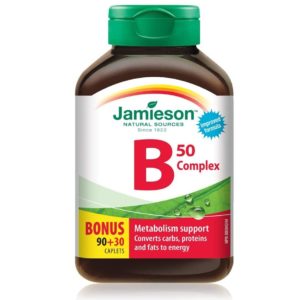
Jamieson – Natural Vitamins B complex 50 120 capsules
Original price was: $168.00.$98.00Current price is: $98.00. Add to basket -
Related Post:
![世界心臟日護心飲食場景,香港中年夫婦享用豆漿、豆腐、雞蛋與堅果,旁有心臟及細胞膜卡通示意]()
World Heart Day: Heart Health in Hong Kong Starts with Daily Life | What are the Benefits of Lecithin? Which of Three 1200mg Products to Choose From?
![香港家居餐桌上有人閱讀無品牌補充品標籤,旁邊有蔬菜]()
2024-2025 Gut Health Product Insight Report: How to Choose? First Look at Diet, Then Clarify Five Product Pathways
![| 香港成年人在家閱讀無品牌補充品標籤,桌上有蔬菜與水]()
Hong Kong Liver Health Product Insight Report 2024-2025: Liver-Protecting Formulas Decline, Q10 Increases
![香港成年人在家閱讀與休息,從日常習慣開始理解腦部健康]()
Hong Kong Brain Health Insight Report 2024–2025: Differentiating Fish Oil, Memory Formulas, and Vitamin B12 from 87 Products