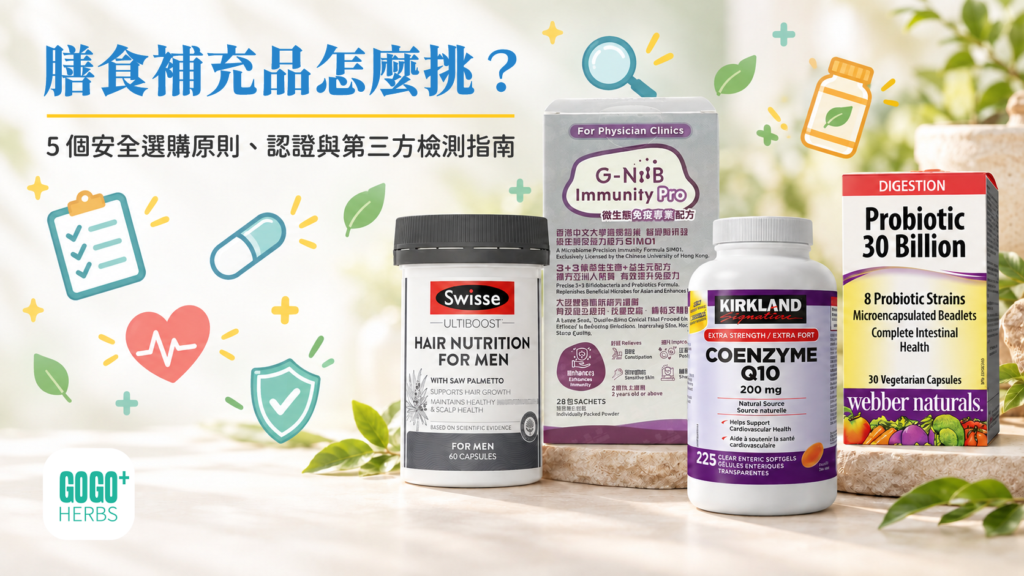
How to choose dietary supplements? 5 safe purchasing principles, certification and third-party testing guidelines.
Modern people buy dietary supplements for many reasons: some follow the advice of medical professionals or nutritionists, while many others proactively purchase multivitamins, minerals, or herbal products to supplement the parts of their diet that are difficult to obtain consistently. Regardless of the reason, choosing products that are "reliable in quality, clearly labeled, and compliant with regulations" is more important than blindly following trends.
With varying quality and a wide range of claims from manufacturers, consumers definitely need to exercise more discernment when choosing supplements on the market. gogoHerbs, as an online health product store, prioritizes quality and compliance when selecting products for its platform and has compiled this buying guide to help you develop your own selection criteria. First, it should be noted that dietary supplements cannot prevent, treat, or cure any disease, nor can they replace medication or a doctor's advice; they are positioned as "nutritional aids," not "disease substitutes."
II. Five Safety Principles Before Selection
III. gogoHerbs Purchase Recommendations (Product links to be added later)
IV. Safety Boundaries and Medical Advice
V. Frequently Asked Questions (FAQ)
I. What are the different forms of health food?
Understanding the product format is the first step in selection. Health supplements can be broadly divided into two categories:
- Synthetic/Single-Extract Nutrients:These products are typically manufactured in laboratories using industrial processes, and are made into tablets, capsules, powder packets, or liquids to mimic the effects of natural nutrients in the body. They are useful when we need to supplement a particular vitamin, antioxidant, mineral, or amino acid.
- Nutrients from natural food sources:Derived from real food, the nutrients contained therein exist in a form that is closer to that of the food, and there are usually no added synthetic substances.
In the past, there was a prevailing notion that all synthetic supplements were "harmful and should be discarded," but this is an oversimplification. Products from reputable brands, whether naturally extracted or highly synthetic, are reliable options; high-quality synthetic nutrients can also effectively fill specific nutritional gaps. However, a balanced diet remains the overall recommended foundation—natural food sources, which also contain dietary fiber and phytochemicals, are still the preferred choice for most nutrients; supplements should serve as an adjunct to a proper diet. Having clarified this point, the next step is how to select from the vast array of brands available.
II. Five Safety Principles Before Selection
1. Conduct thorough quality assessments.
Many supplement manufacturers cut corners in production, so when choosing a brand, you should...Production method, bioavailability (i.e., the proportion actually absorbed and utilized by the body), additives, and optional dosage forms.All of these factors were taken into consideration.
Some quality-conscious brands will disclose their production standards, such as stating that their products have undergone third-party testing, contain no artificial additives, or have obtained further certifications. TRU-ID(Authenticity verification of herbal and probiotic species)NSF Certifications are available; some brands emphasize that their ingredients are sourced from sustainably grown fruits, vegetables, and herbs, and claim to be free of sugar, sweeteners, binders, fillers, artificial colors, and flavors. This kind of "visible production standard" approach is a good reference when making a selection (but please refer to the product packaging for the actual information).
2. Emphasis on regulatory compliance and certification marks
The presence of compliance and certification marks on product labels is a positive indicator of quality. When selecting products, pay attention to the following common marks (each mark has different audit focuses; it is recommended to judge based on your own needs):
- cGMP (Current Good Manufacturing Practice):The U.S. FDA, in accordance with the Dietary Supplement Health and Education Act (DSHEA),Manufacturers are required to ensure that their products meet the standards in terms of purity, strength, and composition.
- USP Verified Mark:United States Pharmacopeia (USP) validation programIndependent verification is conducted on product ingredients, potency, contaminants, and manufacturing processes.
- NSF Certification:NSF International's independent testing and certificationIt covers the control of pollutants and (sports-related) prohibited substances, and also has NSF gluten-free certification.
- USDA Organic, Non-GMO Project Verified:Specifically for organic farming (USDA) and non-genetically modified sources (Non-GMO Project)。
- Certified Vegan, Certified Gluten-Free:Suitable for vegetarians or people with gluten sensitivity.
3. Emphasize independent third-party testing
Some brands conduct their own testing of raw materials and finished products and publish the results, but a more objective approach is to refer to third-party testing websites that are not affiliated with the brand, such as... ConsumerLab.com 與 Labdoor.com—These organizations independently purchase commercially available products and send them to laboratories for analysis, publicly disclosing results such as ingredients, purity, and actual content, providing more unbiased assessments. ConsumerLab also issues warnings about products containing heavy metals, microbial contamination, or with inaccurate labeling; Labdoor presents test results using ratings and rankings. Using these reports as a basis for cross-referencing is more reliable than simply relying on brand advertisements.
4. Don't just look at the price.
Consumers often intuitively believe that "high price = high quality," but this is not necessarily true. There are many affordable brands on the market that demonstrate solid performance in purity and safety. When choosing, instead of being led by price, it's better to go back to the quality indicators and certification marks mentioned earlier; price can be one consideration, but it shouldn't be the only criterion.
5. Ask questions proactively and clarify doubts.
After conducting brand research, questions are inevitable. The next step is to ask the right people: if you have doubts about whether a particular vitamin or brand is right for you, it's best to consult a doctor, pharmacist, or registered dietitian who understands your health condition; for information on the label that you don't understand, you can also directly confirm with the manufacturer. Wise consumers will clarify all their doubts before making a choice.
III. GogoHerbs Purchase Recommendations
- Multivitamins:It is suitable as a supplement to the nutritional foundation for people with a narrow range of diets and a high proportion of eating out, but a balanced diet should still be the main focus.
- Single nutrients (such as vitamin D, magnesium, zinc):Suitable for those who are assessed as potentially not getting enough nutrients; pay attention to the content of each serving when choosing, and avoid combining with other products to avoid exceeding the recommended intake.
- Herbal/Probiotic Products:If you have a history of chronic illness, are currently taking medication, are pregnant, or are breastfeeding, please consult a healthcare professional first.
Selection principles: Carefully check the ingredients and content per serving; choose reputable brands that provide third-party testing information; and be aware of any interactions with medications you are currently taking. The above guidelines are for daily nutritional and health maintenance and should not replace medication or medical advice.
IV. Safety Boundaries and Medical Advice
- Supplements are not medicines:NCCIH ReminderUnlike pharmaceuticals, dietary supplements are not reviewed by the FDA before being marketed. The "structure/function" claims on the label must include the disclaimer: "This statement has not been evaluated by the FDA and this product is not intended to diagnose, treat, cure, or prevent any disease." Before starting any supplements, inform your doctor about all the products you are currently taking.
- Be aware of the risks of contamination and adulteration:Third-party testing has revealed that some products contain heavy metals (lead, cadmium, mercury, arsenic), microbial contamination, or undeclared pharmaceutical ingredients. Choosing reputable brands that are willing to disclose testing information can reduce these risks.
- Interactions with medication/surgery:Some herbal supplements may affect the response to anticoagulants or anesthesia; if you are planning surgery, please inform your healthcare provider as early as possible about any supplements you are taking.
- If these symptoms occur, please seek medical attention and do not attempt to treat them with supplements on your own:Persistent discomfort, symptoms that do not improve for more than one to two weeks, recurrent infections, unexplained weight loss, or a history of chronic illness, immune-related conditions, or being pregnant or breastfeeding.
V. Frequently Asked Questions (FAQ)
Are natural supplements always better than synthetic ones?
Not entirely. Reputable brands of naturally extracted or high-purity synthetic products are reliable options; natural foods, containing both fiber and phytochemicals, remain the preferred choice for most nutrients, while supplements serve as an adjunct. The key is to choose the right source and read the label carefully, rather than simply categorizing them as "natural/synthetic."
Does the presence of a certification mark guarantee that a product is safe and effective?
Labels are an important reference, indicating that a product meets specific standards at a certain stage (purity, manufacturing process, non-GMO, etc.); however, no label guarantees absolute safety or effectiveness. Ultimately, it is necessary to combine label reading, third-party reports, and your own needs to make a judgment.
Are third-party reports from ConsumerLab and Labdoor worth referring to?
These are worth using as a basis for cross-referencing. They independently purchase commercially available products for testing, and disclose the ingredients, purity, and actual content, making their stance less biased; they can also help you avoid products that have been contaminated or have mislabeled information. However, some content requires a paid subscription; you can refer to their published warnings and summaries first.
Does a higher price necessarily mean better quality?
Not necessarily. There are many brands that are affordable yet offer solid purity and safety. When choosing, you should focus on production standards, certification marks, and third-party reports; price should only be one of many factors to consider.
When should you ask a doctor first?
If you are taking medication, preparing for surgery, have a chronic illness, an immune-related condition, or are pregnant or breastfeeding, it is recommended that you consult a doctor, pharmacist, or registered dietitian before starting any supplements; if you experience persistent discomfort or symptoms that last for more than one or two weeks, you should also seek medical attention rather than trying to manage it yourself.
References (official source, click to verify)
- FDA — Dietary Supplements (Regulatory Notes, cGMP, No FDA Review Before Market Launch)
- USP — Dietary Supplements & Herbal Medicines (Quality Standards and Validation Program)
- NSF — Independent Testing and Certification (Contaminants, Prohibited Substances, Gluten-Free)
- Non-GMO Project Verified
- NCCIH — Using Dietary Supplements Wisely (Safety Guidelines, Informing Doctors, Interactions)
- ConsumerLab.com (Third-party independent testing)
- Labdoor.com (Third-party ratings and rankings)
This article is a compilation of nutrition and health information for general reference only and does not constitute medical advice, diagnosis, or treatment. Dietary supplements cannot prevent, treat, or cure any disease, nor should they replace medications prescribed by a doctor. Pregnant women, breastfeeding mothers, children, the elderly, those with a history of chronic illness, or those currently taking medication should consult a doctor, pharmacist, or registered dietitian before starting any supplements. Please refer to the packaging label for the ingredients and dosages of individual products.
Related Products:
-
Sale!

GINAX – Ginseng Tea Bag / Ginseng White Tea Rose Tea Bag | 1bag
Original price was: $13.00.$10.00Current price is: $10.00. 選擇規格 This product has multiple variants. The options may be chosen on the product page -
Sale!

GINAX – Manuka Honey UMF™ 5+ 30g
Original price was: $30.00.$25.00Current price is: $25.00. Add to basket -
Sale!

Single 10% off】aXimed – Recovery Speed 100% Whey Protein Powder 30 sachets
Original price was: $558.00.$502.00Current price is: $502.00. Add to basket -
Sale!

Livinglean – Organic Dietary Mineral Powder 8g x 20 sachets
Original price was: $368.00.$298.00Current price is: $298.00. Add to basket
Related Post:
![牛樟芝子實體與膠囊製品示意]()
What is Antrodia camphorata? A complete guide to its ingredients, research evidence, and precautions for consumption.
![世界心臟日護心飲食場景,香港中年夫婦享用豆漿、豆腐、雞蛋與堅果,旁有心臟及細胞膜卡通示意]()
World Heart Day: Heart Health in Hong Kong Starts with Daily Life | What are the Benefits of Lecithin? Which of Three 1200mg Products to Choose From?
![香港關節健康洞察報告封面:中年及長者在香港步行]()
How to choose joint health supplements? 8 best-selling formulas and repurchase information help you find the right daily option.
![香港素食保健品洞察報告封面:均衡植物性餐桌與閱讀補充品標籤]()
Vegetarian Health Supplement Buying Guide: 8 Best-Selling Products, From Bacterial Strains and Plant Extracts to Daily Nutrition