























































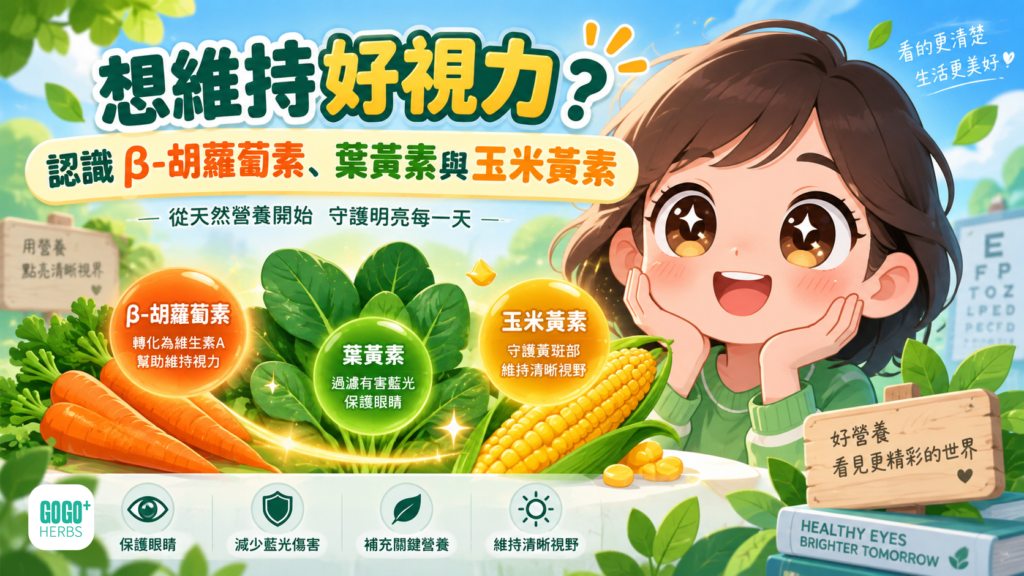
Let's get to the main point first:Nutrients can helpMaintain normal visual functionAnd it helps prevent related problems when there is a deficiency (for example, vitamin A deficiency can cause night blindness). However, current evidence does not support the claim that "eating these nutrients can improve vision" or "reverse myopia and presbyopia." If vision has already declined, or if you have experienced night blindness or visual field defects, you should first consult an ophthalmologist to find the cause, rather than relying on supplements. This article summarizes the scientific background and red lines regarding claims for three common eye-protecting nutrients.
Table of contents
- I. The Relationship Between Nutrients and Vision: First, Clarify "Maintaining" and "Improving"
- 2. Beta-carotene: A raw material for rhodopsin; deficiency affects night vision.
- III. Lutein and Zeaxanthin: Accumulate in the macula and filter blue light.
- IV. Blue Light and Eyes: Does the Screen Really Damage Your Eyes?
- V. Food Sources: The most practical source of food is from your plate.
- VI. How to Read Supplements: Ingredients, Dosage, and Precautions
- 7. In what situations should you seek medical attention?
- 8. Frequently Asked Questions (FAQ)
- IX. Sources of Information
- 10. Disclaimer
I. The Relationship Between Nutrients and Vision: First, Clarify "Maintaining" and "Improving"
It's common to see claims online that "eating more of a certain nutrient can improve eyesight," but from a medical perspective, there are two things to consider:
- Maintain normal function:For example, vitamin A is a component of rhodopsin, a photosensitive pigment in the retina, and sufficient intake is necessary for the visual system to function properly.
- Remedies for lack:If the deficiency is caused by insufficient diet, supplementation can improve related symptoms (such as night blindness); however, this does not mean that it will make a person with normal vision "better".
For problems such as nearsightedness, farsightedness, presbyopia, cataracts, and macular degeneration, nutrients are only...A part of overall eye protectionIt cannot replace optical correction or medical treatment.
2. Beta-carotene: A raw material for rhodopsin; deficiency affects night vision.
Beta-carotene is a "pre-vitamin A carotenoid" that the body can convert into vitamin A (retinol). Vitamin A is an essential component of the retina.rhodopsinRhodopsin, an essential component of light, is a protein that is sensitive to light and helps us see in low-light environments.
The scientifically sound part
- Vitamin A deficiency leads to insufficient synthesis of rhodopsin.The earliest sign is night blindness.(Difficulty seeing in low light or darkness). Sufficient vitamin A intake can improve this deficiency.(NIH ODS Vitamin A Fact Sheet)
- Common food sources: dark green vegetables and orange-yellow fruits and vegetables, such as carrots, pumpkins, papayas, mangoes, and spinach.
The claim needs to be softened.
- 「Improve eyesight, enhance vision"For people with normal vision, supplementing with beta-carotene will not 'improve' their vision; it can only maintain normal function. This statement is too absolute."
- 「Improve night vision—Supplementation is only meaningful when there is an underlying deficiency of Vitamin A; it does not "enhance" night vision in those with adequate nutrition. For adults...SuddenIf you experience night blindness, you should first consult an ophthalmologist to rule out other causes.
III. Lutein and Zeaxanthin: Accumulate in the macula and filter blue light.
Lutein and zeaxanthin are another type of carotenoid that naturally accumulate in the retina.maculaIt is the light-filtering pigment of this region.
The scientifically sound part
- They are located in the macula, andAbsorbs some blue light and reduces photo-oxidation stressIt is a natural protective layer for the eyes.
- The National Eye Institute (NEI) AREDS2 studyThe display shows that, forMid-to-late stage macular degeneration (AMD)For patients, the lutein and zeaxanthin in the formula can help slow the progression of the disease. (NEI page on macular degeneration)
The claim needs to be softened.
- 「Protect your eyes from harmful blue light"—This statement is too absolute. Lutein does have light-filtering and antioxidant properties, but the American Academy of Ophthalmology (AAO) clearly states:"Blue light does not cause eye damage.The main problems with prolonged screen time are "digital eye strain" and disruption of the sleep cycle, rather than direct damage to the retina. (AAO Blue Light Explanation)
- 對Daily eye care for healthy individualsThe evidence for the prevention of lutein supplementation is not as clear as for AMD patients, and it should not be claimed that "taking it will prevent you from being afraid of blue light".
IV. Blue Light and Eyes: Does the Screen Really Damage Your Eyes?
It's natural for modern people to worry about blue light damaging their eyes after staring at their phones and computers for long periods, but the evidence needs to be considered from both sides:
- Regarding eye structure:The AAO pointed out that blue light from the screenIt will not damage the retinaWhat you really need to protect yourself from is outdoor ultraviolet (UV) radiation and sunlight; you should wear sunglasses with UV400 protection when going out.
- Regarding sleep and fatigue:Excessive blue light at night can suppress melatonin and disrupt the body's biological clock; prolonged close-up viewing of screens can easily cause dry eyes, eye strain, and visual fatigue.
A more reliable approach than "taking lutein to block blue light" is the following.Behavioral protection:
- follow 20-20-20 ruleEvery 20 minutes of screen time, look at something 20 feet (about 6 meters) away for at least 20 seconds.
- Maintain a proper reading distance and sufficient ambient light; avoid using your phone in the dark.
- Reduce screen usage 11-2 hours before bedtime, or turn on your device's night mode.
- Regularly expose your eyes to natural outdoor light (this is especially important for children, as it helps reduce the risk of myopia).
V. Food Sources: The most practical source of food is from your plate.
| Nutrients | Common food sources | A little reminder |
|---|---|---|
| Beta-carotene / Vitamin A | Carrots, pumpkins, papayas, mangoes, spinach, sweet potatoes, yams | A balanced intake of dark green and orange-yellow fruits and vegetables is sufficient; animal liver is high in vitamin A, so pregnant women and those taking high-dose supplements should be mindful of the upper limit. |
| Lutein/Zeaxanthin | Spinach, kale and other dark leafy greens, Chinese kale, corn, egg yolks | A balanced diet usually provides sufficient nutrients; adding a small amount of oil during cooking can aid absorption. |
VI. How to Read Supplements: Ingredients, Dosage, and Precautions
If you have difficulty maintaining a balanced diet, or belong to a specific group (such as those at high risk for AMD), you may consider supplements. Please note:
- According to the label:Ingredients, content, dosage form, and recommended daily intake are subject to the actual product label. This article does not target any single brand.
- Non-pharmaceutical:Eye supplements are nutritional aids.Cannot replaceEye examination, glasses, or treatment prescribed by a doctor.
- Consult first in special circumstances:Pregnant women/breastfeeding mothers, those taking long-term medications, those with kidney or liver problems, and smokers should consult a doctor or registered dietitian before supplementing.
- Higher dosage is not always better:Excessive fat-soluble vitamin A can lead to cumulative poisoning; there is limited evidence of the long-term safety of high doses of lutein, so follow the label and professional advice.
7. In what situations should you seek medical attention?
If any of the following conditions occur, do not rely solely on diet or supplements; please see an ophthalmologist as soon as possible:
- visionsudden dropOr blurred vision continues to worsen
- It also appears in well-lit environments.Night blindnessOr perhaps they've been afraid of the dark since childhood.
- Visual field defects and straight lines appearing curved (maybe warning signs of macular degeneration)
- Accompanied by eye pain, redness, photophobia, and a sudden increase in floaters.
- Patients with chronic diseases such as diabetes and hypertension should have regular fundus examinations as prescribed by their doctor.
8. Frequently Asked Questions (FAQ)
1. Can eating beta-carotene really "improve eyesight"?
No. Vitamin A, converted from beta-carotene, is necessary for normal vision. Supplementation can improve deficiency symptoms such as night blindness when deficient; however, for those with adequate nutrition, it will not "improve" vision or reverse myopia or presbyopia.
2. Can lutein "block blue light and protect the eyes"?
Lutein accumulates in the macula and plays a role in filtering light and antioxidation, but the Ophthalmological Society points out that screen blue light...It will not damage the retinaIts value is more clearly seen in patients with mid-to-late stage macular degeneration (AREDS2 formula). However, it should not be exaggerated as "avoiding blue light damage" for daily eye care in healthy individuals.
3. Will looking at 3C products too much damage my eyes?
It mainly causes dry eyes, eye strain, and visual fatigue (digital eye strain), and may disrupt nighttime sleep. It is recommended to use the 20-20-20 rule, ensure sufficient ambient light, and reduce screen time before bed to relieve these symptoms.
4. Do eye-protecting nutrients need to be taken as supplements to be effective?
Most people can obtain this information through a balanced diet (dark green vegetables, orange and yellow fruits and vegetables, eggs, and fish). Whether additional supplements are needed depends on individual diet, age, and risk factors; it is recommended to consult a professional first.
5. Can pregnant women take eye health supplements?
High-dose products containing pre-prepared vitamin A pose a risk of overdose for pregnant women, and self-supplementation with high doses should be avoided; beta-carotene and lutein from general food sources are usually safe, but it is still recommended to consult a doctor or nutritionist.
6. Are these foods helpful for children with myopia?
Nutrients cannot cure or reverse myopia. The most reliable ways to reduce the risk of myopia in children are to increase outdoor activity time, control close-range eye use, and have regular eye exams.
IX. Sources of Information
- NIH Office of Dietary Supplements — Vitamin A Fact Sheet (Vitamin A, Beta-carotene, Rhodopsin and Night Blindness Mechanisms, Upper Limits and Pregnancy Precautions)
- National Eye Institute (NEI) — Age-Related Macular Degeneration (AREDS2 Lutein/Zeaxanthin Research, Dietary Recommendations)
- American Academy of Ophthalmology (AAO) — Should You Use Night Mode to Reduce Blue Light? (Blue Light Does Not Harm the Eyes, Evidence from Lutein, Sleep Cycles)
10. Disclaimer
This article is for general nutrition and eye care information only and does not constitute medical diagnosis, treatment, or prevention advice, nor does it guarantee the efficacy of any product. Every reader's physical condition is different, and eye care nutrients cannot replace eye examinations and doctor's prescriptions. If you have vision problems, chronic diseases, are taking medication, are pregnant or breastfeeding, please consult a doctor, ophthalmologist, or registered dietitian before supplementing with any health products. The content of external links in this article is subject to the original publishing institution.
Related Post:
![眼乾食葉黃素有用嗎?」「秋冬天眼乾特別嚴重,點算?]()
What foods are good for dry eyes? The roles and selection of Omega-3, lutein, zeaxanthin, and blueberry extract.
![男士夜尿、滴滴仔:良性前列腺增生的症狀、檢查與保健品選購]()
Nocturia and dribbling in men: Symptoms, examinations, and supplemental evidence of benign prostatic hyperplasia (BPH).
![通宵一晚,血壓會升多少?]()
Staying up late and blood pressure: How much will blood pressure rise after staying up all night on Halloween? Interpreting cardiovascular risk data.
![均衡備餐與體重管理]()
Weight Management Shopping Guide: 8 Selected Probiotics, Apple Cider Vinegar, and Herbal Formulas