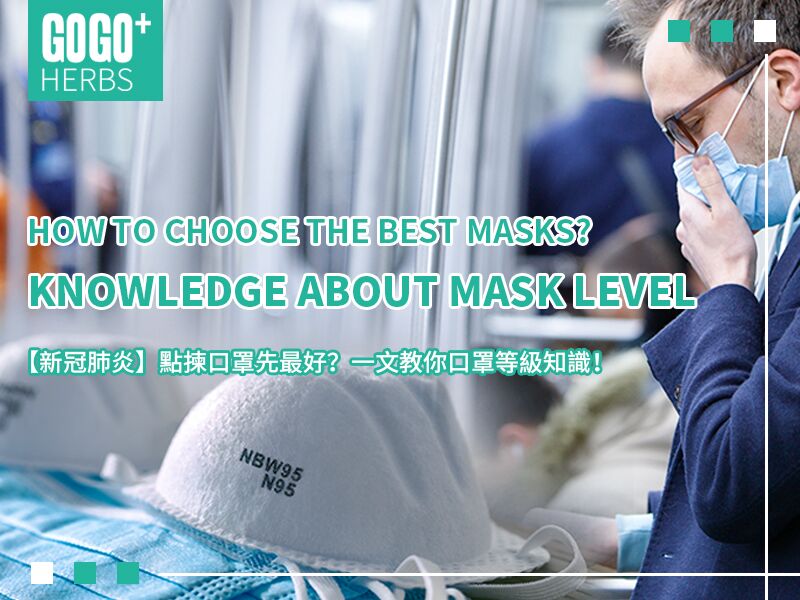
How to choose a mask? Understanding mask protection levels and BFE/PFE/VFE
When buying face masks, you'll often see BFE, PFE, VFE, and various "grade" markings on the packaging. These represent the mask's ability to block bacteria, particles, and viruses. Simply put:For general daily protection, choosing a medical surgical mask that meets BFE/PFE/VFE 95% or higher (such as ASTM Level 1 or equivalent standards) is sufficient to block droplets and reduce the risk of respiratory transmission.However, it's important to remember that masks are only one part of a multi-layered protective system. They cannot guarantee against infection on their own; proper hand hygiene, ventilation, and avoiding overly crowded environments are also essential. Below, Gogo Herbs has compiled practical information on mask standards for you.
1. What are BFE, PFE, and VFE?
These three letters are the most common filtration efficiency indicators found on mask packaging:
- BFE (Bacterial Filtration Efficiency)This measure assesses a mask's ability to filter bacteria, testing for particles approximately 3 micrometers in size. For example, BFE > 95% means the mask can block particles larger than 3 micrometers (bacteria often attach to these droplets) of size 95% or larger.
- PFE (Particulate Filtration Efficiency)This measure assesses a mask's ability to filter suspended particulate matter, with particles as small as approximately 0.1 micrometers. For example, PFE > 95% means it can block particles larger than 0.1 micrometers, which is greater than 95%.
- VFE (Viral Filtration Efficiency)This measure assesses the ability of a mask to filter viruses, testing particles approximately 0.1–5 micrometers in size (average 2.8 micrometers). For example, VFE > 95% means it can block particles larger than 2.8 micrometers, which is greater than 95%.
A friendly reminder: Viruses are extremely small, but in reality, they mostly spread by attaching to larger droplets or particles. Therefore, the three indicators mentioned above are of practical significance. When choosing a mask, those with BFE, PFE, and VFE data on the packaging are usually more reliable than those that only state "PM2.5" or "pollen protection".
2. Mask rating standards in various countries
American Standard: ASTM Level
ASTM is the American Society for Testing and Materials (ASTM)ASTM InternationalThe surgical mask standards established by [the relevant authority] are divided into three levels:
- Level 1 (Low Protection)BFE and PFE must be greater than 95%.
- Level 2 (Medium Protection)BFE and PFE must be greater than 98%.
- Level 3 (High Protection)BFE and PFE must be > 98%, and the synthetic blood penetration resistance must be > 160 mmHg.
European Standard: EN14683
Europe uses EN14683 classification, which also has three levels:
- Type I (Low Protection)BFE must be greater than 95%.
- Type II (Medium Protection)BFE must be greater than 98%.
- Type IIR (High Protection)BFE must be > 98%, and synthetic blood penetration resistance must be > 120 mmHg (with anti-liquid splash function).
Commonly used label in Japan: PM2.5
Japanese face masks are often labeled "PM2.5," meaning they can block airborne particulate matter larger than 2.5 micrometers, such as secondhand smoke, air pollution, pollen, and dust. However,Masks labeled only as "PM2.5" or "pollen protection" are mostly designed for air pollution and allergies, and may not be effective in blocking bacteria and viruses.If you want to use it to block germs, it is recommended to choose a medical surgical mask that shows BFE, PFE and VFE data.
3. How to choose between daily life and the Hong Kong environment?
Although bacteria and viruses are small, they typically attach to larger droplet particles during transmission. Therefore, in general community settings, choosing a mask with a BFE/PFE/VFE > 95% (such as ASTM Level 1 or equivalent standards) is sufficient to block droplets and serve as a basic measure to reduce the risk of transmission.World Health Organization (WHO)與US CDC The guidelines state that masks are an "extra layer of protection" that can reduce the risk of respiratory virus transmission, but...Masks alone are not enough to provide complete protection.In addition, it is necessary to cooperate with practices such as frequent hand washing, maintaining ventilation, and avoiding excessive crowding.
In densely populated and crowded environments like Hong Kong, in addition to the level of protection, attention should also be paid to...Breathability and tightness—A mask can only be worn for a long time if it is comfortable to wear, and only then can it be effective.
4. Tips for purchasing and proper use
- Look at the standards, not the slogans.Prioritize medical surgical masks that are marked with BFE/PFE/VFE and conform to ASTM or EN14683.
- Sealing and CoveringThe mask should completely cover the nose, mouth, and chin, and fit snugly against the face; gaps will allow air to leak in. Different masks offer varying levels of protection.The CDC points out that surgical/disposable masks generally offer more protection than cloth masks, and N95/KN95 and other close-fitting respirators provide even greater protection.。
- Hand cleaningClean your hands before putting on the mask, before taking it off, and when touching the mask (WHO recommendation).
- Disposal and storageDisposable surgical masks should be used and discarded immediately as instructed; if temporary storage is required, place them in a clean plastic bag to avoid contamination.
- Masks with flaps are not recommended.Masks with exhalation valves primarily protect the wearer, but offer weaker protection against the source of infection for those around them.
- Note the expiration date and packaging.When purchasing, confirm the expiration date, packaging integrity, and protection level label.
5. Product Selection Recommendations
When selecting medical surgical masks, you can refer to the following specifications: [Specifications to be met] EN14683 Type II(or equivalent ASTM Level 2 or higher standards)BFE/PFE > 98%, VFE > 95%This type of mask features a three-layer structure, offering both basic breathability and splash protection. It is suitable for daily respiratory protection and as a backup when going out.
Gogo Herbs' Personal Care section offers a wide selection of medical-grade masks and personal protective equipment. Specifications and stock are updated periodically, so we recommend checking the section for the latest arrivals and prices.Gogo Herbs Personal Care SectionBefore purchasing, please refer to the actual protection level, ingredients, and expiration date indicated on the product page.

6. When should I see a doctor?
Masks and nutrition cannot replace professional medical care. If any of the following symptoms occur, seek medical attention or contact your local health department as soon as possible:
- Persistent fever, high fever that won't subside;
- Difficulty breathing, chest pain, bluish lips or face;
- Altered mental status, extreme fatigue, or dehydration;
- Infants, pregnant women, the elderly, or patients with chronic illnesses may experience respiratory discomfort.
During respiratory virus outbreaks, high-risk individuals should take extra precautions and follow [the guidelines/standards].World Health Organization (WHO)Follow the guidance of the local Centre for Health Protection.
Frequently Asked Questions (FAQ)
Q1: What are the differences between BFE, PFE, and VFE?
BFE tests a mask's ability to filter bacteria (approximately 3-micron particles); PFE tests its ability to filter suspended particulate matter (as small as 0.1 microns); and VFE tests its ability to filter viruses (approximately 0.11 TP1T5 microns). Higher values for these three parameters indicate better filtration performance. When purchasing medical surgical masks, prioritize checking if the BFE and PFE are 95 TP4T or higher.
Q2: Is ASTM Level 1 sufficient?
In general community settings, medical surgical masks that meet BFE/PFE/VFE > 95% (such as ASTM Level 1) are sufficient to block droplets and serve as a basic measure to reduce the risk of transmission. However, in high-risk scenarios (such as caring for confirmed cases or in medical facilities), higher-level (Level 2/3 or Type IIR) or tightly fitted respirators should be considered. Regardless of the type, hand hygiene and ventilation are essential.
Q3: Can masks labeled only "PM2.5" or "anti-pollen" protect against viruses?
The "PM2.5" label primarily targets air pollution, pollen, dust, and other suspended particulate matter, and may not necessarily block bacteria and viruses. For blocking droplets and germs, it is recommended to choose a medical surgical mask that simultaneously displays BFE, PFE, and VFE data and meets ASTM or EN14683 standards.
Q4: Will I not get infected if I wear a mask?
No. According to WHO and CDC guidelines, masks can reduce the risk of respiratory virus transmission and provide an extra layer of protection, but masks alone are not sufficient to provide complete protection. The most effective approach is to use multiple measures together: keep your hands clean, ensure ventilation, avoid excessive crowding, wear a mask when necessary, and seek medical attention promptly if you feel unwell.
Q5: What precautions should be taken when children and the elderly wear masks?
Children should wear properly sized masks under adult supervision to avoid affecting their breathing; elderly people with respiratory illnesses should consult medical staff if they feel uncomfortable wearing a mask. High-risk individuals should take extra precautions during the epidemic and follow the guidelines of local health authorities.
Source of information
- World Health Organization (WHO) — When and how to use masks:https://www.who.int/emergencies/diseases/novel-coronavirus-2019/advice-for-public/when-and-how-to-use-masks
- US CDC — Masks and Respiratory Viruses Prevention:https://www.cdc.gov/respiratory-viruses/prevention/masks.html
- ASTM International (surgical mask standard ASTM F2100):https://www.astm.org
- European Standard EN14683 (Requirements and Test Methods for Medical Face Masks)
Disclaimer
This article is for health and product education purposes and is intended for general reference only. It does not constitute medical diagnosis, treatment, or prevention advice, nor can it replace professional medical advice. Mask specifications and product information are subject to change as standards and supply evolve. Please refer to the product packaging and official guidelines for selection and use. If you have any health concerns or discomfort, please consult a doctor or your local health authority.
Related Products:
-
Sale!
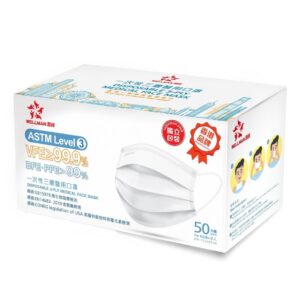
Wyman – ASTM Level 3 Adult Medical Mask White (Individual Pack of 50)
Original price was: $50.00.$37.00Current price is: $37.00. Add to basket -
Sale!
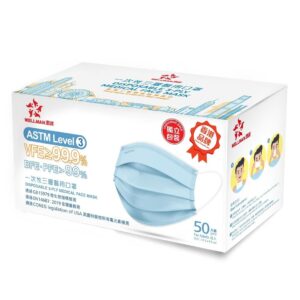
Wyman – ASTM Level 3 Adult Medical Mask Blue (Individual Pack of 50)
Original price was: $50.00.$37.00Current price is: $37.00. Add to basket -
Sale!
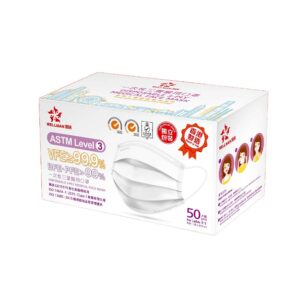
Wyman – ASTM Level 3 Women's Medical Mask White (Individual Pack of 50)
Original price was: $50.00.$37.00Current price is: $37.00. Add to basket -
Sale!

Wyman – ASTM Level 3 Medium Child Medical Mask White (Individual Pack of 50)
Original price was: $50.00.$37.00Current price is: $37.00. Add to basket
Related Post:
![母親用滴管把少量植物藻油滴在食物匙上,幼兒坐在餐桌旁]()
A Complete Guide to Plant-Based Algae Oil Omega-3: Odorless, Vegetarian, and Suitable Omega-3 Choices for Pregnant Women and Infants
![牛樟芝子實體與膠囊製品示意]()
What is Antrodia camphorata? A complete guide to its ingredients, research evidence, and precautions for consumption.
![世界心臟日護心飲食場景,香港中年夫婦享用豆漿、豆腐、雞蛋與堅果,旁有心臟及細胞膜卡通示意]()
World Heart Day: Heart Health in Hong Kong Starts with Daily Life | What are the Benefits of Lecithin? Which of Three 1200mg Products to Choose From?
![香港成年人在家閱讀與休息,從日常習慣開始理解腦部健康]()
魚油、迷你膠囊還是B12?腦部健康熱銷8款的配方與日常選擇